
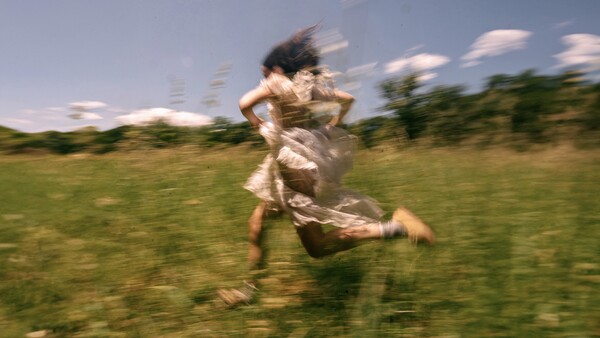
Brandon Woelfel, a New York-based portrait photographer and newly appointed Nikon ambassador, became known through constant experimentation with lo-fi props and effects posted daily on social media. His consistent behind-the-scenes posts amassed two million followers on Instagram and a reputation for dreamy, otherworldly images. Here he dishes on what he wishes he'd done differently, team building, and on letting embarrassment hold you back.
What Are Must-Carry Items Always in Your Bag?
My main camera body I use is the Nikon Z8. I also always bring along a backup body, which is either the Nikon Z5II or the Nikon Zf. For lenses, I always have the NIKKOR Z 24-70mm f/2.8 S and the NIKKOR Z 70-200mm f/2.8 VR S with me. If it's a bit of a larger shoot, I love bringing along the NIKKOR Z 135mm f/1.8 S Plena, the NIKKOR Z 50mm f/1.2 S, and, for something wider, the NIKKOR Z 20mm f/1.8 S. I also always bring along extra batteries, extra chargers, and Lexar memory cards like the Lexar Professional 1800x SDXC UHS-II Card GOLD Series and Lexar Professional 2000x SDXC UHS-II Card GOLD Series in 1TB, or some of the Lexar Professional GOLD CFexpress 4.0 Type A Cards, because these go into the 1TB to 2TB range, which I love because I actually typically shoot in JPG + raw. I know this ends up creating a lot of extra storage and memory for me in the long run, but I love that I'm able to maintain some original color from the JPG, especially when I'm using Picture Controls in Nikon mirrorless cameras. A lot of the time I will have mine set to Standard, but I also love playing around with the Creative Picture Controls. I also have some of my own Imaging Recipes that I can play with in-camera that show my color grade in real time on my camera while I'm shooting. Those are actually available for download for anyone who wants them on Nikon Imaging Cloud. Something I also always pack are clamps. These are small and easy to throw in my bag, and I always find them super useful, whether we need them to secure a backdrop or if we need them for styling and making sure a model's wardrobe is fitting just right. I also bring along my MacBook, extra USB-C cords, and lens filters, which I get from Prism Lens FX. I used to bring along a lot of prisms and kaleidoscope-type glass with me to get really funky with my results, but I've since toned it down a bit and prefer more of a dreamy sort of look. I love the Dream FX Filter or the Lucid Dream FX Filter from Prism Lens FX. If I'm shooting in bright daylight, I will bring along an ND filter. I try to be as prepared for my shoots as possible, and sometimes different shoots call for different kinds of items I'm bringing along.
What Is the Most Underrated Photo Skill?
I think one of the most underrated photo skills is being personable. I feel like a huge part of photography is learning how to connect not only with your subject, but also with the whole team involved in the shoot. That's such a big part of making everyone feel welcome and comfortable, especially the model, because that comfort really translates across on camera. When you're meeting new people, it can be hard to immediately point a camera at someone and expect them to look relaxed. Creating that kind of atmosphere is really essential, and it absolutely affects the final image.
What Technique Do You Use Most Often?
The technique I find myself using most often throughout my work has been working with lens filters and Nikon's Creative Picture Controls. I come from a computer arts background, so naturally I relied a lot on post-production and having an image come to life in the edit. But over time, I've really grown to love doing more inside my camera and getting closer to the final result while I'm still on location. That combination helps me feel more confident on set because I can better see where the image is going in real time and adjust accordingly. It also encourages me to keep shooting more. A lot of the time, if I don't use tools like this, I'll get home, start editing, and realize I should have taken more because the photos start really coming together.
If You Were Starting, What Would You Do Differently?
I always like to say I wouldn't change anything, because if I had, I might not have arrived at the style and career I have now, the people I've met, or the clients I work with today. But if I really look back on it, I think I would have spent more time shadowing larger teams and learning under other people in the industry earlier on. I started out taking photos in my bedroom, with friends, and purely off inspiration, which I still really love and admire looking back on. But I do think I could have learned more of the technical side earlier, and probably made more connections too, if I had spent more time assisting, shadowing, or finding a mentor.
What Advice Would You Give a Photographer Just Starting Out?
Take photos as often as you can, get out there, make honest connections, and really learn your camera as well as possible. That technical foundation matters so much. I definitely had moments early on where I could see something with my eyes that I wanted to capture, but I couldn't really translate it into the still image I wanted. I remember being at a photo meetup under this bridge on a rainy, cloudy day, and everyone around me was capturing these amazing low-lit images of the model moving around. I had never really experienced that kind of situation before, and I wasn't sure how to handle the movement or how to shoot it properly. I was also a little too embarrassed to ask for help. Looking back, that's something I'd really tell someone starting out: don't be afraid to ask questions. This kind of experience is totally a normal part of the process, but I do wish I had spent more time really understanding my camera earlier on. I'm definitely not someone who naturally wants to sit down and read a manual… but I do think there's so much value in learning the technical side, whether that's through experience, repetition, or asking for help, so your creative vision can actually match what you're trying to capture.
When You Look Back on Earlier Work, What Are Your Thoughts?
When I look back on my earlier work, I feel a mix of emotions. On one hand, I can clearly see how much I still had to learn, and on the other, I feel really proud of how much passion I had and how much energy I put into wanting to improve, get better, and even break out of my shell socially. I really respect how hard I pushed myself at that time. I was outside shooting constantly, pretty much every day, and putting work out into the world even when other people had opinions about what I was making or the kind of style I was pushing out. Even when I was feeling tired or starting to feel a little burnt out, I kept going. Looking back, I really admire that about my younger self!
Do You Have Any Rituals or Superstitions?
I'm always a little paranoid that I'm going to forget something on a bigger photoshoot, whether that's forgetting to charge batteries, not formatting a card, really anything that could put my images at risk. To this day, I'm constantly making little mistakes and then learning from them the next time around. So, before a large photoshoot, I find myself triple- and quadruple-checking everything. I'll make a gear checklist, and a few times I've even made that checklist my phone lock screen the day of the shoot just to avoid being forgetful in the morning, because I'm definitely more of a night owl. Waking up early does not come naturally to me at all.
Where Do You Find Inspiration for an Image?
My inspiration comes from a lot of different places. It can come from music, the color from a certain sunset, a location when I'm in a new place, or a lot of the time, just a common everyday object that I feel like I can incorporate into my work. I love taking those objects or props and building an entire concept or set piece around them. Recently, I bought an acrylic panel and ended up using it across three different photoshoots (here, here, and here). I built different concepts around it by taping colored gels onto it, painting shapes on it, or balancing different lenses across the surface and photographing through it while having different models interact with it. I always love how something that simple can spark an entire series of images. I'm also definitely inspired by other photographers and trends. I'd be lying if I said I don't keep tabs on what people are responding to and engaging with. I got my start through Instagram, so I think being aware of trends is naturally built into how I work. Early on, I definitely shot with likes and responses in mind, but now I feel much more focused on leaning into what personally inspires me and not comparing the value of a set to how much engagement it gets.
How Do You Know When to Let Go of a Concept, or Switch Things Up on the Fly?
In the past, I think I let a lot of shoots go to waste because I didn't fully understand the lighting conditions I was working in. Now, I feel much more confident in my pre-planning process, and that gives me more flexibility once I'm actually on set. A lot of the time, before a shoot even happens, I'm already mentally walking through the location or studio in my head and imagining how I would handle different obstacles. I'll think through the lighting, the posing, and what I would realistically do if something changed. That helps me know when to pivot once I get to the location, because I've already sort of rehearsed those possibilities in my head. Then once I'm there, I can feed off that energy and adjust in a way that still feels original to me.
Do You Work With a Team? If So, How Did You Find Team Members? How Did You Know They Were Right for the Team? How Would You Advise Someone to Go About Building Their Own Team?
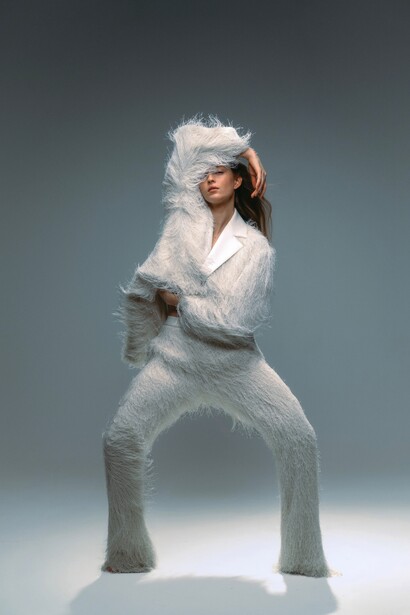
I usually produce my own shoots, so I don't have a producer or someone helping with the production side. I really like having my hands in every part of the process, from choosing the talent to picking the location, timing, and everything else. For some reason, I find myself doing a lot of the pre-production process solo, but then I love working with a team when it comes to hair and makeup, styling, and wardrobe. I've found those people in a lot of different ways. Sometimes it's through friends who are already pursuing modeling or working in the space, and other times it's through Instagram, whether that's based on someone's work, their profile, or simply seeing that they're local to the area. It really depends on the scope of the photoshoot and who feels like the best fit! Of course, we're there to work, but I always want everyone to enjoy the day too. That energy matters a lot to me, especially when it comes to directing someone and working with people who are down to try out new things and be creative in the moment. I also think test shoots are one of the best ways to build a team. When there's no client or paid deliverable attached, you get to meet people and see how naturally you work together. That's usually how I end up hiring someone for a paid photoshoot later on, because I've already worked with them on a test shoot, and we were both happy with the results. If someone is trying to build their own team, I'd really encourage them to do more test shoots and get involved with their local creative community. It never hurts to send someone an email or DM with a clear vision for something you want to make. I think it also helps if you can offer a small budget if possible, or at least approach someone with a strong mood board so they can understand the direction right away. A lot of it comes down to finding people who are aligned, excited to create, and open to building something together that could grow into future opportunities.
Bio
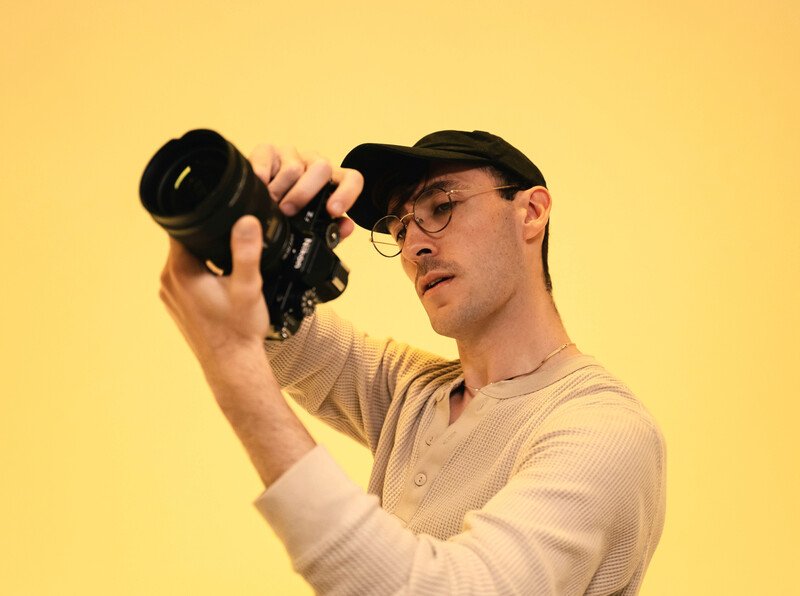
Brandon Woelfel is a Nikon Ambassador and New York-based portrait photographer known for his cinematic use of color, creative lighting, and layered post-production. He earned a BFA in Computer Art from the School of Visual Arts in 2016, where he began refining the painterly editing approach that would become a signature of his work. Woelfel was first introduced to photography through his grandfather's Nikon film cameras and lenses, which sparked years of experimentation with light, portraiture, and visual storytelling. He is the author of two photography books published by Thought Catalog, Luminescence (2017) and Ultraviolet (2020). Through his photography, books, and educational work, he has built a distinct visual style centered on color, atmosphere, and imaginative portraiture.
See more work by Woelfel:
Join the Fstoppers community for free
-
Post comments and join in the discussions
-
Browse the site ad-free
-
Share your work and get featured in the community
-
Compete in the photo contests for fun and prizes
No comments yet