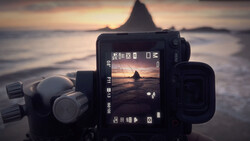
Seascapes reward nerve and timing. Olympic National Park delivered here, with fast-moving clouds, shifting tides, and sea stacks large enough to bend your sense of scale.
Coming to you from Michael Shainblum, this absorbing video walks through simple moves that raise your keeper rate on a volatile coast. Shainblum works ultra-wide with a Sony FE 12-24mm f/2.8 GM, shooting vertical frames to stretch foreground flow into the sea stacks. He brackets with quick darker frames to control the sun while timing 1/6 second exposures for texture in the water. He also watches the receding wave, not just the incoming one, to draw lines back into the stack instead of out of the frame. You get a clear sense of what to look for without turning the scene into a checklist.
The next sequence pushes the same idea with weather. Cloud shapes form a V and Shainblum plants himself exactly where that V points into the primary stack. He shows how a small move left or right kills the effect, so you start scanning the sky for geometry, not just light. In a tide channel, he keeps eyes up-range to spot sneaker sets and steps back the moment he sees a bulge forming. The advice is plain, field-tested, and easy to remember when your boots are filling with water.
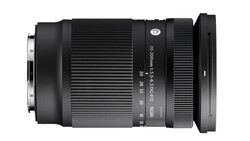
Midway, the pace shifts to textures. Driftwood becomes its own landscape. Shainblum switches to a versatile Tamron 28-200mm f/2.8-5.6 Di III RXD and works small patterns under soft light. He shoots five focus planes and stacks later, then converts to black and white when color distracts from the grain and swirl. You see the full loop: compose, capture insurance frames, decide in edit whether color serves the idea or muddies it. You also learn a quiet trick that saves a lot of images with shallow depth at mid-telephoto.
The cave segment is the spicy part. Shainblum brackets for dynamic range, then uses f/16 to pop a sunstar at the edge of the rock while the backlit splash lifts the midtones. It’s a potent combo, but the safety note is blunt. He recounts a 2014 hit from an unexpected wave that broke gear and pride and lays out a rule: keep a clear retreat and don’t trust only the foam at your feet. You're safest staying in dry areas (and you should still beware of the tide and weather changes). Water is incredibly powerful and can be dangerously unpredictable, so don't risk your safety.
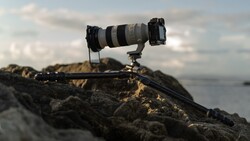
Gear details are kept simple so the craft stays front and center. Ultra-wide at 12-24mm for foreground flow and big shapes. A flexible midrange like 28-200mm when you hunt textures or compressed layers. Bracket with shutter speed to catch a clean sun and a textured sea. Aim for 1/6 second when you want streaks that still look like water, not fog. If highlights push too far, grab a darker frame for the sun and blend later. When clouds give you arrows, stand where they point rather than forcing symmetry. When they don’t, move until the sky supports the subject.
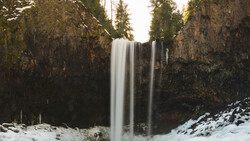
Editing choices are pragmatic. If color doesn’t help, convert to black and white to emphasize contrast and form. Use focus stacking software when a flat-looking subject still hides depth you’ll see at 100%. Reserve the soft, long exposures for scenes that benefit from calm. Keep the crisp shutter when the energy in the wave is the point. Treat forecasts as hints, not orders, and be present enough times that luck has a chance to find you. Check out the video above for the full rundown from Shainblum.
And if you really want to dive into landscape photography, check out our latest tutorial, "Photographing the World: Japan II - Discovering Hidden Gems with Elia Locardi!”


Join the Fstoppers community for free
-
Post comments and join in the discussions
-
Browse the site ad-free
-
Share your work and get featured in the community
-
Compete in the photo contests for fun and prizes
No comments yet