
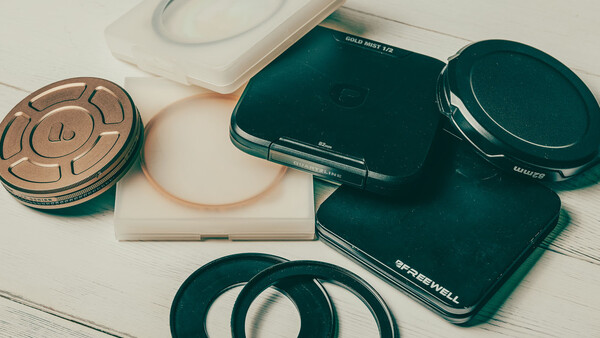
I should say "My Essential Lens Filters." I get a lot of people asking what I use, so I thought I’d share what they are. I have a few filters that go everywhere with me. Sometimes they reside in a backpack when on an outdoor adventure, or in a small shoulder bag when exploring urban environments. Because they all come in individual cases of varying shapes and sizes, I’ve recently become frustrated carrying them all—but we’ll get to the solutions that address this in a moment.
Essential Filters I Take Everywhere
Circular Polarizer
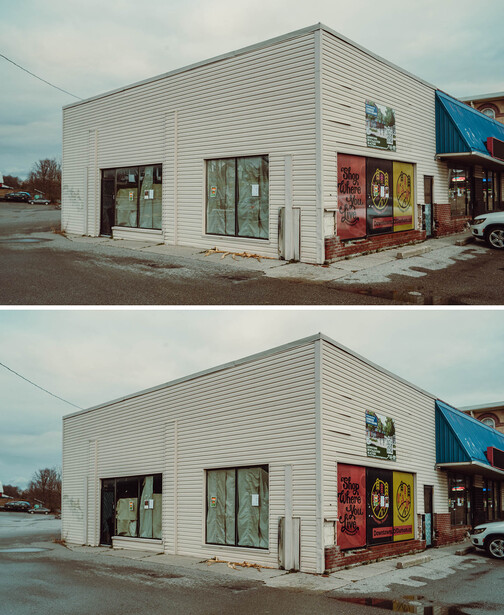
To take away glass reflections in urban environments, or water or foliage reflections in natural environments, a circular polarizer is an essential filter to have. If there’s only one filter you really should own, it’s a circular polarizer.
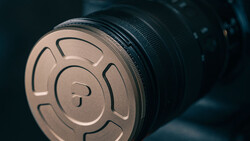
I use a PolarPro 135 Series Chroma Circular Polarizer.
Mist
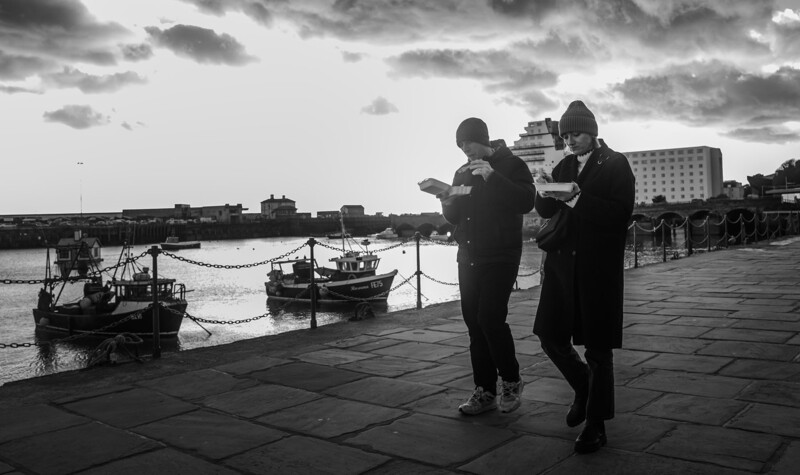
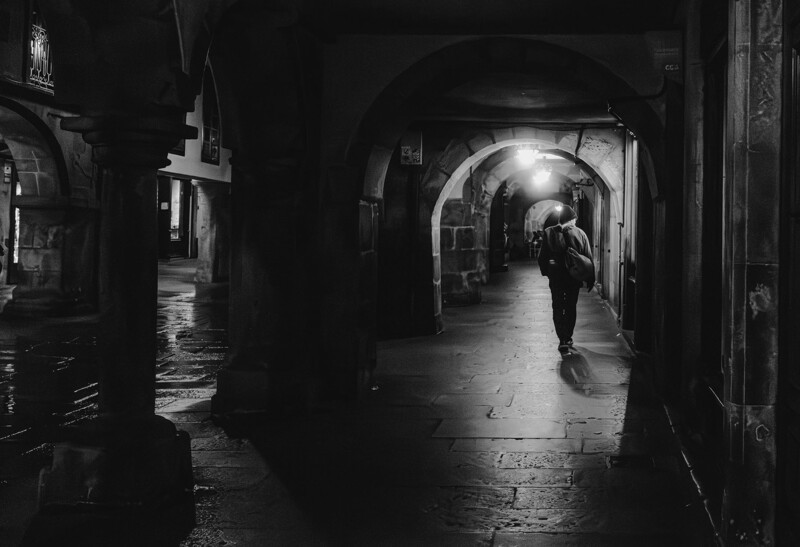
Yes, I know, many of you don’t see the point and have no interest in this one. However, I use a mist filter on all my lenses most of the time and swear by it. This is a personal preference, because I don’t like the sharp, clinical-looking photos that you get with modern super-sharp lenses on digital cameras. I’ll often take two—a quarter- and half-strength—especially if my shoot is at night or I’m shooting high-contrast scenes with lots of light.
My two favorite mist filters are a Formatt Hitech Firecrest Bloom Gold Filter half strength, and a PolarPro 135 Series Gold Mist quarter strength.
Variable Neutral Density
I have a 3–5-stop mist VND, which is useful for shooting moving water, or if I decide I want to grab some video footage. If you’re looking at shooting more video on your hybrid camera, this is an essential filter to own. I recommend a 2–5-stop as a starting point, and maybe something stronger if you like shooting fast lenses wide open in very strong sunlight.
I use a Freewell Mist Edition 2-5 stop VND (discontinued).
Magnetic Filter Kit
This type of ND-centric kit is essential for landscape photography and filmmaking. When I’m shooting landscapes—particularly coastal scenes—I often want to shoot long exposures. I find a small magnetic kit like the Freewell V2 Magnetic Hybrid Variable ND with Circular Polarizer Filter Kit (3 to 7-Stop) very useful.
The Problem With Carrying Multiple Filters
Whatever photography I’m doing, regardless of the bag, taking three or four filters in individual cases is a nuisance.
When I want to change filters, having to open one case to take the filter out while opening a second case in which to put back the filter coming off the lens is a pain, particularly when outside in inclement weather. I’ve been putting up with this messing about for a few years now, but recently decided I needed to find a better solution. After lots of research, I came up with three solutions worthy of consideration, all allowing me to ditch the annoying individual cases and keep all my filters in one neat, convenient package. You might find one of these solutions useful too.
I carry 3–4 filters for most of my photography, all 82mm. As I usually have 2–3 lenses of differing filter thread sizes, I’ll also have 2–3 step-down rings. So, here’s what I’ve found to solve my issue.
For Shoots With A Bigger Bag or Backpack: PolarPro Cube Filter Case
If I’m doing some landscape photography, I tend to take more gear than other genres. If there’s a body of water on my trip, I’ll add a magnetic filter kit with a choice of ND strengths along with my "regular" filters, in case I want to shoot long exposures.
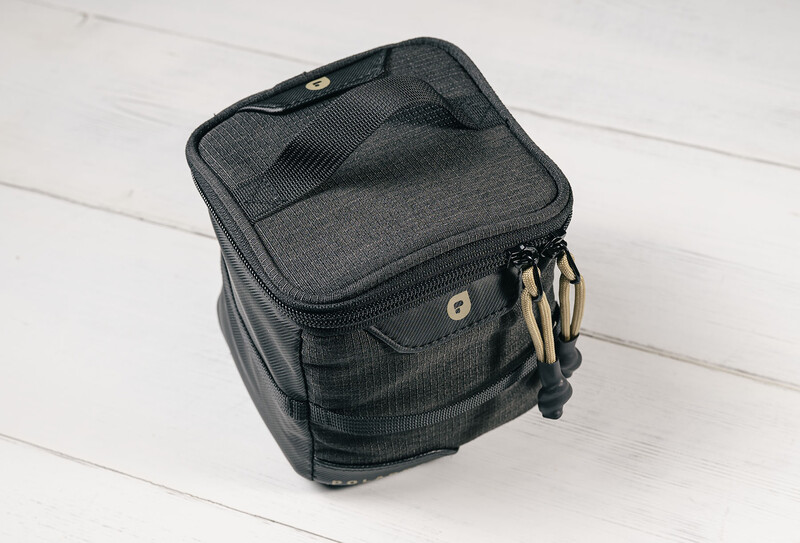
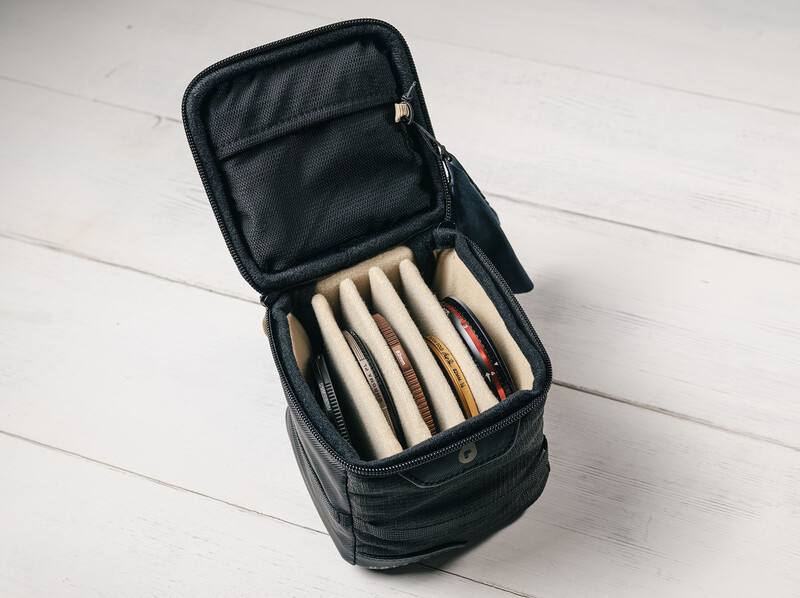
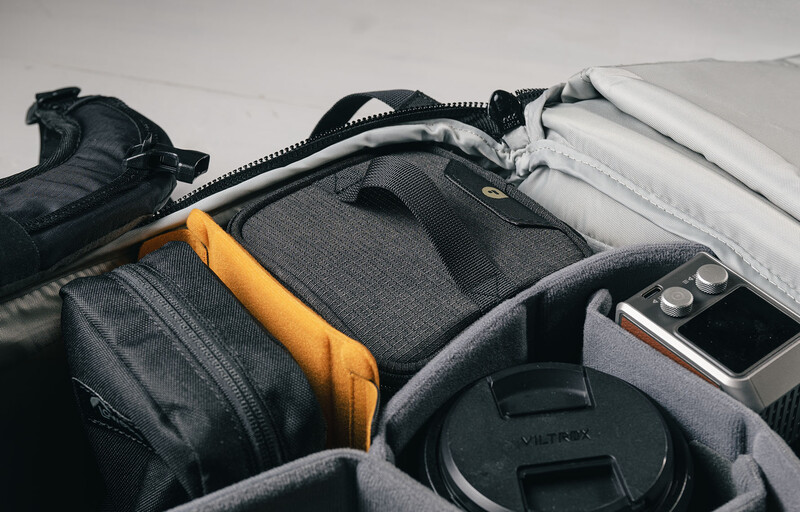
The best solution I’ve found is the Cube Filter Case from PolarPro. It’s, well, a cube. It’s perfect for a larger backpack. There’s plenty of room for three screw-on filters, plus my magnetic kit, and a couple of step-down rings.
Pros
- I like the easily visible light-colored soft fabric interior, and the built-in micro cloth for quick wipe downs.
- There’s a handy mesh top pocket on the inside of the lid to stash memory cards.
- The five grab handles allow you to attach the cube onto a waist or shoulder strap for quick, easy access on the move, or hang it from the underside of a tripod.
Cons
- The size and dimensions don’t lend themselves to a small bag for urban and travel photography.
This is a great solution for landscape and outdoor photographers, priced at $49.99.
For Shoots With a Smaller BackPack or Medium-Sized Shoulder Bag: WANDRD Lens Filter Case
For the majority of my travel and general photography, I carry 3–4 82mm screw-on filters and a couple of step-down rings and prefer a small backpack or larger shoulder bag. I’ve found a perfect solution is the Lens Filter Case from WANDRD. It has four sections, and comes in a range of colors. And the Sedona Orange version I have is rather good-looking!
Pros
- Another case with a light-colored soft interior.
- The large zipper pull—unique to WANDRD—is big and really functional.
- Two grab handles and a webbing loop allow for attaching to a backpack strap or bag exterior, saving you from opening your bag to grab it when you need to change filters.
Cons
- I find the outer reinforced foam shell a little too thick and unnecessary, although the total thickness of the case isn’t too bad at approximately 2 inches.
This is a great solution for general everyday photography, and the variety of colors available—including a pastel purple option—is rather fun. It costs $44.00.


For Shoots With a Small Sling or Shoulder Bag: ThinkTank Filter Nest Mini
When doing street photography and one-day travel outings, I prefer to carry a small shoulder bag. I usually carry 2–3 filters—often smaller than 82 mm—and there’s limited space in a small bag. So the solution I’ve found for this scenario is the Filter Nest Mini from MindShift Gear.
It’s a small pouch with a Velcro fastening, holding four filters in its color-coded compartments. Like the other cases, it has a plush lining to prevent the filters from getting scratched, and it has a small grab handle on top. Despite its small size, it holds filters up to 82mm.


Pros
- The Nest Mini is very small. Even when loaded with four filters, it’s only approximately 1.5 inches thick, so it easily fits into the smallest bag.
- The color-coded compartments are a nice touch.
Cons
- Because it’s black, when it’s in a larger bag with a black interior in low light you have to look to find it. If the grab handle were a lighter, brighter color, that would help, but I’m really being nit-picky here.
This is a small, simple, basic, yet very functional filter holder. I’ve been using it for larger outdoor shoots too, when I don’t require a bulky magnetic filter system.
The Filter Nest Mini retails for $32.75.

Join the Fstoppers community for free
-
Post comments and join in the discussions
-
Browse the site ad-free
-
Share your work and get featured in the community
-
Compete in the photo contests for fun and prizes
11 Comments
Sorry, but I will never see the logic in shooting with modern, high end, clinical and very sharp lenses only to use a mist filter because you don't like sharp clinical photos. Personally I find the look of mist filters too obvious, especially the halo around light sources and it just feels too much like an obvious trend, much like orange and teal was.
I personally prefer to use 'character' lenses to soften my photos, plus you get all the lens' flaws (character), not just taking the edge off the sharpness. I'm also not a fan of high megapixel cameras as I don't want or need all the extra detail higher megapixels produce. Of course the only way to really avoid the clinical look of digital is to go back to film photography but I don't have the budget or patience for that any more.
I prefer to use vintage manual lenses, but there are times when I need a modern lens for the auto-focus ability, particularly when shooting video. I don't find a mist filter obvious at all for most situations.
Sorry, mine was just a personal opinion and not meant to sound like I'm dictating to anyone else. Of course modern lenses have the best autofocus if you need it and a mist filter will take the edge off the sharpness. I still think the effect, to me looks a bit too obvious when you see the halos around lights but the beauty with photography is we are all individuals with individual tastes/needs/wants/priorities and that should be celebrated. Of course my preference for ‘character’ lenses is simply my own personal preference in my quest to soften the clinical digital look.
Also, I myself carry around a couple of ND’s for times when I want to slow the shutter for some abstract effects.
Having an opinion about these things is a good thing! 👍
Agree but a person's tone is lost in a comment and can easily sound like someone is trying to dictate to others as if they are right and everyone else with a different opinion is wrong. I'm aware my comments sometimes could be misinterpreted as such a comment.
The biggest problem I have with filters is that three of the four lenses in my bag have different filter sizes. The Sigma 14-24 F2.8 does not have a filter ring. So while I enjoy the creative possibilities, remembering which filters I have that go with which lenses is sort of a nuisance. Your mention of a step-down ring was not something I had heard of. Would be nice to have one type of filter that could be used on all of my lenses. My problem is not how to organize my filters, but how to minimize the number that I need to have with me.
I have 82mm filter Ed, and 2-3 other lenses with filter thread sizes, so step-down rings allow me to use the one filter on all my lenses. It's a great system and keeps costs down.
I usually carry only 3 filters with me in a small filter pouch and have one on the lens most of the time (Tiffen Black ProMist 1/8) and have step rings on all my lenses taking them all to 77mm...the other two are a polarizer and a variable ND. I do have one 82mm lens (Canon 16-35mm f2.8 L) but I rarely take my Canon 6Dmkii out these days and if I do I bought a 82mm ProMist 1/8 for it. I prefer to carry my much smaller and lighter Fuji X S10 when I'm out and about so my 3 lenses for it all have rings to take them up to 77mm. My only gripe about using the step rings is not being able to put the native lens hoods on.
Thank you for the article, Simon. I was thinking of getting the MindShift Nest Mini and then read that it isn't completely sealed at the bottom of each filter compartment. The concern was that debris can get into the case and potentially scratch your filters if you drop the case outdoors. What has your experience been?
I use the MindShift Nest Mini nicely tucked away in a small shoulder bag / sling mostly, for street and travel photography, so debris is pretty much non-existent. I can see where you might be concerned for something like landscape photography, particularly on the coast or in the desert. The other two options may be best for that scenario.
I'm usually doing portrait photography on or near the beach or in other outdoor areas. My camera bag is often zipped open on the ground during a shoot, so I appreciate your thoughts on looking for other options. Thanks again, Simon, I appreciate it.