Choosing between Nikon’s three current 35mm Z-mount primes can quietly change how your portraits look, even when the framing stays the same. If you shoot people, travel, or weddings, the wrong 35mm can leave you fighting background texture, missed focus, or a bag that feels heavier every hour.
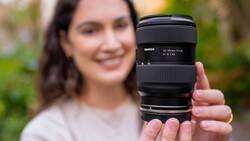
Coming to you from Julia Trotti, this methodical video puts three lenses through the same kind of portrait session on the Nikon Z8: the NIKKOR Z 35mm f/1.8 S, the NIKKOR Z 35mm f/1.4, and the NIKKOR Z 35mm f/1.2 S. The first thing Trotti does is get practical about size and handling, not just sharpness charts. You see the weight spread in plain terms: 370 g, 415 g, then roughly 1 kg, which is not a rounding error once you add a body and a second lens. Filter sizes matter too, because stepping up to 82mm on the f/1.2 changes what your existing filters even fit. Trotti also points out the control differences that affect muscle memory, like which lenses have an aperture ring, an AF/MF switch, and extra function buttons.
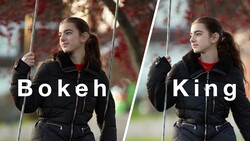
Then the video gets into the part most people actually care about: how each lens draws the background when you’re shooting outdoors with messy trees, highlights, and layered depth. The f/1.2 gives the strongest subject separation, and you can see it even in medium shots where the background would normally start competing. The f/1.8 lands in a clean middle look, with smoother blur than the f/1.4, but less separation than the f/1.2. The f/1.4 is the wild card, and Trotti doesn’t pretend otherwise: it can produce a “soap bubble” style blur that looks bold in some settings and distracting in others. If you’ve ever looked at a set and thought, “Why does the background feel busy when the person is in focus,” this is where you'll want to pay attention.
Trotti also calls out a detail that trips people up when they shop by aperture alone: wider doesn’t automatically mean better across a whole lineup anymore. In these three, the f/1.4 comes off as the least defined wide open, while the f/1.8 holds onto crisp detail better than you might expect. The f/1.2 stays the benchmark, especially if you like seeing fine texture in eyes, hair, and skin at f/1.2 without feeling like you’re gambling. Autofocus performance gets its own real-world check too, with the f/1.2 taking the lead, partly due to its dual-motor approach, and that shows up when depth of field is razor-thin and you still need the hit rate. Trotti mentions distortion and vignetting being well controlled across the set, then slips in another useful catch: fringing can pop up more on the f/1.8 and f/1.4, while the f/1.2 handles it best. Check out the video above for the full rundown from Trotti.

Join the Fstoppers community for free
-
Post comments and join in the discussions
-
Browse the site ad-free
-
Share your work and get featured in the community
-
Compete in the photo contests for fun and prizes
1 Comment
Why keep only one? For event work, I use a small and light Samyang AF 75mm f1.8 in better-lit venues where I can rely more on zooms and a bigger, heavier Samyang AF 85mm f1.4 MkII in dimmer ones where I really need bright primes.