
For photographers seeking the perfect balance between in-camera creativity and personal style, the quest often leads to a crossroads. On one hand, you have the instant gratification of in-camera film simulations offered by brands like Fujifilm, which deliver stunning, ready-to-share images straight out of the camera. On the other hand, there's the professional's need for a consistent, personalized aesthetic, often achieved through meticulous post-processing and custom presets.
For years, these two approaches have seemed mutually exclusive. However, a closer look at Nikon's latest innovations reveals a feature that could bridge this gap and revolutionize the way photographers create. While perhaps overlooked by many, Nikon has introduced a powerful and unique system that, with a few key enhancements, could be something truly special. This is the story of Nikon Image Recipes, a feature that goes beyond simple presets and offers a glimpse into the future of photographic creativity. The problem is that very few people know it exists. And finding details and resources on Nikon's own website can be difficult to do. With no dedicated pages, it can be found hiding within the Nikon Imaging Cloud page.
Beyond Film Simulations: The Nikon Philosophy
While Fuji's film simulations are rooted in a rich history of classic film stocks, Nikon's approach is distinctly different. The company, which doesn't have its own legacy of film emulsions, has opted for a more open and adaptable system. Instead of mimicking specific films, Nikon offers a collection of generic and stylized presets with names like "Neutral," "Vivid," "Portrait," and even more evocative titles like "Morning" and "Sunday." While these built-in options may seem a bit standard, their true potential lies in what they enable.
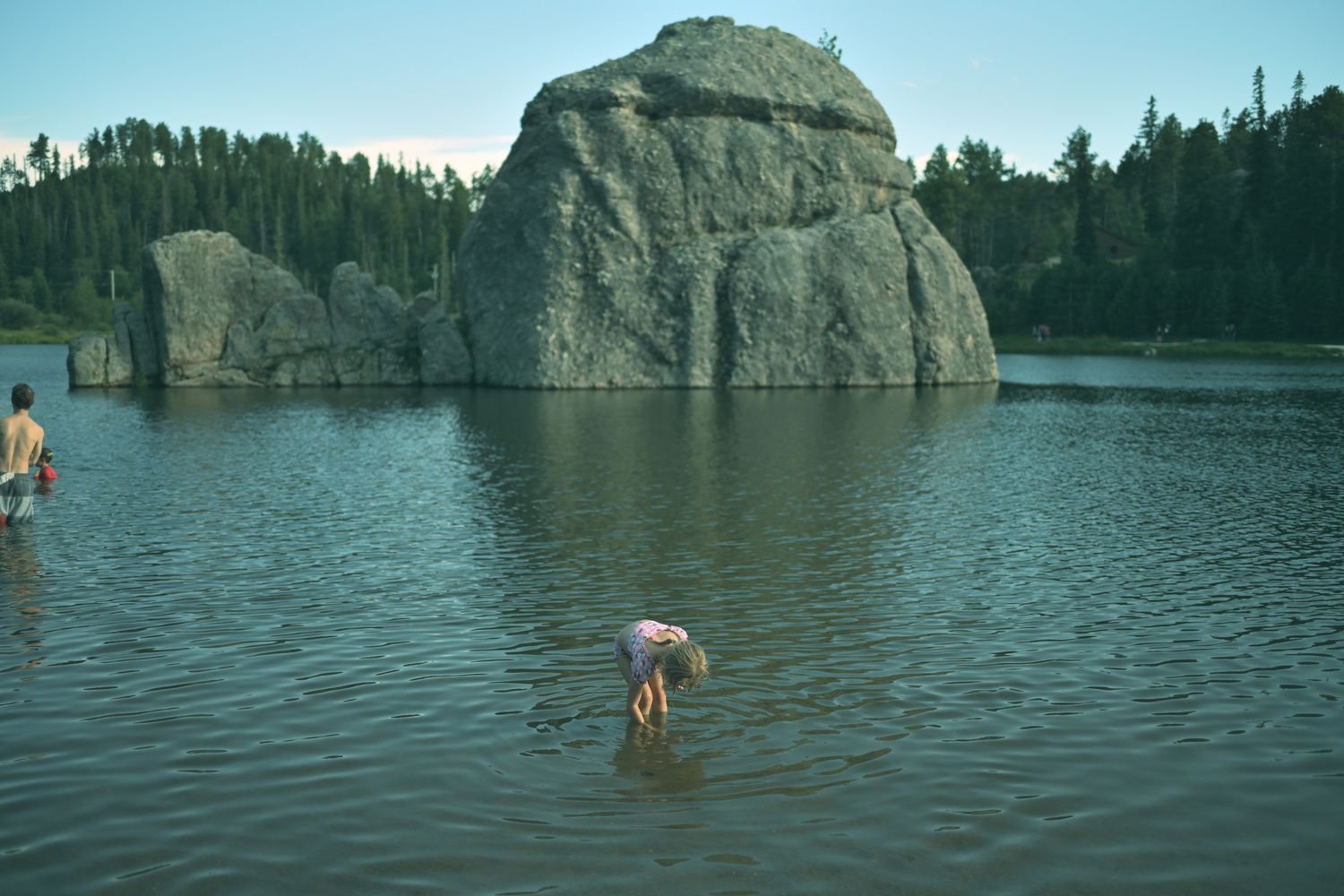







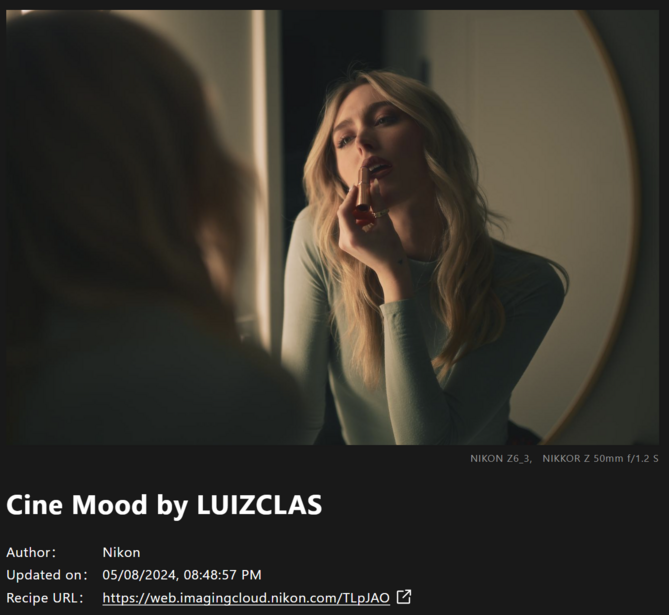
The genius of Nikon's system is its focus on community and customization. The company has curated a list of recipes developed by select Nikon ambassadors and brand partners. Users can explore this collection and download a photographer's specific recipe directly to their camera. This provides a valuable starting point, allowing photographers to experiment with professional-grade looks without the need for extensive post-processing knowledge.

Same image with my own personal style applied
NX Studio: The Hub of Creativity
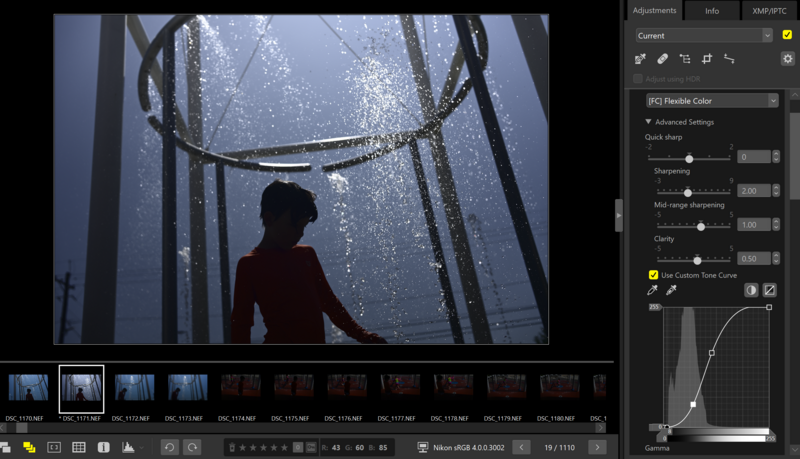
The real power of Nikon's system is unleashed through the NX Studio software. This is where the magic truly happens. Unlike other systems that require tedious in-camera menu navigation, NX Studio provides a comprehensive and user-friendly platform for managing and creating recipes. Photographers can import one of the brand ambassador presets and then fine-tune it to their liking. This level of control allows for a greater degree of personalization than is typically possible with in-camera simulations.
Even more impressive is the ability to build a recipe from the ground up within NX Studio. Instead of fumbling with tiny sliders on a small camera screen, users can utilize the larger interface of their computer to craft a look that perfectly aligns with their personal style. This approach empowers photographers to create a preset that is not a mere imitation of a film stock, but a true reflection of their unique artistic vision.
A Recipe for Improvement: The Path to Perfection
While the foundation of Nikon's recipe system is brilliant, there are several key areas where it could be improved to reach its full potential. The first, and perhaps most significant, hurdle is the user experience. The current process for loading recipes from the internet to the camera is unnecessarily complex. It involves a convoluted series of steps between the camera, a website, and back again, which can be a significant barrier for the average user. For a feature designed to appeal to the "consumer photographer," simplicity is paramount. Nikon needs to streamline this process and make it as intuitive as possible.
Another major area for improvement is the platform itself. The current system relies on a website, which, while functional, lacks the accessibility and discoverability of a dedicated mobile application. A native Nikon app for recipes could revolutionize the feature. Such an app could:
- Streamline Workflow: Provide a single, easy-to-use interface for browsing, downloading, and managing recipes.
- Enhance Discoverability: Act as a centralized hub to showcase the feature, ensuring that users are aware of its existence and potential.
- Foster a Community: Create a social media-like platform where photographers can share their images and the recipes used to create them. Imagine scrolling through an endless feed of beautiful photos and, with a single tap, downloading the exact recipe that produced that look. This would not only provide a wealth of new options for users but also give creators a powerful platform to showcase their work.
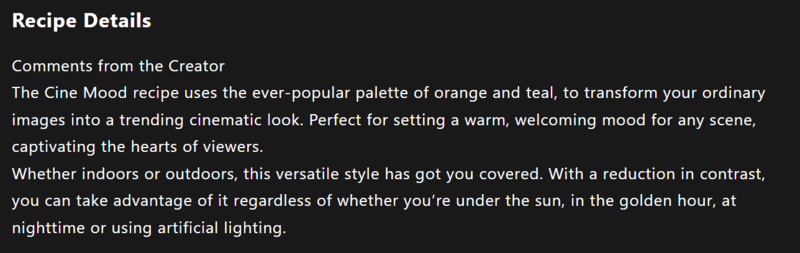
- Showcase Talent: An app could provide a more robust way to present the work of recipe creators. The current system shows only one example image per creator with no "before and after" comparison, making it difficult to understand the effect of the recipe. An app could display a gallery of images, complete with detailed descriptions and even linked creator profiles, giving users a better sense of a recipe's unique character.
- Enable Monetization: Nikon could create a marketplace within the app where photographers could sell their custom recipes. This would not only provide a new revenue stream for creators but also generate additional income for Nikon through a small processing fee.
Elevating the Creation Process: The NX Studio Wishlist
The ability to create recipes from scratch in NX Studio is a powerful tool, but it is currently limited to a basic set of adjustments. To truly unlock the creative potential of the system, Nikon should expand the functionality of the editing panel.
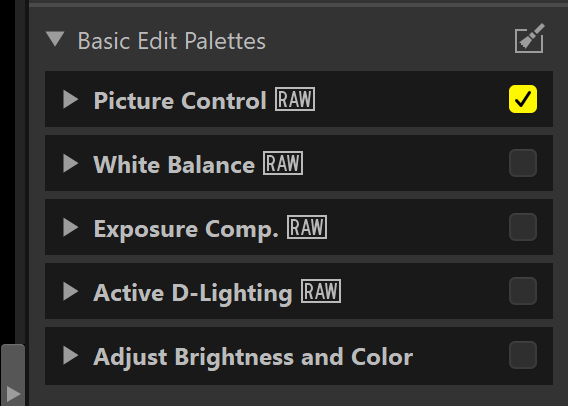
- Curves and Color Control: The current system lacks the ability to adjust the individual red, green, and blue curves, and you are instead limited to the standard tone curve. Adding these controls would provide an unparalleled level of precision and allow for the creation of more complex and nuanced looks.
- LUT and Profile Support: The inclusion of custom camera profiles or LUTs would be a game-changer. This would allow photographers to apply highly specific color grades and styles directly to their recipes, further blurring the line between in-camera creativity and professional post-processing.
- Grain and Texture: While not for everyone, the ability to add realistic grain to a recipe is a popular feature, especially among those who appreciate a filmic aesthetic. Adding this option would make Nikon's system even more appealing to a broader range of photographers. (This feature has recently been announced, but is not yet available.)
The Dream Partnership: A Seamless Professional Workflow
The ultimate goal for a professional photographer is a seamless workflow that minimizes time spent in post-production. While it may be a long shot, a partnership between Nikon and a company like Adobe could be a revolutionary step. The ability to export a custom Lightroom preset and import it directly into a Nikon camera would be the ultimate convenience.
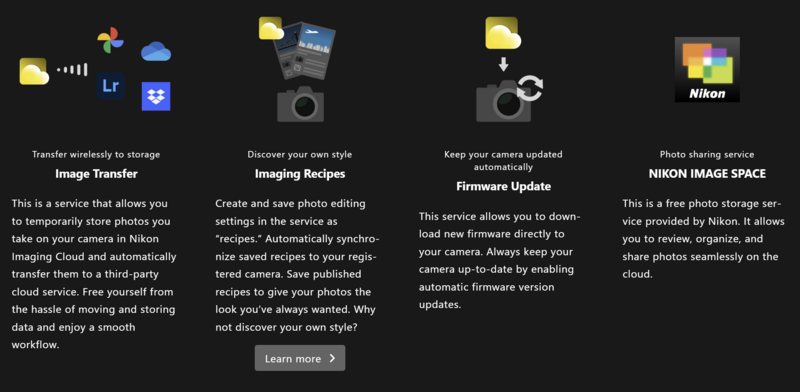
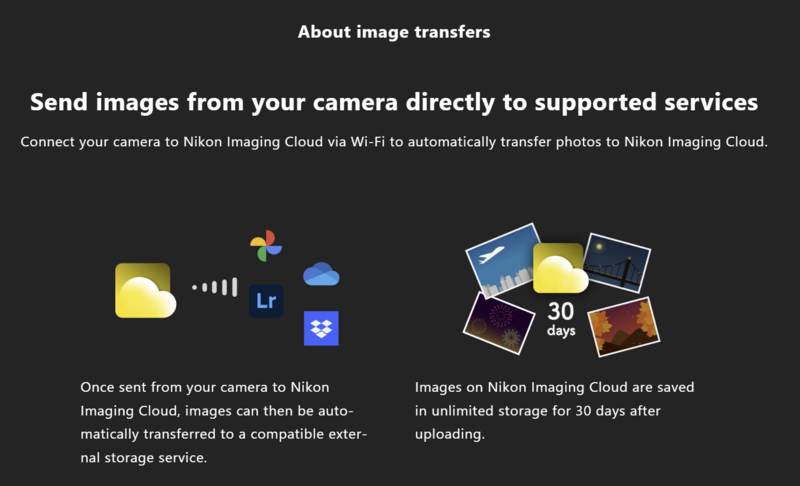
Imagine a professional photographer shooting a wedding or a portrait session. With Nikon's cloud support, they could have their images automatically uploaded directly from their camera to a cloud drive. And with their custom preset applied in-camera, the selected images would be ready to share with clients or upload to an online gallery almost instantaneously, all while maintaining their unique, professional style. This would not only save a tremendous amount of time but also give photographers an unprecedented level of control and speed.
Conclusion: A Feature on the Cusp of Greatness
Nikon's Image Recipe system is more than just a novelty; it's a testament to the company's forward-thinking approach to photographic technology. While it has its flaws, the potential is undeniable. By simplifying the user experience, building a dedicated app, and expanding the creative controls in NX Studio, Nikon could transform this feature from a hidden gem into a cornerstone of its camera ecosystem. This system has the potential to appeal to both casual photographers seeking instant gratification and seasoned professionals who demand a consistent, personalized style. For a company with a strong legacy and a loyal user base, unlocking this potential could be the key to cementing its position as a leader in a rapidly evolving market.




Join the Fstoppers community for free
-
Post comments and join in the discussions
-
Browse the site ad-free
-
Share your work and get featured in the community
-
Compete in the photo contests for fun and prizes
14 Comments
Dear friend, a minor correction. Below the Basic edit palette is the palette Curves and Colors where you'll find the RGB color curves. The importend point is changes must be recorded. 😉
Yes, the RGB color curves are in the NX software, but they dont get saved to a recipe for transfer to the camera, which is what I'm asking for. Only adjustments within the basic panel get saved to recipe✌️
I’m an open source kind of guy, do we really have to monetize absolutely everything? Even specific arrangements of sliders?
𝘣𝘜𝘺 𝘮𝘠 𝘗𝘳𝘌𝘴𝘌𝘵 𝘱𝘈𝘤𝘒𝘴!!
like… nah.
If you want to buy a preset pack, buy one. If you don't want to buy a preset pack, don't buy one. Simple as that. But if someone puts a ton of work into making/developing something and you just want it to be "open source" then that seems like the bigger issue to me 🤗
I’ve got no shade for you but I disagree with you on this idea.
I don’t want to denigrate the effort people put into their presets, but let’s call a spade a spade: in the grand scheme of work that is hard/skilled/creative it doesn’t score that high.
I would suggest that injecting the profit motive into things at the level of Nikon’s in-house system is a shortcut to spoiling the “community” aspect of a film simulation community, and perhaps the entire endeavour itself. Paywalls and micro transactions invariably lead to less accessibility, thus less uptake, and makes such a feature less of a competitive advantage for the manufacturer if their competitors foster an open alternative.
Also, consider: you don’t own “your” recipe/preset/LUT, nor should you. It’s an arrangement of sliders in someone else’s software. Anyone can recreate or outright copy said arrangement and provide it for free or sell it themselves. Heck, if they’re a better marketer than you they could out-compete you.
Not everything needs to be a revenue stream for a handful of photographers. We bought a camera, the company has a recipe feature, let us enjoy it without trying to bend it into another way to make a buck.
Besides, nothing’s stopping anyone from selling their “recipes” on their own websites like any other preset, so that “feature” already exists. The difference of course is that Nikon providing an in-house marketplace is better for the people doing the selling. But not really for everyone else.
I signed up just to say thanks for a bit of much needed sanity. Frankly, the presets I’ve paid for tend to be image specific, the author's image. Applying them to my images simply is an additional step in my usual post processing.
I agree with this. It would definitely be more useful for it all to be more community driven. As well as more enjoyable. I just think it's more likely for brands to invest in such features if they can put a profit behind their investment into the development. Maybe instead of selling recipes, it would be paying for access, or one time app purchase. I'm not sure what the answer is. But if nikon can make money on it, it's more likely for the to invest in it. Even if they are simply breaking even.
The potential to "monetize" is part of the pitch for every new technology. No guarantee it will actually happen. Remember ring tones?
I doubt it would ever be monetized, but a dissenting viewpoint still needs to be expressed otherwise “monetize it” is the singular idea sitting there if/when somebody at Nikon is tasked with collating ideas and feedback that are floating out there in the market.
It’s not exactly surprising that people who pay their bills through a patchwork of photography-related income streams would see an opportunity to engineer yet another trickle of income from this type of feature. They would see it from their point of view as someone who monetizes photography. It’s a hammer thinking “wouldn’t it be good if that could be turned into a nail…”
Thing is, the majority of people with a Zf (or any other camera) slung over their shoulder aren’t in that pipeline. They’re consumers. The recipe framework is a feature being used to market and sell the camera to a wider range of consumers. They’re trying to grab a bite of Fuji’s film-simulation pie and sway some people into buying a Nikon instead of a Fuji. Introducing a paywall immediately kneecaps the feature’s competitiveness, as no one likes being milked with micro transactions no matter how optional.
That’s what was at the heart of my pushback. Monetization is good for the people doing the selling, but those folks are minority stakeholders compared to the number of stakeholders who are the end users of the feature.
Alas, now I’ve redundantly explained my position.
Grain is coming with the next firmware update.
https://nikonpc.com fun to play around with. Instructions on the bottom of the site.
Thanks for this! I love how people come out of the woodwork to create stuff like this.
Perhaps I've missed how this is different than Fuji's approach. Fuji has X RAW Studio for both processing RAW to TIF / JPG and developing recipes.It has many publically available recipes from multiple sources. From when I shot with Fuji I have a list of 100+ recipes that I collected at no cost. Tone curve adjustments, white balance shift, also available depending on the generation of the camera body.
Nikon is offering a great product, I'm shooting with one! But I think most of what you've highlighted is also available from another manufacturer.
TLDR;
Nikon isn't special - Fuji is.
;-)