

Global shutters have long been considered the holy grail of professional cameras, and they're now here. Do you really need one, though?
The "No Free Lunch" Rule
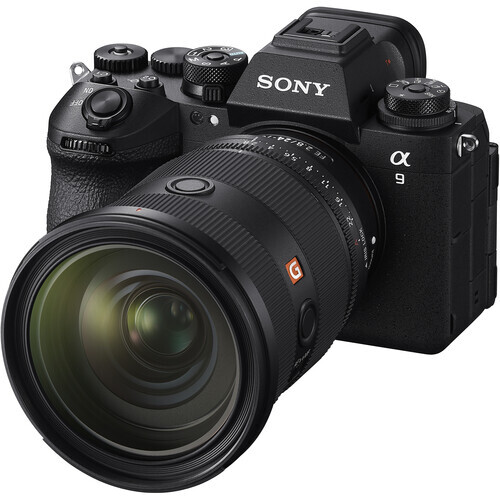
The photography world has spent the last year in a state of collective excitement over global shutter technology, and I understand the appeal. When Sony announced the Sony a9 III with its global shutter sensor, the promise was intoxicating: shoot at any shutter speed with zero rolling shutter distortion, fire off 120 frames per second without any of the warping that plagues fast-moving subjects, and essentially eliminate the partial-frame banding that appears under artificial lighting. Comment sections erupted with proclamations that rolling shutter was dead, that this was the future, and that anyone still shooting with a traditional sensor was basically using a daguerreotype.
The Global Shutter Tax
The engineering challenge of a global shutter sensor is deceptively simple to describe and extraordinarily difficult to solve. A rolling shutter sensor reads each row of pixels sequentially, which means the top of your frame is captured a few milliseconds before the bottom. This creates distortion when subjects move quickly or when you pan the camera, but it also means each photosite can be optimized purely for light gathering. A global shutter sensor, by contrast, must capture every single pixel simultaneously and then hold that charge while the data is read out row by row. This requires additional transistors and circuitry within each pixel site, and those components take up physical space that would otherwise be dedicated to collecting photons.

The second major compromise involves dynamic range, and this is where the global shutter tax becomes impossible to ignore. Current testing suggests that global shutter sensors give up roughly one stop of maximum dynamic range compared to the best rolling shutter stacked sensors, primarily because they cannot operate at low base ISOs. For context, dynamic range is what allows you to recover shadow detail in an underexposed foreground while preserving highlight information in a bright sky. It is the reason modern cameras can produce usable images from exposures that would have been unrecoverable just a decade ago. Losing a stop of dynamic range means you will see noise creep into your shadows sooner, highlights will clip more readily, and your overall editing latitude shrinks noticeably. The photographers who benefit most from expansive dynamic range (landscape shooters, wedding photographers working in high-contrast reception venues, anyone doing HDR work) are precisely the photographers who gain almost nothing from global shutter technology.
Who Is Wasting Money
Let me be direct about this: if you primarily shoot landscapes, you are spending roughly six thousand dollars on a camera that will make your images worse. The entire value proposition of global shutter centers on eliminating motion artifacts, but rocks do not move. Trees do not sprint across your frame, and if yours do, you have bigger problems than sensor technology. Waterfalls do not suffer from rolling shutter distortion because you are using a tripod and a two-second exposure anyway. What landscape photographers actually need is maximum dynamic range to capture the full tonal range of a sunrise, low base ISO to enable long exposures without stacking ND filters, high resolution for large prints and cropping flexibility, and excellent color science for rendering natural scenes. Global shutter delivers the opposite on the first two counts, offers only 24 megapixels on the third (compared to 45+ on alternatives at similar price points), and offers no advantage on the fourth. When you photograph a mountain reflected in a still lake, the a9 III's ability to freeze a tennis serve at 1/80,000th of a second is entirely irrelevant (unless you have particularly aggressive fish), but the reduced shadow recovery and higher noise floor will show up in every single image you process. And if you genuinely need both resolution and speed for wildlife work, cameras like the Nikon Z8 or Sony a1 give you 45+ megapixels with sensor readouts fast enough to freeze a bird's wings without sacrificing the dynamic range you need for the sunset behind it.

The Photographers Who Actually Benefit
None of this is to suggest that global shutter is a gimmick or that the technology has no legitimate applications. In fact, it's probably the future. But let's talk about now, where it's a niche and expensive technology with real tradeoffs. If you have ever tried to photograph a golf swing and ended up with a club that looks like it was made of wet spaghetti, global shutter is genuinely for you. Sports photographers shooting tennis, golf swings, or motorsports at high shutter speeds will genuinely benefit from the elimination of rolling shutter artifacts. Action photographers who pan with fast-moving subjects will see cleaner results without the geometric distortion that plagues rolling shutter panning shots. Birds-in-flight photographers and photojournalists working under nasty arena or stadium lighting will find the technology solves problems they actually encounter. Anyone shooting under flickering LED or fluorescent lighting (concert photographers, indoor sports shooters, journalists working in convention centers) will appreciate the elimination of partial-frame banding without having to match their shutter speed to the light frequency.

Video shooters also have a stronger case than still photographers. Rolling shutter artifacts (the dreaded "jello effect") are significantly more noticeable and ruinous in video than in stills because they occur during panning, which is far more common when you are recording motion. If you are a hybrid shooter doing handheld work or VFX tracking, the global shutter advantage becomes more compelling.
These are real, meaningful improvements for photographers and videographers working in these specific niches.
But here is the honest assessment: even with this expanded list of legitimate use cases, we are still talking about a minority of photographers. The remaining majority are buying into hype without understanding that they are trading image quality fundamentals for a solution to a problem they do not actually have. Before you commit to a global shutter system, ask yourself a simple question: in your last thousand photographs, how many were genuinely compromised by rolling shutter artifacts? If the answer is fewer than a handful, you are likely better served by a camera that excels at the fundamentals rather than one that solves an edge case while introducing compromises you will encounter in every single frame.
Key Takeaways
-
Global shutter sensors pay a "physics tax": higher base ISO (250 vs 100) and roughly one stop less maximum dynamic range than the best rolling shutter alternatives.
-
Landscape photographers gain almost nothing from global shutter while losing shadow recovery, highlight headroom, and resolution. Cameras like the Nikon Z8 or Sony a1 offer fast readouts without the image quality penalty.
-
Wedding photographers working in low light will see slightly more noise compared to cameras like the Canon R6 III or Sony a7 V, and the gap is largest in maximum dynamic range at base ISO where it matters most for recovery.
-
Global shutter genuinely benefits sports photographers (no more spaghetti golf clubs), commercial portrait shooters (flash sync at 1/80,000 s without HSS penalties), and video shooters (no jello effect on pans).
-
Before buying, ask yourself: how many of your last thousand photos were ruined by rolling shutter? If the answer is close to zero, you are paying for a solution to a problem you do not have.





Join the Fstoppers community for free
-
Post comments and join in the discussions
-
Browse the site ad-free
-
Share your work and get featured in the community
-
Compete in the photo contests for fun and prizes
2 Comments
For the last 2 years the marketing mantra by camera makers and corresponding enthusiasts (and maybe even Fstoppers) is: speed at any price. And that includes overlooking image quality, the forgotten feature. Let's all shoot with a 24 mp max sensor with no rolling shutter, maybe an ASP-C or M4/3 sensor, 30+ continuous FPS, and 8k 60 FPS (or whatever) video. Photographers need not apply.
Flash output at 1/80,000th reminds me of the times when Paul Buff claimed his product as having the shortest flash duration for photography strobes. What he never mentioned is that at 400ws the very short durations were virtually unpractical to use.
I agree there is use for global shutter and even for mirrorless but there are also trade offs. Marketing traps will always exist however.
Also, Hyper Sync (not HSS) works very similarly (resulting effect on images) to global shutter regarding camera specific flash sync limitations. Only it's been available for 15years and doesn't restrain low ISO like the 250 with Sony. HS and global both allow 100% use of the light device output be it 50ws 6400ws or what else. They both have draw back but they certainly work for anyone who takes the time to learn both positive and limitative aspect.