
There is a specific feeling you get when you pick up a piece of technology that truly feels like a "masterpiece." It is dense, tactile, and seemingly crafted without compromise. In the world of digital photography, few devices evoke this feeling quite like the Sony RX1R series.
When I hold the Sony RX1R III, I am holding what is arguably the most beautiful camera Sony makes. It is a marvel of miniaturization, and it's currently the smallest, most powerful full frame camera on the market today. It delivers image quality that rivals medium format systems in a package you can slide into a jacket pocket.
But I’m going to be honest with you: this camera frustrates me.
My frustration doesn’t stem from the camera being "bad." Far from it. My frustration comes from the realization that this camera just barely missed the mark on being perfect. It feels like a puzzle with one piece forced in from the wrong box. And the tragedy of the RX1R III is that the perfect version—the camera that should have been—was right there within their reach.

The Heart of the Problem: The 61-Megapixel Trap
The core of my argument lies in the sensor. Sony chose to equip the RX1R III with their renowned 61-megapixel sensor. On paper, this sounds like a victory for consumers. We get incredible resolution, massive dynamic range, and the ability to crop heavily in post-production. With a fixed-lens camera, that cropability is genuinely useful, allowing you to turn your 35mm lens into a 50mm or 70mm equivalent with the press of a button.
However, in practice, this sensor brought a lot of baggage that this specific form factor simply didn't need.
The fundamental issue is speed. The readout speed of this 61 MP sensor is, to put it politely, not great. While it creates stunning still images, the slow readout wreaks havoc on the camera's usability in other areas. The most obvious victim is the video capability and the use of the electronic shutter. The rolling shutter on the RX1R III is severe. If you are panning or have a fast-moving subject, the entire world turns into Jell-O. You also get horrible banding under certain lighting conditions (again, when using the electronic shutter).

For a camera at this price point, that performance is hard to justify. But it becomes even harder to justify when you look at what Sony released just a short time later: the Sony a7 V.
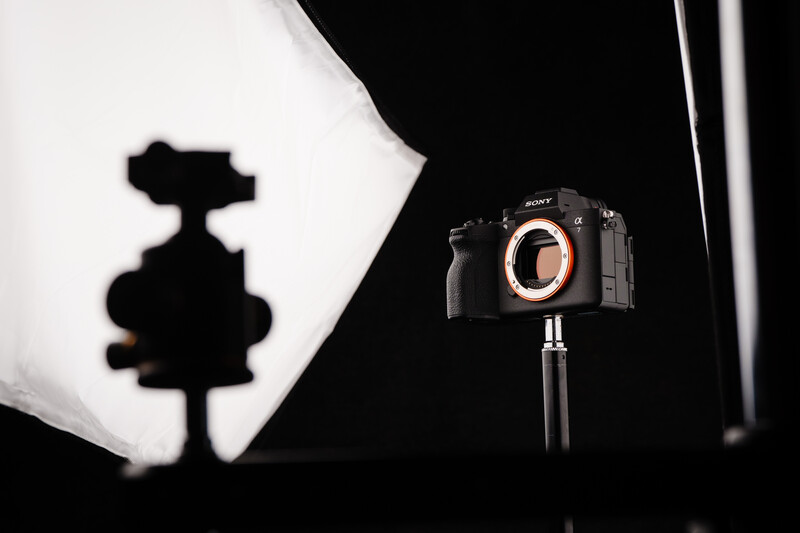
The a7 V launched with a brand-new, partially stacked sensor. It offers a modest but sufficient 33 megapixels, but more importantly, it boasts incredibly fast readout speeds for a budget-level sensor. If Sony had simply waited and synchronized the development cycles just slightly differently, they could have put the a7 V’s sensor into the RX1R III body. And then we would be having a very different conversation today. We wouldn't be talking about rolling shutter or sluggish performance. We would be talking about a compact speed demon.

The Leaf Shutter Dilemma
For those unfamiliar, a leaf shutter is built inside the lens rather than in front of the sensor. It is incredibly quiet and allows for flash synchronization at high speeds, and it was a staple of the previous RX1 cameras. However, leaf shutters come with physical limitations.
On the RX1R III, you are capped on your maximum shutter speed depending on your aperture. For example, you cannot shoot at 1/4,000th of a second if you are shooting wide open at f/2. Instead, you have to have the camera set to f/5.6 or higher in order to achieve a 1/4,000th shutter speed. From there, if you want to take images at f/2, you are limited to 1/2,000th or slower. This is a physical constraint of the leaf shutter.
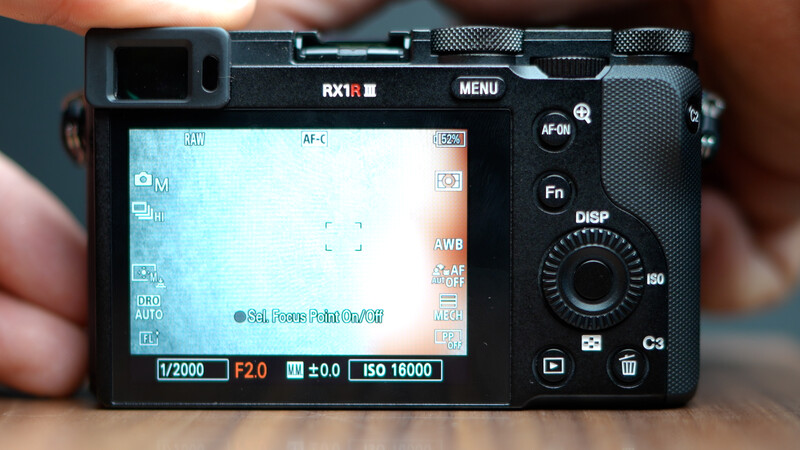
But the baggage gets heavier, because the biggest annoyance I’ve found is the strange exposure preview effect on the RX1R III. If you take photos with this camera stopped down to something like f/8, you get a distracting flickering effect in the viewfinder. The preview goes from light to dark, light to dark (example in the video). This happens because the camera has to fully open the aperture while focusing. Then the camera stops back down when focus is not active. And while I think this is a bug that could be fixed with a firmware update (fingers crossed), it's an annoyance that is mainly due to the limitations of the leaf shutter and the camera's lack of ability to darken the exposure as needed in order to represent an accurate exposure preview.
The Electronic Solution
Here is where the "Camera That Should Have Been" comes into focus. If the RX1R III had utilized the newer sensor from the a7 V, Sony could have made a radical design choice. They could have ditched the leaf shutter entirely. With the fast readout speeds of the a7 V’s partially stacked sensor, a mechanical shutter becomes largely redundant. We are seeing this shift across the industry, with flagship bodies moving toward fully electronic shutters. A fully electronic RX1R III would have solved every single one of the complaints listed above.

Without a leaf shutter, there would be no mechanical speed caps. You could shoot at 1/32,000th of a second at f/2 in broad daylight without needing an ND filter. There would also be no vibration from moving mechanisms, so you maintain the ability to handhold longer shutter speeds (since the RX1R III has no image stabilization). Most importantly, the shooting experience would be much more seamless.

Yes, removing the leaf shutter means losing high-speed flash sync, which is a beloved feature for a niche group of strobists. But for the vast majority of street and travel photographers who buy this camera, the benefits of a fully electronic, high-speed sensor far outweigh the loss of leaf-shutter flash sync.

The Tired Lens Design
Perhaps the most frustrating realization about the RX1R III is that the inclusion of the leaf shutter forced Sony to make compromises on the optics—specifically, the autofocus. Because while the lens on the RX1R III is visually stunning, carrying the prestigious Zeiss Sonnar T* branding, it is essentially the same optical design found on the Sony RX1R II—a camera that was released in 2015. So we are effectively paying a premium price in 2025 for a ten-year-old optical design. Why does this matter? Because lens technology has moved on.

The lens on this camera uses older step motors to move the glass elements. So while the focus speeds are still fast and accurate, compared to modern Sony lenses mounted to modern Sony bodies, the RX1R III just feels a bit tired. Which brings us back to the sensor. If Sony had used the a7 V sensor, they could have removed the leaf shutter mechanism, allowing them to design an entirely new lens. By removing the complex, expensive mechanical shutter assembly from inside the lens barrel, Sony would have freed up space and budget. They could have engineered a modern ZEISS Sonnar T* 35mm f/2 specifically for this body, utilizing modern linear focus motors.
The Economics of a Missed Opportunity
Finally, we have to talk about the price. Leaf shutter lenses are notoriously expensive to manufacture. They are complex mechanical watches stuffed inside a glass tube. High-resolution 61 MP sensors are also expensive flagship components.
The "Camera That Should Have Been" would likely have been cheaper to produce.
- The Sensor: The 33 MP partially stacked sensor of the a7 V is likely less expensive per unit than the high-resolution 61 MP chip.
- The Lens: A lens without a mechanical leaf shutter is simpler to build.
- The R&D: While developing a new lens costs money upfront, the long-term manufacturing savings of a simpler lens design—combined with the cheaper sensor—could have lowered the MSRP of this camera.
We could have had a faster, more responsive, video-capable camera with better autofocus—for less money.

Conclusion
I want to be clear. I bought the RX1R III with my own money, and I carry it everywhere. The images it produces are undeniably special. But loving a camera doesn't mean ignoring its flaws. It is a beautiful and powerful device while also being a little frustrating. Because every time I look at the new a7 V, I can’t help but think about the camera that could have been. Sony had all the pieces to make the perfect compact camera. They just put them together in the wrong order.




Join the Fstoppers community for free
-
Post comments and join in the discussions
-
Browse the site ad-free
-
Share your work and get featured in the community
-
Compete in the photo contests for fun and prizes
10 Comments
Considering the cost of the RX1R III and all of it's flaws, the A7CR just feels like a much better purchase.
For a lot of users, yes. I own both the a7CR and the RX1R III, and I'd much rather carry around the RX1R. Which is why I'd love to see it refined and perfected ✌️
I can't understand why they put a subpar lens on such a nice camera. Fatal flaw.
I honestly think it's because it would have cost too much for them to make a new leaf shutter design without their partnership with Zeiss. It's been a long time since we have gotten any lenses with a CZ label so I assume that relationship is no longer.
At that price level, well, it deserved a LOT better. EFCS maybe?
The really important flaw for we who have been using the RIi for street photography and waiting for an update is the removal of the flip down LCD screen!!!!
Just a question... Are there shooting settings with these ultra-high MP cameras that turn down the MegaPixels, so that it will save RAWs images with say 20, 35, 40mps? Because I could see even editing those big files to be a headache, and a slow enterprise. But there are times, I might want that power, for certain shots. My current camera is 31mp and lets say I want to jam a panorama together of 10 images... the software takes a bit of time... I couldn't imagine the computer nightmare trying to do that with 60mp images. Even my gaming computer, would probably still take an hours.
As an A7r5 user I can say that there is not a very noticeable difference between processing speeds in files from my OM-3 (21mp) and A7r5 (61mp). Slightly but nothing to be concerned about unless doing multi-pano images.
N.B. I'm using an old Apple M1 with 16GB.
The concern was brought up above about speed, I was also wondering if you were able in camera to change a setting and presto-chango... it was saving much smaller RAW files, and then faster. Like CRAW, only actually less pixels. Like in the olden Canon days, there was MRAW and SRAW, with less resolution. Would this help at all with any other issues mentioned above. However, if they don't even give you that option... But, yes I still stress editing would seem to be tough. I don't use Adobe like many of you do, I'm used to using Gimp (along with some supporting software), and when I hit a function like 'scale' or 'unified transform', and a really big file takes too much time... Normally for me, this only happens when I've pano'd files together, like you said, but if I had that camera, I could see that happening all the time, with files of 10000x6000 or so, which every 61mp file would be. Even though my PC has 64gb of the fastest ram, and 4ghz of processing speed.... Gimp just isn't the fastest tool of course. It's open source.
As an RX1R III owner, I agree with all of this. Great piece.