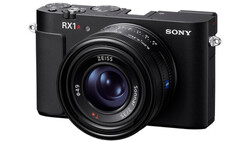
Sony just dropped a compact full frame camera with a 61-megapixel sensor and a fixed 35mm f/2 lens, priced at $5,100. Can a point-and-shoot, no matter how nice, really justify that cost?
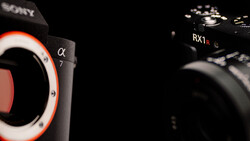
Coming to you from Jared Polin, this detailed video looks at the new Sony RX1R III. Sony waited nearly a decade to update the RX1R II, and while the new version brings the same high-end sensor and processor as the a7CR and a7R V, it also holds onto older design choices. You’re essentially paying for a compact body paired with tech you can already get in cheaper Sony cameras. The key difference is you’re locked into the built-in Zeiss 35mm f/2 lens, a lens first used more than 10 years ago. That decision raises questions about how modern the experience really feels, especially when you’re used to faster, quieter autofocus from Sony’s current lenses.
The RX1R III does improve some areas. The pop-up EVF is gone in favor of a built-in viewfinder, and the flat-back LCD feels sleeker even though it no longer tilts. Image quality is everything you’d expect from a 61-megapixel full frame sensor: sharp, detailed, and beautiful colors. But usability takes a hit. The grip is shallow, the included strap feels mismatched, and the new battery (actually an older NP-FW50) drops performance down to around 270 shots per charge. That’s not much, and in practice, Polin drained it quickly during a single baseball game shoot.
Key Specs
-
61 MP full frame BSI CMOS sensor
-
Fixed Zeiss 35mm f/2 lens
-
ISO 100–32,000 (manual), 100–12,800 (auto)
-
4K video up to 30 fps, Full HD up to 120 fps
-
2.95" fixed touchscreen LCD
-
Built-in EVF, 2.36M dots
-
5 fps continuous shooting
-
Leaf shutter, max 1/2,000 sec sync
-
No in-body stabilization
-
Single UHS-II SD card slot
-
NP-FW50 battery, approx. 270 shots
Where it really starts to hurt is when you realize what’s missing. There's no image stabilization in either the body or the lens, which means handheld shooting at slower speeds is risky. The shutter limitations also restrict how you use that f/2 aperture in bright light unless you jump to the electronic shutter, which brings rolling shutter issues. Add in pricey accessories ($300 for a thumb grip and $200 for a lens hood) and the overall cost becomes even harder to justify.
Polin’s comparison to the a7CR makes the problem clear. For $3,000, you get the same sensor, better ergonomics, stronger battery life, full lens flexibility, and in-body stabilization. The RX1R III only makes sense if you’re committed to the smallest possible package and don’t mind paying a premium for it. Check out the video above for the full rundown from Polin.


Join the Fstoppers community for free
-
Post comments and join in the discussions
-
Browse the site ad-free
-
Share your work and get featured in the community
-
Compete in the photo contests for fun and prizes
No comments yet