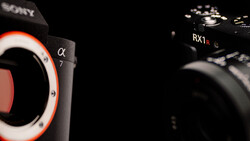
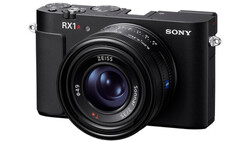
The Sony RX1R III isn’t your usual camera upgrade. With its fixed 35mm f/2 Zeiss lens that hasn’t changed in a decade, it raises an immediate question: is this a serious tool for your work or just a niche option for specific situations?
Coming to you from Anita Sadowska, this in-depth video puts the Sony RX1R III camera through real-world fashion shooting conditions. Sadowska takes it into the field in Malibu, testing whether the camera works for more than just street photography. She notes right away that while the built-in 35mm lens is limiting compared to zoom ranges like 24–200mm, the new AI autofocus tracking makes the camera surprisingly capable for editorial-style work. The 61-megapixel full frame sensor is also a big leap from the 42 megapixels of its predecessor, which gives you plenty of room for cropping.
Sadowska also points out that the fixed lens can be both a strength and a drawback. The sharpness is excellent, but in practice, you’ll feel boxed in if you’re used to different focal lengths. Battery life is another sticking point. During her shoot, she managed just under 2 hours and about 730 photos on a single charge, which is well below what most working shoots require. That means you’d need to carry multiple batteries if you plan on using it in a professional setting. Still, the focusing performance stood out as one of the camera’s strongest features, holding on to subjects even as they moved unpredictably.
Key Specs
-
Sensor Resolution: 61 Megapixels (9,504 x 6,336)
-
Image Sensor: 35.7 x 23.8 mm Full Frame BSI CMOS
-
Lens: Fixed 35mm f/2 Zeiss
-
ISO Range: 100–32,000 (manual), 100–12,800 (auto)
-
Shutter Speed: 1/8,000 to 30 seconds (electronic), 1/4,000 to 30 seconds (mechanical)
-
Continuous Shooting: Up to 5 fps at max resolution
-
Video: UHD 4K at up to 29.97 fps, 10-bit internal recording options
-
Media: Single SD UHS-II card slot
-
Display: 2.95" fixed touchscreen LCD
-
Weight: 1.0 lb (body only)
Beyond specs, Sadowska highlights some interesting additions. The camera includes new image profiles that simulate film looks, giving you more creative flexibility straight out of the camera. It can also handle macro shooting at close distances of around 20 cm, which is rare for a fixed-lens full frame camera. On the downside, the lack of a flip screen makes it less appealing for vlogging or self-portraits.
The real value of the RX1R III comes down to how you work. If you shoot fast-moving subjects or need varied focal lengths, the single-lens design won’t cut it. But if you like the idea of a compact, high-resolution camera with reliable autofocus and strong image quality, it has potential as a travel or secondary camera. Check out the video above for the full rundown from Sadowska.


Join the Fstoppers community for free
-
Post comments and join in the discussions
-
Browse the site ad-free
-
Share your work and get featured in the community
-
Compete in the photo contests for fun and prizes
3 Comments
Is Anita still a Sony ambassador? Might be good to take it with a grain of salt if so. She’s a fantastic photographer regardless.
Love the concept, but for that kind of money I'd want a sharp lens.
A A7Cr is a much better choice for a photographer. The same camera/lens combo leaves you with ~$2K for travel :-)