
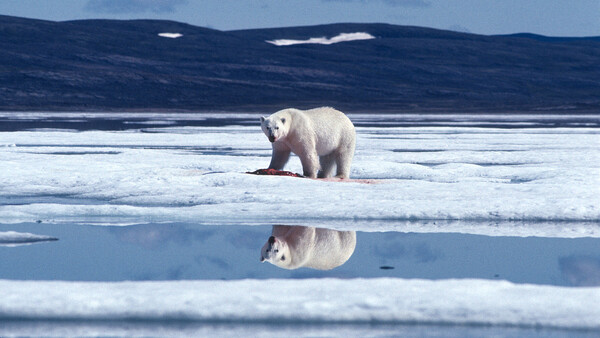
Over the last two decades, polar bears have become a popular symbol for climate change. To evaluate the threat, let's consider that the scientific community has reached a consensus: if we continue our current consumption and emission patterns, certain polar bear subpopulations will very likely reach a point of no return as early as the 2030s to 2040s. Subsequently, most polar bear populations will likely reach reproductive failure by the beginning of the next century. I work with the Western Hudson Bay polar bear population in Churchill, Canada, and we've seen a population decline of nearly 50% since the mid-1980s. To short-circuit the predictable debate, certainly many polar bear images have been taken out of context; however, these charismatic bears remain one of the most frequent tokens for the end of the world. Can photography help save these bears, and maybe ourselves, from such a precipitous slide toward extinction?
Polar Bear Biology and Their Environment
I spoke with Flavio Lehner, Chief Climate Scientist for Polar Bears International and Assistant Professor in Earth and Atmospheric Sciences at Cornell University. Dr. Lehner explained that polar bears require the high-caloric fat content from seals to maintain a healthy weight. But what does that have to do with photography and climate change?
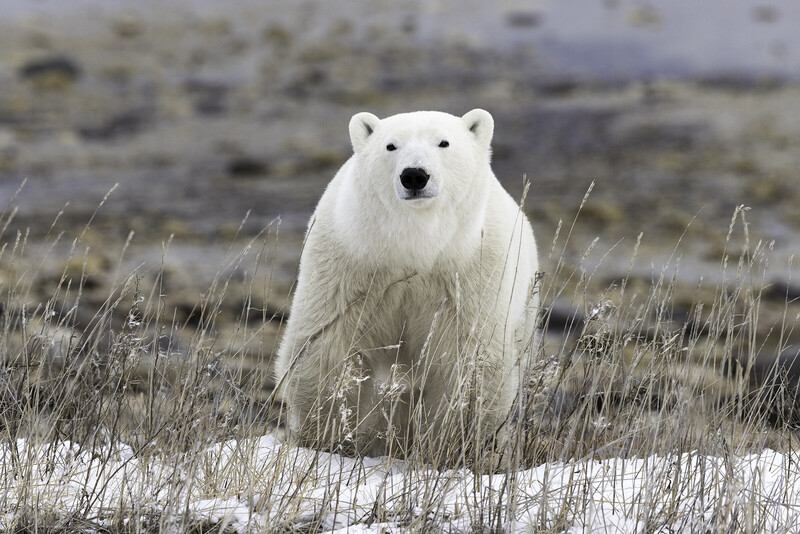
Let's back up a bit and start from the bottom so to speak. Sea ice is the key to the Arctic food web: algae grows on the underside of sea ice, zooplankton feeds on the algae, fish feed on the zooplankton, seals feed on the fish, and bears feed on the seals. Beyond the importance of sea ice as the foundation of the Arctic food web, seals use the sea ice to den and rest on. Polar bears almost exclusively hunt seals on the sea ice. If there isn't enough sea ice, seals can't den and polar bears can't hunt. The last few decades have seen a reduction in the amount of time that Hudson Bay is frozen to an extent that it provides a hunting platform for polar bears. This means Western Hudson Bay polar bears now spend less time hunting on the ice and more time on land waiting for the annual freeze-up.
Dr. Lehner explained that polar bears lose about two pounds a day while they wait for the next freeze-up over summer. Research on polar bears in the Western Hudson Bay suggests that the bears’ risk of starvation increases rapidly if the bears spend more than 180-200 days off of the sea ice. This threshold has been approached in recent years and is predicted to be exceeded frequently if global warming continues unabated.
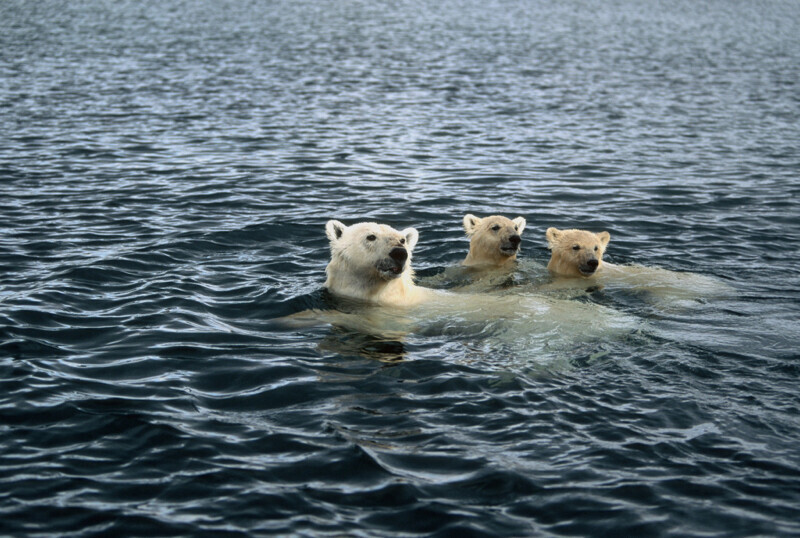
Dr. Lehner went on: studies indicate that female polar bears must reach at least 430 lbs to successfully have cubs. A weight lower than this mark means that female polar bear anatomy will block a viable pregnancy. If female polar bears can't hunt seals, they can't grow large enough to carry a successful pregnancy.
Polar bears have been seen hunting caribou and other land animals, but they cannot survive as a species that way; there just isn't enough fat on a caribou. Polar bears need to hunt seals from sea ice to thrive. In simple terms: insufficient sea ice will lead to starvation and reproductive failure.
The Problem
Accepting current climate science with an eye toward 2100, we are on a 2.6-2.8 °C warming pace compared to pre-industrial levels. This pace is less than the cataclysmic pre-Paris Agreement pace estimates of 3.5-4.0 °C. Unfortunately, a warming pace of 2.6 °C will still result in ice-free summers in parts of the northern polar regions within the next decade or so. This type of climate change will see certain polar bear populations forced off the ice for over 200 days a year, well beyond the mortality-event and reproductive-failure thresholds we just spoke of. Polar bear biology cannot sustain this and we will likely see southern range sub-populations shrink further or potentially collapse within the next decades, culminating in potential extinction by the early 2100s. Can photography help brighten this negative prognosis?
Photography Steps In: Success to Date
Over the last 50 years, photographers have helped to sway public opinion and guide politicians on matters of climate change using polar bears as the spokesanimal, so to speak. It was, in fact, photographers who started Polar Bears Alive in 1992 that later morphed into Polar Bears International.
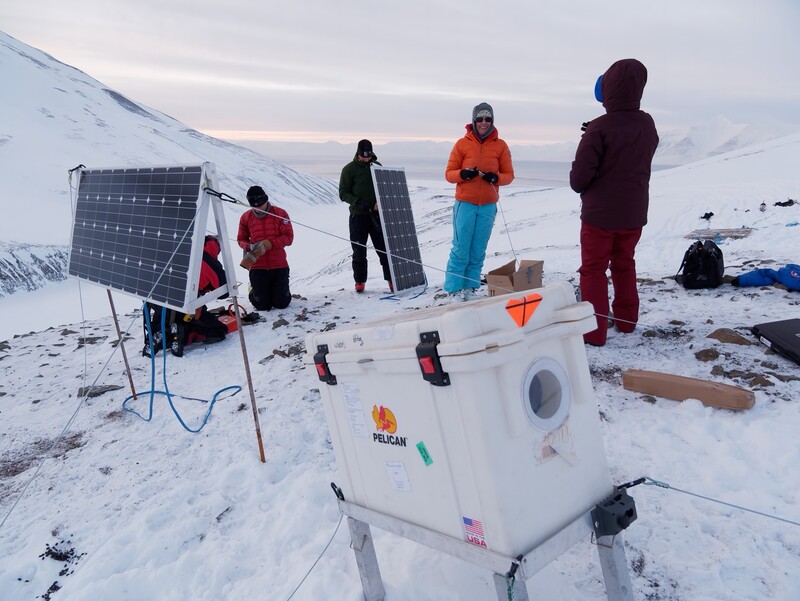
Photography and the Genesis of Polar Bears International
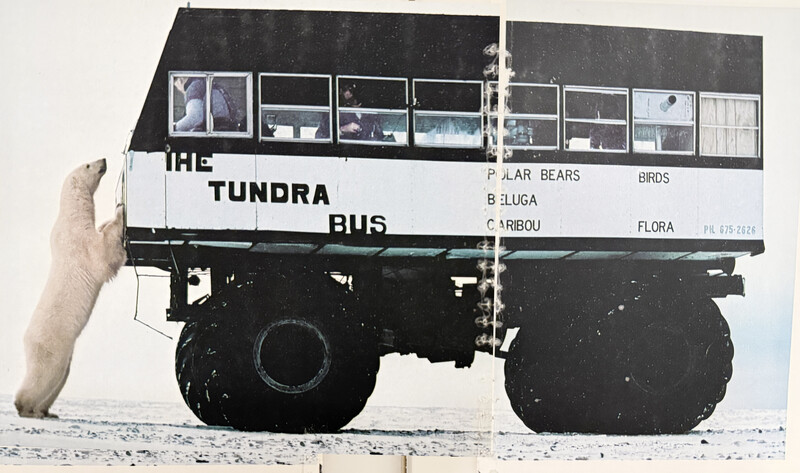
In 1971, Len Smith, a resident of Churchill, Manitoba, Canada, on the western shores of Hudson Bay, a tinkerer by nature, built his first all-terrain vehicle, later to be called a Tundra Buggy.
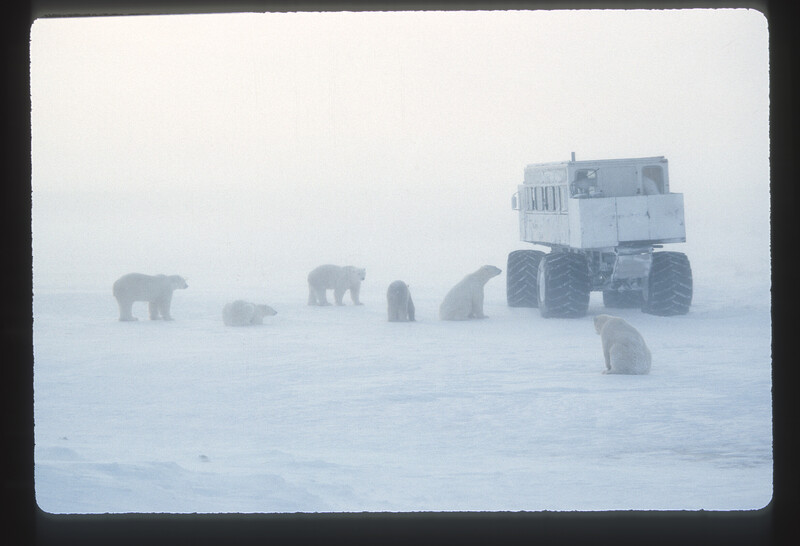
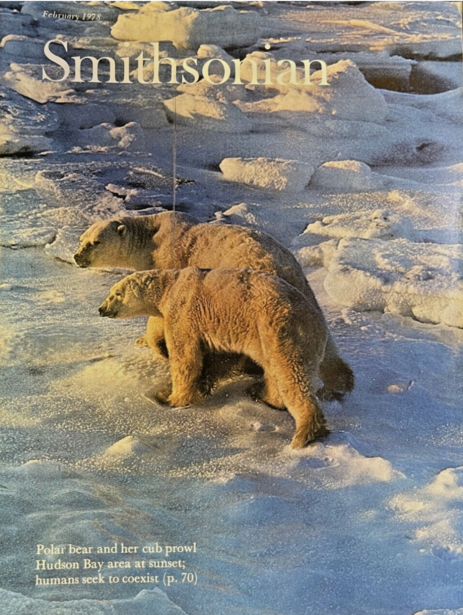
Smith had no intention of sparking an entire industry; instead, he was simply looking for a way to safely take family and friends out into the wilds to watch and photograph polar bears. In late 1977, a freelance photographer named Dan Guravich convinced Smithsonian Magazine to send him to Churchill to photograph a cover story on polar bears. Guravich and Smith started to work together, collaborating on Guravich's illustrations for Richard Davids' now-famous Lords of the Arctic: A Journey Among the Polar Bears. Smith piloted the Tundra Buggy and Guravich took the photographs. I'd be remiss if I didn't point out that Guravich also became the Tundra Buggy Lodge cook.
Just a few years later, Smith was chartered by National Geographic to take some photographers out to Cape Churchill in 1981 to observe the polar bears for an upcoming article. Following on the success of the article, National Geographic released a Churchill documentary: Polar Bear Alert.
In 1984, Barbara Nielson, working in part with Guravich, also wrote an article for AARP's Modern Maturity about a trip out on a Tundra Buggy. In closing the article, Nielson added the address for Travel Manitoba, which resulted in thousands of letters being delivered to a surprised and overwhelmed provincial tourism agency.
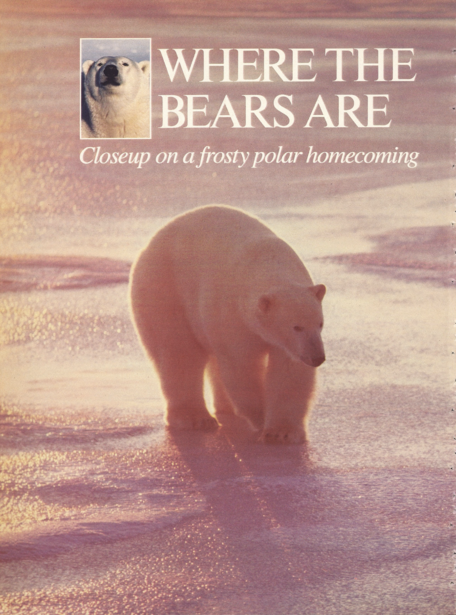
The coincidental publication of the polar bear articles in AARP's Modern Maturity, Smithsonian Magazine, National Geographic, and the related documentary sparked a tourism craze over the polar bears in Churchill. This tourism boom has seen contributions to polar bear conservation skyrocket.
Guravich fell in love with photography while he was serving with the Canadian Army in Holland at the close of World War II.
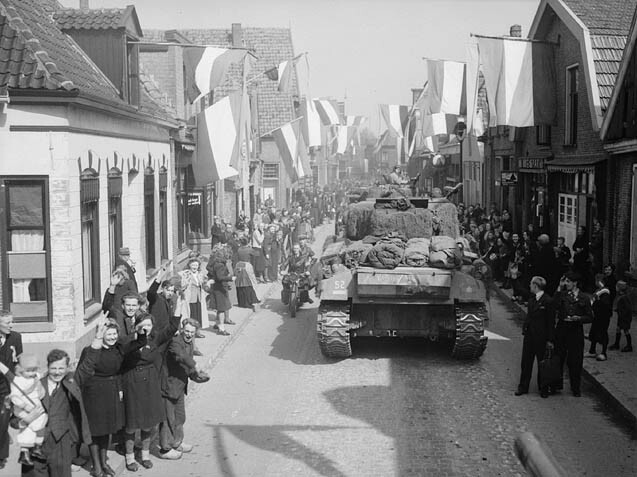
After seeing his first bear in the high Arctic, Guravich was smitten. Over the next decades, Guravich made over 75 trips to visit the bears outside Churchill. Supported by Smith and the rolling Tundra Buggy headquarters, Guravich, along with Carolyn and Rob Buchanan, and Frederica Gamble, founded Polar Bears Alive. After a decade of using their photographs to help the public visualize the plight of the polar bears in a warming Arctic, Polar Bears Alive was renamed Polar Bears International ("PBI") in 2002. PBI shifted focus away from pure conservation to a broader mission of protecting polar bears where they thrive, on the Arctic sea ice: to inspire action to protect polar bears and their Arctic sea ice home through research, education, advocacy, and international collaboration.
Let's remember, this all started with a group of cold photographers on the Canadian tundra, dreaming of how to make the world a better place.
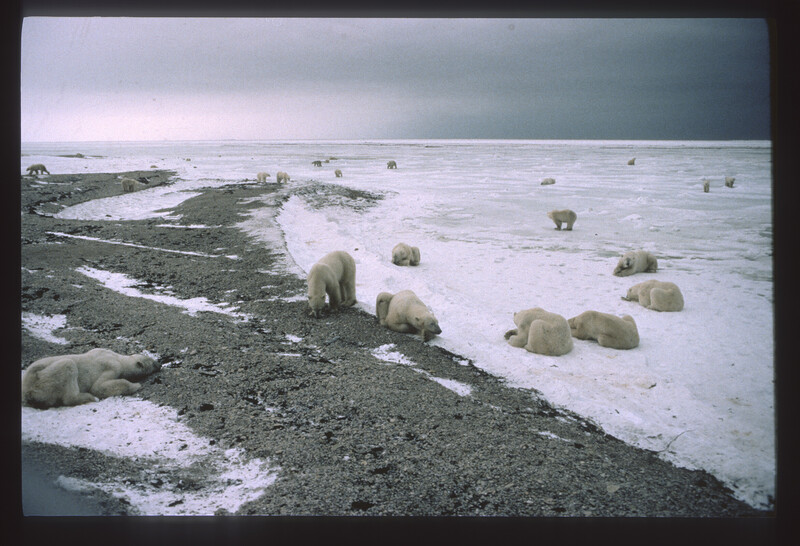
Polar Bears International Now
Polar Bears International is a broad science-based organization focusing on the conservation of polar bears' sea-ice habitat. Today, PBI is guided by the belief that a future for wild polar bears lies at the heart of everything they do. PBI focuses on a positive vision of what is possible, grounded in science and motivated by the belief that, by working together, we can all help to overcome the challenges of our times.
Photography has been at the heart of Polar Bears International’s mission from the very beginning. Powerful images create an emotional connection to polar bears and the Arctic, inspiring people to care about a place they may never have the chance to visit. When people feel connected to a place, they are more likely to take action to protect it. — Krista Wright, Executive Director of Polar Bears International
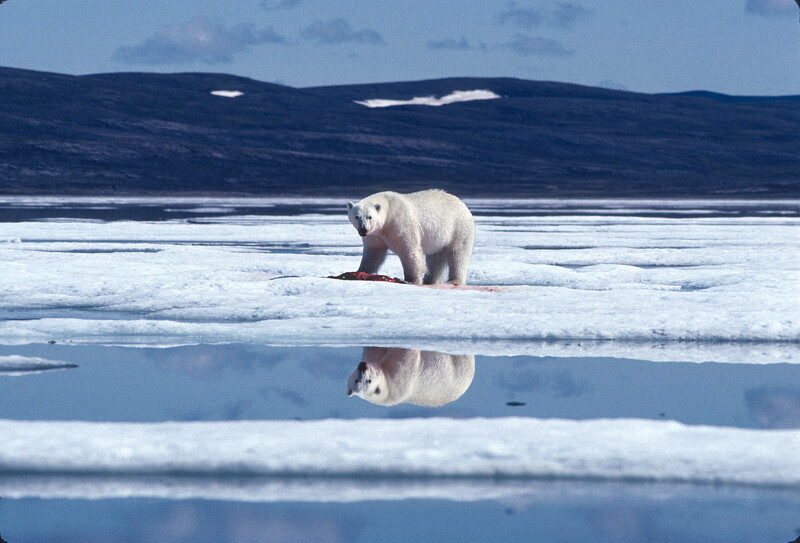
Photography Making a Difference in Paris, 2015
PBI sent representatives to Paris for the climate convention that gave rise to the Paris Agreement, 2015.
As part of their outreach, PBI partnered with Frontiers North Adventures and Google to create a Google Street View of Cape Churchill to help politicians and negotiators in Paris understand polar bears and the Canadian tundra. I was lucky enough to be on a photography trip with Frontiers North Adventures when the talented crew from Handcraft Creative was sent to Cape Churchill by PBI and Google to capture the media necessary for the Street Views. I'm still incredibly thankful that Ray Friesen and Elbert Bakker of Handcraft Creative let me play along a little bit with the project. I'd credit both Friesen and Bakker with getting me deeper into wildlife photography than I had been at the time.
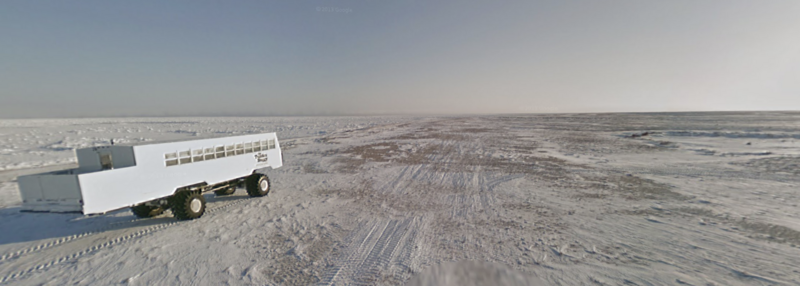
These photographs had a direct impact on the negotiators in Paris. Sitting in boardrooms in Paris, it's easier to understand what you're protecting, it's easier to understand the cost of failure, if you can look it in the eye.
If you look close enough, you can find the bears; if you look even closer, you can even find me, in my younger days.
Today, PBI regularly sends delegations to UN Climate Summits, having become official observers in 2016, armed with peer-reviewed research linking sea ice loss to carbon emissions. PBI research continues to underscore that strict adherence to the Paris Agreement, 2015 targets is the threshold for polar bear survival.
Photography Making a Difference Now: Visuals to Wow
Making a difference in the world isn't easy and it's certainly not free; it's not even cheap. It's important to be able to share the beauty of polar bears to encourage others to care enough to pester politicians and to potentially donate to organizations that are in the fight. The photos of polar bears serve to increase the profile of polar bears, which in turn provides greater protection. After all, money-making animals are a sustainable resource that is often protected by interested governments.
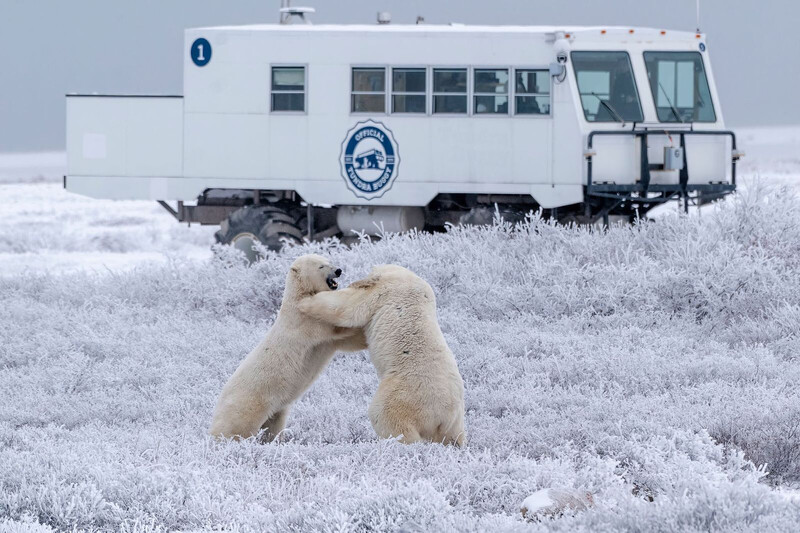
Polar bears are often thought of as an umbrella species; protecting the bears protects all of the other animals that live in their ecosystem. Ultimately, protecting the bears protects the sea ice, which in turn protects us.
I talked with two of PBI's photography ambassadors about their roles.
Daniel J. Cox
Cox came from an outdoor family that spent a lot of time in the wilds of northern Minnesota and South Dakota. The association of family with the outdoors helped Cox fall in love with nature. When Cox was about 16 years old, he realized he wasn’t enjoying the hunting aspect of the outdoors and decided it’d be fun to just spend time with these animals. It was about this time that his father introduced him to photography, sparking a lifelong interest. Cox was hooked on the magic of photography when he saw his first black-and-white print developing before his eyes.
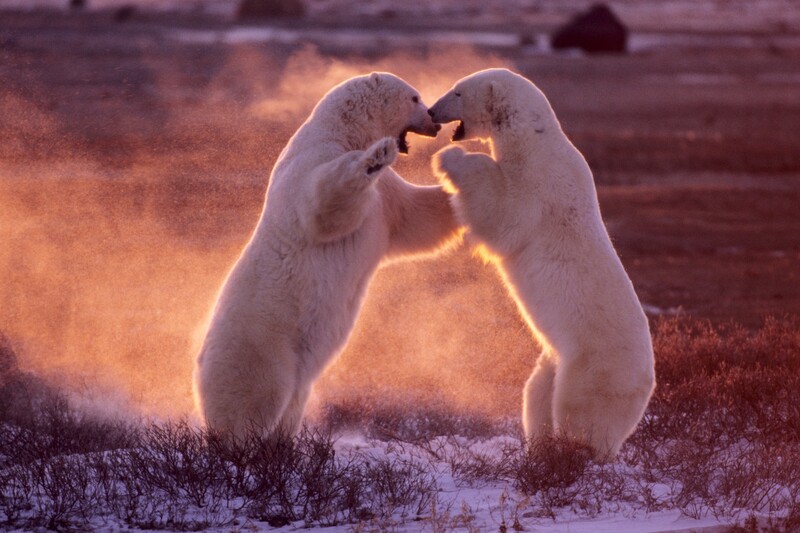
Perhaps shocking to some, Cox sold his 1968 GTO to fund his new obsession. From this point on, Cox spent the rest of his early years in hay fields waiting for the deer to come out at sundown.
I asked Cox if he felt that photography has a place in conservation. Working closely with PBI, Cox believes that pictures and videos that get people excited about the animals depicted in his work can help people consider the underlying message of what is going on with polar bears.
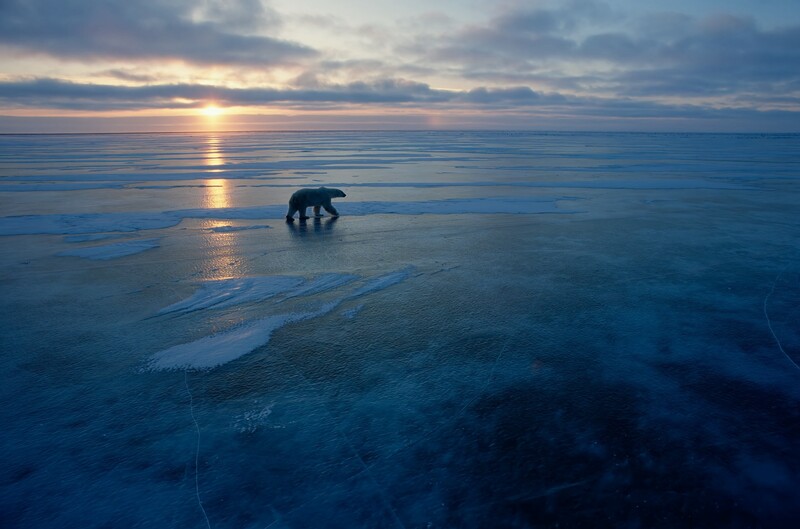
Cox did express concerns about the dilution of photography and conservation, voicing concern that there is just so much photography that he wonders if it has lost its impact. The rise of social media has seen photographers sell themselves as much as they are sharing a message. For Cox, he sees social media as shifting the narrative away from the uniqueness of the experience and toward the importance of the person holding the camera.
"It’s not about you and me, it’s about protecting and cherishing these special places."
The Arctic Documentary Project is one of Cox's biggest PBI related projects these days. In line with Cox's view of photography and conservation, The Arctic Documentary Project is designed to produce visual records of the north that can be used to educate and inspire viewers. The Arctic Documentary Project provides images to PBI, Arctic Ambassador Centers in zoos around the world, scientific journals, and research papers.
Jenny Wong
Wong came to photography through a love of traveling. Backpacking around the world, Wong became known for finding secret spots, essentially fixing for guidebooks. On one trip, Wong visited gorillas and became obsessed with finding a way to share the realities of sitting with these creatures that for her reflected so much of the goodness she wanted to find in humanity.
On a trip to Pond Inlet, in northern Canada in 2018-19, Wong realized that her photography could advocate for what it's like to live in these remote places, to help people understand and empathize with the life of those who live in the north.
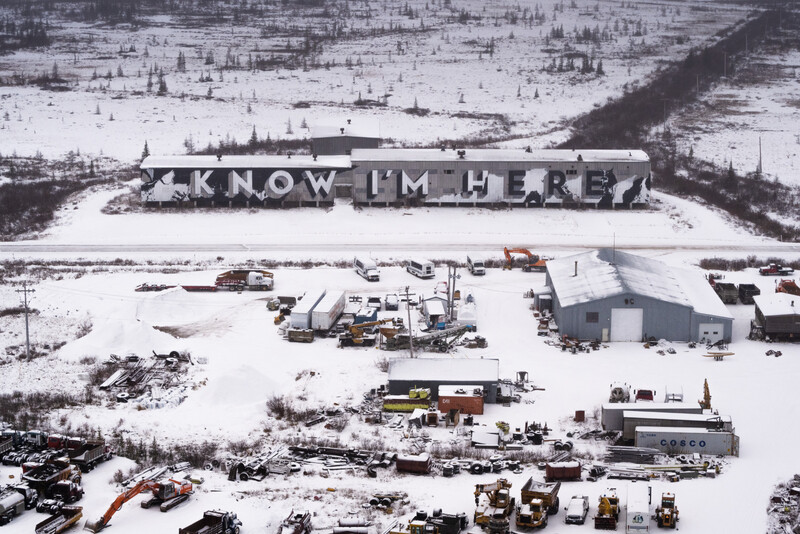
For Wong, it's very important to ensure that the stories she tells align with the realities of northern life. For example, there may be a bit of a rift between local knowledge and experience versus knowledge brought from outside the community by researchers. For Wong, photography that represents life can help to mend this rift and perhaps help researchers learn from and work closely with local communities that have a deep historical knowledge of the fragile northern places she works in.
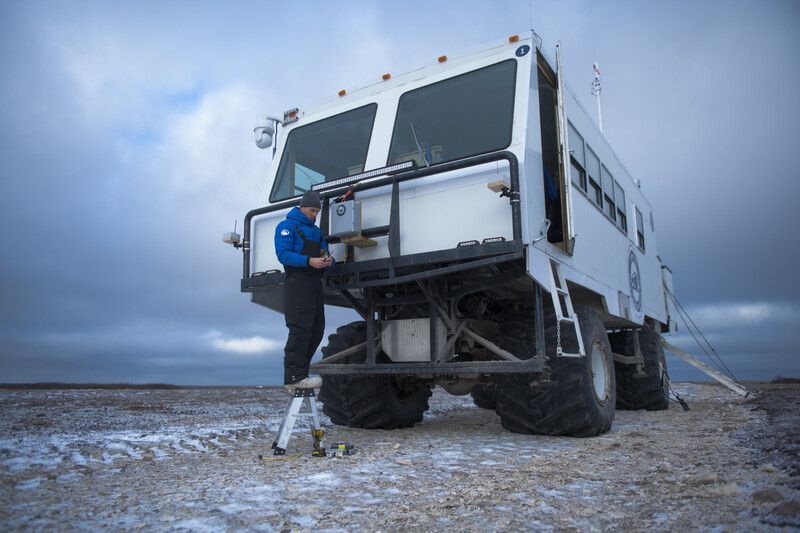
For Wong, however, there is a large ethical pall cast over current wildlife photography. Much like Cox's view, the question photographers should be asking when they are taking up air in wild or cultural spaces boils down to whether or not the photo is for their own glory, or for spreading awareness, without the involvement of ego.
For example, Wong and I talked about what it takes to be an ambassador for a wildlife organization like PBI. At the top of the list, Wong noted that photographers should communicate effectively for the cause they're interested in championing. Photographers should remember that their stories should be helping to move the needle with those who don't already empathize. If a photographer wants to move the needle, for Wong, the work can't just be a pretty picture, it should encourage people to dig into science and research.
"Photos can open up a conversation. A paper sits on a shelf, they are often dense and difficult to read. We and our photos should be the teaser trailer for the paper."
Essentially, conservation photography can help open the door to encourage learning, to encourage conversations about problems and their potential solutions.
"The most powerful thing we can do is to help to catch someone’s attention."
Wong did stress that creating images can't be an excuse to shift ethical boundaries. For example, we talked a lot about the laws in Canada surrounding droning bears. Breaching ethical or legal guidelines can’t be excused by the fact that a picture might make a difference, that's ego. For Wong, we should be idolizing the photographers who have ethics, not the ones who endanger bears or the story to get a pretty picture for IG.
Great photographs on social media raise the profile of these megafauna, contributing to a greater awareness and a greater sense of public imperative, but we shouldn't be breaking the rules that guard these animals or the fragile environments and cultures that fill up these wild spaces.
Photography and Tourism
I mentioned at the start of this piece that I work for Frontiers North Adventures as a photography and interpretive guide out on the tundra in the Churchill Wildlife Management Area.
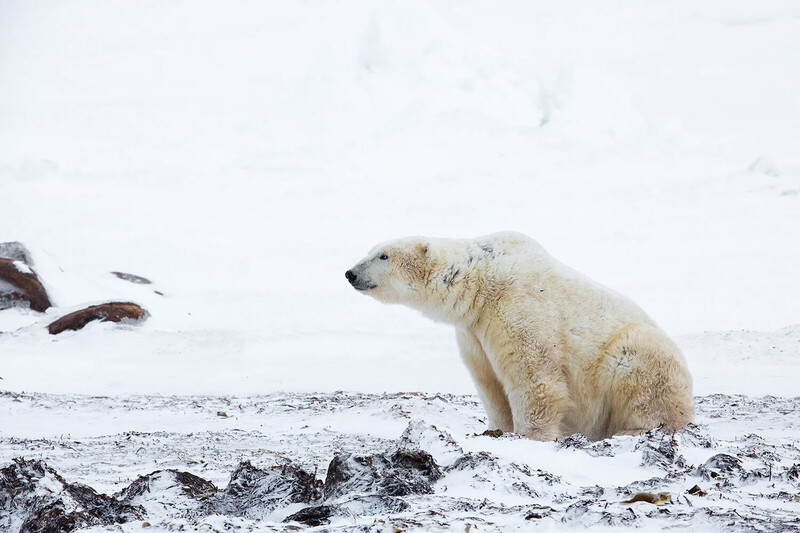
Anecdotally, almost everyone who goes out with me to visit the bears brings a camera. I don't mean just cell phones, but full kits of varying sizes and technical specifications. Capturing one of these bears on camera is a major goal for most of our guests. This means that the money being spent in town, the money being spent on the bears, and the donations made to various polar bear-related causes are in large part related to photography. Moreover, those who come to take photographs leave with a deeper understanding of what it might take for us to save the polar bears. Hopefully, our guests leave as ambassadors for our bears, willing to sacrifice or speak out to protect our bears from the changes that they get to see firsthand.
"As we don’t operate tours anywhere else in the world, you can be confident that your travel dollars remain right here, where you travelled — helping sustain the land, people, and experiences that make your journey meaningful." — John Gunter, CEO and Co-Owner of Frontiers North Adventures
Photography may draw our guests to Churchill, but it also acts as a bit of a gateway to various conservation causes related to polar bears and climate change.
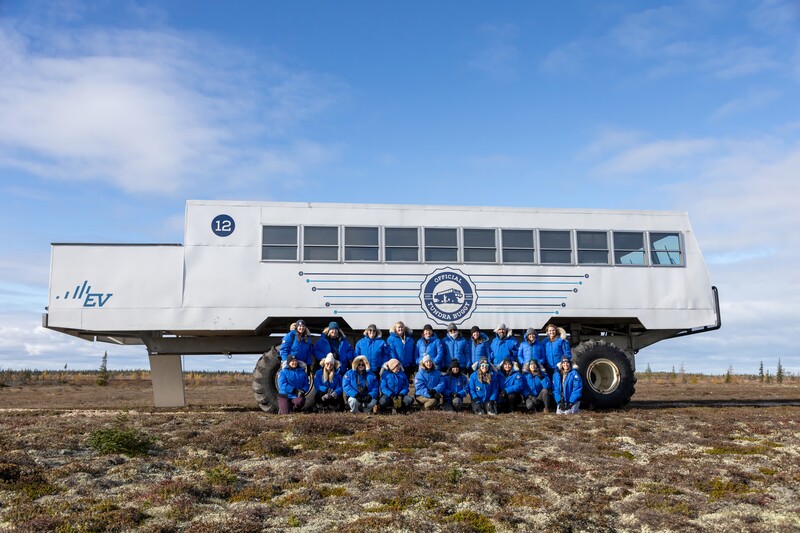
Frontiers North Adventures has been one of PBI's Platinum Sponsors since 2001. Remember, Polar Bears Alive was actually founded on a Tundra Buggy, the all-terrain vehicles Frontiers North Adventures uses to explore the tundra.
Frontiers North Adventures' current Tundra Buggy Lodge serves as a type of home-away-from-home for PBI during the fall polar bear migration. PBI scientists and ambassadors are typically in residence, running studies or outreach programs from Frontiers North Adventures' infrastructure. Frontiers North Adventures' success makes this type of partnership possible. To bring this back full circle, this success is in large part due to the number of photographers, both professional and amateur, that make their way to Churchill to meet our polar bears.
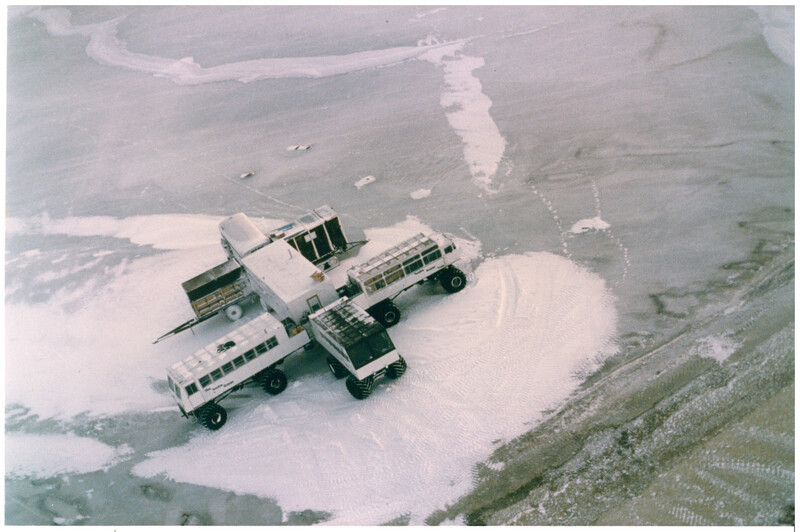
Frontiers North Adventures has tracked donations since 2008. Since then Frontiers North Adventures has donated over $5.7 million (CAD) in combined financial and in-kind donations. Talk about putting your money where your mouth is.
If you'd like a deeper look at how Frontiers North Adventures leverages photography tourism to sustain conservation efforts, I encourage you to look at their Impact Report.
Photography Making a Difference Now: Explore.org
Polar Bears International runs three different camera streams for explore.org. Explore.org, the world's largest live-streaming nature network, is operated by the Annenberg Foundation. Together with their foundation, the Annenbergs have donated or granted well over $5 billion to provide funding and support to nonprofit organizations that address community needs, advance public well-being, and foster systemic change.
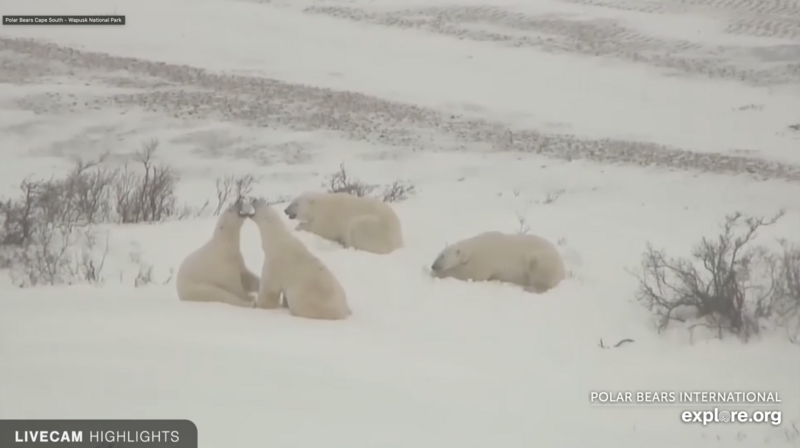
PBI's polar bear, beluga, and northern lights cameras are some of the most popular on the network.
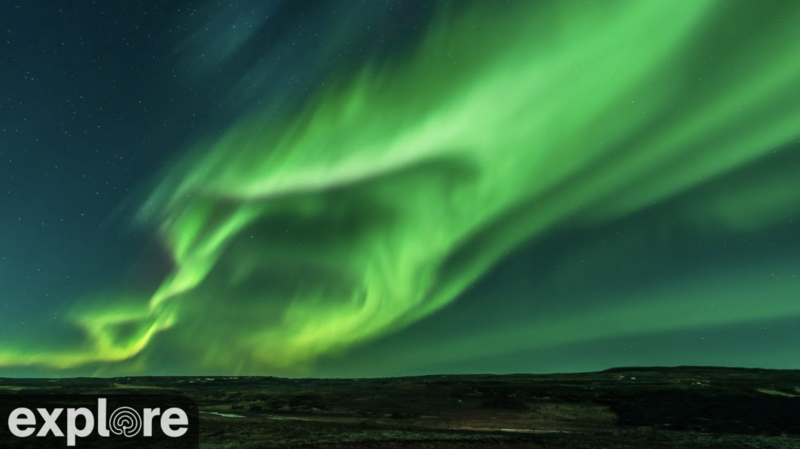
I do warn you though, don't go watching any of these close to bedtime, you'll never pry yourself away and get to sleep.
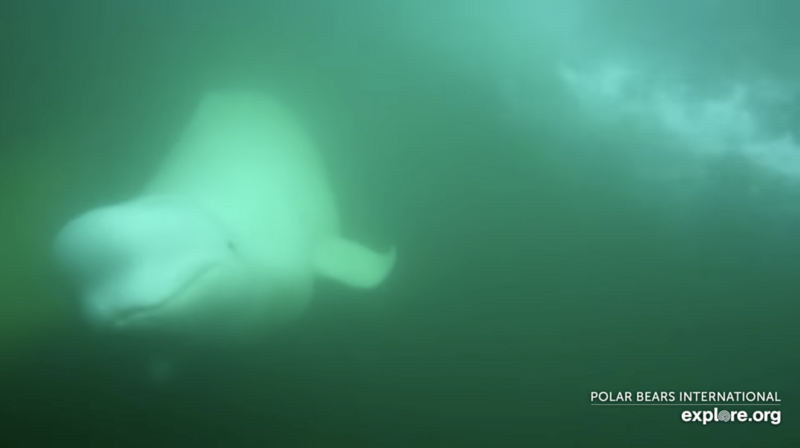
By reaching out to millions of people a year through photography, explore.org and PBI are able to help the world understand the fragility of our environment and the crisis that it (and we) are facing.
No conversation of PBI's explore.org presence can be complete without mentioning BJ Kirschhoffer and Kieran McIver. Kirschhoffer managed to set up the seemingly impossible broadcast tether from the Tundra Buggies puttering around the tundra, and today, McIver is responsible for dealing with the environmental complications related to running these cams 24 hours a day.
It seems clear to me that photography can indeed help to highlight the plight of the polar bears and perhaps encourage a deeper education about what is happening to our planet. Which, in turn, might just save us along with the bears.
All photos provided by authors as credited. Lead image by Dan Guravich, courtesy of Polar Bears International.



Join the Fstoppers community for free
-
Post comments and join in the discussions
-
Browse the site ad-free
-
Share your work and get featured in the community
-
Compete in the photo contests for fun and prizes
No comments yet