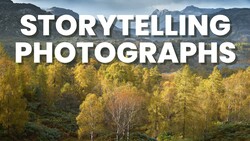
Sharp focus and perfect exposure are not enough. If bird photos feel flat, the problem is not settings, it is storytelling.
Coming to you from Chiara Talia - Wildlife Photography, this thoughtful video breaks down why some bird images hold attention while others fade fast. Talia argues that every strong photo rests on four pillars: character, plot, setting, and voice. The bird is the character. The action is the plot. The habitat forms the setting. Your choices create the voice. When only the character shows up, the result is simple documentation. When you wait for behavior, frame the environment with intent, and choose perspective with care, the image starts to say something beyond "this bird exists." You begin to show what life looks like for that bird in that moment.
Talia then moves into five practical approaches you can use right away. The first is behavior storytelling. Instead of settling for a perched portrait, wait for movement. A dive, a stretch, a call, a midair chase. That shift demands patience. It also changes the energy of the frame. The second approach is interaction. Two birds feeding, fighting, or guarding a nest create tension that a single subject rarely can. These frames are harder to execute. Focus must be precise. Composition gets messy fast. But when it works, the image carries weight and feeling without needing explanation.
The third approach centers on environment and scale. You do not always need to fill the frame. A small bird against a vast marsh says something different than a tight headshot at 600mm. Showing habitat adds context. It places the bird inside a real world. Talia pushes you to think about how much space to include and where to position yourself. Eye level invites closeness. Shooting down can make the subject feel fragile. Shooting up can add presence. The same bird, in the same place, can express entirely different moods depending on where you stand and how wide you frame.
Light and color form the fourth layer. Instead of labeling light as good or bad, Talia treats it as emotional language. Warm sunrise light leans toward comfort. Blue hour cools the mood. Harsh midday light brings contrast and grit. Fog adds secrecy. Storm clouds increase tension. Even subtle shifts in background color shift the story. Autumn tones hint at transition. Snow suggests endurance. She also touches on post-processing choices, not as rescue tools but as refinements of mood. A slight push toward warmth or cooler tones can steer how the image feels without changing the subject.
The fifth approach may challenge you most: conservation storytelling. This is where the frame shows more than beauty. A shrinking habitat. Pollution near a nesting site. A protected area with signs of recovery. These images move beyond aesthetics. They document reality. They ask something of the viewer. Talia does not frame this as activism for the sake of it. She frames it as responsibility tied to observation.
Throughout the video, she repeats a point that may sting a little. Gear does not create stories. Obsessing over equipment can distract from intention. A perfectly sharp file of a still bird can be lifeless. A slightly imperfect frame with gesture, tension, or atmosphere can stay with someone far longer. She also offers a challenge: review recent work and identify which storytelling types are missing. That exercise alone can shift how you approach the next outing. Check out the video above for the full rundown from Talia.


Join the Fstoppers community for free
-
Post comments and join in the discussions
-
Browse the site ad-free
-
Share your work and get featured in the community
-
Compete in the photo contests for fun and prizes
3 Comments
The Fstoppers editors must disagree with this video... the February 10th photo-of-the-day (bird on a stick) would undoubtedly be labeled "boring" by the author of the video. I find it interesting how You-Tubers frequently pit sharpness against story-telling... as if you can only choose between one or the other, and sharpness and detail always seem to lose. Does that mean blurry action-filled pictures are any better? They're not in my opinion.
I'm not a wildlife photographer but I have a few friends who are, and I find their sharp detailed photographs fascinating for exploring the details of a subject that we are rarely able to view, up-close and in person. So to claim that photos are boring because there's no action or movement seems insulting to both the genre and the bird. After all, photographers make a lot of portraits of humans who are sitting perfectly still in a chair. Sure, they don't scream action and story, but good ones communicate the essence of the subject.
Does this pass on the story telling?
In my opinion yes. It tells the story of humans providing structure for nesting. The story of birds taking advantage of those structures. The story of some species taking advantage of manmade objects. In this case intentionally made for birds, but they use all kinds of structures for nesting and perching. Even hunting for food. My ornithology professor told us about American Kestrels hunting Anoles on the side of campus buildings. And the Anoles were taking advantage of the building too.