
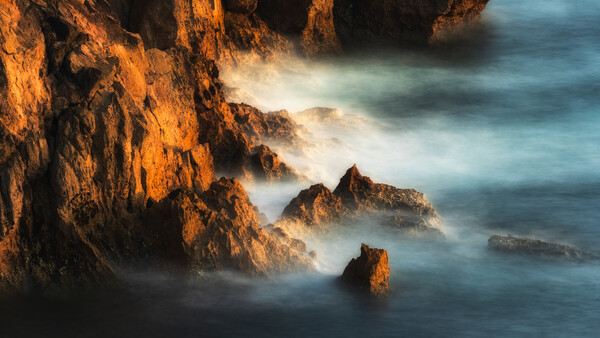
I remember so vividly the excitement of when I first started taking pictures. It was all new, new, new. "Oh my God, what's this? Did you just see that?" No matter what it was I photographed, I felt a rush of pure exhilaration. Even now, 24 years later, I am thrilled to say that I still feel that rush.
There is no denying that photography, like most things, is incredibly rewarding when you first start. When those first good images pop up on your computer screen, the air is palpable with giggles and fun. But, like most hobbies, there is an inherent plateau effect that happens. It is during this time that your mettle is truly tested.
I have met a great many people who took up the camera only to eventually put it back down as an expensive paperweight. In my experience, it's not due to a lack of talent. Rather, it's because they mistake the natural transition from mastering the craft (technical skill) to developing the art (personal vision) for a failure of capability. They decide to quit just as the work gets more difficult, more meaningful, and is teetering on the edge of a breakthrough.
Let's look at why this happens. If you are a beginner reading this, I hope it resonates and helps keep that camera in your hand. We're going to explore the psychology of the plateau, the difference between practice and deliberate practice, the necessity of "creative failure," and how to shift your metrics to sustain long-term motivation.
The Psychology of the Plateau: Intermediate Frustration
The plateau effect crosses many disciplines—from weight loss to learning a language—but in photography, it is the first major hurdle. Once you understand the four key elements of this phase, it becomes much easier to recognize them and move past them.
The Initial Climb: The barrier to entry in photography is surprisingly low, which makes it a wonderful hobby to pursue. In the beginning, the learning curve is steep and exciting. I remember times in my own journey where I looked at the back of the camera and was totally blown away. I was sellotaping a penny to my shutter release because I couldn't afford a remote, or taking ultra-long exposures of the ocean at dusk because I didn't have ND filters yet. The rush of learning how aperture, shutter speed, and ISO work together provides immediate, tangible feedback. Your image quality improves visibly every single week.
Hitting the Wall: Once you have a foundational understanding of how to take a technically "correct" photograph, you reach the next stage: hitting the wall. This wall takes many forms. You start feeling unoriginal. You worry that your images are derivative or, dare I say, visually boring. You can't shake the feeling that your photos look like everyone else's. But if you stare at this wall long enough, you begin to notice small finger-holds that enable you to climb.
The Problem of Imitation: Many beginners quit here because they have mastered the mechanics but haven't yet developed the why. There is a strange emptiness to being a skilled imitator. Without a personal vision, you and twenty other people overlooking the same view might as well be taking the exact same photograph. This hollowness manifests as a feeling that you aren't creating anything truly "new."
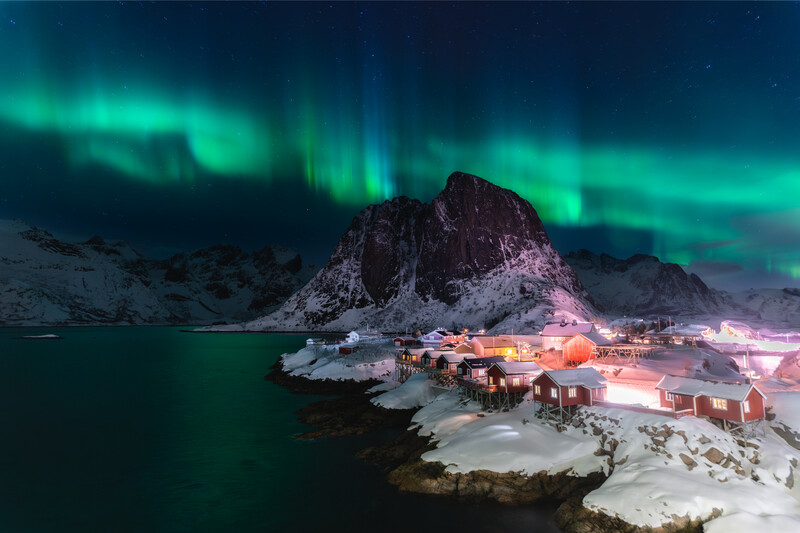
The Question of Talent: This was the hardest hurdle for me personally. You stand overlooking an epic scene, you photograph it, and a voice in the back of your mind asks: Is this good enough? When you review the images later, you see that the dynamic range is accounted for and the focus is sharp, but the itch of questioning your innate talent remains. There is a dangerous assumption that if it isn't clicking now, then photography isn't for you. You mistake a normal learning curve for an insurmountable ceiling.
Practice vs. Deliberate Practice
The understanding of deliberate practice is what helped me overcome my own plateau, and not just in photography.
Defining the Rut: When you reach the intermediate stage, simply going out and shooting stops yielding improvements. If you just keep doing what you're already good at, you are effectively practicing your own limitations. To grow, you have to define the rut you are in.
The Need for Intentionality: Deliberate practice is a term from performance psychology. It means picking one specific element—macro, long exposure, shallow depth of field—and focusing your intention entirely on it. It is an effortful pursuit designed to push a weak point outside of your comfort zone.
Structuring Your Practice: When I moved to Southern Portugal, I had a deep respect for the sea, but I knew I wanted to dive deeper into seascapes. I spent weeks scouring the coast, not just taking pictures, but deliberately practicing different shutter speeds to see how they changed the mood of the Atlantic. I forced myself to look beyond the 16mm wide angle lens and find the intimacy in the waves.
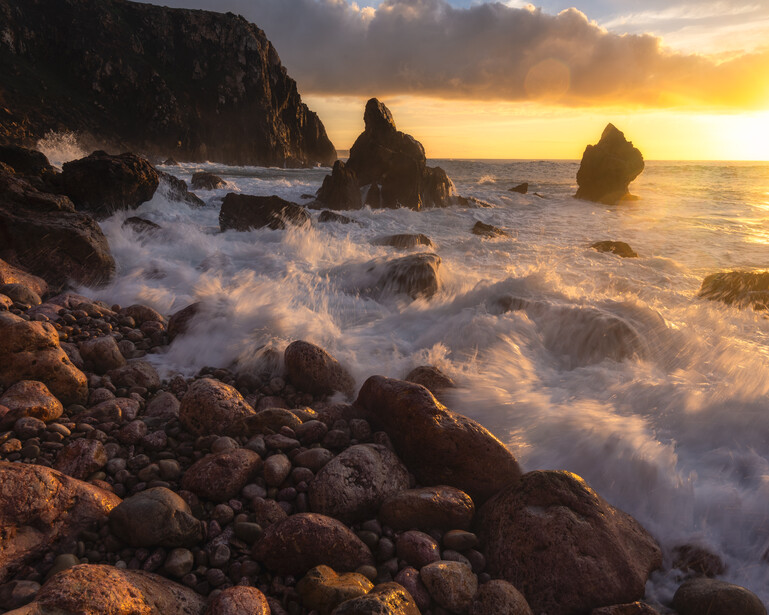
Isolation Drills and Forced Constraints: Try an Isolation Drill. Go out with just one lens for an hour. Or, if you have ND filters, use only one and learn exactly how it affects the time required for an exposure. There is immense satisfaction in being able to calculate a 10-stop exposure in your head without reaching for an app. These constraints force creative problem-solving.
The Critique Loop: Seek out critique—the harsher the better. As painful as it can be, the key is not to take it personally but to find the growth within it. Use that feedback to design your next deliberate practice session. Whether it's here on Fstoppers or in a local club, find people who will tell you the truth, not just "like" your photo.
Embracing the Failure Portfolio
This leads us to a vital concept: embracing creative failure.
Failure as Data: The moment you start recognizing the flaws in your work is the moment you transcend from a beginner to an intermediate photographer. Disappointment is just a signal of a knowledge gap. Once you see the gap, you can fill it.
The Fear of Failure: The fear of taking a terrible photograph is what keeps you in beginner mode. It is only when you risk taking creative control—and failing at it—that you see breakthroughs. Don't spend half a lifetime hiding in the shadow of someone else's idea of what is "good." Experiment with radical compositions. Shoot directly into the sun. Take the Lightroom sliders to the maximum if that's what you feel. This is your art; don't be afraid to break it or the rules.
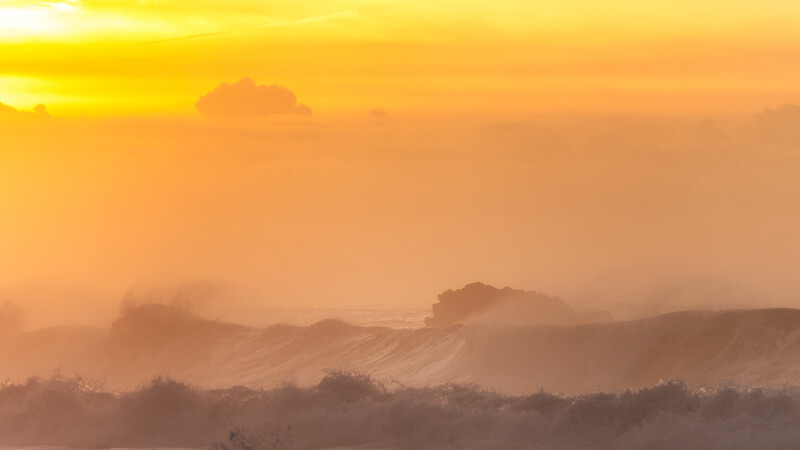
The Necessity of the Failure Portfolio: I encourage you to actively pursue experimentation that risks failure. Try to deliberately fail. It's actually harder than it looks! Intentionally take images with poor composition or harsh lighting to see what happens. These difficult lessons will teach you more about the behavior of light than a "perfect" sunset ever will.
The Power of Process: Shift your mindset from "capturing a portfolio piece" to "executing a process." When you focus on visual problem-solving rather than Instagram likes, the pressure vanishes. Ask yourself: What story am I telling here? instead of What would get the most engagement?
Shifting Metrics: From Output to Insight
The final piece of the puzzle is changing how you measure success.
The Beginner Metric: Most beginners fall into the trap of counting good shots per outing or checking social media notifications. These are hollow victories that don't sustain long-term growth.
The Advanced Metric: Instead, ask yourself:
- What was the depth of the insight I gained today?
- Did I adhere to my own unique vision, even if the result was "messy"?
- Was I able to troubleshoot a difficult visual problem on the fly?
The Value of Long-Term Projects: To break the cycle of quitting, start a long-term project. Spend a year photographing the same rock formation at every tide height, every shutter speed, and every phase of the moon. This reinforces dedication and reveals subtle truths that only come with patience. These metrics fight the "quick hit" satisfaction that leads to burnout.
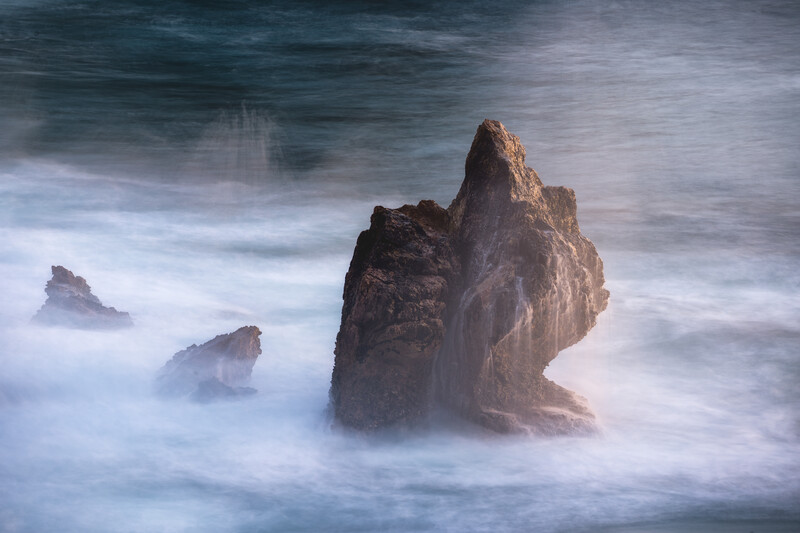
Redefining Success: To overcome the intermediate hump, you must learn to value the ability to see an image that no one else can, more than the ability to take an image that everyone else admires. When your journey moves from "I know how to do a long exposure" to "What feeling do I want this long exposure to convey?", you have officially moved past the pitfall.
To Wrap Things Up
These slumps are not a sign of failure; it is a signal that you are transitioning from a student to an artist. The frustration you feel is simply the gap between your rising taste and your current skill level.
If you ask your favorite photographers, they will likely tell you that their greatest successes followed their periods of deepest self-doubt. Do not quit when you are ten feet from gold. This is a lifelong journey of learning, so learn to embrace every step.
If you're looking for a structured way to push past your own plateau, Photographing the World: Landscape Photography and Post-Processing is a great resource for the kind of deliberate practice discussed above.
Call to Action: Identify one technical or creative weakness you've been avoiding. Design a four-week deliberate practice schedule focused only on overcoming it. Accept right now that every image you create during those four weeks might be a "throwaway." That's okay. You aren't making photos; you're making a photographer.

Join the Fstoppers community for free
-
Post comments and join in the discussions
-
Browse the site ad-free
-
Share your work and get featured in the community
-
Compete in the photo contests for fun and prizes
7 Comments
Keep it up, you can get there!
Oh, I feel that! Obsessing over "perfect" shots is a trap I fell into as well, especially since my perfectionism wouldn't let the photo be as it it. Thankfully, I got tired of it and decided to start experimenting more just to see how it goes and that's when the whole process finally felt fun again. Apparently even messing around with edits in Photoworks helped me see my images differently and push my own style a bit further instead of copying what everyone else does.
I think all that is said here are not the problems. Not all are looking at being a Pro and making money at it. Being a Pro takes way more than the camera and images business knowledge is the key the what for and how's to do and get. Legal stuff of limits to places, protection of gear, insurance. Things not in Photography classes but need to learn in a business class.
What are the Pros doing today, they do tours of places and spots with lots of people all getting images together of the same thing. I remember videos of Trey Ratciff out at a spot with a crowd of people most all on tripods going from place to place in just one city.
The only perfect capture is if you think it is great enough for your wall and no other.
What you fail to mention is cost, there is so much hype about the newest and best cameras and lenses but then you add the post processing yes you have a computer BUT you need a editing program or two or more each with costs per year. Add the need for a newer and faster computer about every three years (just look in your closet for all your old stuff) and also a new phone of sorts for commutations with others yes normal stuff to get new of and while out never left alone to capture something with all the apps needing to be looked at.
Also the hype on using Manual mode to prove as a pro and few even learn the 90% of all are captured in aperture mode but who will ever know you capture in auto mode, it is part of the camera you pay for it and just like video it is there and never used, why is it on every camera taking up room where some apps could be.
Lastly yes there has to be joy in the time of the capture with the just being out there or all the planning with several apps like weather with or without clouds rain or non, you use a calendar with spots you look at and see in your mind where the sun will be or say the Milky Way at night and a foreground all this is the build up you hear in all the photographers videos of their capture times.
A hobbyist has all that fun of the capture without the selling part just staying in ones budget and just out there say going to work early getting that sunrise or planning diner around a sunset time when everyone is inside eating and not really aware you are outside. As a hobbyist I give prints as gifts to a doctor who help me or my wife with something family members that once wondered why i was doing it but now having a capture on their walls. When you see a print (I like metal ready to hang) on a wall not your own it just adds to the whole photography time it is my payment that others give without asking.
Another last how do you save and pass on your image to someone say after you pass? Ever think that far, I mean all digital and not a trunk or file cabinet full of prints, Well I have that also, slide shows are boring to those not ever out there.
"I Spy A Something Every Day"
1. A sunset seen from anniversary dinner table
2. drove just a 100 miles for a Solar Ring image
3. an image no other captured in 2017 using a first 12mm lens
4. Returning to the place after seeing the tide going out on way back to hotel avoiding weather on new moon night learning 5 days before you can capture a crescent moon looking like a full moon under the MW an image few ever think about
Cost and time other than the capture.
Sadly, for me, it was none of the things in the article. It was the pure financial side of it. Once I realized that I had gotten good enough to do some real work, I felt partially cut off. With the specs on my old computer it needs to be replaced to run any of the software I want to use, my entry level camera is fine for practicing, but not for creating a portfolio. I think a lot of beginners quit or are at least discouraged and put their dreams on hold for this reason. Seems like this was overlooked in the article.
Sadly, for me, it was none of the things in the article. It was the pure financial side of it. Once I realized that I had gotten good enough to do some real work, I felt partially cut off. With the specs on my old computer it needs to be replaced to run any of the software I want to use, my entry level camera is fine for practicing, but not for creating a portfolio. I think a lot of beginners quit or are at least discouraged and put their dreams on hold for this reason. Seems like this was overlooked in the article.
Unless you need to be paid for your work, I never really understood why anyone cares if the photos they take can impress the internet.
Art doesn’t necessarily need razor sharp focus and perfect light. It needs feeling first, perfect settings second.
You can take a travel photo that is technically all over the place, but if it captures how you were feeling, that is an excellent image that will have meaning whenever you want to return there in your mind.
Great article Buddy, Good things don't happen overnight, they take time, practice, mistakes, frustrations, more mistakes, more time and then it starts to feel like its coming together