About six months ago, I wrote a piece comparing flash techniques to HDR and ambient-only techniques when shooting for architecture and interiors clients. There was some great discussion involved and many valid points raised, and I’d like to take a few minutes to bring up another scenario that really shows the benefits of using flash whenever possible when dealing with interior or architectural situations. [more]
This year Patrick and I were invited to Gulf Photo Plus in Dubai to film a behind the scenes look of what it’s really like to go to this exotic workshop. The experience itself was one of the highlights of my life but the most memorable moment for me was the few minutes I had with each of the instructors. I decided to interview them about the pitfalls of their careers and what it takes to become successful as a photographer. [more]
In Michael Wolf’s latest photography series, entitled ‘Architecture of Density’, the urban landscapes of Hong Kong are explored. While his photos in the series rarely contain people, creative angles, or any context, they still manage to provide a mind-blowing look into the haunting and seemingly endless buildings of mega city Hong Kong. [more]
Architectural (and real-estate) photography is one of the most challenging and technical types of photography. In most cases, the goal is to get a clean shot with perfect lighting showing the place at its best and “sell” it to the viewer. It usually means the photo will show the location in a wide-’normal’ angle and without distortion. But there is a different kind of Architectural photography that shows buildings and rooms in a unique angle, creative lighting, and usually shows only small part of it. It’s about making art out of architecture. [more]
Jim Kazanjian’s surreal architecture images are a dreamlike scene that teeterings on turning into a nightmare at any moment. The dark dreamy mood and beautiful decay of crumbling elements allows the viewer to peek into a darker scene of a fictitious location. The hyper realism of the photographs was perplexing and I assumed that the images were shot and pieced together, little did I know that Kazanjian doesn’t use a camera for his creations. [more]
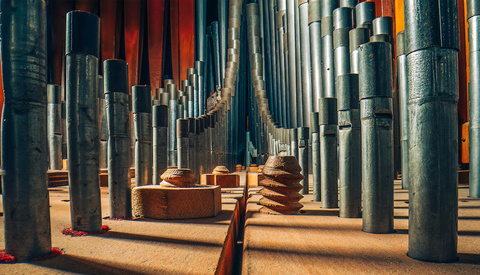
What started out as an small project to kill time during slow business months has turned into a major project that’s been picked up by numerous news outlets and taken him all across Europe in search of these hauntingly beautiful structures. In this video, Jonathan Andrews photographs the remains of World War Two bunkers and defenses and walks you through his entire process from inspiration to actually shooting.
[more]
This is a first for this style of indoor photography. Usually you see nice clean HDR shots of rooms or office space for real estate agents. Menno Aden takes a whole different approach on this genre, one many people never really see. [more]
Some of you may have seen the new series “Revolution,” in which power around the world goes out. Thierry Cohen applies the same concept to some of his work by showing what vast urban areas might look like without light pollution. [more]
To have an eye for fine art requires a special kind of talent. Nicolas Ruel does a fantastic job of creating unique photographs that capture the essence of a city in his “8 Seconds” project. For all of his images within the project, he sets the camera to an 8 second exposure and changes perspective mid shot. This lets him capture a layering effect in a single shot.
[more]
One thing I love about photography is when people take different approaches on it. Tom Ryaboi does that extremely well. Granted, some of these shots are your standard architectural/urban shots, however, most of them are stunning. The main thing I am wondering about Toms shot on the roof of the building, is it real? Composite? What do you guys think? [more]
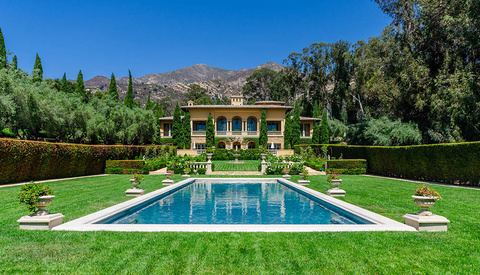
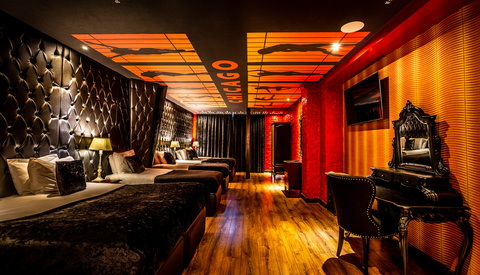
I know that many of our readers are real estate photographers or have at least tried their hand at real estate photography. The most common method used to create ‘good enough’ real estate photos is HDR: whether it is tonemapping or exposure fusion, HDR is definitely the most-used method for real estate and beginner interior photographers. In this post, I’ll do a comparison between tonemapping, exposure fusion, single on-camera flash, and multiple off-camera flash, and show you the benefits (or disadvantages, rather) of each. [more]
One of the best contests each year is the National Geographic Photography Contest. They always receive so many photographic entries that are simply amazing shot from locations all over the world. I picked out a few of my favorites to share here along with the links to go see more. [more]
I’ve never been one to take landscape pictures. I just don’t like any that I take. I can’t seem to get the composition right or lighting. I am a portrait photographer. It’s what I do. However, I greatly appreciate photographers who are able to capture the true beauty of a certain location. Photographers, like Fakrul, are able to do just that. The perfect exposure, bringing out details I would never have noticed had I been the one to take the shot. [more]
Architectural photography is something I can never seem to get down. I love shooting people much more than buildings, but when it is executed correctly I love it, even though it is not my favorite thing to shoot. I could look at good architectural photography all day. What’s interesting is how architectural photographers use light to sculpt, add contrast, and bring out details in their work. Check out this really in depth tutorial from Vancouver architectural photographer Roger Brooks on how he lights and retouches an architectural interior.
Ready to have your mind blown? Check out these installations by Swiss artist Felice Varini, in which he painstakingly paints patterns and designs into enormous spaces in such a way that from one specific angle, they look entirely surreal. This concept is nothing new, (we’ve all seen those chalk drawings on the street) but the scale and size of Varini’s installations is simply incredible. But what does this have to do with photography, you ask? [more]