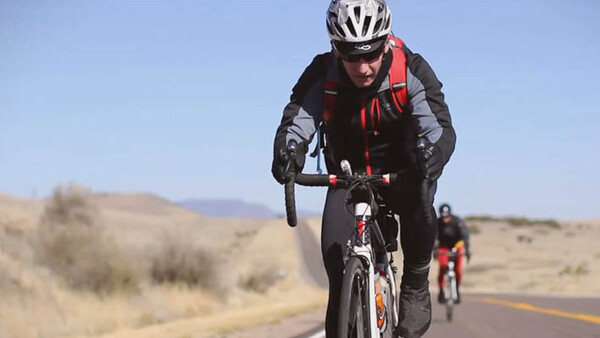
Last spring, I met a group of 4 cyclists planning a 35 day epic adventure from coast to coast across the US. Their goal was to cycle over 100 miles a day, resting only one day a week, in order to raise awareness and funds for the poor and needy in Burundi, Africa. I decided it would be awesome to tag along and film their journey.
The Project
Simon Guillebaud, the leader of the team, has given most of his life to serving the needy in Burundi, Africa, one of the poorest countries in the world. The nation has gone through a great amount of hardship, including genocide, crime, corruption, conflict over land, and food shortages. In 2011, the country recorded it's per capita GDP at $200, which is less than I make for a 1 hour photo shoot. Over the course of his work, Simon has established a non-profit organization, Great Lakes Outreach, which has done tremendous things for the people of Burundi. Much of the work focuses on leadership training and equipping the people with tools to become self-sufficient through education and business opportunity.
As part of an awareness and fund raising campaign, Simon and a teammate began to organize a cross country cycling trip with the goal of raising $500,000. The money was to be put toward a school, farming and food methodology training, and an orphanage. The trip started in San Diego, California and ended in Charleston, South Carolina, over 3000 miles of cycling.
I've always had a heart for Africa. When I heard about the cycling trip, I felt like I could make a contribution to the team and its ultimate work for the people of Burundi. My normal job is shooting weddings and working with pictures. Although I had never worked with video much, I felt I could challenge myself to create a documentary about the cycling experience.
My first and biggest hurdle was expense. Including gas and equipment, I decided to keep costs at $2,500 for the whole trip. I worked largely with the wedding equipment I already owned and used two Canon 60D bodies with an assortment of lenses.
The Filming
My vision was to tell the story of Burundi alongside the cyclists' journey. I didn't want to make this another heart throb story that focuses in on a crusty-eyed, fly-ridden, starving little African boy. I wanted to show how average people, like the cyclists, can contribute to need around the world. To do this, I decided I wanted 4 major types of shots through the film.
I wanted the journey to be told through the cyclists' words and needed a basic interview set up. I used natural backgrounds and natural light throughout the whole trip. For sound, I attached a sennheiser ew100 g2 mic to my 60D and filmed with a b roll for most talking segments. As the trip progressed, I decided having both cameras on tripods produced the best looking interviews. I also incorporated slider shots into some of the interviews.
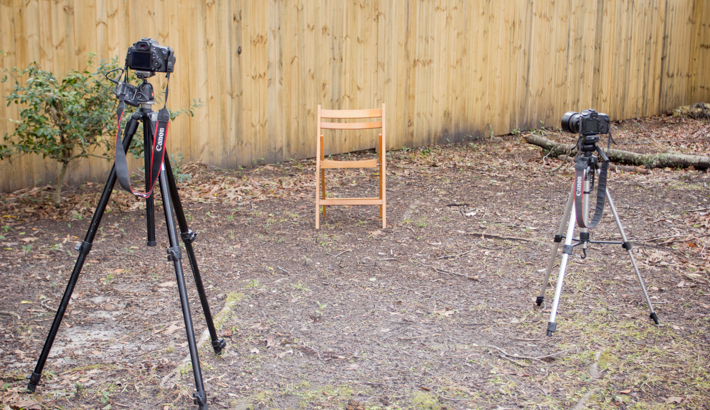
The second and third kind of shots were to track the cyclists while they were on their bikes. I used a Manfrotto video head on for basic pan and tilt shots. This came in handy not only for side of the road shots, but also for an in car video option in case of rain. Yes, this does mean that I was driving and videoing at the same time for some segments. I do not recommend this as the optimal or safest filming method. These shots were only taken when we were traveling on unpopulated side roads with very little or no traffic present.
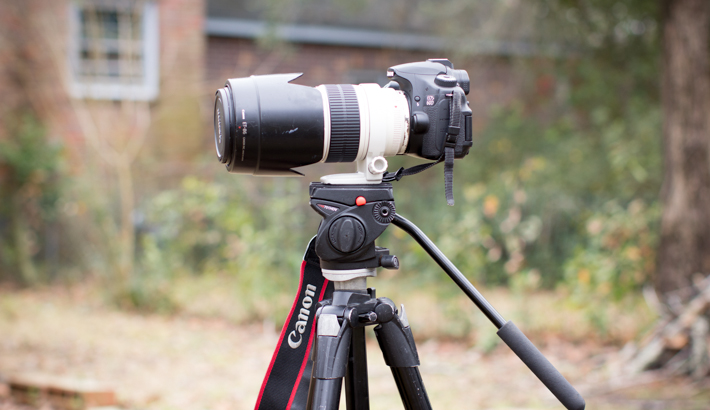
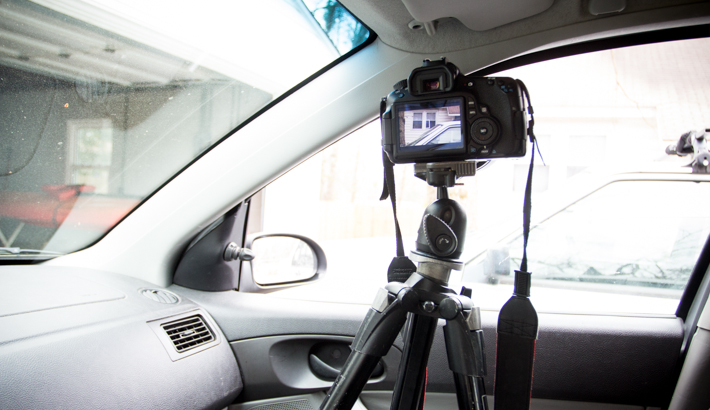
Since basic pan and tilt shots were far too limiting in variety, I got adventurous with my equipment and used my car as a tracking option for my third kind of shot. For the trip, my car was equipped with a roof rack and a rear bike rack. These came in handy for attaching and stabilizing a camera. I secured a camera to the bike racks using a Manfrotto magic arm clamp but found that the magic arm alone did not provide much steadiness to the shots. In order to stabilize the camera a little more, I used bungee cords to hold the camera firmly to the side or top of the car. Honestly, the bungee cords really were the only way this shot was possible. Even with bumpy roads, I was able to get a smooth 100mm shot with the camera on the top of the car.
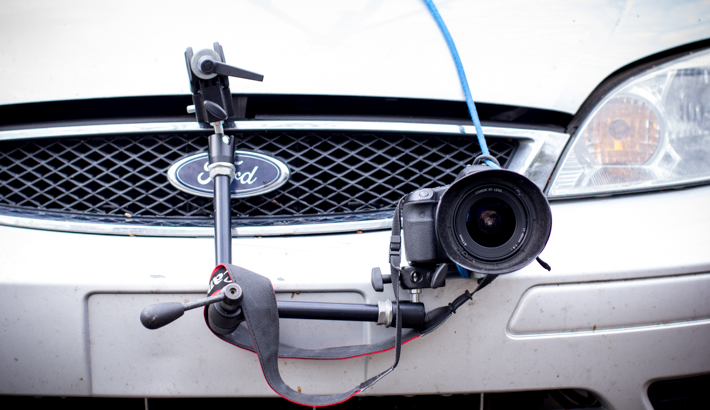
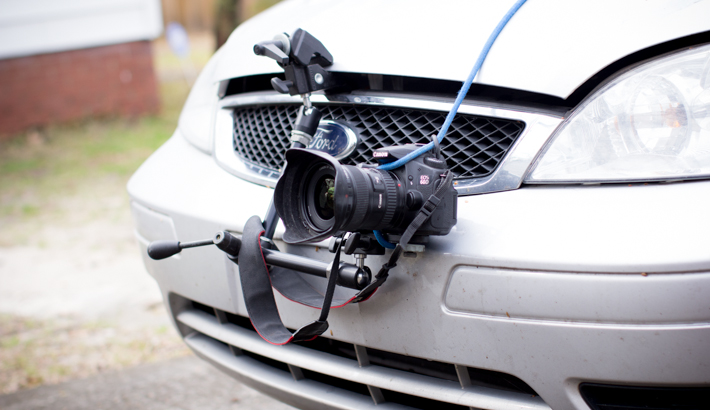
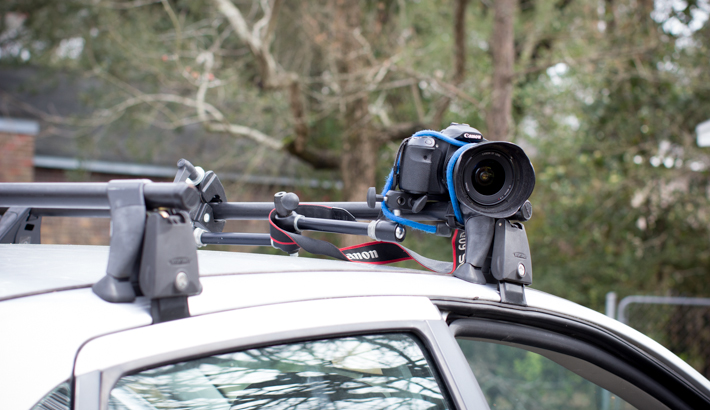
Since I had multiple spots on the car to attach the camera, I was able to get a good variety of POV's while driving beside, behind or in front of the cyclists.
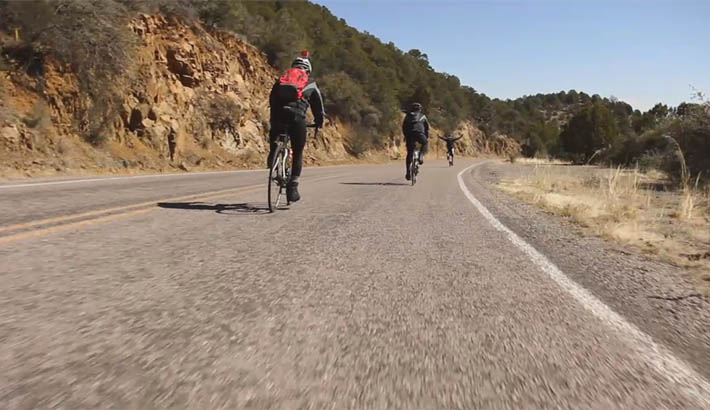
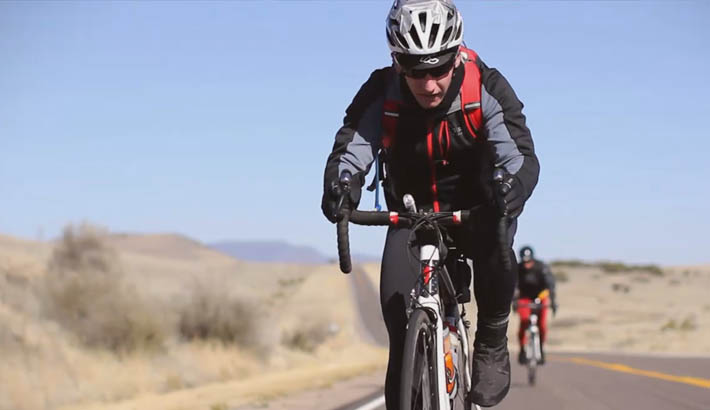
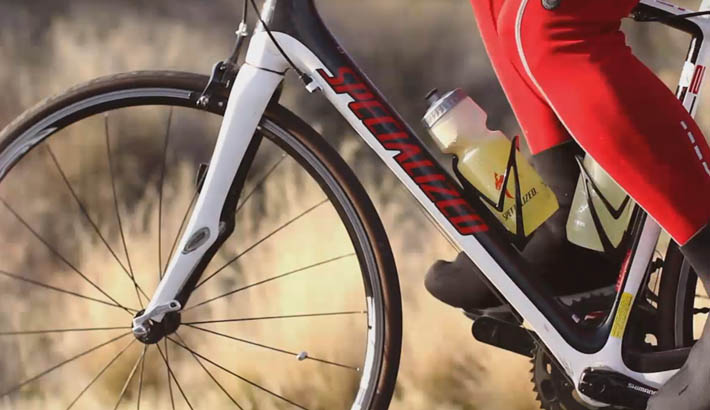
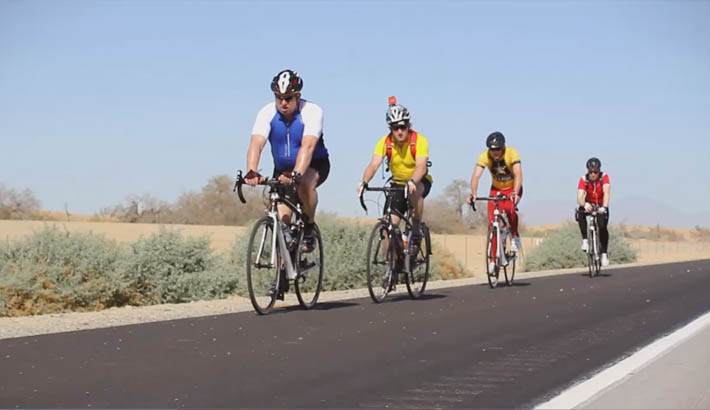
Since I was unable to man the camera for most of the time, most of my shots had to be pre-set. To keep the cyclists in focus the majority of the time, I used a light stand on the side of the road to sub in for the cyclists. Once I mounted the camera on the car, I gauged how far back or to the side of the car I wanted the cyclists and used the light stand to set my focus. I then used my rear view and side mirrors to “place” where the cyclists needed to be to have them in the shot correctly.
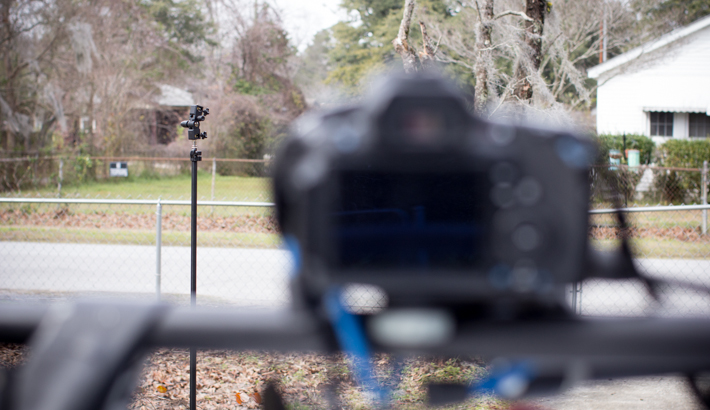
The final shots I wanted include in the film were to capture the beauty of the countryside we passed through. Although I used some basic panning shots, I wanted to include some time lapse segments as well. To stick to my low budget, I purchased the least expensive aluminum slider I could find and built a motor system for it to track. I used a Dynamic Perception MX2 Dolly Engine to synchronize the motor and shutter release. The slider ended up coming in handy to bring some movement to some of the interview shots as well.
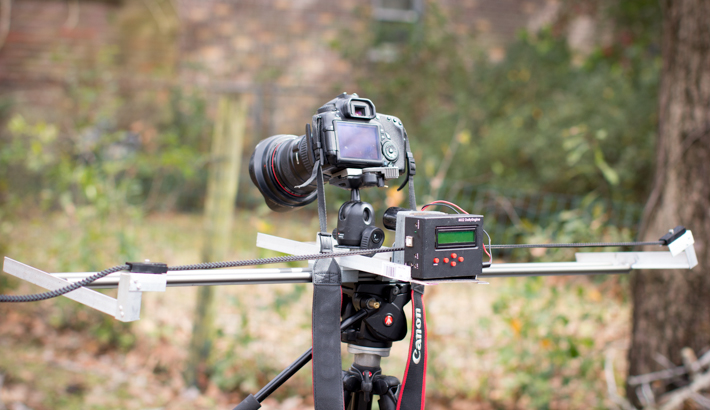
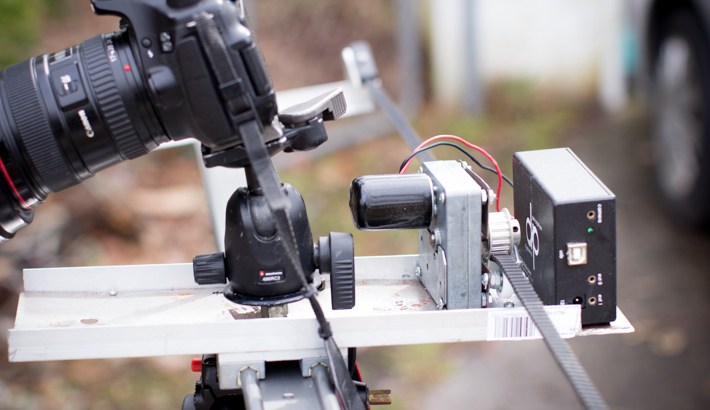
Though the time lapse segments probably could have been a little smoother, I was happy how they turned out considering the limited budget.
Timelapse Example from David Strauss Photography on Vimeo.
Once the filming was done, everything was cut in Adobe Premiere Pro. I was fortunate enough to have a contact to write a soundtrack for the film.
The work behind this project, both mine and the broader work of the cyclists and Great Lake Outreach was done for the sake of people who are in desperate need of help. Below is the full feature length film. If you have the time to watch it and share it, I thank you. If you want to learn more about the trip or would like to donate toward the projects going on in Burundi, check out the Bike for Burundi website.
Bike For Burundi Documentary from David Strauss Photography on Vimeo.
Join the Fstoppers community for free
-
Post comments and join in the discussions
-
Browse the site ad-free
-
Share your work and get featured in the community
-
Compete in the photo contests for fun and prizes
26 Comments
This is a pretty awesome story David. I'm amazed at the small amount of gear (and not necessarily the most expensive gear either) you used to create this. This should be a big wake-up call to those"if I only had X, I'd be so much better" photographers and filmmakers (myself included).
Thank you for sharing and I look forward to watching the full length feature when I have some time.
Thanks Travis. After the fact I felt like the minimalist gear was actually a good fit to the nature of the story, though I never planned for it. You really dont need much to do a great deal of help for people.
how did you get audio from them while they were riding?
That was actually straight from the built in camera on the 60D. There wasn't much ambient besides the car but I was still surprised how well it picked up the sound.
wow. nice work!
how great is that - big applause for you david !!!!
Nice lil article. Thanks for sharing.
Everything was cut in Premiere, by you or outsourced? How long was post production? You knew someone who wrote the soundtrack, did they license all the music free? What kind of budget was involved after the fact, not just the $2500 to drive with the cyclist.
I cut everything in Premiere myself. The only job that was outsourced was the writing of the music. A contact of one of the cyclists offered to write the entire sound track for free. The majority of the film was cut in a month and a half, but the inclusion of music and the production to a playable DVD took a few months longer. Besides time spent by me and the musician, there was no other budget required.
Good stuff, inspired me to have a think about what I could do with my gear and skills to help others...Thanks for sharing.
'not enough land to go around'.
I couldn't get past that. wtf does that even mean? It makes no sense unless you are agitating there aren't enough land holders in what is still principally an agrarian society. Which is hogwash.
Fundamentally Burundi is in the shape it's in because there is no rule of law and property rights in addition to a rigid caste and tribal system that provides what little protection an individual can have. . Westerners who 'raise money for the afflicted in Burundi' but don't address these root causes are doing effectively nothing in the long run. It's a fools errand to try to instill Western leadership skills when these folks have no concept of Locke, Madison, Jefferson or Rousseau.
You opened your film on the banal and while I admire your frugality, I've seen this story a million times before and it ends the same way: status quo.
Thanks for your input!
Out of curiosity, would you suggest it is better to leave countries in such states to fend for themselves? Western rule was ultimately what put countries such as Burundi in the state they are in. Is it better to walk away and let them figure it out?
IMO, no. Sure, there are ways of "helping" that really hurt, but with a proper contextual understanding of the culture, there are successful ways to benefit the people with effective help.
tyrohne, so this is your excuse to do nothing? Locke, Madison and Jefferson aren't there to help them, these guys are. And if you think is so much essential... bring Locke and Rousseau and DO SOMETHING!
You rock!
Fantastic to see ingenuity triumph over budget. I recently had a similar
experience keeping my go pro steadily attached to my car. Had to think outside the box and used a crutch and lots of straps to get the desired effect. Who needs a crew and a mobile jib?
Great work, I wonder what you were using for lighting your interviews?
Everything was natural light. Only location selection =).
Thanks for posting. But please revise your headline... two of the lenses pictured (70-200mm and 24-70mm) cost over $2,500, so the total is a gross underestimate that is a harmful benchmark for low budget filmmakers as well as video professionals who present budgets to clients, not to mention self aggrandizing.
As I already owned the equipment, I did not spend more than $2500 for this trip. One of the points I made was to show that anyone with any piece of video equipment has the capability to undertake larger projects. I understand the total assets involved were more than $2500. I suppose with that line of thought, I should include the cost of my car and clothes as well.
You are not using just ANY video equipment, you are using about $6,000 in canon gear. Real film budgets also include transportation and meals. In this case your car played a supporting role greater than transportation so it should not be under valued. I don't intend to lessen your accomplishment, which is great, no matter the actual budget. My problem is with the assertion that your headline implies; a false cost that undervalues the craft of filmmaking. Of course, it still made me click it. :P
To give some context to my claim:
A few years ago I directed and produced a 2min+ bike video, with rented, borrowed and owned gear, over a weekend and the total cost more than twice your headline, not including labor. The camera person held the camera while strapped to a manpowered tricycle. It was shot with the cheaper version of the 60D, the Rebel T3i and the same 70-200mm. https://vimeo.com/34414313
On a side note: had we had more money, I would have shot over two weekends and had them eat falafel instead of ice cream.
I wish you the best!
Congratulations to David, this is awesome and so inspirational in so many levels. Thanks for sharing this.
What an achievement, David! Beautiful and prolific!
awesome, david u were such an integral part of the trip and fundraising, without your unselfish efforts we would not have raised soooo much , thx geoff
Congrats David! Showing that action do much more than talking.
Great work! I enjoyed watching the film. Creativity and skill to tell stories are really the most important tools to make a good feature.
Finally had time to sit down and watch the film, David! Truly inspirational...well done, my friend!
More importantly, I admire how u managed to film the documentary AND record your process at the same time.