• Originals
    • Categories
      • Gear
        • Forum
          • Picture of the Day
            • Contests
              • More
                • FS Gear Guide
                • Fstoppers T-shirts
              • Home
              • Advertise
              • Meet the Writers
              • Submit Content
              • Contact
              image011
              November 18, 2012
              Lauren Jonas

              Depth of Field as a Creative Tool

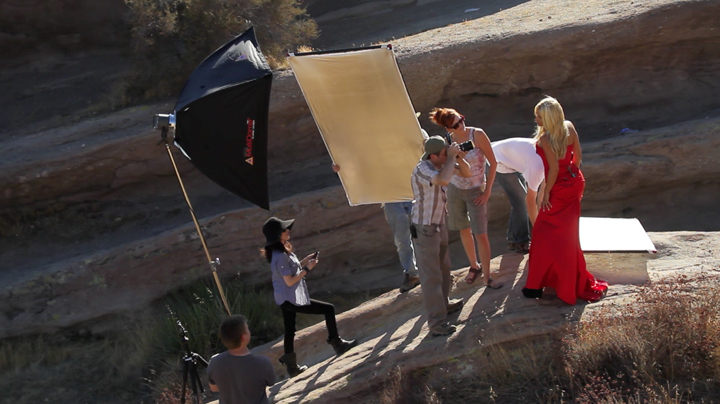
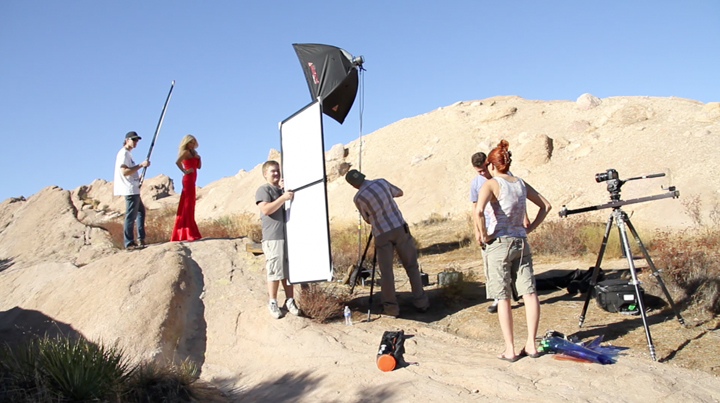
              With a simple change in focal length, we know that we can drastically change and control the depth of field. In this lesson from The Slanted Lens, Jay P Morgan shoots a fashion portrait at the Vasquez Rocks in California. Not only does he cover how to control the depth of field, but you’ll also learn how he uses this tip to enhance his work.
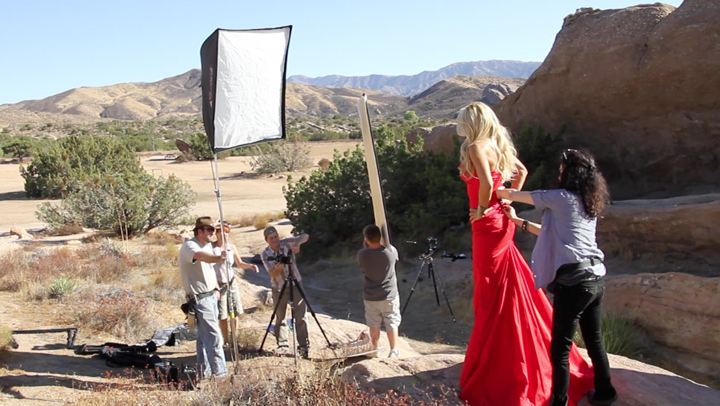
              image006 Depth of Field as a Creative Tool

              image020 Depth of Field as a Creative Tool

              image023 Depth of Field as a Creative Tool

              image004 Depth of Field as a Creative Tool

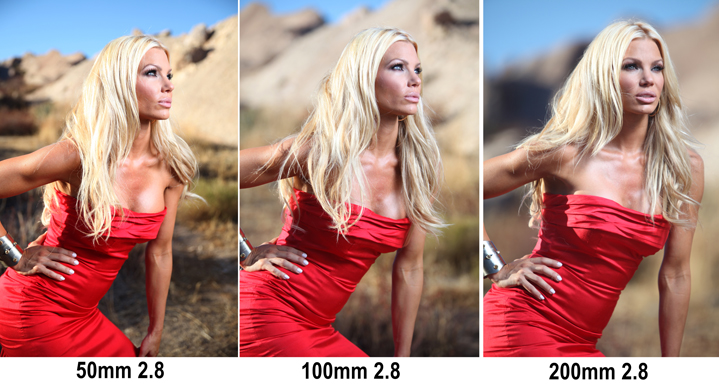
              From Jay P: You can see from this comparison that the wider the lens the more depth of field you will have. Wider lenses give us more depth of field. Longer lenses give you a shallower depth of field. To achieve a shallow depth of field you need a longer lens with a smaller aperture number which gives us a larger aperture opening and less area of acceptable focus. A 200mm lens at f2.8 is going to give you a very shallow depth of field where as a 50mm lens at f2.8 still has a lot of depth of field. On the 5D mark 2 a 50mm lens at f2.8 twenty feet from the subject will give you 8.57 feet of acceptable area of focus. A 200mm lens at f2.8 twenty feet from the subject will give you 0.5 feet of acceptable area of focus. Even if you back away from the subject with a 200mm lens to 40 feet, the area of acceptable focus is only 2.04 feet. That is why it’s easier to throw the background out of focus with longer lenses. There is no right or wrong choice when it comes to depth of field. It’s a matter of what and how you want to communicate. There are many resources to get accurate information on Depth of Field. I use an app for the iphone called Depth of field master. Its a great app that lets you choose the camera lens and distance to get the depth of field. Here are two web pages that I have used as well that will give you the same information as the app.http://www.dofmaster.com/dofjs.html
              http://www.dofmaster.com/doftable.html

              Fashion
              Gear
              Location
              Natural Light
              Nature
              Portraits
              « Inspiring Photography By Lorena Arance
              The Athlete Machine: Red Bull Combines Extreme Sports With A Rube Goldberg »
              • http://wemetlastnight.tumblr.com/ Albi Kl

                It should be noted that depth of field (DOF) is a function of aperture and distance from subject and not focal length. The ‘apparent’ decreased DOF is due to magnification of the background (or lens compression).

                For those interested a technical explanation is presented here:
                http://www.cambridgeincolour.com/tutorials/depth-of-field.htmand
                a practical example here:
                http://www.luminous-landscape.com/tutorials/dof2.shtml

                On the subject of using DOF creatively, I think the use of longer focal lengths by many artists is limited. It seems most use them for zooming in or as a means of separation of subject and background, whereas I’ve seen very few that take advantage of this to create an interesting relationship with the background. This is perhaps an untapped niche and this article has given me an idea for a project. Thanks.

              • Anders Petersen

                (Your first link is broken. Change “.htmland” to “.html”)

                As much as I love Cambridge in Colour for their to-the-point technical explanations, I think this article has a better explanation of DoF, mostly because it doesn’t simplify the equations to use hyperfocal distance as a parameter. I think this does a better job of revealing the nonlinearities at the extremes of short focal length and close focus distance. The included plots are also easy to understand.

                In any case, DoF is (minimally) a function of three parameters. But which three doesn’t really matter, as long as you cover the whole state space. If you choose to use focal length or use focus distance doesn’t matter, as long as you can express both in terms of some other parameter(s). Field of view, size of circle of confusion, pixel density, sensor size, crop factor… They’re all interconnected, so there are a huge number of correct ways to represent the state space. It’s just that some are simpler (algebraically) than others, and some are easier to apply to real world scenarios than others.

                Of course, if you were to also consider diffraction and phase velocity change due to refraction (chromatic abberation, and attempts to counteract it with corrective elements), the equations would be ridiculously complicated. And then there are things like field curvature and working with aspherical elements…

              • http://wemetlastnight.tumblr.com/ Albi Kl

                Thanks for the link, it does indeed provide a better explanation. I’ve edited my above comment to reflect that.

              • Connect with Fstoppers
                Follow @Fstoppers
              • Fstoppers Originals
              • Popular Articles
                • List: Top Ten Best Movies about Photography
                • Do You Have Enough Gear to be a Professional?
                • Cat Beards: The Latest Funny Photo Trend Involving Cats
                • What A Week Of Groceries Looks Like Around The World
                • How To Light a Muscle Car with Tim Wallace
                • Fstoppers Reviews the Sigma 30mm f/1.4 DC HSM Prime Lens
                • Sounds of the Shutter
                • Tools to Use to Avoid Uncle Sam's Snooping
                • My Top 8 Pieces Of Gear For Shooting Run And Gun Video On A DSLR
                • NY Times Photoshops Fashion Model - Says Readers Understand It's Fantasy
                • Brad Pitt Photographs Angelina Jolie: Results Are Impressive
                • Canon Photographers Biggest Secret Exposed
                • Tackle Exposure, Skin, Eyes, Sharpening & More in This 5 Minute Retouch
                • When and Where To Style Your Food Photography
              • Recent Comments
                • Konstantin Lazorkin said Shutter (thailand version is better) http://www.imdb.com/title/tt0440803/?ref_=sr_3 »
                • Gunnar Rathbun said I'm a Canon user and the D3 is the best sounding camera I've ever heard.. Though I do quite like the soun »
                • Kenji Kenji said I don't think this is possible on any Nikon. :-( »
                • Edd Carlile said Typical stick thin clothes horse....nothing to see here. »
                • Yoga Wijaya said yeah right, where is bang-bang club? why not in the list? come on »
                • Joe Triple D said for 500 bucks i'd still go for the Tamron AF 28-75mm f/2.8 SP XR Di LD Aspherical (IF) for Canon. »
                • Jason Peters said Atta boy Lear »
                • David Silverman said Funny Face with Audrey Hepburn and Fred Astaire. Fred Astaire character was loosely based on Richard Aved »
              • Support Fstoppers
                current nikon rebates deals
              • FS Originals
              • List: Top Ten Best Movies about Photography
              • My Top 8 Pieces Of Gear For Shooting Run And Gun Video On A DSLR
              • Canon Photographers Biggest Secret Exposed
              • Endearing Animal Portraits By 18 Year Old Photographer Jessica Trinh
              • How to Go Pro Without Going Crazy
              • Categories
              • Commercial
              • Video
              • Gear
              • Location
              • Strobe Light
              • Contests
              • Win a 30x40 Print
              • Alien Skin Retouch Contest
              • Win the Art Behind the Headshot
              • Black Rapid Contest
              • Win a Lowepro Bag
              • Random Posts
              • Stop Charging, Start Shooting For Free
              • Fstoppers Lighting Diagrams: Creating Gradient Backdrops
              • Portraits From A Land Forgotten
              • Henri Cartier-Bresson: The Father Of Modern Photo Journalism
              • Fstoppers Reviews the Fotodiox Wonderpana System for Wide-Angle Lenses
              • Picture of the Day
              • Cyclist
              • Ferris Wheel
              • Cloudbreak
              • Highway 90
              • Frankfurt Delay
              • Home
              • Advertise
              • Meet the Writers
              • Submit Content
              • Contact
              • Sitemap
              © Fstoppers
              Made by Novum