
First Long exposure
Niagara
Niagara

Hiking in this beautiful region is like a present.Also standing at high elevation and looking to the king of Austria.The first snow the changing coloursand all the combination with the weather cond


One of my favorite waterfalls I've photographed in recent years. deep in the backcountry of Vancouver Island lies this pristine oasis.

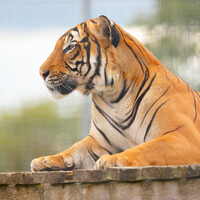
These are a highly endangered species, and the rescue center has this young male tiger, which they hope will breed with their already existing female Malayan tiger.
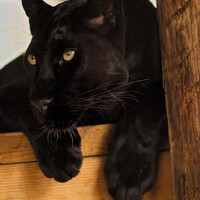
A new arrival at the rescue center. She was very friendly and very flirty, rolling about on her back and meowing, then staring at you as if she might be hungry. A magnificently beautiful animal


2 Comments
Hi Gopi,
are you looking for feedback on this?
If not stop reading here ;) All that's written below is meant in good faith and not meant to be taking harshly.
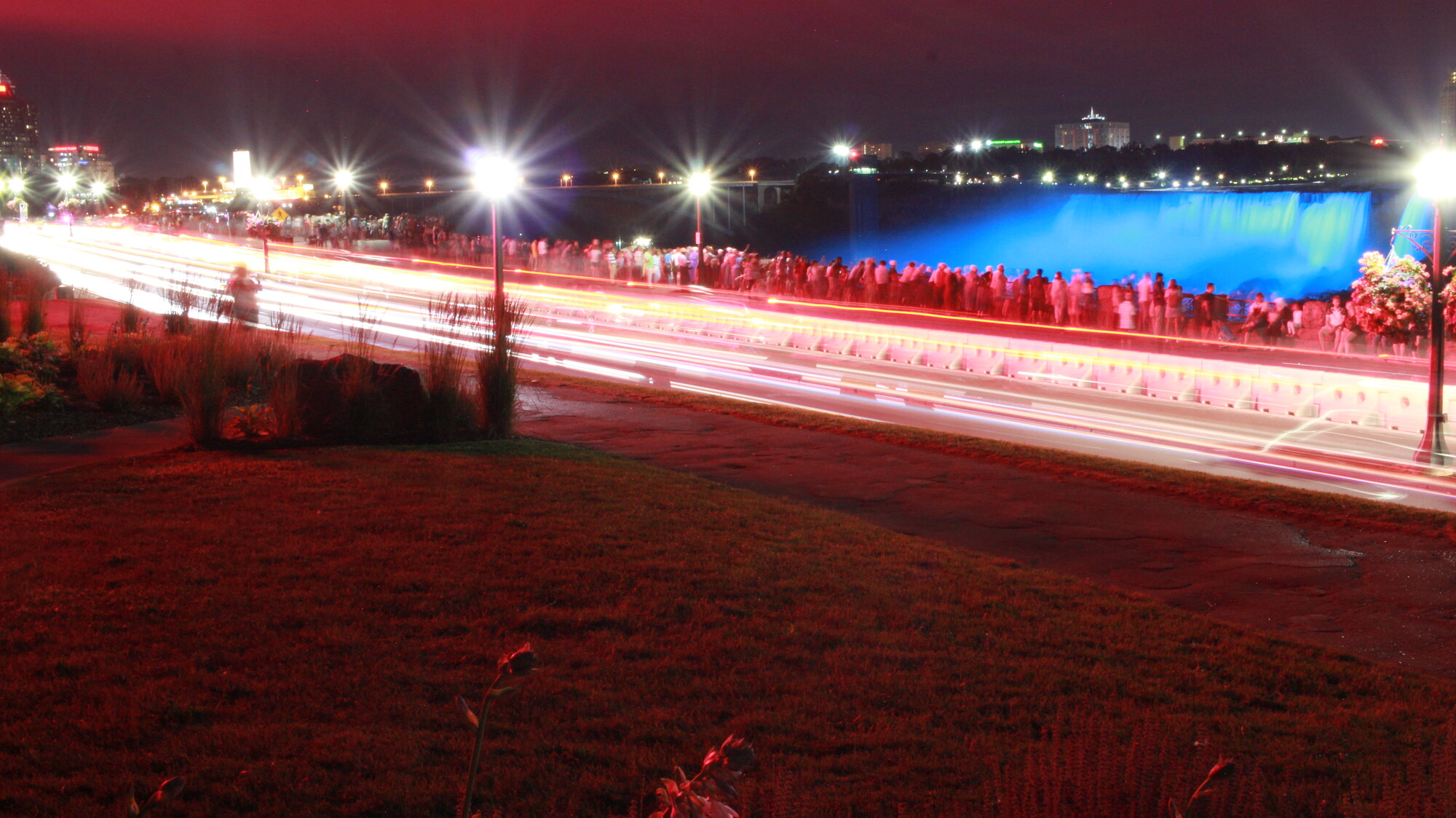
1. You should always ask yourself, what is your subject. In this case it would be the waterfall, yet the waterfall is tiny and all the way on the side of the image.
2. I'm not sure if this is the right scene for long exposure. It's doesn't really benefit from it. You get light trails and silky waterfalls, but the waterfall is so far in the back it doesn't really matter and the light trails are so numerous they morph into one overexposed mass. Additionally the people watching the waterfall are also so many that they become one blur which doesn't look very nice.
3. Exposure. The image is overexposed. That leads to these big white blobs on the lights instead if nice, clean lensstars. The top left of the image is a white blur and quite distracting.
4. Composition. As mentioned above you should always look for a clear subject. Apart from that there is a big imbalance in this image created by the dark and empty foreground.
I assume that you do not have the opportunity to go and re-take the shot. So in order to get around the points i listed above you could try and crop the image. I could imagine a 16:9 crop of the top right third of the picture (from the right edge to the 3rd or 4th lantern) will look better by eliminating the dark foreground and the white part on the left.
It's good that you're trying something new.
As Max wrote, it's important to keep composition in mind. A good idea is to try and use the lights from the cars effectively, for example as a leading line.
Balance is also important, as is a clear subject (once again, as Max pointed out). For example. in this photo we have 3 layers, all seemingly disconnected. You have the grass at the front, then as the eyes move up there's a streak of light going nowhere in particular, and then at the top we have Niagara falls, which is too small to even tell what it is.
It's good that you're learning the ins and outs of how to use your camera in different ways. Don't give up, I've even seen some pros fail at using long exposure effectively.