Picking between two Canon telephoto zooms for wildlife comes down to a question that sounds simple and isn't: do you want more reach or better glass? One gives you 800mm in a package that's hard to match anywhere else, and the other gives you L-series quality with a wider low end.
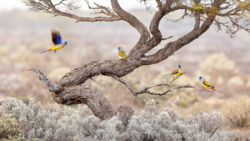
Shooting at a lake before sunrise, Duade Paton sets out to answer which lens to grab for birds by simply using both and reporting what happens. He runs the Canon RF 100-500mm on one body and the Canon RF 200-8000m on another, mounting the original Canon R5 and the newer Canon R5 Mark II so the cameras get tested alongside the glass. The morning starts slow, with barely a bird in sight, and Paton is honest about the nerves that come with waiting on wildlife that may never show. Then swans fly into the sun, a peregrine falcon settles into a hollow, and a pied cormorant lands against dark water.
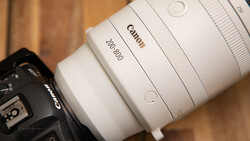
The 100-500mm is an L-series lens, weather-sealed and sharp, weighing around 1.3 kg, which makes it easy to handhold for long stretches. Its 100mm to 200mm gap turns out to be larger than Paton expected, and that wide end opens up landscapes and birdscapes the 200-800mm simply can't frame. The tradeoff is reach: 500mm runs short for small birds, and while a 1.4x teleconverter adds length, it costs you the wide end and leaves the lens extended. The 200-800mm sits at f/9 and isn't L-series, so the coatings, sealing, and autofocus don't match, but 800mm in this form and price is difficult to find another way. Add the 1.4x and you reach 1,120mm, which pulled that distant falcon much larger in the frame during the session.
Paton also shows a shutter-speed trick worth borrowing. He keeps his shutter at 1/2500 s in case a bird takes flight, then uses a custom button that drops it to around 1/320 s for still portraits, which lowers his ISO and cuts noise. That single press lets him switch between action readiness and clean image quality without diving into menus.
The reach-versus-quality choice tracks a wider shift in wildlife photography. High-resolution sensors and better subject-detection autofocus have made cropping a heavy zoom far more forgiving than it used to be, which is why lenses like the 200-800mm have become popular despite the slow aperture. Paton points to the APS-C angle directly: on a body like the Canon R7, the 100-500mm delivers a 160mm to 800mm full frame equivalent field of view, and he suspects it would pair well with a future R7 II. If you shoot crop-sensor bodies and chase small, distant birds, that math changes which lens makes sense before you even weigh cost or sharpness.
His own verdict leans on the body. On APS-C he'd tilt toward the lighter, sharper 100-500mm, but on his full frame cameras he keeps reaching for the 200-800mm for the extra length. He also notes the R5 Mark II edges out the original R5 in the field, picking up birds faster and offering a more lifelike viewfinder, even though the older R5 holds a slight image-quality lead. Which shots landed best from the morning, and how the falcon looked at each focal length, is worth seeing for yourself in the video above.



Join the Fstoppers community for free
-
Post comments and join in the discussions
-
Browse the site ad-free
-
Share your work and get featured in the community
-
Compete in the photo contests for fun and prizes
1 Comment
Reasonable comments. The 200-800mm seems to be way more fragile than the 100-500mm. This is an important consideration. I use the 1.4 extender with the 100-500. That’s handy, it is a pity it only works 300-500mm range. That’s a nuisance. The shutter speed trick is a good idea. The only thing too many button shortcuts can be confusing. Fieldcraft gets forgotten sometimes. The closer you can get the better. Longer and longer lens is sometimes a lazier and less effective solution.