




Profile picture for Alex Cooke
Editor-in-Chief

Alex Cooke

Cleveland, OH
18 3 Star badge
1 10+ Portfolio Images badge
1 Editor's Pick badge
1 Top Contributor badge

Original Articles from Alex Cooke

What 'Stops of Light' Means (And Why Photographers Won't Shut Up About It)

If you have spent any time reading about photography, you have encountered the word "stop" used in a way that makes no apparent sense. A lens is "two stops faster." A photo is "one stop underexposed." Image stabilization gives you "five stops of compensation." Somebody on a forum says they "opened up a stop and a half" and everyone nods like that means something.

A Love Letter to the Disposable Camera

There is a specific feeling that I am going to try to describe, and I am not sure I will succeed. It is the feeling of being nine years old in 1996, holding a plastic Kodak FunSaver on a wrist strap, with the flash recycling and the little red ready light blinking on and off, knowing that I had 27 chances to take a picture and that I would not see any of them until my mom got the envelope back from the grocery store a week later. It is the feeling of a camera that did not ask anything of me and did not promise anything in return, and it is the feeling I have been trying to recapture in pieces ever since.

The Shutter Speed Rule Most Beginners Don't Know About

There is a simple rule that will immediately reduce the number of blurry handheld photos you take, and most beginners have never heard of it. It is called the reciprocal rule, and it gives you a minimum shutter speed based on the focal length of your lens. The math takes about two seconds. The payoff is permanent.

The Authenticity Trend Is the Best Thing to Happen to Photography in a Decade

Every January, the trend forecasts roll in. And every year for at least the last five, "authenticity" has appeared somewhere on the list, wedged between AI predictions and whatever retro aesthetic is cycling back. By now, it would be reasonable to dismiss it as an empty buzzword, the kind of thing that sounds important in a webinar and means nothing in practice.

The Difference Between Image Stabilization and a Fast Shutter Speed

Your camera has image stabilization. Your lens might, too. You also have a shutter speed dial that goes up to 1/8,000 of a second. Both of these tools fight blur, but they fight different kinds of blur, and mixing them up is one of the most common mistakes beginners make.

Sony Is Still Winning the Camera Business. Fujifilm Is Winning the Conversation.

For roughly a decade between 2013 and 2023, Sony defined where the camera industry was going. The original a7 and a7R democratized full frame mirrorless and forced Canon and Nikon to abandon their DSLR-protective hesitation. The a9 line proved electronic shutters could compete with mechanical at the highest level of professional sports. The opening of the E mount to third-party manufacturers reshaped the lens economy across every competing system. Sony was the brand that other manufacturers reacted to, and the photography press treated Sony announcements as bellwethers for where the industry would move next. Working photographers debated which a7 variant to buy because the relevant comparisons were among Sony's own bodies.

Many Working Photographers Are Buying the Wrong Camera

For roughly twenty years, the working photographer's purchase logic was simple. The flagship body was the right answer for demanding work, and the mid-range body was the right answer for everything else. Working pros bought flagships because their work demanded it. Wedding photographers shooting in dim churches, photojournalists in unpredictable conditions, sports photographers tracking fast subjects, wildlife photographers waiting for a single decisive moment, commercial photographers needing absolute reliability across long shoot days. All of them needed something the mid-range bodies could not deliver, and the flagship was where that something lived.

Why the 24-70mm f/2.8 Should No Longer Be the Default First Zoom Purchase

The 24-70mm f/2.8 has been the default first professional lens purchase for at least 25 years. Almost every working photographer has owned one. Every photography forum recommends one to every newcomer asking what to buy after the kit lens. Every wedding educator names it as the foundation of a working kit. Every camera store stocks it at eye level. The lens has been so culturally dominant within working photography that the question of whether it should still be the default has rarely been asked seriously. It should be asked now. 

Why "Less Perfection, More Human" Is the 2026 Photography Trend That Will Last

Photography has spent most of its digital era chasing technical perfection. Sharp focus, clean files, controlled lighting, smooth skin, perfect exposure across the dynamic range. The pursuit was reasonable. Each generation of cameras and editing software made these standards more achievable, and working photographers who failed to meet them risked looking unprofessional. By 2020, a wedding photographer delivering a slightly soft image was apologizing for it. A portrait photographer leaving visible skin texture was risking client complaints. The technical-perfection ceiling kept rising, and the industry kept rising with it.

What Is Truth in a Post-Photography World?

In March 2026, the National Republican Senatorial Committee released an online ad featuring a minute-long video of Democratic Senate candidate James Talarico speaking into the camera, reading statements the real Talarico had not spoken on camera. The Talarico in the video was generated entirely by artificial intelligence, voicing content drawn from the candidate's old social media posts. The words "AI Generated" appeared in small text in the corner of the frame at the start, then faded into even smaller text that remained on screen while the fake Talarico continued to speak. 

Why Every Photographer Needs to Delete 90% of Their Portfolio

Most working photographers have a portfolio problem. The problem is not that the work is bad. The work is usually fine. The problem is that there is too much of it. Portfolios that should have 12 to 18 images contain 40 or 50 or 80. Websites that should load three galleries fast contain eight galleries that load slowly. Instagram grids intended to function as portfolios contain two years of inconsistent work that blurs the photographer's identity rather than sharpening it. The photographer has spent years building the portfolio and cannot bring themselves to remove anything from it.

Why Niching Down Is the Single Most Profitable Decision Many Photographers Never Make

The photography business has a strange relationship with specialization. Almost every working photographer starts as a generalist. The first few years of paid work are a scramble: weddings on weekends, headshots during the week, a real estate gig when a friend asks for a favor, some product work to pay for a lens upgrade, maybe a few corporate events when the calendar is thin. The logic is obvious and reasonable. Early in a career, any paying work is better than no paying work, and saying yes to every request builds both experience and cash flow. That first phase of generalist scrambling is not a mistake. It is how most photographers who become successful actually learn their craft. The mistake is staying there.

OM System Survived Its Split From Olympus: Who Expected This?

When Olympus sold its imaging division to Japan Industrial Partners on January 1, 2021, the new company was called OM Digital Solutions. The OM SYSTEM product brand arrived later, announced in October 2021 as the name the company would put on its cameras going forward. Most of the photography press wrote the obituary in advance of either event. The division had been unprofitable for years. Olympus itself, after more than eighty years of making cameras, was exiting the business. Micro Four Thirds had lost the sensor-size argument in the public imagination to APS-C and full frame. The buyer was a private equity firm, not a camera manufacturer. The standard expectation was managed decline: a few years of catalog padding, a thinning lens roadmap, and eventual fade.

Why Fujifilm Is the Only Major Manufacturer That Understands Gen Z

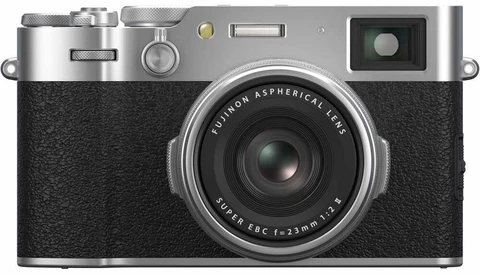
The Fujifilm X100VI has been supply-constrained for more than two years. The camera launched in February 2024, and as of April 2026, availability remains spotty: Fujifilm's own US shop typically shows it as "Notify Me" rather than in stock, and major retailers list the camera as temporarily out of stock with rolling expected availability windows rather than steady inventory. The company raised the US price from $1,599 to $1,799, and the camera still moves for above MSRP on the secondary market. Two years of reported shortages is not a production problem that got solved. It is a demand problem that Fujifilm is openly uninterested in solving.

Your Video Workflow Is Probably Five Tools Duct-Taped Together and Vmake Is Betting You're Tired of It

If you produce short-form video for clients or your own brand, take a second and count the number of apps, browser tabs, and subscription logins sitting between the moment you have an idea and the moment you hit publish. There's the scriptwriting tool (or a blank doc you've been staring at for twenty minutes). The generation or editing platform. A separate captioning service you pay for monthly. Something for thumbnails, maybe a dedicated generator, maybe you're still screenshotting frames and adding text in Photoshop. A background removal tool. Possibly a video enhancer you bookmarked six months ago and keep forgetting to cancel.

A Love Letter to My Film Cameras

I sold my Mamiya 645AFD, and I regret it every time I think about it, which is more often than I would like to admit. The film got too expensive, and the scanning costs added up, and I told myself the rational thing to do was to let it go and put the money toward something more practical. I was right about the math. I was wrong about everything else. 

The Return of Camera Design as Identity

Somewhere around 2010, camera design stopped mattering to the photography industry. The DSLR era had produced bodies defined by ergonomics rather than aesthetics, and the first mirrorless wave carried forward the same logic. Cameras were tools, tools looked like tools, and any photographer who cared about how a camera looked was suspected of being a poseur. The mainstream press reinforced the assumption. Reviewers evaluated bodies by their grip comfort, control layouts, button feel, and weather sealing, and any discussion of aesthetics was treated as either irrelevant or faintly embarrassing.

5 Things That Are Worth Splurging On in Photography (and 5 That Are Not)

Photography has a spending problem, and it starts early. The moment you get serious enough to move past the kit lens and the auto mode, the industry opens a firehose of recommendations pointed directly at your wallet. Better bodies, faster glass, studio lighting, editing software, bags, straps, filters, presets, printers, and accessories that promise to make your work look professional before you have figured out what "professional" means for you.

Why the 85mm f/1.8 Beats the 85mm f/1.4 for 95% of Photographers

The 85mm prime is the rare lens that almost every working portrait photographer owns, eventually. It is the focal length that does the most flattering work on faces, the easiest one to recommend to a portrait beginner, and the lens most photographers reach for when they want to make a person look the way they want to be seen.

The Pentax K-3 Mark III and Why DSLRs Refuse to Die

The Pentax K-3 Mark III was officially discontinued in Japan in January 2025. The Monochrome variant has been more complicated: B&H's original black Monochrome listing is now marked "No Longer Available," though it points buyers to a current matte-black Monochrome listing still shown as in stock. After roughly four years of production, the K-3 Mark III is being phased out in stages rather than discontinued cleanly, and the last major APS-C DSLR from a major manufacturer is winding down. By the standard industry narrative, this should be the end of the story. DSLRs are dead. Mirrorless has won. Move on. Except the story is more complicated than that. 

Why the Nikon Z9 Is Aging Better Than Anyone Expected

When Nikon announced the Z9 in late 2021, the camera was treated by most of the photography press as Nikon's "we are still here" moment. The brand had spent the early mirrorless years getting beaten in feature comparisons by Sony, criticized for slow autofocus updates, and described in obituary-adjacent language by gear reviewers who had decided Sony had won the format war. The Z9 was supposed to prove Nikon could still build a flagship. It did. Then something more interesting happened over the next four years.

9 Things I Wish I Knew About Photography Insurance

Insurance is the part of running a photography business that nobody warns you about, nobody teaches you, and nobody finds interesting until the day they need it. Then it becomes the most important conversation of your career, usually too late. Most photographers buy a policy because a venue asked for one, sign whatever the broker recommends, and never think about it again until something breaks, gets stolen, or generates a lawsuit.

Deposits Are Not Optional, and Photographers Who Do Not Require Them Are Working for Free

Most photographers treat the deposit as a courtesy request. A nice-to-have. Something you ask for politely, and if the client pushes back or seems uncomfortable, you waive it because you do not want to lose the booking. This is the standard operating posture of the photography industry, and it is costing working photographers thousands of dollars a year that they never see on their books, because the losses are invisible until you run the math.

Fstoppers Photographer of the Month (April 2026): Radek Pohnan

The Fstoppers community is brimming with creative vision and talent. Every day, we comb through your work, looking for images to feature as the Photo of the Day or simply to admire your creativity and technical prowess. In 2026, we're featuring a new photographer every month, whose portfolio represents both stellar photographic achievement and a high level of involvement within the Fstoppers community.

The Secret to a Full Calendar Is Answering Your Damn Email

There is an entire industry selling photographers the idea that their booking problems are marketing problems. Instagram strategies, SEO courses, funnel templates, lead magnets, content calendars, brand refreshes, niche-defining workshops, and $2,000 mentorships that promise to "unlock the pipeline." Photographers buy them, implement them, and wait for the calendar to fill. For most photographers, it does not.

The Real Reason Photographers Are Leaving Adobe

For most of the past decade, Adobe was not a choice. It was the default. Lightroom and Photoshop were where photographers learned to edit, where the workflows lived, where the presets came from, and where the entire industry quietly agreed to standardize. The price hikes were annoying. The subscription model was annoying. But the alternative was unthinkable, because there was no real alternative.

The Real Reason Photographers Are Quitting Instagram

It is happening quietly. Working photographers, the kind who built audiences in the 30,000 to 200,000 follower range over five or ten years, are deleting their accounts, archiving their grids, or simply going silent. There are no farewell posts. No dramatic announcements. The accounts just stop updating, and a few months later they are gone.

The Problem With How Photographers Talk About Money (and What Needs to Change)

Photography has a money problem. Not a "there is not enough of it" problem, although that is also true for many photographers. A deeper problem: the photography community has developed a set of cultural patterns around money that no other professional industry tolerates, and those patterns are actively suppressing income for everyone in the field.

8 Unpopular Photography Opinions That Are Actually True

Photography has a generous supply of conventional wisdom. Some of it is earned. Some of it is repeated so often that nobody questions whether it was ever true in the first place. And some of it is actively wrong, kept alive by a community that confuses encouragement with honesty.

Your First 30 Days With a New Camera: A Day-by-Day Learning Plan

You just bought a camera. Maybe it is a Canon EOS R50, maybe a Nikon Z50 II, maybe a Sony a6400 you found on sale, maybe a Fujifilm X-T50 that took three months on a waitlist. Whatever it is, you unboxed it, charged the battery, took a couple of test shots of your cat, and now it is sitting on the counter while you wonder what to do next.

14 Hidden Costs of Being a Professional Photographer Nobody Talks About

When you calculate whether photography can support you financially, you start with the obvious math: how many sessions per month, times your session rate, equals annual income. That number looks promising. It is also wrong, because it does not account for the dozens of expenses that sit between your gross revenue and the money you actually take home.

12 Signs Your Photography Has Plateaued and What to Do About Each One

A plateau does not announce itself. There is no notification, no error message, no dramatic moment where you realize you have stopped growing. It arrives quietly, disguised as comfort. You know your camera. You know your style. You know your workflow. Everything is efficient, consistent, and predictable. And that predictability is exactly the problem.

16 Signs You Are Ready to Go Full-Time as a Photographer

The question is not whether you are talented enough. Talent got you to the point where going full-time even feels possible. The question is whether the business infrastructure, the financial runway, and the personal support system are in place to survive the transition without collapsing under the weight of it.