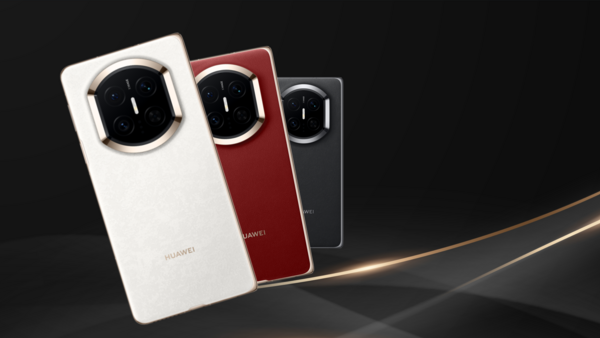
For years, foldables have been known to offer nothing more than mediocre-level cameras. With the launch of the new Huawei Mate X7, they have just raised the bar for foldable phones with a device that packs a bunch of serious camera hardware. The new Huawei Mate X7 is being positioned as the first foldable with true flagship-grade imaging technology that finally doesn’t force you to compromise on photography for form factor.
A Foldable That Rivals Flagship Bar Phones in Imaging
The Mate X7 is Huawei’s first thin, lightweight foldable designed to deliver flagship-grade imaging performance equivalent to a conventional top-tier smartphone. At the core of this advancement is Huawei’s new True-to-Color Camera system, which improves color accuracy by 43% compared to its predecessor, ensuring that hues are reproduced exactly as the human eye perceives them—even under mixed lighting or complex color environments such as live concerts and neon-lit cityscapes.
Huawei’s upgraded spectral sensing also delivers a remarkable 96% increase in light intake, resulting in more faithful tones and reduced color cast. Pixel-level auto white balance (AWB) further refines color reproduction, enabling natural, balanced images across all lighting conditions.

Ultra Lighting HDR: Powering Low-Light and High-Contrast Scenes
The Mate X7 features the newly designed Ultra Lighting HDR Camera with a 50 MP 1/1.28-inch RYYB sensor that is paired with a 10-stop adjustable physical aperture ranging from f/1.49 to f/4.0. This configuration is capable of boosting the overall light sensitivity by approximately 32%, capturing sharper details, richer colors, and deeper dynamic range—especially in difficult low-light environments. The camera sensor, coupled with smart HDR processing, is capable of capturing up to 17.5 stops of dynamic range, allowing photographers to retain highlights and shadows even in harsh backlighting scenarios.

Telephoto Breakthrough: Industry’s Largest Aperture on a Foldable
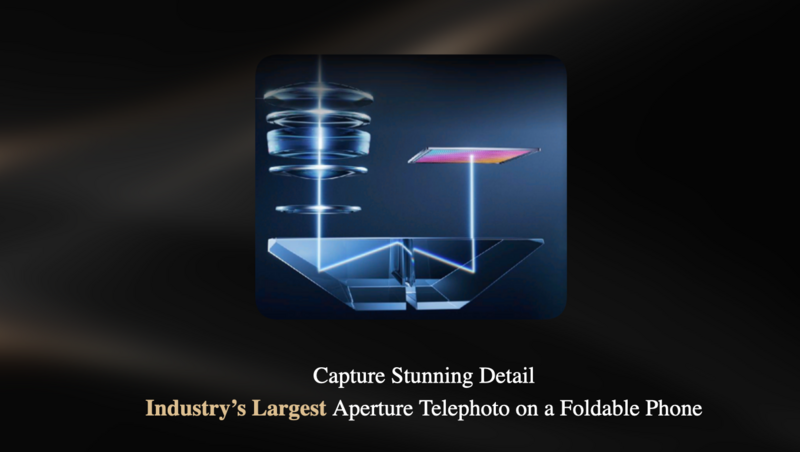
One of the Mate X7’s most notable achievements is its newly designed telephoto camera system that reduces the module size by 44%. The device incorporates a 3.5x optical zoom 50 MP RYYB OIS telephoto macro camera with an f/2.2 aperture—one of the largest apertures ever placed on the telephoto lens in a foldable phone. With the large aperture, light intake is increased by an estimation of up to 127%, depending on comparison metrics, enabling exceptional clarity for distant subjects or macro-level textures.
Images at long range remain well detailed, while the telephoto macro mode delivers close-ups with intricate texture reproduction—enhanced by multi-frame fusion and panoramic depth-of-field expansion.
Equipped with Huawei’s new ISP platform and second-generation LOFIC sensor, the Mate X7 introduces Ultra Lighting HDR Video, again supporting up to 17.5 stops of dynamic range, allowing creators to easily capture backlit scenes or night scenes professionally, and also making it a versatile tool for travel filmmakers.
As someone who is a strong believer in creating photos and videos with proper camera equipment, I have to admit that I am impressed by how far smartphone imaging technology has come. And if I am being honest, after being a photographer for so long, I am somewhat attracted to the idea of being able to produce quality casual work using such a powerful device that conveniently fits in the pocket.


Join the Fstoppers community for free
-
Post comments and join in the discussions
-
Browse the site ad-free
-
Share your work and get featured in the community
-
Compete in the photo contests for fun and prizes
No comments yet