
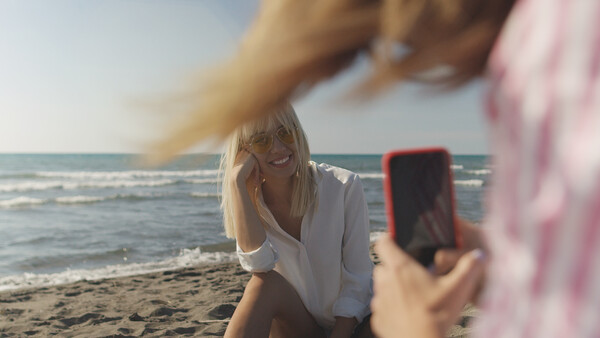
There is a reflex most photographers know well. Something happens, a light shifts, a child laughs, a stranger's face catches the sun, and before the moment has fully registered, the camera is already up. The hand moves faster than the thought.
The shutter fires, and only afterward does the photographer look at the back of the camera to find out what they just saw. The instinct feels like devotion to the craft, a readiness to capture whatever the world offers. But it is worth asking what that reflex actually serves, because the photographer who shoots everything has not made a decision. They have postponed one.
The case for shooting less is usually made as a wellness argument: put the camera down, be present, stop living through a screen. It is a tidy sentiment and a slightly smug one, because it treats the camera as the enemy of experience and the photographer as someone who needs saving from their own tool. The more interesting claim, at least in my opinion, is a craft argument, and it runs in the opposite direction. Deciding what not to photograph is not a retreat from photography. It is one of its central skills, the same faculty as composition or timing, pointed at the whole field of attention instead of the edges of a single frame.
Not Shooting Is a Kind of Editing
Every photographer accepts that editing is essential. The cull, the selection, the ruthless narrowing of a thousand frames down to the handful that matter, is understood to be where a body of work is actually made. What goes unsaid is that this editing can happen at two moments: after the shutter, in front of a screen, or before it, in the half second when the photographer decides whether to raise the camera at all.
The photographer who shoots everything has chosen to do all of their editing afterward. They have decided, in effect, that the moment is not worth evaluating in the moment, that judgment can be deferred to a calmer time when the images can be reviewed at leisure. This feels safe. It guarantees that nothing is missed. But it also means the photographer never has to decide, in real time, what they think is worth keeping, and that decision is the entire act of seeing. A camera does not see. It records. The seeing is done by the person, and the person who records indiscriminately has outsourced their seeing to a future self who will sort it out later.
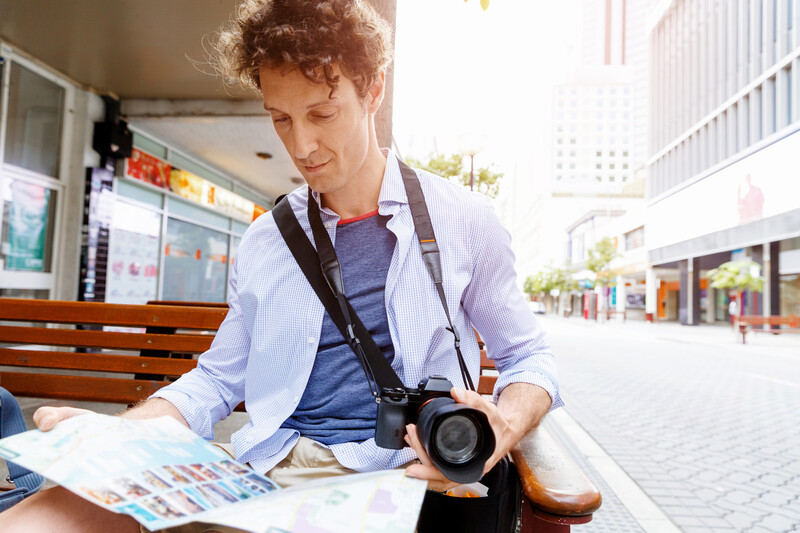
Choosing not to shoot is the same judgment, made earlier and at higher stakes. It requires the photographer to look at what is in front of them and conclude, before there is any image to fall back on, that this either matters or it does not. That is a harder thing to do than pressing a button, which is precisely why it is worth doing.
What Restraint Trains
The unexpected return on this discipline is that the photographs a photographer decides not to take make the ones they do take better. This sounds backward, as though declining to practice could improve performance, but it follows directly from what restraint demands.
A photographer who raises the camera for everything never has to articulate, even to themselves, what separates a worthwhile image from a forgettable one. The threshold is set to zero. Everything clears it. But a photographer who holds back is forced, many times an hour, to run a quiet evaluation: what is it about this scene that would justify the frame, and is that quality actually present, or is it merely the habit of the hand reaching for the camera? Asked often enough, that question sharpens into instinct. The eye learns to recognize the difference between a moment that looks like it should be photographed and one that genuinely rewards it. When such a photographer does raise the camera, the gesture carries the weight of a decision rather than a reflex, and the resulting images tend to show it.
This is the part the wellness framing misses entirely. Restraint is not the opposite of photography. It is photography's quality control, applied at the source. The photographer who shoots less, by choice and with discernment, is not photographing worse. They are photographing with intent, and intent is visible in the work in a way that volume never is.
The Cost Is Real
None of this would be worth taking seriously if it pretended the missed shot did not exist. It does, and the cost is real. A moment not photographed is gone. There is no recovering the expression, the gesture, the collision of light and subject that happened once and will not happen again in the same way. Every photographer carries a private museum of images they failed to take, and some of those absences ache more than any bad photograph ever could. To argue for restraint without acknowledging this would be dishonest.
There are also situations where restraint is simply the wrong choice. A wedding photographer cannot afford to be philosophical about which moments deserve the frame; the job is to come back with everything, because the client's memory of the day will be only what was captured. A photojournalist on a fast-moving story shoots first and judges later for good reason, because the alternative is missing the frame that mattered while deliberating over whether it did. Sports, wildlife, breaking news, any situation where the decisive instant cannot be summoned back, all reward the photographer who keeps the shutter moving. The argument for not photographing everything is not a universal rule. It is a discipline for the contexts that allow it, which, for most photographers most of the time, is more contexts than they assume.
The skill, then, is not abstinence. It is discernment: knowing when to shoot everything and when the better photograph, and the better experience, comes from choosing. A photographer who can only do one of those things is less capable than one who can do both and knows which the moment calls for.
What Is Gained
What the photographer gains from this is twofold. The first gain is the one already described: a sharper eye, a higher standard, a body of work shaped by judgment rather than accumulation. The photographs improve because the photographer has been making decisions all along instead of deferring them to the edit.
The second gain is harder to name but no less real. A photographer who does not reach for the camera at every moment occasionally gets to simply be in the place they are standing. Not as a retreat from the work, but as part of it. Some of what makes a photographer good is the accumulated experience of having actually paid attention to the world, having watched how light behaves at a particular hour, how people move through a space, how a moment builds and breaks. That kind of attention does not require a camera, and sometimes it is sharper without one. The photographer who occasionally lowers the camera to watch is not neglecting their craft. They are feeding the part of it that no equipment can supply.
There is an old idea that the camera is a license to look, that holding one gives a person permission to study the world with an intensity that would otherwise seem rude. It is true, and it is one of the quiet gifts of photography. But the license works in both directions. The camera can also become an excuse not to look, a way of converting every experience into a task to be completed, a frame to be secured, a file to be sorted later. The photographer who shoots everything risks spending a lifetime in the presence of remarkable things while never quite seeing any of them, because seeing was always something to be done afterward, on a screen.
The argument for not photographing everything is finally an argument for taking the act of seeing seriously enough to do it in the moment, with the camera sometimes raised and sometimes deliberately not. The photographs that result will be fewer and better. And the photographer, having actually been somewhere rather than merely having documented it, will have something the unphotographed moments gave them that no image could: the thing itself, seen once, kept in the only place that holds what a camera cannot.
Join the Fstoppers community for free
-
Post comments and join in the discussions
-
Browse the site ad-free
-
Share your work and get featured in the community
-
Compete in the photo contests for fun and prizes
No comments yet