
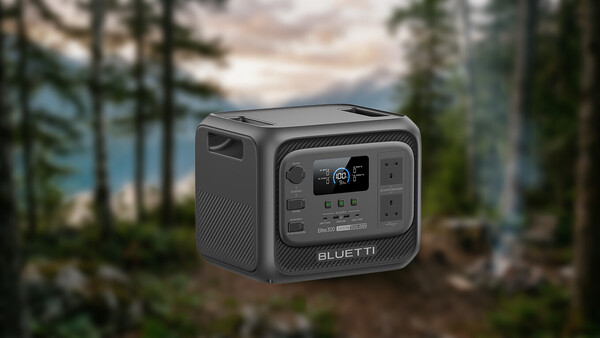
You've pitched camp at the perfect spot, gear unloaded, base set for the next few days. And now you're waiting — for the fog to lift, the light to change, or an elusive animal to step into frame. Modern adventures in the wild are no longer just about chasing beautiful locations; there's an expectation to stay connected, keep every battery topped up, edit on location, and bring a few home comforts with you for when the light isn't cooperating. And honestly, why shouldn't that include a hot meal and a movie on your laptop while you wait for the clouds to part? We put the BLUETTI Elite 300 through its paces to see just how well it holds up to this kind of outdoor creative pursuit.
First Impressions
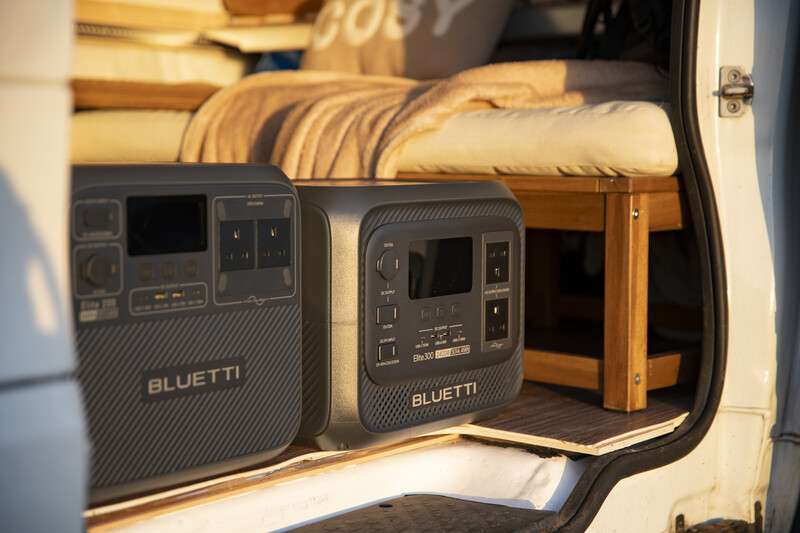
I was curious to see how the BLUETTI Elite 300 would perform on photography trips in my campervan — a scenario that demands consistent power draw across a real mix of high- and low-consumption devices. I've always liked my home comforts, which means I've never been one to travel light, and that's exactly the kind of setup I wanted to put it to the test in. I used to tent camp, but as age and health requirements crept in, I upgraded to a small campervan to keep that lifestyle going in a way that's still accessible to me — which makes portability just as important to me as power capacity.

Given that, what surprised me most when I first opened the box was the size. I expected bigger power capacity to equate to a larger product. Despite offering significantly more capacity, the Elite 300 is more compact than the earlier Elite 200 V2, which makes it easier to port from place to place. It still has significant weight to it, and this isn't something you'd want to carry miles across a mountain range, but it feels practical for that off-grid workflow. If you regularly move your setup between campsites or locations, pairing it with a wheeled trolley would make perfect sense.
More Than a Backup Battery
What immediately stands out is how well suited the Elite 300 is to creators on the move. This isn't a backup battery that only kicks in during an emergency. The Elite 300 is capable of powering an entire van setup, enabling you to work, charge batteries, run lighting, cook, and heat your setup all at the same time.
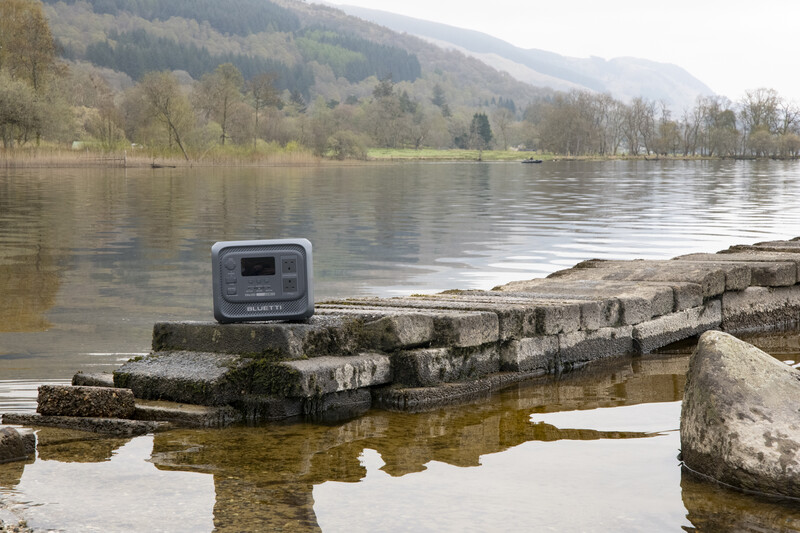
Most campervans and motorhomes use a leisure battery setup, which works well for dedicated van use. One of the biggest advantages of a power station over a traditional leisure battery system is flexibility. A fixed leisure battery stays in the van permanently, but the Elite 300 can go wherever you go. When parked up and heading out to shoot for the day, the power station can be taken out to remote locations, powering equipment on-site, recharging drone batteries between flights, or even running lighting equipment in the middle of nowhere. That freedom is something a built-in system simply can't offer.
It also removes the complexity that comes with campervan electrics. Instead of permanent installs, split charging systems, wiring, and complicated setups, the Elite 300 is essentially plug-and-play. It gives you that off-grid capability without needing to redesign your entire van around a power system. For content creators, travel or landscape photographers, and filmmakers, that simplicity matters. You can move it between vehicles, use it at home between trips, or build your setup around portability rather than committing to one fixed installation. If you're building out that kind of location workflow from scratch, Photographing the World 4: Advanced Landscapes covers the shooting and post-processing side of extended trips into remote terrain.
Putting It to the Test
Over a recent weekend away, I decided to properly test what the Elite 300 could handle in a realistic vanlife scenario. Alongside my usual photography equipment, I deliberately packed several home comforts that would put a serious drain on portable power sources. Throughout the trip, I used the Elite 300 to charge camera batteries, drone batteries, phones, and laptops while also powering a kettle, an electric heater, and even an air fryer. Normally, those are the kinds of appliances that make you start carefully monitoring battery percentages and fearing running out of power, but the Elite 300 handled everything effortlessly. With 2,400 W of continuous output, and Power Lifting Mode raising the ceiling to 4,800 W for short bursts, it has more than enough headroom for demanding resistive loads such as a kettle or a microwave.

Key Specifications
- Battery capacity: 3,014 Wh
- AC output: 2,400 W continuous
- Power Lifting Mode: 4,800 W
- Battery chemistry: LiFePO4
- Cycle life: 6,000+ cycles before dropping to 80% capacity
- Weight: approx. 26.3 kg
- Solar input: up to 1,200 W
- App connectivity: Bluetooth and Wi-Fi
- Warranty: 5 years
The Elite 300 has plenty of power ports, including 4 AC wall outlets, a TT-30 RV outlet, 2 USB-A ports, a 100 W USB-C port, a 140 W USB-C port, a 12V/30A DC output, and a 12 V cigarette lighter socket. That combination easily covers everything from laptops and drones to camera chargers, lighting, portable fridges, and cooking appliances. The inclusion of the high-powered USB-C ports is particularly useful for fast-charging your devices directly without bulky adapters, and the 12V/30A output means a van fridge or diesel heater can run without an adapter chain.
The BLUETTI app also adds another level of convenience. Through the app, you can monitor battery percentage, power input and output, charging speeds, and estimated runtime. As my Elite 300 was stored under the bed in my van, being able to switch it off using the app was a great feature, instead of having to put the bed away or go out in the pouring rain to access it from the back door.
There was no worry about conserving power or avoiding certain appliances. After a cold day out shooting, being able to return and put the kettle on, warm the van, cook a hearty meal, and use my MacBook while my gear charges completely changes the experience of vanlife. Even after two days of fairly heavy use, I arrived home with 34% battery still remaining. For anyone creating content on the road, that kind of endurance is a huge advantage.

Charging on the Road
Charging flexibility is another area where the Elite 300 feels built for life on the move. You can, of course, recharge from standard mains power, solar panels, or directly from 12 V charging from your vehicle while driving. That means the battery can be topping itself back up while traveling between locations, making it ideal for longer road trips and full-time vanlife. For even faster charging on the road, you can also pair it with the BLUETTI Charger 2, which pulls up to 800 W from the alternator and up to 600 W from solar for a combined 1,200 W — far quicker than a standard 12 V car socket. For creators moving between locations to document road trips for their social channels, this pairing would be perfect, as it lets you stay off-grid longer and removes the need to hunt for spots on campsites with electric hookups.
Final Thoughts
For vanlife creatives, photographers, filmmakers, and drone pilots, reliable power isn't just about convenience anymore; it's part of the workflow. Currently priced at $1,099, the BLUETTI Elite 300 feels purpose-built for that outdoor lifestyle, allowing freedom to shoot, edit, charge, and travel comfortably without watching the battery percentage. Yes, it still has enough weight that you wouldn't want to carry it long distances by hand, but considering the amount of power packed into a relatively compact unit, that's an easy compromise to accept for the creative freedom it gives in return.





Join the Fstoppers community for free
-
Post comments and join in the discussions
-
Browse the site ad-free
-
Share your work and get featured in the community
-
Compete in the photo contests for fun and prizes
No comments yet