
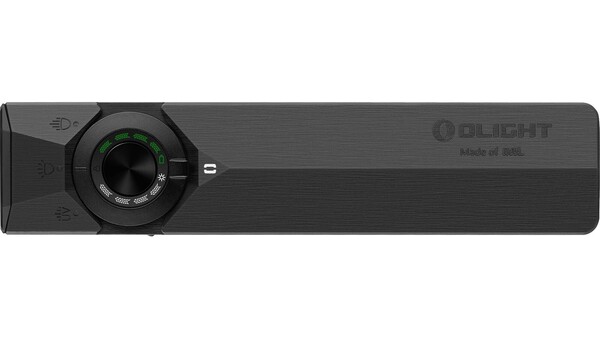
The Olight ArkPro Ultra is a flat, pocketable everyday-carry flashlight that tries to do something most lights do not: put four different light sources in one slim body. Alongside the usual white flood and a longer-throwing white spot, it adds an ultraviolet output and a green laser. I have been carrying it as a daily light, and this review is about what that is actually like, not just what the box promises.
I am the kind of person who always has a light on me, so an EDC flashlight lives or dies on small things: whether it disappears in a pocket, whether the interface gets out of the way, and whether it is charged when I need it. The ArkPro Ultra gets most of that right, and the four-light setup turns out to be more useful in the field than I expected, even if I reach for the plain white flood far more than anything else.
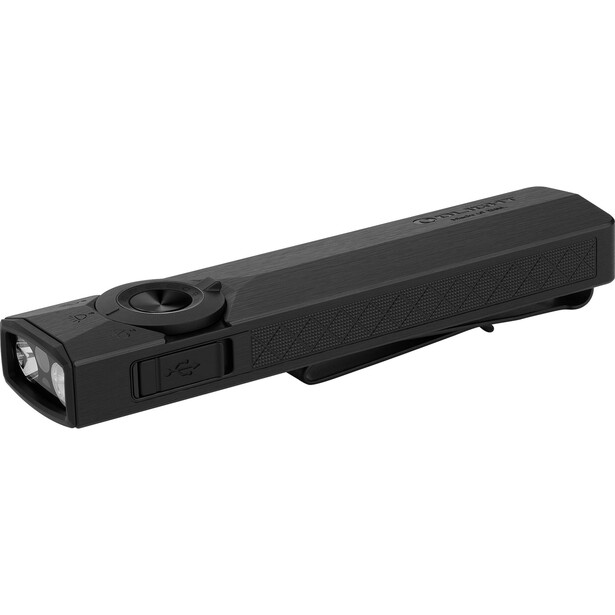
Specifications and Configuration
- Model: Olight ArkPro Ultra (flat unibody EDC flashlight)
- Light sources: four, across seven modes, white flood, white spot, ultraviolet, and a green laser. The green laser is the only source that pairs with another; it can run alone or with the flood, spot, or UV. The two white beams do not run together.
- White flood: up to 1,700 lumens
- White spot: up to 800 lumens, roughly 10,640 candela and 205 meters of throw
- UV and green laser: secondary emitters, UV for inspection and fluorescence, and a green laser (Class 3R, up to 5 mW, 510 to 530 nm) for pointing and marking
- Battery: built-in 2,000 mAh, 3.7 V, 7.4 Wh, up to about 14 days of runtime on the 1-lumen moonlight setting
- Charging: dual, USB-C (about 1.5 hours) and magnetic MCC (about 3 hours)
- Status readout: LED status indicators (not an OLED display), plus Olight's ArkBeat, a color-shifting accent light that changes hue as your total run time adds up
- Body: flat unibody Olight O-aluminum, about 1.73 times harder than standard 6061 aluminum
- Weight and size: 120 g (4.23 oz); 124 x 27 x 16 mm (4.88 x 1.06 x 0.63 in)
- Water and dust: IPX7
- In the box: the light, a pocket clip, a lanyard, and a magnetic charging cable
- Price: $129.99
Four Lights, and When Each One Actually Earns Its Place
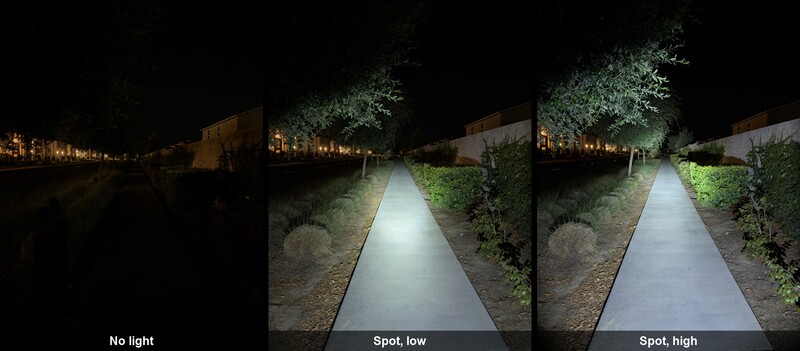
The headline feature is the reason to consider this over a plain single-emitter light, so it is where I spent the most time. In daily carry, the white flood is the one I use ninety percent of the time. It is a wide, even wash of light for the close, boring, genuinely useful stuff: finding a dropped lens cap under a car seat, reading a breaker panel, walking a dog down an unlit street. The spot is the light I reach for the other ten percent, when I need to see across a parking lot or down a trail, and its throw is real rather than a marketing number. The block I live on runs about 590 feet, and on high, the spot covered most of that length even when I kept it angled slightly down at the path, which is more reach than a light this size has any business having.
One thing to know about the top of the range: in the most powerful modes, the light heats up fairly quickly. It does not get uncomfortable during normal use, and the heat really only shows up at the end of the light where the bulbs are, but by then it is notably hot. It stays holdable, though certainly warm enough that you are aware of it, which is what physics does to a light this small pushing this many lumens.
The UV and green outputs are the interesting extras, and they earn their keep in very different ways. I rarely reached for the UV myself, but it is genuinely useful if your life calls for it: checking for pet stains, verifying currency and IDs, or spotting scorpions if you camp somewhere they live. It is the kind of feature you either use often or almost never, depending entirely on who you are. Like any UV source, it deserves a little respect: do not stare into the emitter or shine it at skin or eyes for extended stretches (that goes for the regular lights and laser too, of course). The green laser is the standout of the two. It is bright, tight, and an excellent pointer, and it is the output that matters most to me as a photographer. If you shoot astro or night landscapes, a green laser is the polite way to point out a star or a line in a composition to someone standing next to you in the dark, and it doubles as a way to signal across distance. It is a genuine Class 3R laser rather than a toy pointer, so the usual caution applies: never aim it at anyone's eyes or at aircraft. To be clear about what that means: the ArkPro Ultra is a field tool for photographers, something to help you see and point in the dark, not a light you would use to actually light a photograph.
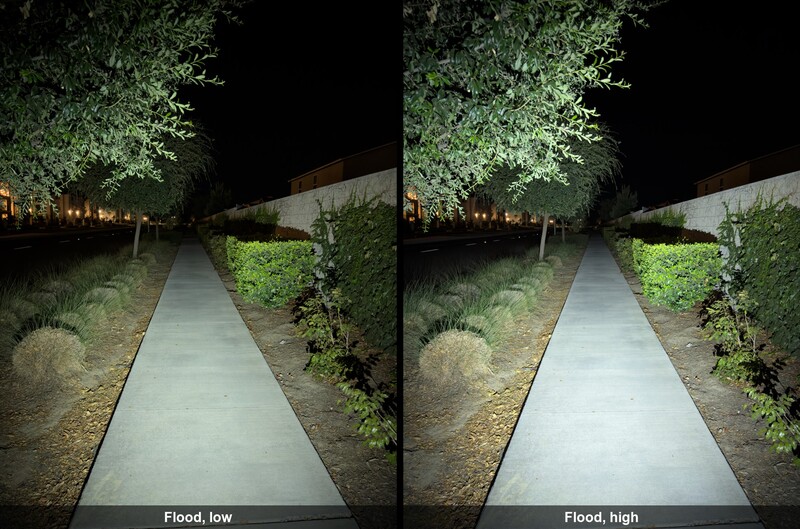
You cannot run the two white beams together, so there is no flood-plus-spot super mode. What you can do is pair the green laser with the flood, the spot, or the UV, which is handy when you want to point at something and light it at the same time.
Size, Feel, and Everyday Carry
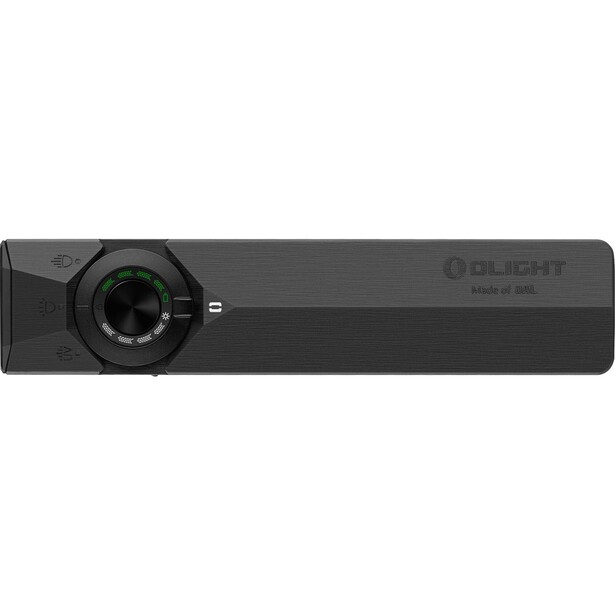
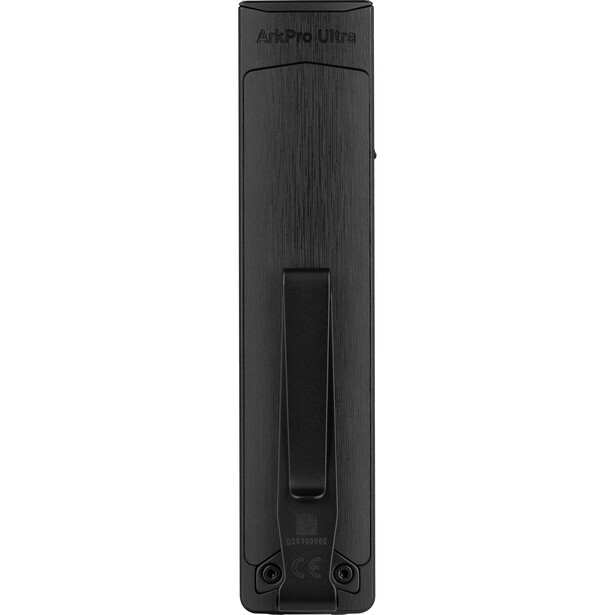
This is where the ArkPro wins me over as an EDC light. The flat, unibody shape is the whole point. Round flashlights roll off tables and print awkwardly in a pocket; a flat light sits flush against your leg and disappears the way a phone power bank does. The O-aluminum body feels dense and solid without being heavy, and after weeks of getting tossed in bags, it looks essentially new, which is what that harder-than-6061 material is really about.
The controls are easy to learn and easy to run one-handed, which is the bar for a carry light. I could select modes without looking after a day or two, and I stopped thinking about the interface, which is the highest compliment an EDC light earns. That might sound a bit strange, but if you've used a professional-level flashlight before, you probably know that many of them have rather unintuitive interfaces.
The Ultra adds a small flourish Olight calls ArkBeat, a color-shifting accent light that cycles through hues as your total run time climbs, or that you can simply set to a color you like. It does nothing functional, but it is a harmless bit of personality.
Battery, Charging, and Living With It
Runtime on a carry light is less about the headline maximum and more about whether it is ready when you grab it, and here the ArkPro is reassuring. On sensible everyday outputs, it goes a very long time between charges, normally about 10-15 hours with mixed usage. The quoted two-week figure on its 1-lumen moonlight mode is the kind of number that means you are never caught dark. And speaking of, a moonlight mode is great to have, as I frequently need a nightlight for my dogs when traveling. The dual charging is a nice touch, though in practice, I almost always reached for USB-C. It is simply easier and more convenient to top off from the same cable as everything else I own. The magnetic option is there if you want it, and some people love dropping a light onto a charger on the nightstand, but USB-C is the one I actually used. LED status indicators tell you where the charge sits.
IPX7 covers the realities of EDC. It has been rained on and splashed and did not care. This is a use-it-and-forget-it light, not a delicate one.
Summary
What I Liked
- Four genuinely different light sources in one slim body, no second gadget to carry
- The flat, unibody shape actually disappears in a pocket the way a round light never does
- A wide, even white flood that handles the vast majority of daily tasks
- A white spot with real, usable throw around 205 meters
- A UV output that is a genuine bonus for the people whose work or hobbies call for it
- A bright, tight green laser that works as an excellent pointer and doubles as an astro/night-shoot marker
- USB-C charging that runs off the same cable as everything else you carry, with a magnetic charger as a backup option
- Long real-world runtime, so it is ready when you grab it
- Dense, tough O-aluminum body that shrugs off drops and looks new after weeks of abuse
- IPX7 water resistance you never have to think about
- An interface that is easy to run one-handed without looking
What I Didn't Like
- In the most powerful modes it heats up fairly quickly and is notably hot, still holdable, but you feel it
The ArkPro is an easy recommendation for the specific person it is built for: someone who already carries a light every day and likes the idea of collapsing a white light, a UV light, and a pointer into one flat, pocketable tool. If all you want is bright white output, a simpler single-emitter light will save you money. But if the four-in-one pitch appeals to you, the ArkPro Ultra delivers it in a body you will actually carry, and for astrophotographers, it throws in a green laser that makes a genuinely useful field pointer.



Join the Fstoppers community for free
-
Post comments and join in the discussions
-
Browse the site ad-free
-
Share your work and get featured in the community
-
Compete in the photo contests for fun and prizes
No comments yet