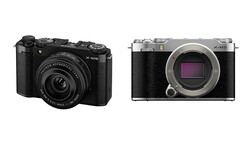
The X-E5 is a compact body that borrows the 40.2 MP sensor and processing from Fujifilm’s recent heavy hitters while keeping the classic rangefinder style. If you shoot street, travel, or daily life and want interchangeable lenses without lugging a brick, this lands right in the sweet spot.
Coming to you from pal2tech, this practical video walks through the setup quirks, ergonomics, and real-world tradeoffs of the Fujifilm X-E5 mirrorless camera. You see how the new film simulation dial works in practice, why its prime top-plate real estate might be better spent, and how quickly the focus mode switch becomes muscle memory. You also get a close look at the tiny EVF and the tilting LCD that can flip forward for self-shooting, plus the two press-to-click command dials that speed up exposure changes. The video highlights where the body’s minimal grip starts to struggle with heavier glass and where a lighter lens keeps the balance right.
The video spends a lot of time with the Fujinon XF 23mm f/2.8 R WR pancake and explains the real effects of f/2.8 on background separation and low light. If you want more blur or faster AF in video, it compares it with Fujifilm’s larger 23mm f/2 and calls out where the smaller lens hunts and where you’ll hear aperture clicks through the top mics. Battery behavior is a theme as well, with practical notes on how 4K/60, IBIS, AF-C tracking sensitivity, and Boost IS settings chew through the NP-W126S compared to the newer NP-W235. There’s also smart context on how this body compares with the X-T5 and the fixed-lens X100 VI, so you can decide where the control layout and feature set best line up with what you shoot.
Key Specs
-
40.2 MP (7,728 x 5,152) APS-C CMOS sensor
-
5-axis sensor-shift stabilization
-
Photo ISO 125–12,800 (64–51,200 extended)
-
Video ISO 125–12,800 (64–25,600 extended)
-
Internal H.264/H.265, MOV/MP4, up to 6.2K 30p; DCI/UHD 4K to 59.94p; Full HD up to 240p
-
10-bit 4:2:2 via HDMI; 12-bit Raw via HDMI
-
Single UHS-II SD slot; V90 recommended
-
3-way tilting 3" touchscreen LCD; 2.36-million-dot OLED EVF
-
Wi-Fi 5, Bluetooth 4.2; USB-C data/power; 3.5 mm mic input; micro-HDMI output
-
NP-W126S battery, rated about 310 shots
-
4.9 x 2.9 x 1.5 in; 14.0 oz body only, 15.7 oz with battery/card
You also get clear IBIS expectations from real hand-held tests, including sharp frames down to 1/6 second with moderate crops and where 1 second falls apart. AF for stills with face/eye tracking performs well in daylight and moderate light, but fast subjects coming straight at the camera and low-contrast scenes are called out as weak points. Subject detection is mixed, and you’ll want to tune AF-C parameters to the scene rather than set-and-forget. For video, AF slows on near-to-far transitions with the 23mm pancake, and you’ll hear focusing and aperture ticks unless you run an external mic.
If you’re lens-curious, the video flags a practical “weight limit” for comfort and one-handed control: the XF 55-200mm f/3.5-4.8 R LM OIS balances better than expected, the XF 18-55mm f/2.8-4 R LM OIS is an easy match, while the XF 16-55mm f/2.8 R LM WR feels too front-heavy on this body. The film simulation dial is a stylish throwback with quick access to three custom slots, yet readability and accidental bumps are concerns, so assigning film sims to a swipe or button may be faster in bright light. Dynamic range recovery from raw is solid, and the 40.2 MP files give generous crop room before detail breaks up. Check out the video above for the full rundown.



Join the Fstoppers community for free
-
Post comments and join in the discussions
-
Browse the site ad-free
-
Share your work and get featured in the community
-
Compete in the photo contests for fun and prizes
1 Comment
"If you shoot street, travel, or daily life" - then I would argue that you probably don't need a 40MP sensor.