

Tilt-shift lenses used to be rare and unattainable for most photographers. Back then it would cost an arm and a leg just to get one, but now Laowa has made it more available for almost every major camera system, and this new lens expands the available options.
Tilt-shift lenses are some of the most highly specialized lenses in the camera industry. While not a lot of photographers actually need them, those who do can be significantly enabled by having such a reliable tool. The ability to shift the frame allows the photographer to capture a wider perspective without distortion, while the tilt function narrows the depth of field by changing the alignment of the focal plane. In recent years, Laowa has made both shift and tilt-shift lenses available for camera systems that don't have native options, and even improved the options for those that do. This new 17mm tilt-shift lens from Laowa is an enhanced take on the classic 17mm tilt-shift.
The Laowa 17mm f/4 Tilt-Shift Zero-D
It doesn't come as a surprise, because of its capabilities, that this lens comes in a bulky form. It's 111 mm long and has a maximum diameter of 93 mm, not including the protruding tripod collar. It weighs 810 grams, as it is made of only metal and glass, including the rings and the knobs for control.
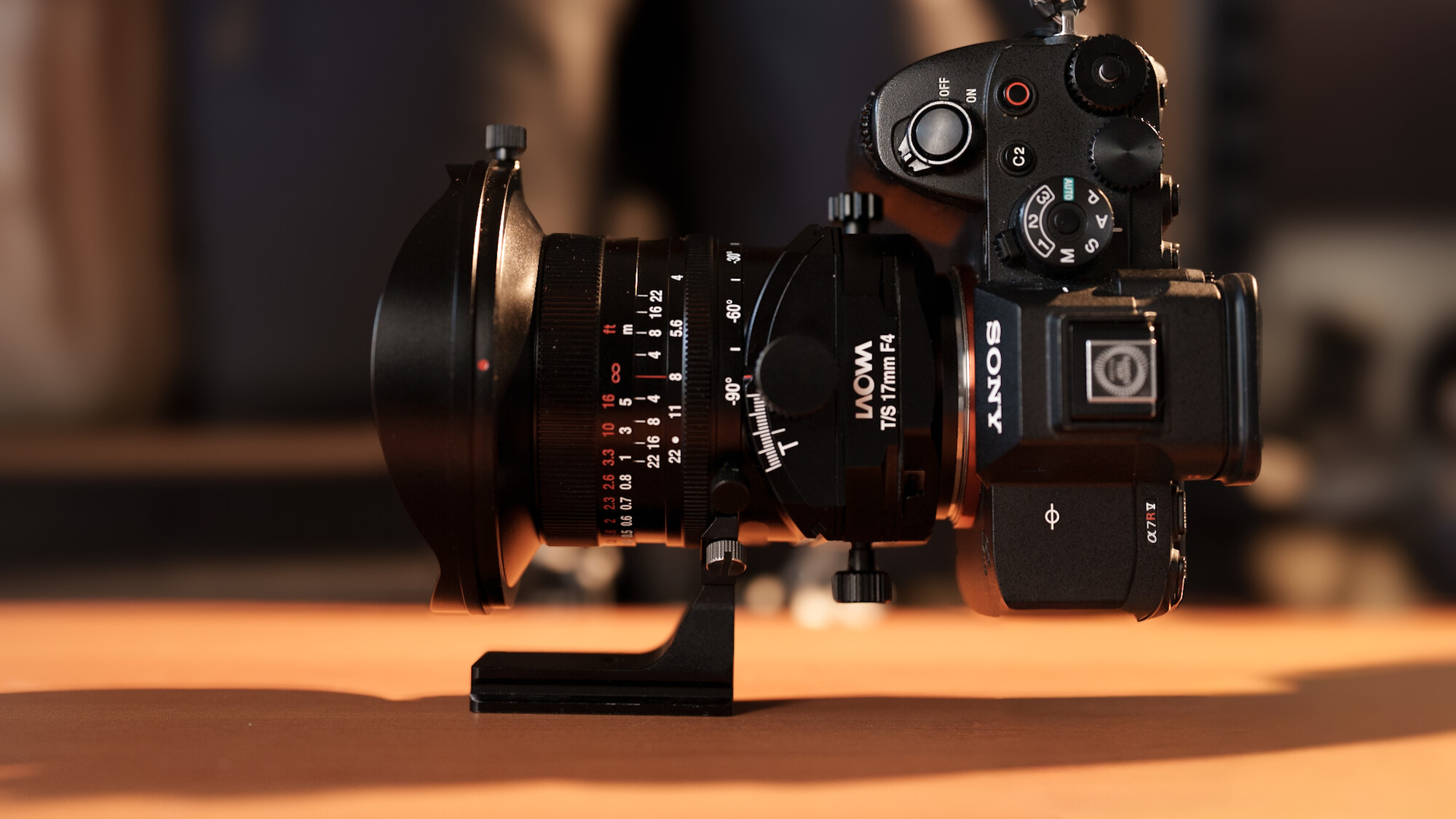
The lens has a large 86 mm filter thread around the proportionately large front element and distal end of the barrel. Around this is a rotating and removable metal lens hood that allows the user to adjust it to avoid getting the edges in frame when shifting the lens. At the distal end of the barrel is a 1.25-inch focus ring with a ridged metal surface for grip. Next to it is a much thinner aperture ring that has very subtle clicks for certain f-stops between f/4 and f/22. Next to it is a thin ring that connects to the Arca-Swiss-compatible tripod collar and foot, secured by a small friction knob.
Tilt-Shift Controls
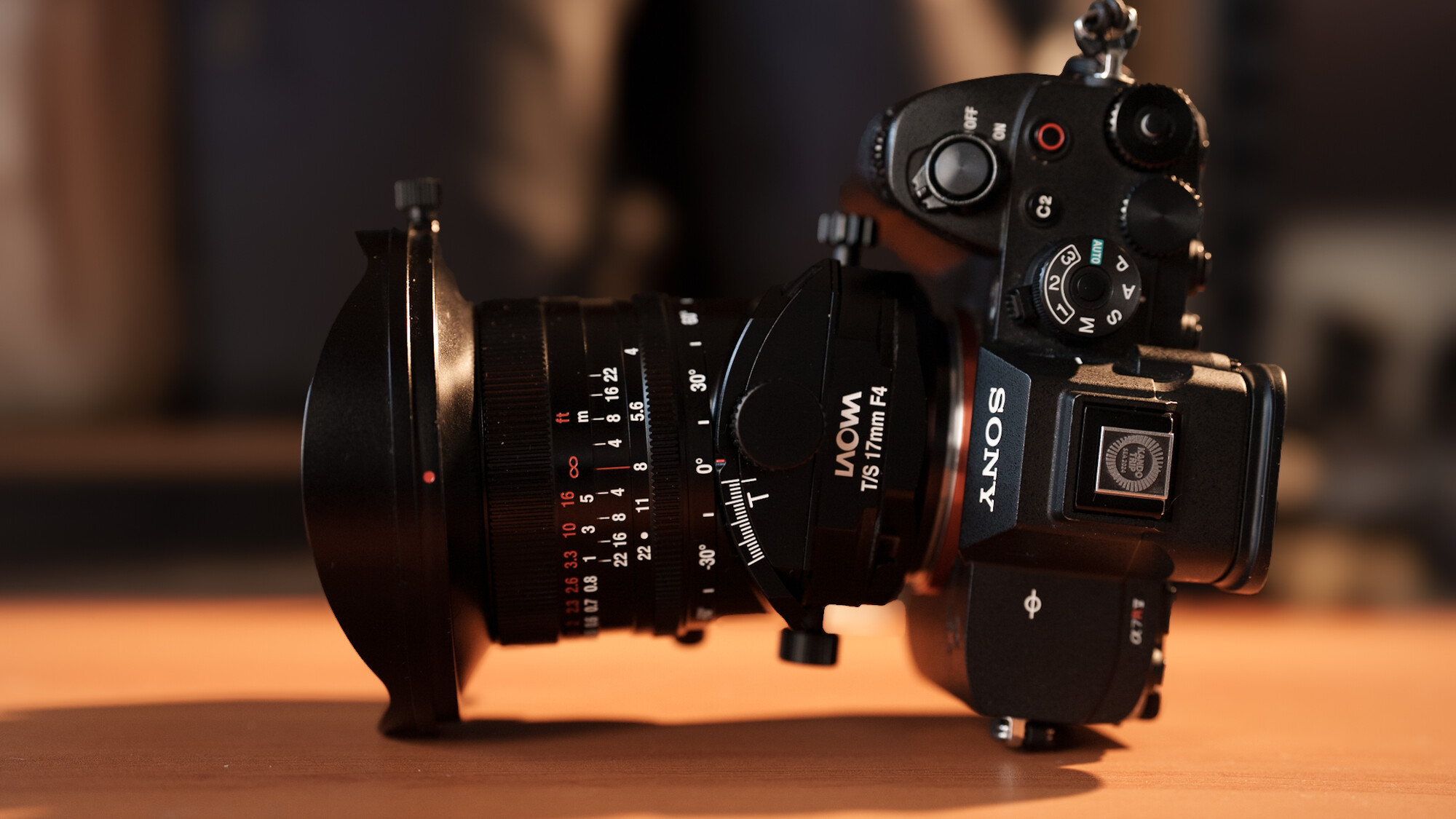
The densest part of the lens would have to be the tilt mechanism, which allows all the preceding glass elements to tilt up to 10 degrees to either side. This is accompanied by a main control knob on the upper surface and a lock on the opposite side. Beside the control knob are indicator lines for the tilt movement.
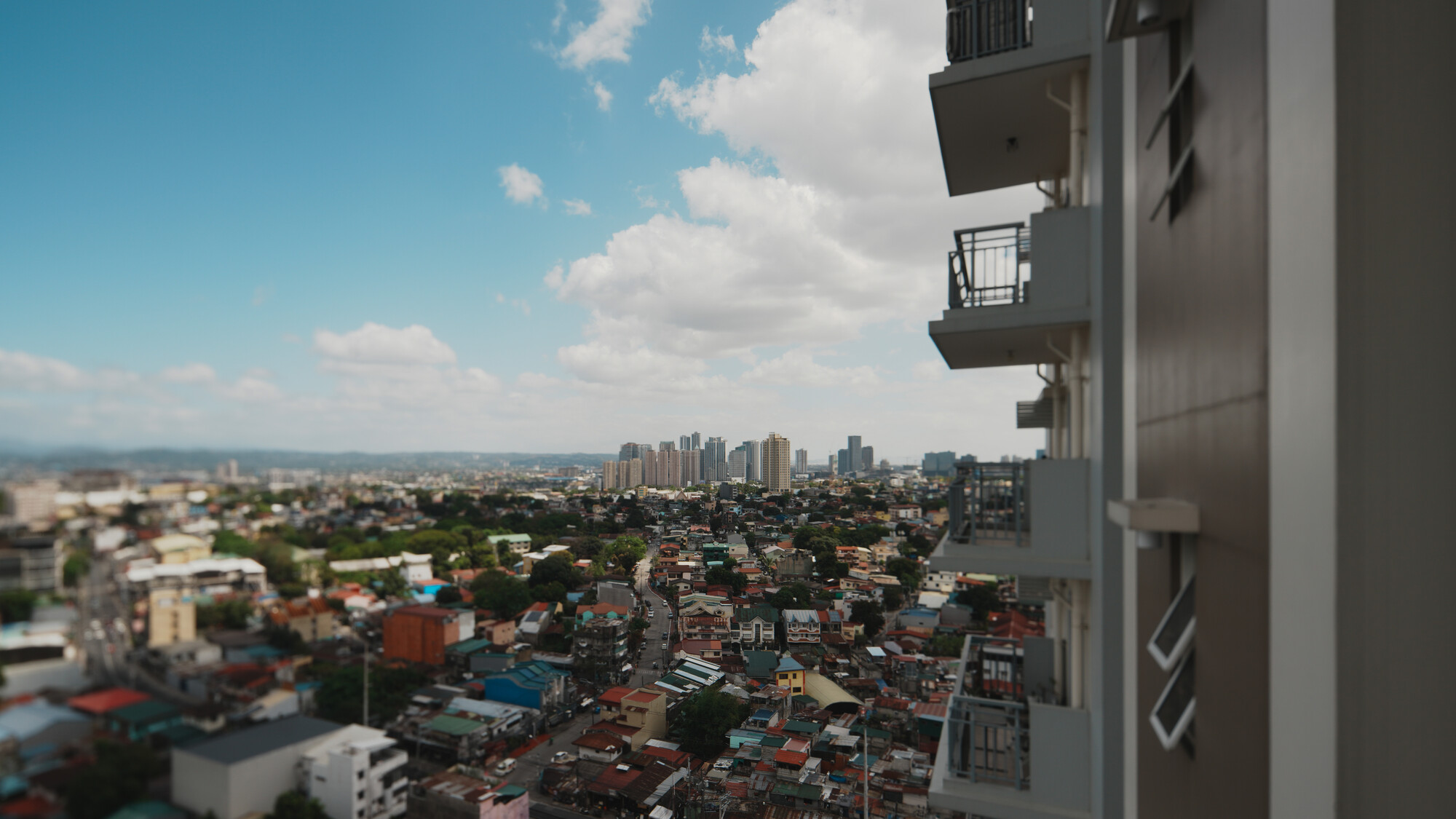
10 degree tilt at f/4
One note for improvement on this mechanism is that it would be much better if the zero-tilt mark had a more pronounced indicator and even tactile clicks that could be felt as you adjust the angle. This can be a much more foolproof indicator that the glass elements are aligned and that there is no unintentional tilt in the focal plane that would result in unwanted blurring of the image. For users that utilize this lens for architecture and interiors, a mistake in the tilt axis could lead to totally unusable images if unchecked.
On the more proximal end of the lens is the shift mechanism that allows the entire field of view to shift up to 12 mm toward either side when used with full frame cameras. For medium format cameras such as the Fujifilm GFX or Hasselblad XCD, this shift is equivalent to 8 mm. On the left is the main control knob for the shift adjustment, while on the opposite side is a corresponding friction knob to lock it in place. Unlike Laowa's other lenses that only have shift motion, this doesn't use the more straightforward ring mechanism similar to the focus or zoom ring.
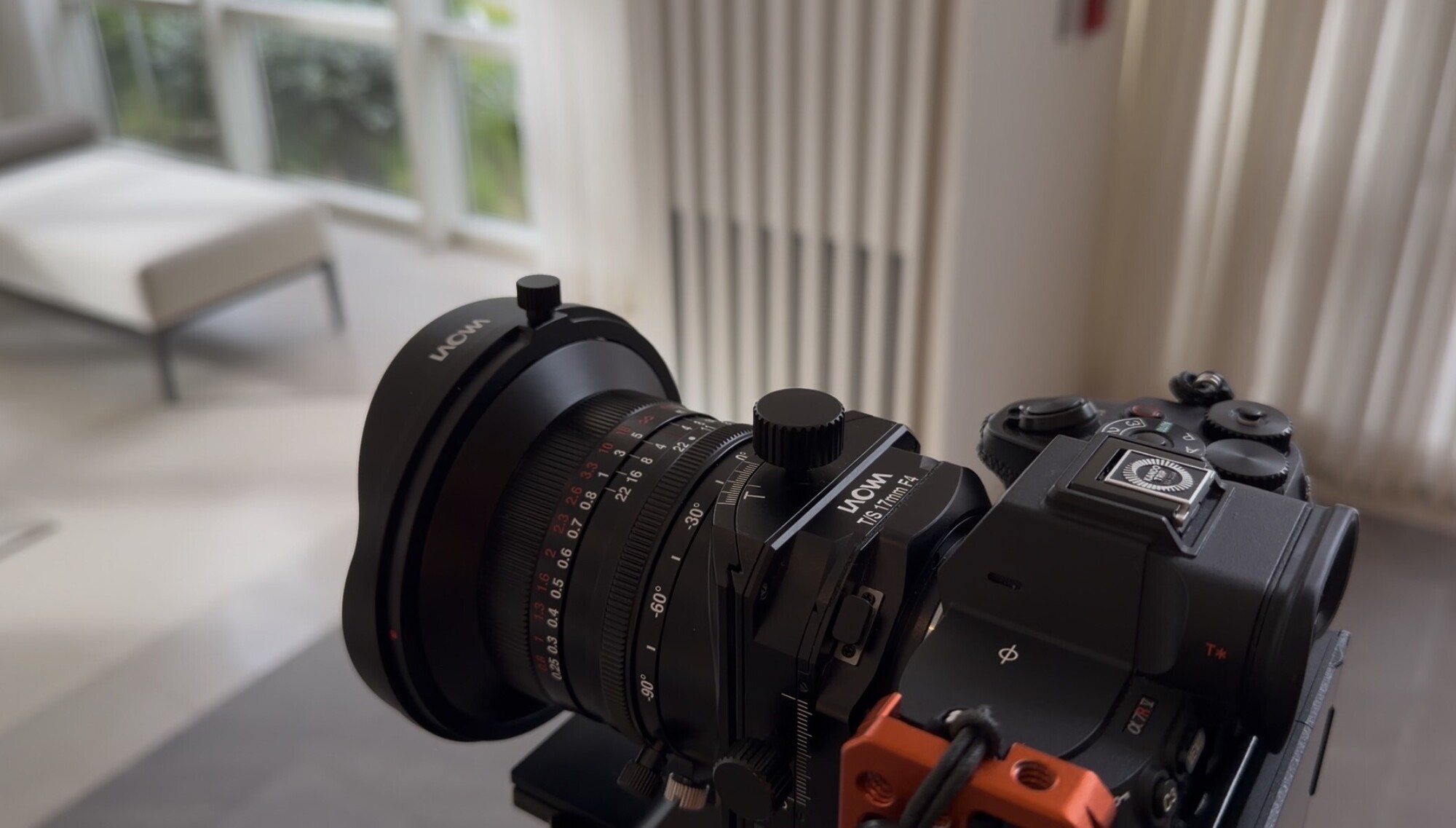
Because a lot of the weight of the lens is on the proximal side and adds to the weight of the camera body, there is a tendency for the weight to drag down and shift the frame up when the knob is not fully locked. In some instances when shooting in slow shutter or long exposure, there is a possibility of getting entirely blurred frames even when there is no camera shake and the focusing is correct, because of minute unintentional movement of the shift mechanism during the exposure. It is important to fully lock the knobs whenever shooting to make sure that the shots come out right. Perhaps improvements on the friction curve of the knob can solve this potential problem, lessening the probability of botched exposures.
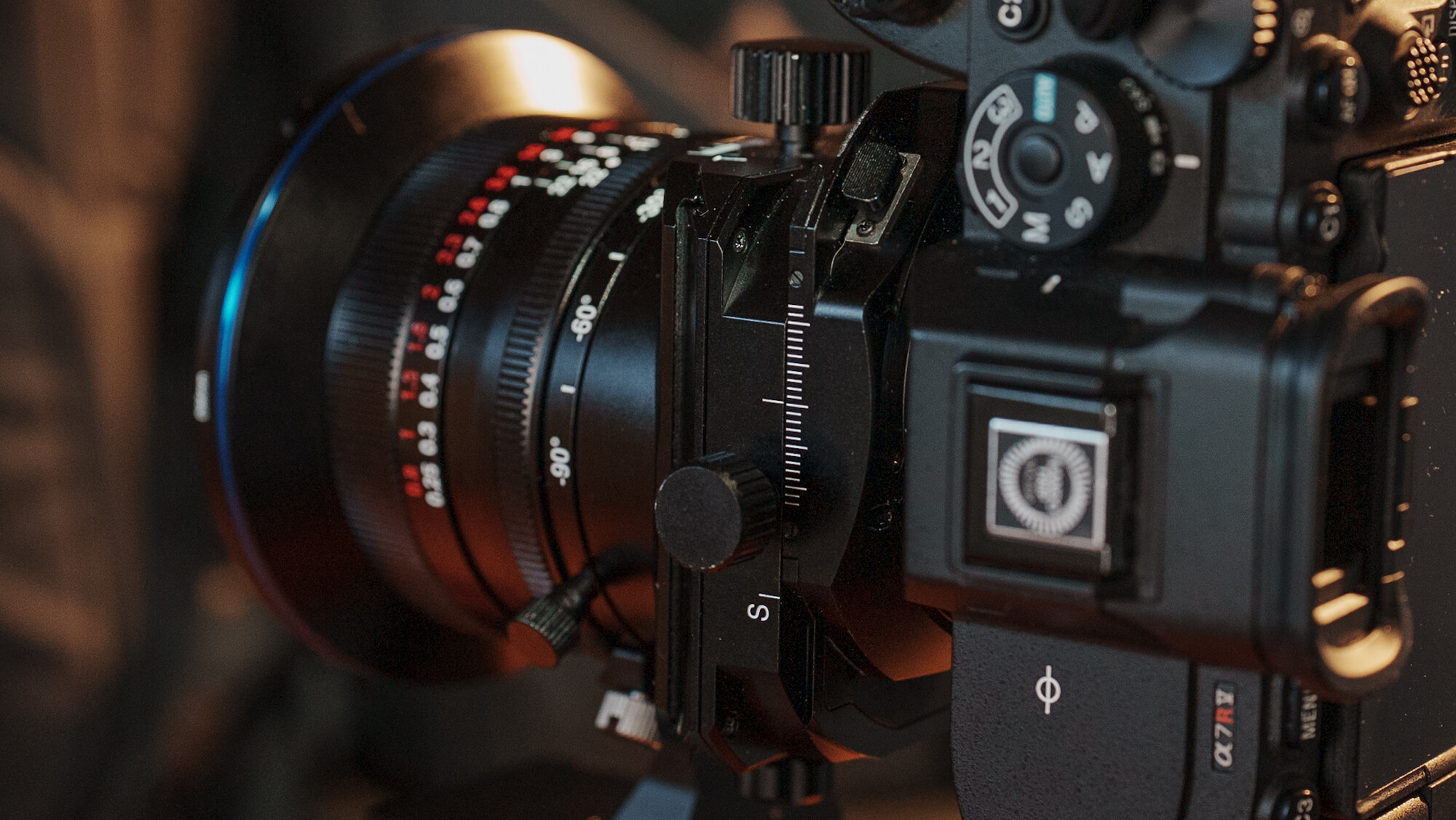
On the corner of the rear part of the shift mechanism is a button that allows the entire mount to rotate 360 degrees. Practically, this allows the user to change the shift movement from up-down to side-to-side and the tilt movement to the opposite axis. There are also stops at 30-degree adjustments for the purpose of shooting multi-row panoramas to achieve the most expanded angle of view.
Application and User Experience

While Laowa's lenses are usually unique in terms of focal length and aperture combinations compared to the main camera brands, this one is an exception. Having used Canon's TS-E 17mm f/4L in the past, this feels like the update of that lens that never really existed.
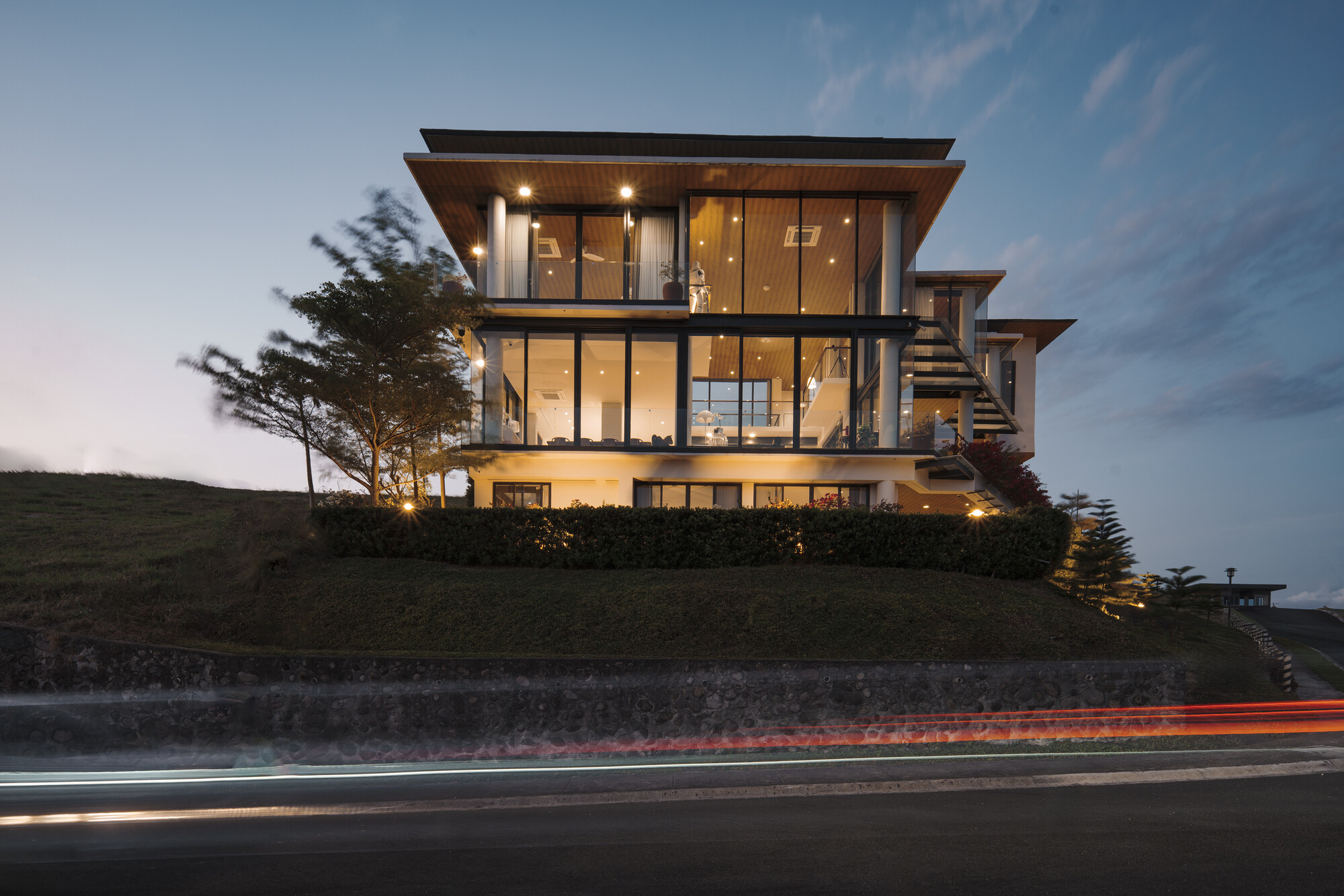
The Laowa 17mm f/4 Zero-D Tilt-Shift offers consistent zero-distortion and sharpness across the frame, which persists even when shifted. It gives constant image quality throughout the image circle, which has not been the norm for other shift lenses, as they usually have a decline in sharpness toward the edges. While there is a minimal change in sharpness in the corners, it is virtually negligible. Optically, this lens is impressive when used with the right workflow and intention, especially despite the mechanical imperfections stated earlier.

This lens is a great option for architectural photography, especially for photographing tall structures and highly detailed exteriors. At the same time, 17mm gives a great angle of view for shooting interiors, especially high-ceiling spaces that require controlled perspectives. While this lens can of course be used in other scenarios where a wide angle lens would shine, it is obviously a lens that does best for photographing structures and spaces. If you're looking to deepen your skills in this area, the Fstoppers tutorial Where Art Meets Architecture 1: Real Estate, Architecture, and Interiors is an excellent complement to a lens like this.
What I Liked
- Good and consistent optics
- 12mm shift
- Zero distortion
- All-metal build
What Can Be Improved
- Better tilt control and indicators
- Possibly a button to unlock while shifting instead of a knob





Join the Fstoppers community for free
-
Post comments and join in the discussions
-
Browse the site ad-free
-
Share your work and get featured in the community
-
Compete in the photo contests for fun and prizes
1 Comment
It seems a good lens but Id love a comparison to a Canon TS-E 17mm. Is it better or worse than that is the benchmark. The Canon is okay but not brilliant. If the Laowa is not better then its a less than okay lens.