Buying a drone in the United States in 2026 means navigating a market that changed underneath everyone's feet. The FCC added foreign-made drones that have not already cleared its authorization process to the Covered List in December 2025, and the practical result is that no new model from DJI, Potensic, HoverAir, Antigravity, or anyone else manufacturing overseas can enter the country. Aircraft that were authorized before that door shut are still on shelves, still legal to own, and still legal to fly. Everything announced since launches everywhere except here. That reshapes the buying decision more than any spec on any sheet. The question is no longer only which drone is best, but which best drone you can actually get, and how long the one you want stays in stock.
The drones that made it through the gate are the strongest crop the category has ever produced. DJI's authorized lineup covers everything from an entry-level beginner aircraft to a 100-megapixel flagship, and Potensic, HoverAir, and the Insta360-backed Antigravity brand all got their current models certified before the cutoff.
This guide is organized around what you actually want to do, whether that is professional aerial stills, a sub-250-gram drone you can fly almost anywhere without paperwork, a first drone that will not end its life in a tree, or a hands-free camera that films you skiing. Three things decide most of these purchases: takeoff weight and the regulations it triggers, sensor size and how much editing latitude it gives you, and how forgiving the drone is when you make a mistake. Prices below are current B&H figures and will move. For every pick, we flag where its US supply stands and whether a newer model exists that you cannot buy here.
At a Glance
- Best Overall: DJI Mavic 4 Pro
- Best Sub-250-Gram Drone: DJI Mini 5 Pro
- Best for Beginners: DJI Flip
- Best for Cinematics and FPV: Antigravity A1
- Best Value: Potensic Atom 2
- Best for Travel: DJI Air 3S
- Best Selfie and Follow Drone: HoverAir X1 ProMax
Best Overall: DJI Mavic 4 Pro
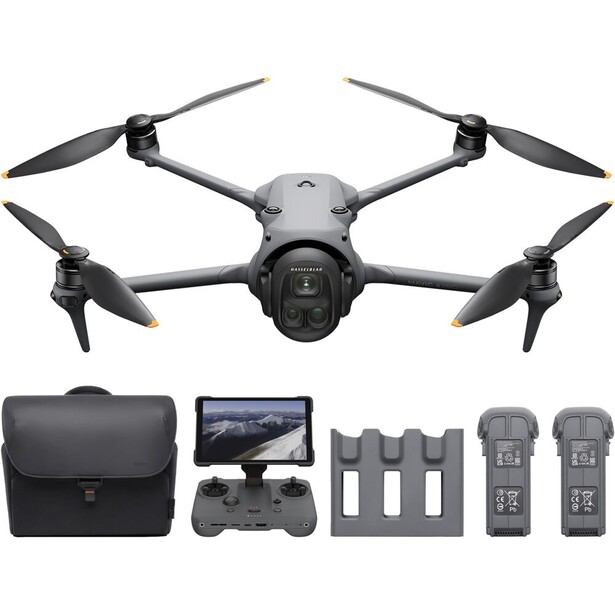
- Weight: 1,063 g takeoff weight
- Camera: 100 MP 4/3 Hasselblad, 28mm equivalent, f/2 to f/11; plus a 48 MP 1/1.3-inch 70mm tele and a 50 MP 1/1.5-inch 168mm tele
- Video: up to 6K/60p HDR, 4K/120p on the main camera
- Gimbal: Infinity gimbal, 360-degree rotation, tilts up to 70 degrees upward
- Flight time: up to 51 minutes
- Obstacle sensing: omnidirectional vision with forward LiDAR rated to 0.1 lux
- Transmission: O4+, up to 30 km (FCC)
- Price: $3,999 (B&H)
When we reviewed the Mavic 4 Pro, the thing that stuck was not any single number, it was how little the drone asks of you to get a professional result. The 100-megapixel 4/3 Hasselblad sensor is the largest DJI has ever flown on a folding drone, and it gives you the kind of dynamic range and detail that used to require carrying a second camera bag up a mountain. The adjustable f/2 to f/11 aperture matters more than the resolution for working shooters, because it lets you control shutter speed for smooth video without stacking neutral-density filters in front of the lens. Add a 70mm medium tele and a 168mm long tele, both usable rather than token, and you have three genuine focal lengths from one aircraft.
The redesigned gimbal is the quiet star. It rotates a full 360 degrees and tilts up to 70 degrees above the horizon, so you can shoot true vertical content for social platforms and frame a bridge underside or a cliff face from below, something no previous Mavic could do without a workaround. Flight time is rated at 51 minutes, and while you will never see that number in real wind, the practical figure is long enough that battery anxiety stops dictating your shot list. The forward LiDAR reads obstacles down to 0.1 lux, which is roughly a clear night, so the drone stays cautious in the light where vision-only systems give up.
Two things keep this from being a universal recommendation. The first is price: this is a professional tool priced like one, and most people reading this guide do not need three cameras or 100 megapixels. The second is supply. The Mavic 4 Pro cleared FCC authorization before the December 2025 cutoff, so it is still legal for DJI to import and sell here, but there is no successor coming to the US to replace it and no guarantee about how long the pipeline stays full. Buy it when you see it listed rather than waiting for a better deal that a restock might not bring. For the working aerial photographer, nothing else on this list competes on pure image quality, so check the current price of the DJI Mavic 4 Pro at B&H.
Read our full review: Mavic 4 Pro Review: Best Drone for Photographers?
What We Like
- 100 MP 4/3 Hasselblad sensor with a real adjustable aperture
- Three usable focal lengths, from 28mm to 168mm
- Infinity gimbal shoots true vertical and points 70 degrees up
- 51-minute rated flight time and O4+ range headroom
- LiDAR obstacle sensing that still works at night
What Could Be Better
- Professional price that most buyers do not need to pay
- Large and heavy enough to require FAA registration and Remote ID
- No US-bound successor, and no promise the current stock pipeline holds
Best Sub-250-Gram Drone: DJI Mini 5 Pro
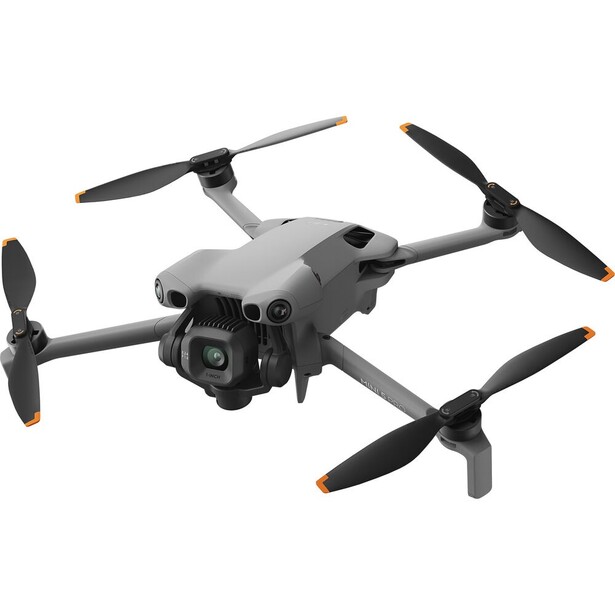
- Weight: 249.9 g takeoff weight
- Camera: 50 MP 1-inch CMOS, 24mm equivalent, f/1.8
- Video: up to 4K/120p, 10-bit color
- Gimbal: 3-axis mechanical, rotates to vertical and tilts upward
- Flight time: 36 minutes standard, up to 52 minutes with the larger battery
- Obstacle sensing: omnidirectional vision with forward LiDAR
- Transmission: O4+, up to 20 km (FCC)
- Price: $1,159 (B&H)
The whole point of a sub-250-gram drone is that it drops you out of the heaviest tier of regulation, and for years the compromise was a small sensor to hit that weight. The Mini 5 Pro is the first mini drone to fly a 1-inch sensor at 249.9 grams, and that single fact changes what this class can do. The larger sensor pulls in noticeably more light and cleaner shadows than the 1/1.3-inch chips in earlier minis, so the images finally look like they came off a serious drone rather than a toy that happens to be light. The f/1.8 lens and 10-bit 4K capture give you room to crop and grade that the older Minis never had.
Two long-standing small-drone frustrations are gone. The gimbal now rotates to shoot true vertical without cropping into the frame, and the obstacle sensing is omnidirectional with a forward LiDAR unit that works in low light, so the drone sees trees and wires in conditions where vision-only systems go blind. Our reviewer's takeaway after flying it was that the 1-inch sensor is not a marketing line, it visibly holds detail in evening shadows that a Mini 4 Pro loses. Flight time is genuinely long, 36 minutes on the standard pack and up to 52 with the larger battery, though the larger battery pushes the drone over 250 grams and back into registration territory, which defeats part of the purpose. Most people should fly the standard battery and enjoy the paperwork-free status.
The caveat here is not the drone, it is the paperwork around it. DJI never gave the Mini 5 Pro an official US launch, and while B&H does list it in several kit configurations, DJI's US service network has been slow to stock parts for it, so a repair is not the routine transaction it is with an Air 3S. There is also no replacement coming: the older DJI Mini 4 Pro remains the easy-to-service fallback, while DJI's actual next-generation small drones, the Lito 1 and Lito X1, launched globally in April 2026 with no FCC authorization path and are not sold here at all. For the flyer who wants the most capable ultralight drone in existence, the DJI Mini 5 Pro has no rival, and it is worth checking its current price at B&H while the imported stock lasts.
Read our full review: DJI Mini 5 Pro Review: 1-Inch Sensor Game-Changer
What We Like
- First sub-250-gram drone with a 1-inch sensor
- Gimbal rotates for true vertical shooting
- Omnidirectional sensing with a low-light forward LiDAR
- Up to 52 minutes of flight time with the larger battery
- Genuinely professional stills from an unregistered aircraft
What Could Be Better
- Never got an official US launch, and US service parts have lagged
- The larger battery pushes it past the 250-gram line
- Priced well above older sub-250-gram options
Best for Beginners: DJI Flip
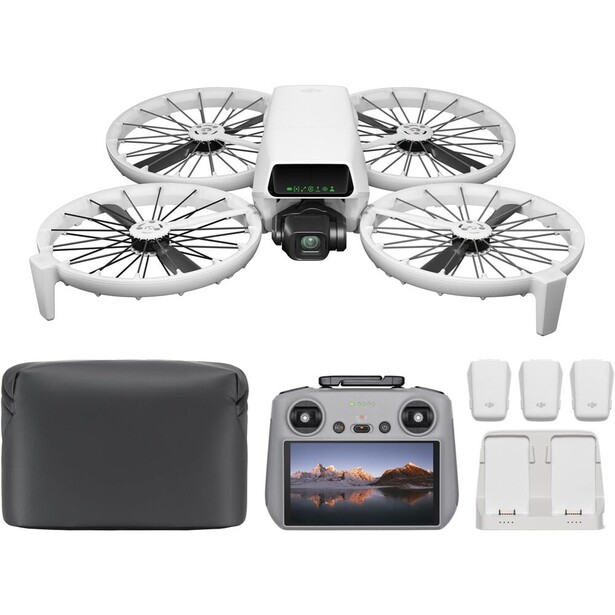
- Weight: 249 g takeoff weight
- Camera: 48 MP 1/1.3-inch CMOS, f/1.7
- Video: 4K/60p HDR
- Gimbal: 3-axis mechanical (tilt, roll, pan)
- Flight time: up to 31 minutes
- Obstacle sensing: forward 3D infrared and downward vision
- Transmission: O4, up to 13 km (FCC)
- Price: $619 (B&H)
Most first drones fail their owners in the first month, either by hitting something or by being so intimidating that they never leave the closet. The Flip is built to prevent both. Its propellers sit inside full enclosed guards that fold down when not in use, so the blades never contact a wall, a branch, or a finger, and that alone removes the single most common way beginners destroy a drone. You can take off from your palm with a button press, no controller and no phone required, which turns the terrifying first launch into something a child could manage.
What separates it from cheaper toy drones is that there is a real camera under the safety features. The 1/1.3-inch 48-megapixel sensor is the same class of hardware DJI puts in drones costing far more, and it shoots 4K/60p HDR on a proper three-axis mechanical gimbal, so the footage is smooth and genuinely usable rather than a novelty. When we flew it, the surprise was how little the price showed in the footage, and the subject-tracking modes followed a rider down a path without any piloting input at all. Forward 3D infrared sensing and a downward vision system keep the hover steady and stop it short of the obvious obstacles. At 249 grams it also skips the heaviest registration tier.
The tradeoffs are the ones you would expect from a beginner drone. The single forward sensor is not the omnidirectional array on pricier models, so it can be fooled by thin obstacles approaching from the side, and this is a drone to fly in calm conditions rather than gusty ones. It is also physically larger and less pocketable than a Mini once you account for the prop cages. Supply, at least, is the one thing you do not have to think about: the Flip was authorized well before the FCC cutoff, no locked-out successor to it exists in other markets, and it remains one of the easiest drones in this guide to walk out with. If you are still deciding whether a drone or a first proper camera is the better place to put your money, our cameras for beginners guide covers the other half of that question. Otherwise, check the current price of the DJI Flip at B&H.
Read our full review: DJI Flip Drone Review, Shockingly Good, Surprisingly Cheap
What We Like
- Fully enclosed propeller guards protect blades and people
- Palm takeoff with no controller or phone needed
- Large 1/1.3-inch sensor with 4K/60p HDR on a real gimbal
- 249 grams and easy subject tracking
- Authorized long before the cutoff, so it is easy to buy
What Could Be Better
- Only forward and downward sensing, not omnidirectional
- Bulkier than a folded Mini once caged
- Best kept to calm-weather flying
Best for Cinematics and FPV: Antigravity A1
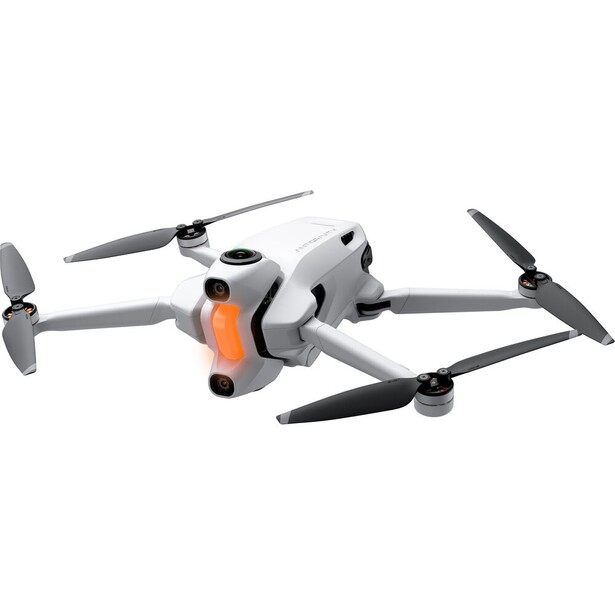
- Weight: 249 g takeoff weight (standard battery)
- Camera: dual 1/1.28-inch sensors, full 360-degree capture, 48 MP stills
- Video: 8K/30p 360, 5.2K/60p, 4K/100p
- Gimbal: none; spherical capture reframed in software
- Flight time: 24 minutes standard, up to 39 minutes with the larger battery
- Obstacle sensing: omnidirectional, fusing 360 capture with forward and downward binocular vision
- Transmission: OmniLink, up to 10 km (FCC)
- Price: $1,599 (B&H)
Buy the Antigravity A1 if you care about the feeling of flying as much as the footage it brings back. Built by a new brand backed by Insta360, it captures a full 8K 360-degree sphere with two 1/1.28-inch sensors, which means you never point a camera at anything. You fly, the drone records everything around it, and you reframe the shot afterward on a phone or computer, pulling smooth cinematic moves out of a single take that would have taken a skilled FPV pilot several attempts to nail. Because the capture is spherical, the drone itself can be erased from the footage, so the final clip looks like it was shot from a camera floating in empty air.
When we tested it, the revelation was the control scheme. Instead of sticks, you wear Vision goggles with a sharp 2,560 by 2,560 display per eye and steer with a motion-sensitive Grip controller, tilting your hand to bank and turn. It is intuitive in a way traditional FPV never is, and it collapses the months-long learning curve of goggle flying into an afternoon. The A1 holds 249 grams with the standard battery and flies 24 minutes on the standard pack or up to 39 on the larger one. An April 2026 firmware update turned the 360 capture into a full omnidirectional obstacle-sensing system with an active bypass mode, which is a genuinely unusual thing for a drone to gain after purchase.
The honest limitations come with the format. A 360 sphere split across two sensors will not match the per-pixel sharpness of the Mavic's dedicated 100-megapixel camera, and the reframing workflow is a real step that adds time to every edit. This is a creative tool for immersive and dynamic footage, not a replacement for a stills drone. If the reframe-later approach appeals to you on the ground as well, our action and 360 cameras guide covers the handheld version of the same idea. Antigravity got the A1 authorized before the FCC cutoff, so it is on US shelves now, though the brand's future models face the same wall everyone else does. For sheer creative range in the air, check the current price of the Antigravity A1 at B&H.
Read our full review: Antigravity A1 Drone Review: Shockingly Good
What We Like
- Full 8K 360 capture means you reframe any shot in post
- The drone can be erased from its own footage
- Motion Grip and goggles make immersive flight easy to learn
- 249 grams, so no registration for recreational flying
- Firmware added true omnidirectional obstacle avoidance after launch
What Could Be Better
- Split-sensor 360 is less sharp than a dedicated camera
- Reframing is an extra step in every edit
- Not a tool for high-resolution aerial stills
Best Value: Potensic Atom 2
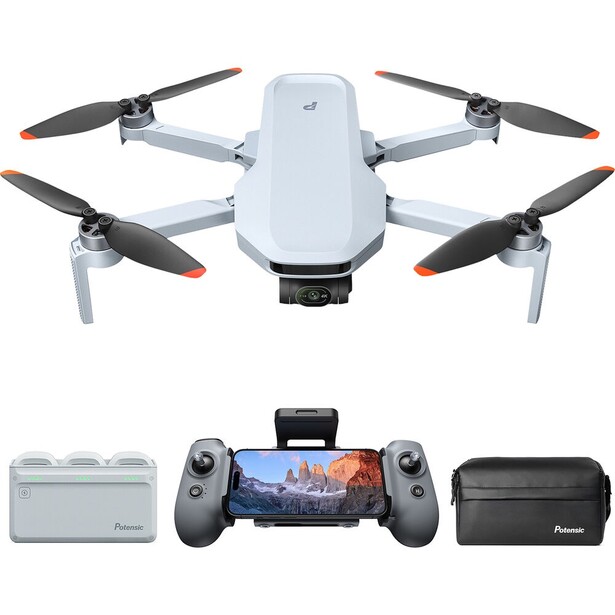
- Weight: under 249 g takeoff weight
- Camera: 48 MP 1/2-inch Sony CMOS, f/1.8
- Video: 4K/30p HDR
- Gimbal: 3-axis mechanical, with vertical shooting
- Flight time: up to 32 minutes
- Obstacle sensing: none, aside from downward vision for landing
- Transmission: PixSync 4.0, up to 10 km, 1080p feed
- Price: $339.99 (B&H)
For years the answer to "what is a good cheap drone" was a reluctant "buy a used DJI," because the budget alternatives were genuinely bad. The Potensic Atom 2 ended that. When we flew the Atom 2, it held its position in the wind better than its weight suggested, and its published specifications and documented design fill in the rest: it weighs under 249 grams, folds to the same pocketable size as a Mini, and its three-axis mechanical gimbal produces stable footage that budget drones historically could not, because they cheaped out on stabilization and leaned on software instead. The 1/2-inch Sony sensor with an f/1.8 lens turns in clean 4K/30p HDR in good light and a night mode that outruns its price.
The feature set reads like a DJI spec sheet, which is the point. You get AI subject tracking that follows a person or a vehicle, a full menu of automated QuickShots for orbits and reveals, vertical shooting for social content, and a PixSync 4.0 transmission system rated to 10 kilometers that holds a stable feed far beyond normal flying range. For a beginner or a casual creator who wants aerial footage without spending flagship money, this is the drone that makes the most financial sense in 2026.
The corner Potensic cut to hit the price is obstacle avoidance: the Atom 2 has nothing beyond a downward vision system for landing, so it will not stop itself before hitting a tree the way a DJI will. That puts the responsibility back on the pilot, which is fine for open-field flying and a genuine risk in tight spaces. The transmission is long-range, but the feed tops out at 1080p rather than a crisp high-bitrate image. On availability, the picture is more nuanced than it looks: Potensic released the improved Atom 3 in June 2026 with a 1/1.3-inch sensor and 16 km transmission, but it has no FCC authorization and is not sold in the US, so the Atom 2 is the Potensic you can actually buy here. For an authorized, in-stock, genuinely good camera drone at this price, check the current price of the Potensic Atom 2 at B&H.
What We Like
- Three-axis mechanical gimbal at a budget price
- 1/2-inch Sony sensor with a capable night mode
- AI tracking, QuickShots, and vertical shooting
- Authorized before the cutoff and still widely stocked
- Cheapest way into a real camera drone by a wide margin
What Could Be Better
- No forward or omnidirectional obstacle sensors at all
- Transmission feed caps at 1080p
- Smaller sensor than the pricier sub-250-gram drones
- The better Atom 3 exists, but not for US buyers
Best for Travel: DJI Air 3S
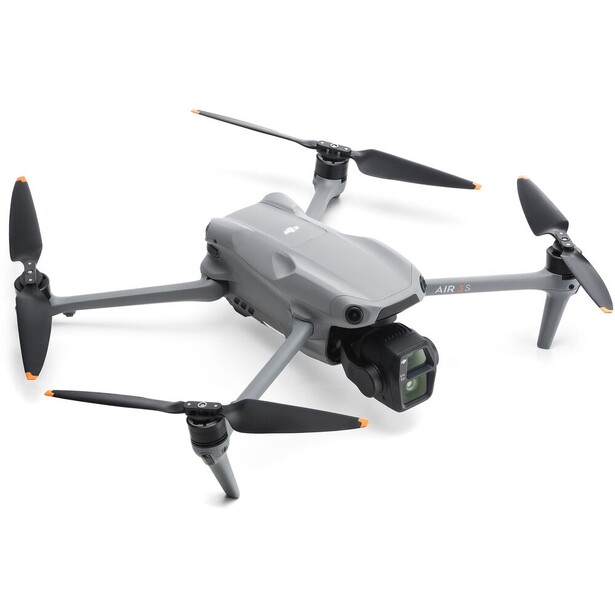
- Weight: 724 g takeoff weight
- Camera: 50 MP 1-inch CMOS, 24mm equivalent, f/1.8; plus a 48 MP 1/1.3-inch 70mm tele, f/2.8
- Video: up to 4K/120p, 4K/60p HDR
- Gimbal: 3-axis mechanical, with vertical shooting
- Flight time: up to 45 minutes
- Obstacle sensing: omnidirectional vision with forward LiDAR
- Transmission: O4, up to 20 km (FCC), with 42 GB of internal storage
- Price: $1,439 (B&H)
If the Mavic is more drone than you need and the Mini is a little too limited, the Air 3S is the one to pack for a trip. We reviewed the Air 3S for landscape work, and the specification that earns it the travel slot is not subtle: two cameras that cover almost everything a traveler wants, a 1-inch 24mm wide for landscapes and establishing shots, and a 70mm medium tele that compresses a scene and doubles your framing options without moving the aircraft. Having both means you land with variety instead of a folder of identical wide shots, which is what actually makes travel footage watchable. The 45-minute flight time and 42 gigabytes of internal storage mean you can leave the spare cards at home for a short trip.
It also flies with more confidence than anything lighter here. The forward-facing LiDAR reads obstacles in low light, and combined with the omnidirectional vision system it is built for the dawn and dusk hours, exactly when the good light happens and exactly when vision-only drones start making you nervous. This is a mature, authorized product that was on the US market well before the FCC cutoff, so unlike DJI's newest releases it remains straightforward to buy and to service. An Air 4 has been rumored for most of 2026, but no FCC filing exists for it and none can, which is a strange kind of reassurance: the Air 3S is not about to be discounted out from under you by its own successor.
The one thing to plan around is weight. At 724 grams it sits firmly in the tier that requires FAA registration and Remote ID for US flyers, and it takes up more bag space than a Mini or a HoverAir. If crossing borders and skipping paperwork is your priority, a sub-250-gram drone is the smarter travel companion, and the Mini 5 Pro above is the one to look at. For the traveler who wants one drone that does nearly everything well, the DJI Air 3S is the pick, so check its current price at B&H.
What We Like
- Two focal lengths cover almost any travel shot
- Low-light obstacle sensing with forward LiDAR
- 45-minute flight time and 42 GB of onboard storage
- Authorized well before the cutoff, so it is easy to buy and service
- No successor arriving to strand it
What Could Be Better
- At 724 g it needs FAA registration and Remote ID
- Larger and heavier to pack than a sub-250-gram drone
- Single 1-inch sensor rather than the Mavic's 4/3
- The 70mm tele drops to a smaller 1/1.3-inch sensor
Best Selfie and Follow Drone: HoverAir X1 ProMax
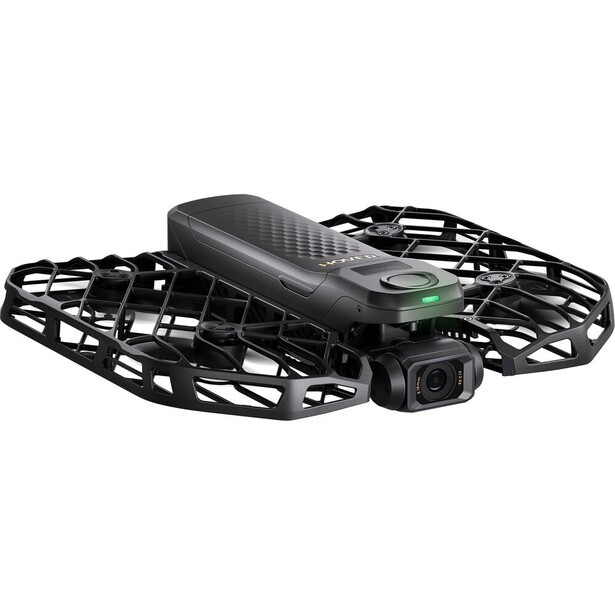
- Weight: 192 g takeoff weight
- Camera: 1/1.3-inch CMOS, 107-degree field of view, 48 MP DNG raw stills
- Video: 8K/30p, 4K/120p, 10-bit HLG
- Gimbal: free-floating 2-axis with AI horizon leveling
- Flight time: up to 16 minutes
- Obstacle sensing: rear proximity sensor only
- Transmission: app control to 500 m; up to 1 km with the Beacon
- Price: $879.99 (B&H)
A traditional drone is the wrong tool for filming yourself doing something. You cannot pilot a Mavic and mountain bike at the same time, and that gap is what the HoverAir X1 ProMax fills better than anything else. We have not tested this one ourselves, so here is what the hardware is built to do: it launches from your palm with no controller, no phone, and no setup, tracks you automatically at up to 42 kilometers per hour, and lands back in your hand when it is done. You pick a flight mode, tap a button, and go ride, ski, or run. For solo creators who want dynamic third-person footage of themselves and have no interest in learning to fly, that is the whole pitch, and it lands.
What lifts the ProMax above earlier selfie drones is that the camera got serious. It shoots 8K/30p and 4K/120p through a 1/1.3-inch sensor with 10-bit HLG capture, and it produces 48-megapixel DNG raw stills, so the footage and photos hold up to real editing rather than living only on a phone screen. At 192 grams it is pocketable and paperwork-free, and an optional Beacon extends control and tracking range to a kilometer, which is what you want for wider action shots down a trail or across a break.
The limitations define what this is and is not. Flight time is only about 16 minutes, so this is a tool for capturing clips rather than long sessions, and there are no obstacle-avoidance sensors beyond a rear proximity sensor, so it will follow you into a low branch if you ride under one. It is also not a free-flying camera drone in the traditional sense, so if you want to send a camera across a valley for a landscape, look at the Air 3S instead. HoverAir got the X1 ProMax authorized before the FCC cutoff and it stays on US shelves, though the waterproof Aqua variant announced for other markets is not coming here. If your budget is tighter and you mainly want palm-launch follow clips, the DJI Neo is a cheaper, lighter alternative worth a look. For the athlete, cyclist, or solo vlogger who wants effortless follow footage, the HoverAir X1 ProMax sits in a category of one. Check its current price at B&H.
What We Like
- Truly hands-free, palm launch with no controller
- Automatic tracking to 42 km/h for action sports
- Serious 8K video and 48 MP raw stills
- 192 grams, pocketable, and no registration required
- Beacon pushes usable range out to 1 km
What Could Be Better
- Only about 16 minutes of flight time
- No obstacle avoidance beyond a rear proximity sensor
- Not a traditional free-flying camera drone
- The 2-axis gimbal leans on software horizon leveling
How to Choose a Camera Drone
Start with weight, because in the US it decides how much freedom you have before you have shot a single frame. Any drone at or over 250 grams must be registered with the FAA and broadcast Remote ID, and that includes the Air 3S and the Mavic 4 Pro here. Drones under 250 grams, like the Mini 5 Pro, the Flip, the Atom 2, the Antigravity A1, and the HoverAir, skip the registration tier for recreational flying, which is why the sub-250-gram class has become the sweet spot for most people. Note that two of these models cross the line only when you fit the larger battery, so read the fine print if staying under the limit matters to you.
Next, think about the sensor rather than the megapixel count. A 1-inch sensor, as in the Mini 5 Pro and the Air 3S, gathers far more light than the 1/2-inch chip in a budget drone, and that shows up as cleaner shadows, more highlight recovery, and usable footage later into the evening. The Mavic's 4/3 sensor goes further still. Megapixels mostly determine how much you can crop; sensor size determines how good the image looks in the first place. If you plan to color grade, or to shoot in anything but bright midday sun, spend on the sensor.
Then match the drone to how you actually fly. If you want to send a camera out over a landscape and compose carefully, a traditional drone with a controller and obstacle avoidance is what you want, and the sensors are worth insisting on, because the Atom 2's lack of them is its one real weakness. If you want footage of yourself in motion, a follow drone like the HoverAir removes the piloting entirely. If you want the feeling of flight and creative freedom in the edit, the 360 approach of the Antigravity A1 is unlike anything else, and if you want traditional goggle FPV with a single forward camera for freestyle dives, the DJI Avata 2 is the authorized option to look at.
Finally, factor in the regulatory wall. Every model in this guide cleared FCC authorization before the December 2025 Covered List decision, which is precisely why it is in this guide. Newer and often better hardware exists (the DJI Lito X1, the Potensic Atom 3, the HoverAir Aqua) and none of it can legally be sold here. Do not buy a gray-market import to chase a spec sheet: you will own a drone that DJI cannot service and that a US retailer cannot help you with. Buy from the authorized list, and buy sooner rather than later, because nothing on it is being replenished forever.
What We're Looking For
Our picks weigh image quality against the weight class and its regulations, the maturity and safety of the flight system, how forgiving the drone is for its intended pilot, and, in 2026 more than ever, whether you can legally buy and support it in the US. Most picks here come from gear our writers have flown and reviewed hands-on, including the Mavic 4 Pro, the Mini 5 Pro, the Flip, and the Antigravity A1, and we write those entries from that experience. Where we have not flown a drone ourselves, as with the HoverAir X1 ProMax, we say so in the entry and write from verified current specifications and each drone's documented design. Every specification here was checked against current manufacturer and retailer sources at the time of writing, and prices are current B&H figures that will move.
Frequently Asked Questions
Are DJI Drones Banned in the United States in 2026?
Not exactly. You can still legally own and fly DJI drones, and no existing drone has been grounded or disabled. What changed is that the FCC added foreign-made drones without prior authorization to its Covered List in December 2025, so DJI's newest releases cannot be certified for the US market. Models authorized before that date, including every DJI pick in this guide, remain legal to import, sell, and fly.
Do I Need to Register My Drone With the FAA?
If the drone weighs 250 grams or more, yes, you must register it and it must broadcast Remote ID, even for recreational flying. Drones under 250 grams flown recreationally do not require registration. All recreational flyers must also pass the free TRUST safety test and follow airspace rules regardless of drone weight.
Is a Sub-250-Gram Drone Good Enough for Serious Photography?
In 2026, yes. The DJI Mini 5 Pro flies a 1-inch sensor at 249.9 grams, which was unthinkable a few years ago, and it produces images good enough for professional use. You give up the reach of a multi-camera drone and some wind resistance, but for landscape and travel work a sub-250-gram drone is no longer a compromise.
What Is the Best Drone for a Complete Beginner?
The DJI Flip, because its fully enclosed propeller guards, palm takeoff, and subject tracking make it hard to crash and easy to fly on day one, while still carrying a camera worth keeping. If your budget is tighter, the Potensic Atom 2 is a genuinely capable alternative, though it lacks obstacle sensors, so fly it in open space while you learn.
Should I Buy a Drone Now or Wait?
Buy now if you want one of the models in this guide. US stock is limited to what was authorized before the FCC's December 2025 cutoff and is not being replenished with new models, so waiting does not get you a better drone, it gets you a thinner shelf. Waiting only makes sense if you are betting on DJI's court challenge to the FCC succeeding, and that is a long, uncertain fight.
Fstoppers may earn a commission from purchases made through links in this article. Our picks are made independently by our editorial team.