GoPro invented this category, and in 2026 it no longer runs it. The company that made "action camera" a household phrase now sells one of the least interesting cameras in a field it used to own, while DJI and Insta360 push out larger sensors, variable apertures, and 360 rigs that let you point the camera after you get home. The result is a market that is genuinely better than it has ever been and far more confusing to shop, because the three dominant form factors, a rugged fixed-lens action cam, a reframe-later 360 camera, and a pocket gimbal built for talking to the lens, solve completely different problems and barely compete with one another.
The purchase turns on three questions. First, do you want to frame in the moment or capture everything and decide later? That single choice separates a traditional action camera from a 360 camera and matters more than any spec. Second, how much do you care about image quality in bad light, which is where the newer one-inch-class sensors have opened a real gap over the tiny chips of a few years ago. Third, how are you actually mounting it, on a helmet, a chest, a handlebar, a wrist, or your own hand, because a camera that is perfect clipped to a jersey is often wrong on a dive.
This category also churns faster than any other in photography, so every pick below carries a plain note on where it sits in its product cycle, whether a successor is close, already announced, or nowhere in sight. We have used six of these seven cameras hands-on. For the seventh, the Osmo Action 6, we write from verified current specifications and say so rather than imply testing we have not done. Prices are the current B&H figures and move often, so treat them as a snapshot.
At a Glance
- Best Overall Action Camera: DJI Osmo Action 6
- Best 360 Camera: Insta360 X6
- Best for Vlogging: DJI Osmo Pocket 3
- Best for Image Quality: Insta360 Ace Pro 2
- Best for POV and Helmet Use: Insta360 GO Ultra
- Best Budget Action Camera: DJI Osmo Action 5 Pro
- Best Waterproof and Dive Camera: GoPro HERO13 Black
Best Overall Action Camera: DJI Osmo Action 6
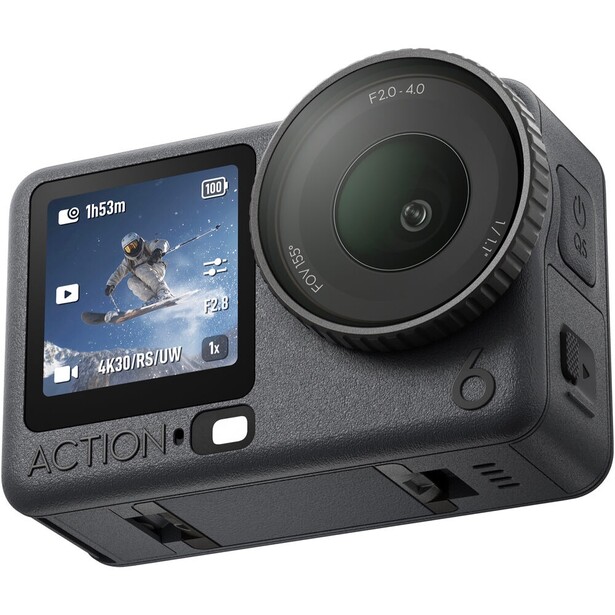
- Sensor: 1/1.1-inch CMOS, 38 MP
- Video: 8K/30p, 4K/120p
- Stabilization: RockSteady 3.0 and 360° HorizonSteady
- Waterproofing: 20 m without a case, 60 m with the dive case, IP68
- Battery: 1,950 mAh, up to 240 minutes
- Price: $436 (B&H)
We have not run the Osmo Action 6 through a full Fstoppers review yet, so this pick rests on its verified specifications and on the fact that nothing else in the category currently matches them. It is the first mainstream action camera with a variable aperture, f/2.0 to f/4.0, which solves a problem the rest of the field papers over with digital tricks: an action camera with a fixed aperture has only shutter speed and ISO to work with, so it either drags the shutter and smears motion or drops to a noisier ISO the moment the sun goes down. Stopping down to f/4.0 in bright sun and opening to f/2.0 at dusk gives this camera a lever the others do not have, and it pulls that lever on a 1/1.1-inch sensor, the largest chip in any action camera in this guide.
The fundamentals underneath are just as strong. It is waterproof to 20 m with no housing at all, the deepest bare-camera rating here, so snorkeling, kayaking, and surf work do not require buying a dive case first. Dual OLED touchscreens, one facing forward, make framing a selfie or a piece to camera trivial. The 1,950 mAh battery is rated to 240 minutes, roughly four times what action cameras managed a few generations ago, and the magnetic quick-release snaps into mounts in a second rather than requiring you to thread a bolt through plastic fingers. DJI's mount adapters are cross-compatible with the enormous existing catalog of action-camera accessories, so switching does not mean rebuying every clamp you own.
The honest weaknesses are real if narrower than they used to be. That headline 8K is capped at 30p, so high-frame-rate work still tops out at 4K/120p, and the 8K H.265 files it produces demand a recent phone or a capable computer to edit without stuttering. The square-ish sensor and DJI's color science take some learning if you are arriving from GoPro, where the look out of camera is punchier by default. Anyone who wants a camera that hands them a finished, gradeable file with no thought at all will find DJI asks slightly more of them. On product-cycle timing, this is the newest flagship action camera on the market and nothing is rumored to replace it, which makes it the safest full-price buy in this guide. Cyclists, travelers, and parents at a pool all land in the same place here, so check the current price of the DJI Osmo Action 6 at B&H.
What We Like
- Variable f/2.0 to f/4.0 aperture, unique in this class
- Large 1/1.1-inch sensor, the biggest of any action camera here
- Waterproof to 20 m with no housing
- 240-minute battery rating and fast magnetic mounting
What Could Be Better
- 8K recording is capped at 30p
- Color science takes adjustment for GoPro switchers
- No interchangeable-lens system like GoPro's HB mods
- We have not tested it ourselves yet
Best 360 Camera: Insta360 X6
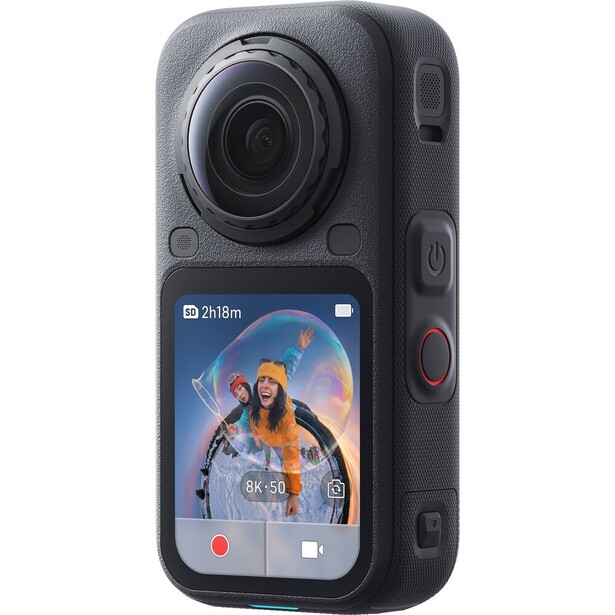
- Sensor: dual 1/1.1-inch, f/2.0
- Video: 8K/50p 360, 5K/60p and 4K/120p single-lens
- Stabilization: FlowState and 360° Horizon Lock
- Waterproofing: 20 m without a case, 60 m with the dive case, IP68
- Battery: 2,600 mAh, up to 140 minutes at 8K/30p
- Price: $699.99 (B&H)
A 360 camera works on a different principle than everything else here. It films in every direction at once, and you frame the shot later on your phone by dragging around the sphere. The X6 is the best expression of that idea currently shipping. Against the X5, which it replaces as Insta360's flagship, it moves to dual 1/1.1-inch sensors with 33% more area and raises 360 video from 8K/30p to 8K/50p, stills from 72 MP to 120 MP, and I-Log color from 8-bit to 10-bit. A selfie stick held in the blind spot between the two lenses still vanishes from the stitched footage, which is how mountain bikers get those floating third-person shots with no drone and no crew. Filming in every direction also means you cannot point the camera the wrong way, which is the entire reason motorcyclists and skiers have migrated to the format.
When Nicco Valenzuela reviewed the X6 for Fstoppers, the first change that stood out was the body. At 100 mm tall, it is nearly an inch shorter than the X5. Insta360 removed the two buttons every earlier X model carried, kept record and mode buttons on the sides, and put a pressure sensor under the 2.32-inch OLED screen, so with that feature enabled, a press anywhere on the display starts or stops recording, even in gloves. Our reviewer also notes that 47 GB of usable built-in storage keeps you shooting when the microSD card is still sitting in a card reader at home. What Valenzuela dreaded about 360 cameras was hours of reframing, which meant fewer videos got edited at all. AI Director goes after that chore: plug the X6 in to charge, and it builds a highlight edit on the camera and sends the finished clips to the Insta360 app, where you can still adjust the cut and the framing. The lenses still swap out without a repair, and Insta360 rates the new ones five times more scratch-resistant and 60% cheaper to replace than the X5's.
The X6's 8K covers the full sphere, so a cropped 16:9 frame pulls from a slice of it and never looks like true 8K, and the files are big. InstaFrame 2.0 will hand you a tracked flat 4K clip straight from the camera, but only at up to 30p. The one improvement our reviewer asked for was a detachable screen and remote, which Insta360's Luna Ultra already has. On product-cycle timing, the X6 went on sale on August 12, 2026, is Insta360's current flagship, and has no announced successor. If 8K/30p is enough for you, Insta360 still sells the X5 as its value model, and the DJI Osmo 360 is worth a look if you prefer a flatter single-body design and DJI's editing app, though its lenses are not user-replaceable. For floating third-person shots at 8K/50p, check the current price of the Insta360 X6 at B&H.
Read our full review: Giving Bigger Camera Energy: We Review the Insta360 X6
What We Like
- Larger 1/1.1-inch sensors, 8K/50p video, and 120 MP stills
- 10-bit I-Log color for grading
- Shorter body with a press-anywhere OLED screen
- AI Director cuts a highlight edit while it charges
What Could Be Better
- Reframed 16:9 clips fall well short of true 8K
- InstaFrame 2.0 flat 4K tops out at 30p
- Large files and an app-based workflow
- No detachable screen and remote like the Luna Ultra's
Best for Vlogging: DJI Osmo Pocket 3
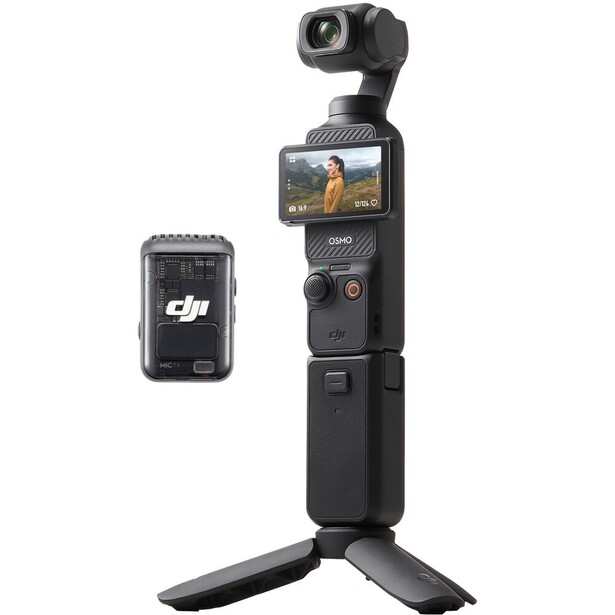
- Sensor: 1-inch CMOS, f/2.0, 20mm equivalent
- Video: 4K/120p, 10-bit D-Log M
- Stabilization: three-axis mechanical gimbal
- Waterproofing: none
- Battery: 1,300 mAh, up to 166 minutes
- Price: $512 (B&H)
If your real goal is talking to a camera, walking and filming, or shooting b-roll that looks like it came off a proper rig, an action camera is the wrong tool and the Osmo Pocket 3 is the right one. It pairs a genuine 1-inch sensor, the size you find in premium compacts (see our guide to the best compact and point-and-shoot cameras), with a physical three-axis gimbal, so the footage is both cleaner in low light than any action camera and steadier than electronic stabilization can fake. One of our writers bought a Pocket 3 on release day and, after listing the fixes it needs, still recommends it, but the stronger case for it is structural rather than subjective: no rival puts a chip that size behind mechanical stabilization at this price, and nothing else in the category comes close to the look it produces straight off the card.
The design is what sells it in daily use. The 2-inch screen physically rotates, flipping the camera between horizontal video for YouTube and vertical for social with a twist of the wrist, and the interface reorients along with it. Face and object tracking keep you centered while you move around a scene, which is what turns a one-person shoot into something manageable. It records 4K up to 120p and captures 10-bit D-Log M for anyone who wants to grade, and it slips into a jacket pocket in a way no gimbal-plus-camera combination ever will.
The limitations are inherent to the form. The gimbal has exposed moving parts, so this is not a camera you throw loose into a bag or bolt to a mountain bike, and it is not waterproof at all. Battery life is adequate rather than generous. Then there is the awkward footnote that shapes this entire slot. DJI's successor, the Osmo Pocket 4, does exist, and its spec sheet adds a stacked 1-inch sensor, 4K/240p, 37 MP stills, and 107 GB of built-in storage. You cannot buy it in the United States. DJI was added to the FCC's Covered List in December 2025, which bars the agency from granting the company new equipment authorizations, and the Pocket 4 was the first camera to fall through that gap. It is not stocked by B&H, Adorama, or any other US retailer, and DJI is challenging the designation in court with no resolution yet. Until that changes, the Pocket 3 is not a compromise pick, it is the pocket gimbal that exists here, so check the current price of the DJI Osmo Pocket 3 at B&H.
What We Like
- Large 1-inch sensor and mechanical gimbal stabilization
- Rotating screen for instant vertical or horizontal shooting
- Reliable face and object tracking for solo work
- Cinematic footage with no rig to carry
What Could Be Better
- Exposed gimbal is fragile and not waterproof
- Merely adequate battery life
- Its Pocket 4 successor is blocked from US sale, so this model is frozen in place
Best for Image Quality: Insta360 Ace Pro 2
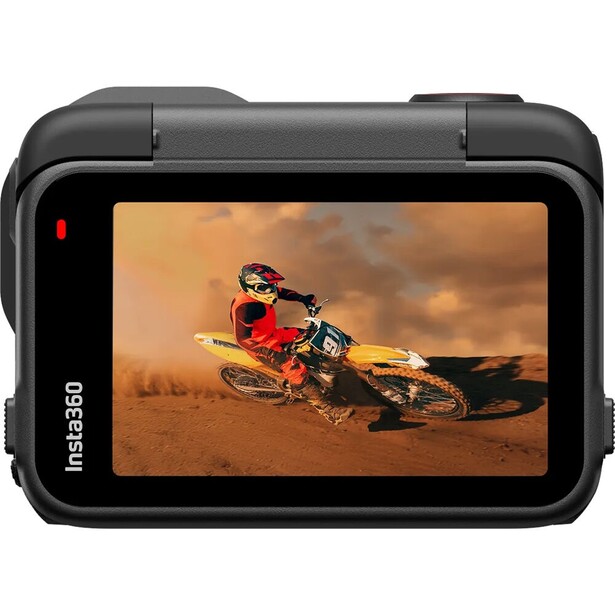
- Sensor: 1/1.3-inch, f/2.6 Leica SUMMARIT lens, 13.5 stops of dynamic range
- Video: 8K/30p, 4K/60p Active HDR
- Stabilization: FlowState with 360° Horizon Lock
- Waterproofing: 12 m without a case, 60 m with the dive case
- Battery: 1,800 mAh, up to 180 minutes
- Price: $389.99 (B&H)
Buy the Ace Pro 2 when the footage itself matters more than the mounting. It is the only camera in this guide with a lens co-engineered with Leica, a 1/1.3-inch sensor rated for 13.5 stops of dynamic range, and a two-chip design that pairs a dedicated imaging processor with a 5 nm AI chip. That hardware exists to hold detail in the shadows and highlights of a scene a normal action camera clips to mush, and it shoots true 8K/30p, which is the resolution you want if you plan to lock the camera off and reframe hard in post.
What makes it livable rather than merely impressive is the flip-up screen. The 2.5-inch display rotates up so you can frame yourself, a genuine advantage over the small fixed front screens most rivals use, and the AI chip drives aggressive noise reduction in low light plus on-device editing that will assemble a rough cut before you get home. It is waterproof to 12 m out of the box and to 60 m with the dive case, so it doubles as a capable underwater camera without an expensive housing. We have covered this camera in our own testing, and the short version is that Insta360 has kept improving it after launch through firmware rather than leaving it to age.
The tradeoffs keep it out of the overall slot. It is physically larger and heavier than the Osmo Action 6, which you feel after an hour on a helmet or a chest mount, and its stabilization, while excellent, sits a step behind DJI's smoothest modes. The 8K files want fast cards and a strong computer. On product-cycle timing, an Ace Pro 3 has been rumored for 2026 but nothing has been announced, so there is no confirmed successor to wait for. The run-and-gun creator who wants the cleanest possible image out of a rugged body, and will carry a little more to get it, should check the current price of the Insta360 Ace Pro 2 at B&H.
Read our full review: Insta360 Ace Pro 2: A New Contender To The Action Cam Throne?
What We Like
- Leica lens and a large sensor with 13.5 stops of range
- Genuine 8K/30p for reframing and detail
- Flip-up screen for easy self-framing
- Strong AI noise reduction and on-device editing
What Could Be Better
- Larger and heavier than rival action cameras
- Stabilization trails DJI's best modes
- 8K files demand a strong editing setup
Best for POV and Helmet Use: Insta360 GO Ultra
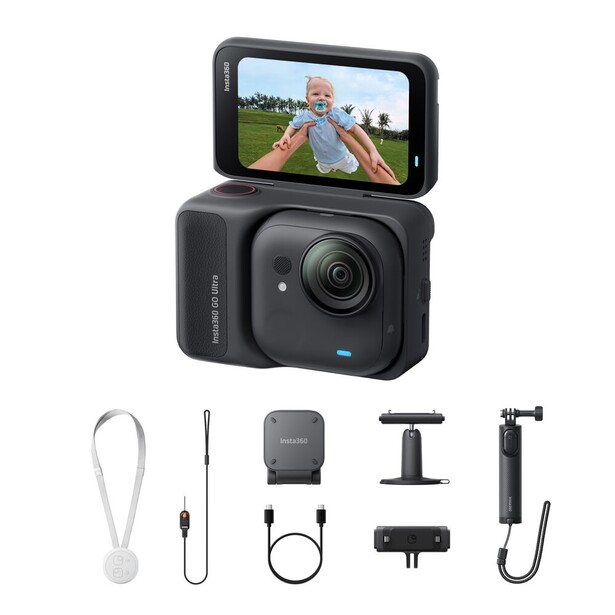
- Sensor: 1/1.28-inch, f/2.85
- Video: 4K/60p, 2.7K/240p slow motion
- Stabilization: FlowState with 360° Horizon Lock
- Waterproofing: 10 m for the camera, 60 m with the dive case
- Battery: 500 mAh camera, 1,450 mAh Action Pod
- Price: $499.99 (B&H)
Some of the best point-of-view footage comes from a camera small enough that you forget you are wearing it, and the GO Ultra is built entirely around that idea. The camera itself weighs 53 g, about the mass of a few coins, and it sticks magnetically to a pendant worn under a shirt, clips to a hat brim, or snaps onto a helmet in spots where a normal action camera is simply too bulky to sit. When we reviewed it, the appeal was immediate for exactly the shooters this format was invented for: a chef filming a dish from their own eye line, a climber who wants a true first-person view, a parent capturing a kid at the kid's height with no rig in the frame.
The Ultra is the generation that makes the format serious. It moves to a 1/1.28-inch sensor, the same class DJI and Insta360 put in their full-size cameras, so the image is a world away from the toylike earlier GO models, and it shoots up to 4K/60p with 2.7K/240p slow motion. It ships with the Action Pod, a folding dock with a flip screen and its own 1,450 mAh battery that converts the tiny camera into a conventional handheld with a viewfinder and far longer runtime. The camera is waterproof to 10 m on its own, and the whole system inherits Insta360's stabilization and its quick-cut editing app.
The compromises are the price of the size. The onboard 500 mAh battery is small, so long sessions mean living inside the Action Pod or swapping often, and this generation drops built-in storage in favor of a microSD card you supply yourself. Wind noise on the naked camera intrudes without an accessory. None of that undercuts the core appeal for the person who needs a camera they can wear and forget. On product-cycle timing, the GO Ultra launched in 2025, is current, and has no announced successor. For hands-free, first-person, wearable shooting nothing else is close, so check the current price of the Insta360 GO Ultra at B&H.
Read our full review: Insta360 GO Ultra Review: Tiny Camera, Serious Video
What We Like
- 53 g body that mounts almost anywhere
- Much larger sensor than earlier GO cameras
- Bundled Action Pod adds a screen and battery
- Ideal for hands-free, first-person footage
What Could Be Better
- Small onboard battery for the bare camera
- No built-in storage this generation
- Wind noise without an add-on
Best Budget Action Camera: DJI Osmo Action 5 Pro
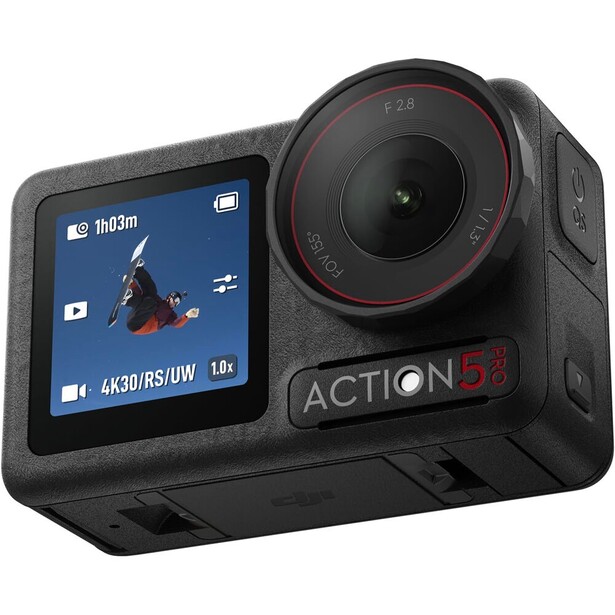
- Sensor: 1/1.3-inch CMOS, 40 MP, f/2.8
- Video: 4K/120p
- Stabilization: RockSteady 3.0 and 360° HorizonSteady
- Waterproofing: 20 m without a case, 60 m with the dive case, IP68
- Battery: 1,950 mAh, up to 240 minutes
- Price: $319 (B&H)
Last year's flagship is almost always the smartest value in this category, and the Osmo Action 5 Pro is the clean example. It still carries a large 1/1.3-inch sensor, the same 20 m bare waterproof rating and 60 m dive-case rating as the newer model, the same dual touchscreens, and the same 240-minute battery rating. What it gives up to the Action 6 is the variable aperture and a slightly larger sensor. For anyone not doing low-light math before every shot, that gap is worth considerably less than the roughly $117 separating them at current B&H prices. When we filmed it against the HERO13 Black for a few weeks, it came out ahead nine times out of ten on low light, ease of use, and dynamic range, and the specification overlap with the Action 6 is public and easy to check line by line.
Everything that made DJI's action cameras worth switching to is present. The 4K/120p ceiling is plenty for smooth slow motion, RockSteady 3.0 sits at or near the top of the class for stabilization, and the magnetic mount clicks in and out quickly with gloved hands. There is a genuinely useful front screen for framing selfies, subject tracking, and enough built-in storage to shoot for a while before a card becomes mandatory. Because the camera has been on the market long enough to settle, mounts and accessories for it are cheap and everywhere.
The reason it sits in the budget slot rather than higher is exactly what makes it cheap. It is the previous generation, so you forgo the Action 6's variable aperture and its low-light edge, and DJI's firmware attention will drift to the newer body over time. Neither is a real problem for most buyers today, and on product-cycle timing this camera has already been superseded, which is the entire point of buying it. It undercuts a new GoPro while beating it on sensor size and battery life, and for most people that is the argument settled. If you want most of the best action camera on the market for meaningfully less, check the current price of the DJI Osmo Action 5 Pro at B&H.
What We Like
- Large 1/1.3-inch sensor at a discounted price
- Same 20 m waterproofing and 240-minute battery rating as the newer model
- Smooth stabilization and fast magnetic mounting
- Cheap, plentiful accessories
What Could Be Better
- No variable aperture like the Action 6
- Previous-generation firmware support will wind down
- Slightly behind the latest sensor for low light
Best Waterproof and Dive Camera: GoPro HERO13 Black
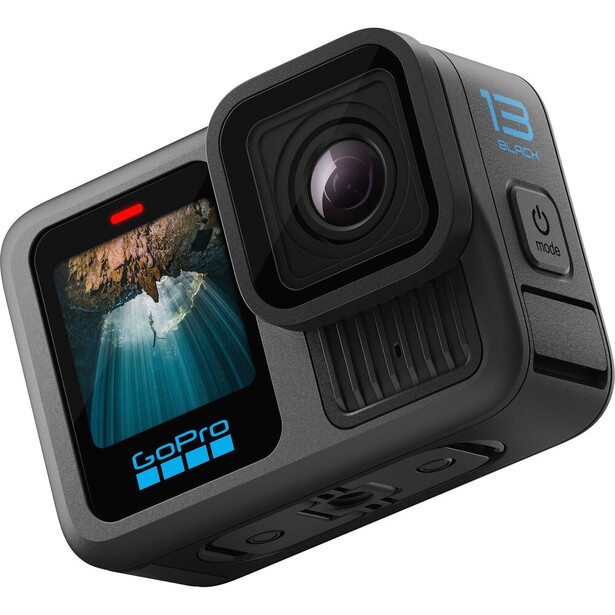
- Sensor: 1/1.9-inch, 8:7 aspect ratio, 27 MP stills
- Video: 5.3K/60p, 4K/120p, 2.7K/240p
- Stabilization: HyperSmooth 6.0 with AutoBoost
- Waterproofing: 10 m on its own, 60 m with the dive housing
- Battery: Enduro 1,900 mAh
- Price: $429 (B&H)
GoPro has lost the outright performance race and still owns the one thing that decides underwater purchases: the ecosystem. The HERO13 Black is waterproof to 10 m on its own and to 60 m inside the proven GoPro dive housing, and no other brand has anything approaching GoPro's decade-deep catalog of housings, red filters, tray mounts, lights, and third-party dive gear built specifically around this camera's shape. For divers, spearfishers, and anyone whose camera lives in salt water, that maturity outweighs a spec sheet, because the exact accessory you need already exists and thousands of people have already flooded one and told you how.
On land the HERO13 is the most flexible GoPro yet, thanks to the HB-series lens mods. A Macro mod, an Anamorphic mod, or an Ultra Wide mod that pushes the field of view to 177° gives it an optical range no fixed-lens rival can answer. The 8:7 sensor lets you shoot tall and crop both horizontal and vertical deliverables from one clip, HyperSmooth 6.0 is the stabilization system rivals still get benchmarked against, and the Enduro battery finally gives GoPro respectable runtime. Mounting is the universal GoPro finger system, which every chesty, helmet mount, and tripod adapter on earth already fits.
The honest problem is the sensor. At 1/1.9 inches it is the smallest chip in this guide, so low-light footage is noticeably noisier, and low light is precisely the condition a diver spends most of their time in once they get below the first few meters. The best features also tend to sit behind paid accessory mods. On product-cycle timing, this is the pick most exposed to obsolescence: GoPro announced its GP3 processor in March 2026, promising roughly double the pixel-processing power and a large low-light gain, and unveiled its GP3 camera generation at NAB in April. That generation arrived as the MISSION 1 series of compact cinema cameras, which reached stores on May 28, 2026. GoPro has not announced a HERO14, and the HERO13 Black is still its newest HERO Black. If low light is your priority, compare it with the 1-inch-sensor MISSION 1 cameras before you buy. If you need a bombproof, deeply supported water camera now, check the current price of the GoPro HERO13 Black at B&H.
What We Like
- Unmatched dive-housing and mount ecosystem
- HB-series lens mods, including a 177° ultra wide
- HyperSmooth 6.0, still the stabilization benchmark
- Universal mounting that fits everything
What Could Be Better
- Smallest sensor here and noisier low-light footage
- GoPro's newer GP3 cameras are MISSION 1 models with 1-inch sensors
- Best features often need paid accessory mods
How to Choose an Action or 360 Camera
Start with form factor, because it decides everything else. If you want a finished shot the moment you stop recording, buy a traditional action camera like the Osmo Action 6 or the HERO13 Black. If you would rather capture the whole scene and choose your angle later, or you want that floating third-person look, a 360 camera like the Insta360 X6 is a different tool entirely and worth the extra editing step. If you are mostly filming yourself talking or walking and want cinematic, stabilized footage, a pocket gimbal like the Osmo Pocket 3 will embarrass an action camera at that specific job. These three do not really compete; they answer different questions. And if what you actually want is the aerial version of that third-person shot, the honest answer may be a drone rather than a stick, which our guide to the best camera drones covers in detail.
Sensor size is the spec that has quietly separated the good cameras from the mediocre ones. The move to one-inch-class and 1/1.3-inch sensors is why 2026 footage looks so much cleaner in low light than it did a few years ago, and it is the single biggest reason to prefer DJI and Insta360 over the smaller-sensor GoPro when image quality outranks ecosystem. Resolution matters far less than the marketing implies. Several of these cameras shoot 8K, but the action cameras among them manage it only at 30p, and on a 360 camera, even the X6's 8K/50p is spread across a full sphere, so a big number on the box does not become a big number in your final crop. A 1/1.3-inch sensor shooting 4K will beat a tiny sensor shooting 8K in every condition that is not bright noon sun.
Then match the camera to how you mount it. For helmets, chests, and wrists, weight and bulk decide it, which is the whole argument for the 53 g GO Ultra. For water, native waterproof depth and the depth of the housing ecosystem matter more than anything else, which is where the Action 6's 20 m bare rating and GoPro's dive-housing catalog pull ahead of the field. Battery life and thermal limits are the specs nobody thinks about until a camera dies or overheats halfway through the run, so favor the bigger batteries if you shoot long sessions. Factor the editing workflow in honestly, too, because 360 footage and 8K files both demand time and a capable computer that an action camera's quick 4K clips do not.
Finally, watch the calendar. This category refreshes faster than any other in photography, and buying two weeks before a successor lands is how you overpay by a hundred dollars. As of this writing, the Insta360 X6 has replaced the X5 as the company's flagship 360 camera, and DJI's Osmo Pocket 4 is shipping everywhere except the United States. GoPro's GP3 processor reached stores in May 2026 inside its new MISSION 1 compact cinema cameras, not a new HERO. The GoPro MAX2 is also worth a look if you want a 360 camera on GoPro's mount and housing ecosystem rather than Insta360's software.
What We're Looking For
Our picks weigh real-world image quality, stabilization, waterproofing and durability, battery life, the strength of each camera's mount and accessory ecosystem, and how well a camera suits the specific way its buyer will actually shoot rather than how it scores in isolation. Our writers have used six of the seven cameras here hands-on, all but the DJI Osmo Action 6. For the Action 6, we have relied on specifications verified against current manufacturer and retailer sources, and we say so plainly in its entry rather than imply testing we have not done. Prices are the current B&H figures at the time of writing.
Frequently Asked Questions
Is a 360 Camera Better Than a Normal Action Camera?
Neither is better; they solve different problems. A 360 camera captures everything at once and lets you frame the shot later, which is ideal when the action is unpredictable or you want third-person angles. A traditional action camera gives you a finished, higher-quality frame straight off the card with no editing step. Pick based on whether you want to frame in the moment or after the fact.
Why Can't I Buy the DJI Osmo Pocket 4 in the US?
DJI was added to the FCC's Covered List in December 2025, which bars the agency from granting the company new equipment authorizations, and the Osmo Pocket 4 was the first camera caught by it. No major US retailer stocks it, and DJI is challenging the designation in court. Cameras authorized earlier, including the Osmo Action 6, Osmo Action 5 Pro, and Osmo Pocket 3, remain on sale at B&H.
Should I Wait for a New GoPro HERO?
Not on current evidence. GoPro announced its GP3 processor in March 2026 and put it in the MISSION 1 series of compact cinema cameras, which reached stores on May 28, 2026, but it has not announced a HERO14, and the HERO13 Black remains its newest HERO Black. If you want GoPro's mounts and housings with a 1-inch sensor, the MISSION 1 cameras are the newer option. Otherwise, the HERO13 Black is proven, and the DJI and Insta360 options already lead on sensor size.
Do I Need an 8K Camera?
For most people, no. The action cameras here that shoot 8K cap it at 30p, and the X6's 8K/50p is spread across a full sphere, so your final cropped clip lands closer to good 4K. An 8K spec earns its keep mainly if you plan to lock a camera off and reframe heavily in post. For everyday action footage, a 4K/120p camera with a large sensor is the better buy.
Which Action Camera Is Best for Low Light?
The cameras with the largest sensors win. The DJI Osmo Action 6, with its 1/1.1-inch sensor and variable f/2.0 to f/4.0 aperture, and the Insta360 Ace Pro 2, with a 1/1.3-inch sensor and a Leica lens, are the strongest low-light performers here. GoPro's smaller 1/1.9-inch sensor trails them noticeably once the light drops, which is the main reason to look past it for indoor, night, and underwater shooting.
Fstoppers may earn a commission from purchases made through links in this article. Our picks are made independently by our editorial team.