
On June 1, 2026, GoPro filed a document with the Securities and Exchange Commission that no company ever wants to file. Its auditor, PricewaterhouseCoopers, had attached a going-concern warning to GoPro's 2025 accounts, the formal accounting language for substantial doubt that a business can survive the next twelve months.
The company that taught a generation how to film itself surfing, skiing, and falling off mountain bikes was bleeding cash, having burned through about $37 million running its operations in the first quarter of 2026 alone, and it warned that it expected to fall out of compliance with its loan covenants, a breach that through cross-default provisions could make debt it could not afford come due all at once. It was telling investors, in writing, that it might have to sell itself, merge, pivot into defense and aerospace, or cease operations. For a brand built on the image of fearless motion, it was a strange and quiet way to face the edge. To understand how GoPro got here, you have to go back to a surf trip.
A Camera Strapped to a Wrist
In 2002, Nick Woodman was not an obvious candidate to build a billion-dollar company. He was a 1997 visual-arts graduate from UC San Diego with two failed startups behind him, the second of which, an online gaming venture called Funbug, had collapsed in 2001 and taken roughly $3.9 million of other people's money with it. He has said the shame of that failure, of having people believe in him and letting them down, is what drove him afterward. Looking for a reset, he went on an around-the-world surf trip through Australia and Indonesia, and he kept running into the same problem. He wanted photographs of himself and his friends riding waves, and there was no good way to get them. Amateurs could not get close enough, and professional gear was out of reach.
So he improvised, strapping a 35mm camera to his wrist with a homemade band, and the idea for a company came with it. The concept took shape in 2002, though Woodman would not formally incorporate the business, as Woodman Labs, until 2004. He bankrolled it with about $235,000 from his parents and raised more by selling bead-and-shell belts out of a Volkswagen bus for under $20 each. The first GoPro was a simple 35mm film camera and a strap that retailed for around $30. It was not sophisticated. It did one thing, which was to let an ordinary person mount a camera to their body and capture a point of view that had previously belonged only to film crews with money. That single idea turned out to be enormous.
For most of the following decade, GoPro thrived in a niche it had essentially conjured into existence. As the cameras went digital and the HERO line matured, the footage became unmistakable: the helmet-cam plunge down a mountain, the surfer inside the barrel of a wave, the skydiver's view of the ground rushing up. By the time the HERO3 and HERO4 arrived, that point-of-view look was everywhere, on YouTube, in Red Bull's marketing, on ESPN. GoPro had not just sold cameras. It had pioneered the modern action camera and built a visual language around it. As Woodman would later put it, the company grew its category from scratch, a claim very few founders can honestly make.
The Peak
The numbers caught up to the hype quickly. In 2012, the manufacturing giant Foxconn bought a stake of just under 9 percent in GoPro for $200 million, a deal that valued the company at $2.25 billion and made Woodman a billionaire. Two years later came the moment that defined the company in the public imagination. On June 26, 2014, GoPro went public on the Nasdaq at $24 a share. The offering raised around $427 million in total, though only half of those shares were newly issued by GoPro itself, with existing stockholders selling the rest, and the company briefly carried a market capitalization north of $10 billion. Revenue that year approached $1.4 billion, and it would peak around $1.6 billion in 2015. Woodman was, for a brief and dizzying moment, the highest-paid chief executive in America, holding a restricted stock package valued at roughly $284.5 million at the end of 2014, and his personal wealth touched $3 billion.
The pitch that investors fell in love with was bigger than cameras. GoPro was sold as a hardware company that was also a media brand, a business whose customers generated billions of views of GoPro footage and turned the product into its own advertising. For a while it was intoxicating, and it papered over a vulnerability that would prove fatal. GoPro made one kind of thing for one kind of moment, and it had grown so fast on instinct that it had stopped asking whether the instinct still held. Woodman has admitted as much, saying the company did almost no consumer research because it had invented the category and assumed it could simply keep inventing its way forward. The headcount swelled from around 700 employees at the IPO to more than 1,500 within eighteen months, and the spending, on the founder's part and the company's, took on the flavor of people who believed the line would only ever go up.
The Media Company That Never Was
The grandest expression of those empire-building years was GoPro's attempt to become a genuine media company. The logic looked sound on paper. If GoPro footage was already generating billions of views, why let other platforms capture all of that attention? In late 2015 the company hired Ocean MacAdams, a former Current TV executive, to run a dedicated entertainment division, and it set about producing original content at a startling clip, turning out an average of a dozen videos a week, many shot in far-flung locations from Switzerland to China. Former staff described lavish budgets and little discipline about burn rate, all in pursuit of premium content worthy of the brand.
It did not work, because making television is expensive, and GoPro was learning that while its core business had already begun to wobble. At the end of 2016, as part of its scramble back toward profitability, GoPro approved the closure of the entertainment division and wound it down over the following months. The company's own explanation was revealing. It had experimented with branded partnerships, original productions, and distribution deals, and concluded that scaling that production would not deliver a return beyond the marketing value of promoting its cameras. The media-brand story that had so excited investors at the IPO turned out, in the end, to be an unusually expensive form of advertising. GoPro was a camera company that had convinced itself, and Wall Street, that it was something more, and the correction was painful.
The First Cracks
The first real cracks were in the product line itself, and they appeared before any of the famous failures. In 2015, GoPro launched the HERO4 Session, a small, cube-shaped camera it priced at $399, exactly the same as the better-specced HERO4 Silver that had a screen. The company ran almost no marketing behind it, on the theory that the strength of the GoPro brand would sell anything it released. It was wrong. Confused buyers stayed away, and GoPro was forced to cut the price by $100, then by another $100 to $199, taking substantial price-protection charges that helped turn the fourth quarter of 2015 from a healthy year-earlier profit into a loss. The episode was an early sign that the company had lost its feel for its own customers, and that Wall Street's faith in Woodman's instincts was not unconditional.
Then two larger forces arrived at almost the same time and broke the story GoPro had been telling. The first was the smartphone. As phone cameras improved year after year, the casual buyer who might once have bought a GoPro for a vacation simply stopped needing a second device, and at the low end, cheaper competitors undercut GoPro on price. The smartphone's advantage was not only image quality. It could capture, edit, and share from a single device, while getting footage off a GoPro still meant transferring and processing files before anyone could see them. GoPro knew this was a weakness, acquiring the Replay and Splice mobile-editing apps in 2016 and repeatedly promising easier offloading, but it never made the process as frictionless as simply recording on a phone.
The second was self-inflicted. GoPro decided its future lay in diversification, and it bet heavily on a drone called Karma, launched in 2016 as the product that would prove the company was more than one camera. It became a debacle. In November 2016, GoPro recalled approximately 2,500 Karma units after some of them lost power in flight and fell out of the sky. The drone returned to shelves in early 2017 and was discontinued altogether in 2018. There were other expensive detours into virtual reality and 3D that went nowhere, and a class-action lawsuit accused the company of overstating demand. The reckoning was brutal: across late 2016 and early 2017, GoPro cut roughly 470 jobs, and in the first of those rounds it eliminated about a third of its positions at the vice-president level or above. The founder who had been celebrated at the IPO was being named to worst-CEO lists, and by January 2018 his salary had been cut to a single dollar.
The Long, Managed Decline
What followed was not a single crash but a long, uneven struggle. The 2018 restructuring forced a discipline the boom years had lacked. GoPro slashed its product lineup and recommitted to what it did best, the flagship HERO Black line, which kept improving in meaningful ways. The HERO5 had already made the cameras waterproof without a bulky housing and added voice control, and the HERO7 Black introduced HyperSmooth, the in-camera stabilization that remains one of GoPro's genuine technical achievements. To keep its image quality ahead of the smartphones closing in, the company also invested in custom silicon, moving from off-the-shelf Ambarella image processors to the custom GoPro-designed GP1 chip and later the GP2. It pushed customers toward buying directly from GoPro.com rather than through retailers, which improved both its margins and its control over the brand, and it built a subscription business that bundled cloud storage, camera replacement, and discounts. By 2023 that subscription exceeded 2.5 million members and represented what GoPro described as roughly $125 million in annual recurring revenue, a rare source of stability.
The decline was not even a straight line down. In April 2020, as the pandemic hit, GoPro cut more than 20 percent of its workforce and bet the company on the direct-to-consumer model and the subscription. For a while it worked. Revenue rose about 30 percent in 2021 to roughly $1.16 billion, the company was solidly profitable again, and the subscriber base climbed. It was a genuine, credible turnaround, the kind that should have stabilized the business for good. The problem was that it did not last.
There was also a lesson buried in these years that would matter enormously later. In December 2018, with the trade war between the United States and China escalating, GoPro became one of the first brand-name electronics makers to announce it would move most of its US-bound camera production out of China, a shift it completed by the summer of 2019 to sidestep tariffs. It managed the move cheaply, because it owned its production equipment and relied on its manufacturing partner only for facilities. But it was an early and unmistakable sign of how exposed a hardware company like GoPro was to forces entirely beyond its control: trade policy, geopolitics, and the cost and availability of the physical components its cameras depended on. GoPro could design a beautiful camera. It could not control the price of making one.
And the core kept eroding. Revenue that had peaked near $1.6 billion settled to about $1 billion across 2022 and 2023, and the competition had changed character entirely. This was no longer a matter of smartphones nibbling at the casual buyer. Two Chinese companies, DJI and Insta360, came directly for GoPro's heartland, the serious action and creator market, with relentless product cadence and features GoPro struggled to match. GoPro had tried to get ahead of the 360-degree trend with its Fusion camera in 2017 and the GoPro Max in 2019, but neither blunted Insta360's rise, and the gimbal and pocket-camera categories increasingly belonged to DJI. GoPro's market share fell, and its annual product refresh, once a strength, began to look like iteration without reinvention.
By the middle of the decade the erosion had become impossible to manage. GoPro endured repeated rounds of layoffs, including a roughly 15 percent cut in August 2024 that subsequent restructuring deepened, and full-year 2025 revenue fell to $652 million, down 19 percent, as consumer sell-through fell to about 2 million cameras, a fraction of its former volume. In April 2026 came another reduction of about 145 jobs, nearly a quarter of a workforce that had shrunk to just 631 people. A company that had employed more than 1,500 at its peak would, after these cuts, be roughly a third that size.
The Edge
By early 2026, the slow leak had become a hemorrhage. In the first quarter, revenue fell 26 percent year over year to $99 million, camera sell-through dropped 29 percent to roughly 313,000 units, and the company lost $80.8 million. Its subscriber base, long the one reliable bright spot, slipped to 2.26 million. Most alarming of all, gross margin, the basic measure of whether a company makes money on what it sells, collapsed from 32.1 percent a year earlier to 4.3 percent, dragged down in part by a $24.5 million charge tied to component purchase commitments. GoPro burned through about $37 million in cash just running its operations in those three months. This was not a healthy company waiting for one bad break. It was a company already in freefall.
The thing that turned freefall into crisis was, fittingly for a hardware maker, a problem with hardware. In the last week of March 2026, GoPro was hit with unexpected increases of between 80 and 115 percent in the cost of memory components, part of a broader supply shock that tech-industry coverage took to calling RAMageddon, with suppliers signaling production cuts on top of it. For a company with collapsing margins and dwindling cash, a sudden surge in the cost of an essential component was the worst possible news at the worst possible time. It did not single-handedly break GoPro. It made the company's forecasts so much worse that it expected to breach its financial covenants in the rounds ahead, and on June 1, 2026, GoPro refiled its 2025 financials with the going-concern paragraph attached. The going-concern doubt, the filing made clear, arose from all of these conditions considered together: the mounting losses, the negative cash flow, the covenant risk, the rising component costs, and the weakening sales.
The filing reads like a company doing math against a clock. GoPro disclosed that it had engaged outside advisers to evaluate strategic alternatives including a sale or merger, that it was exploring whether its imaging technology might find a second life in the defense and aerospace sector, and that it was looking at selling non-critical assets and raising new financing. It noted that its lenders could argue the very act of refiling with a going-concern warning constituted an event of default, which through cross-default provisions could cascade across its other debt and force immediate repayment the company plainly cannot make. The filing insists that bankruptcy plans have not been initiated or considered, and then, a few lines later, lists bankruptcy among the outcomes if no deal materializes. Both things are technically true. Neither is reassuring.
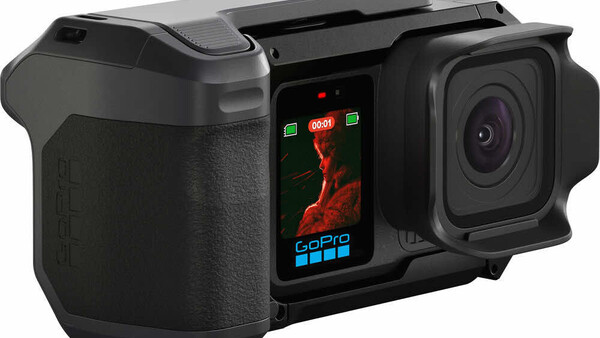
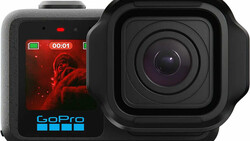
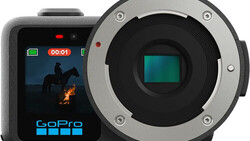
What makes the moment genuinely strange is that GoPro was, at the very same time, still trying to build its way out, and still capable of real things. The aerospace ambition was not fanciful. In April 2026, modified GoPro cameras flew aboard NASA's Orion spacecraft on Artemis II, the first crewed mission to lunar orbit in more than fifty years, mounted on the solar array wings to capture the spacecraft, the Earth, and the Moon. Just weeks later, in May 2026, GoPro launched the MISSION 1 series, a line of compact 8K and 4K cinema cameras pitched as its boldest move yet into high-end professional imaging, and the cameras won three best-of-show awards from industry publications at the NAB Show. It was the latest entry in a long pattern. Even in early 2024, with the core business shrinking, GoPro had acquired the Australian smart-helmet maker Forcite, intending to develop GoPro-branded tech-enabled motorcycle helmets and eventually expand the technology into other helmet categories. The company that could not stop the erosion of its original market was still, right up to the edge, trying to invent its way into new ones.
What GoPro's Story Actually Teaches
It is tempting to read this as a simple tale of a company that got outcompeted, and the competition is real. But the deeper lesson is about what it means to invent a category and then mistake that act of invention for a permanent advantage. GoPro created the modern action camera, and for a decade that origin felt like a moat. In truth it was the opposite of a moat. A company defined by a single product, for a single kind of moment, is exquisitely exposed: to the smartphone that absorbs its casual customers, to the rivals who can copy and exceed the formula, to the trade tensions that pushed it to shift most of its US-bound production out of China, to a discretionary-spending pullback, and, in the end, to a spike in the price of memory chips. The media-brand dream that thrilled investors in 2014 never became a business that could carry the company when the hardware faltered, and even a genuine turnaround in 2021 could not change the underlying shape of the problem.
There is something poignant in the particulars. GoPro sold danger and motion and the thrill of the edge, and it built a genuine cultural artifact in the process, changing how an entire generation chose to record its own life. The footage it made possible will outlast the company by decades. But what brought it to the brink was not a wipeout on a forty-foot wave. It was the slow erosion of a one-product business, with a memory-chip shock arriving to expose how little financial room was left, the least cinematic ending imaginable for a brand that taught the world to point a camera at its own audacity. A company once worth more than $10 billion now carries a market value of only a couple hundred million dollars, a loss of more than 95 percent, which is why its talk of a sale reads less like the search for a premium buyer than a question of who might want the pieces. Whether GoPro survives as an independent company, gets absorbed by a larger one, or quietly winds down, the action camera it pioneered is not going anywhere. It will just, increasingly, be made by someone else.

Join the Fstoppers community for free
-
Post comments and join in the discussions
-
Browse the site ad-free
-
Share your work and get featured in the community
-
Compete in the photo contests for fun and prizes
2 Comments
I still use an older GoPro to record my YouTube videos. it's in a cage, and can take a hell of a beating. it gets dropped and thrown around, and keeps on working_even in a rainstorm. It's rubbish in low light though. A DJI Osmo Pocket or Insta360 Luna are waaaay better for low light, but fragile. What a dilemma!
See also Michael Girdley's YouTube video "The Rise and Fall of GoPro: From $11 Billion to Penny Stock".