
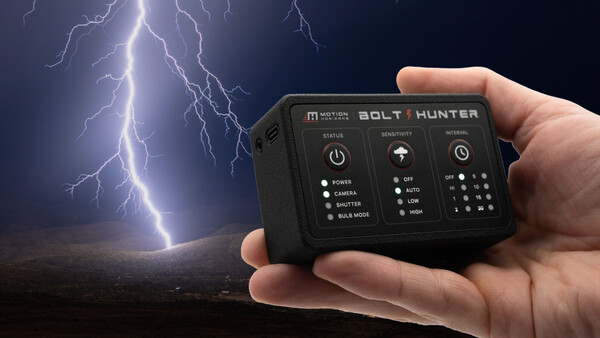
Living in Southern Arizona means spectacular lightning is around at certain times of the year, especially during our monsoon season, which runs from around June 15 to September 30. We get some great storms, and I'm always thrilled to capture some of nature's fireworks.
I've experimented with a few lightning triggers, including one that is software-only for iOS called iLightningCam 2 Lite. Here's an example:
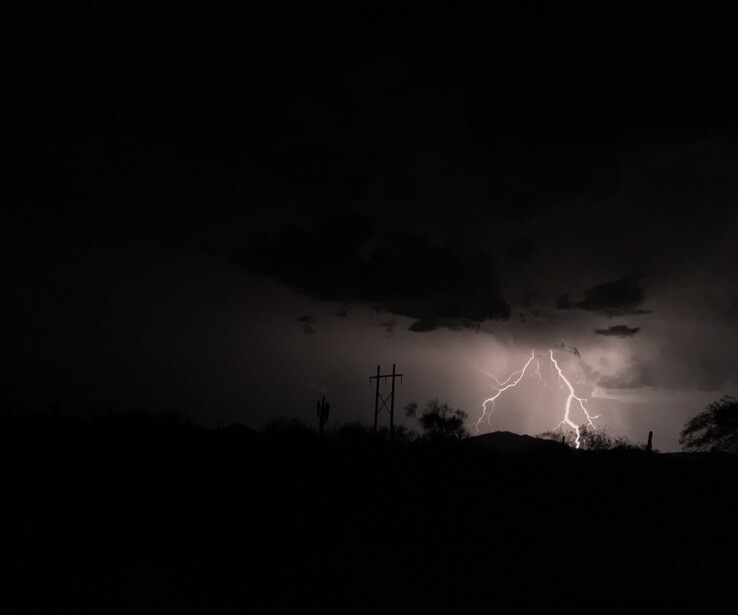
In my experience, it worked well, but it did miss some lightning bolts, and the photos didn't have the resolution of a DSLR.
I also have a Pluto Trigger. It has many functions, including time-lapse and sound-based capture. I thought it did a good job with lightning, and I took quite a few photos I am proud of:
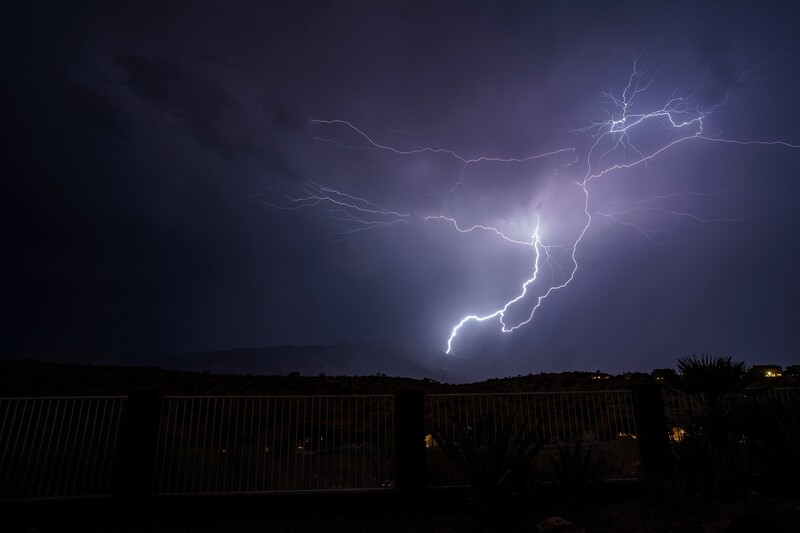
It would miss a few, too, but I was overall pleased with the results.
Now we have Bolt Hunter, which is a newcomer to the market. It's designed solely for lightning capture, and it was designed by professional storm chasers who know their way around lightning. It's a device that mounts on your camera using the hot shoe. I purchased one as soon as it was announced and was glad to hear it offered a cable that worked with my Hasselblad X2D II 100C camera, as not every accessory works with Hassies.
Here are some of the reasons Bolt Hunter says its system is superior to other solutions:
- Early detection of the faint intracloud flashes that can happen before a strike
- Accommodation for each camera's unique shutter lag
- The right shutter speed to match the storm
The Bolt Hunter team says it learned that most triggers miss because they only react. Lightning happens faster than any camera can respond.
Lightning Photography Safety
No photograph is worth risking a lightning strike. Lightning triggers can operate a camera automatically, but they do not make it safe to remain outdoors during a thunderstorm. Check the forecast and local weather alerts before setting up, identify a safe shelter in advance, and plan a route that lets you reach it immediately.
- If you hear thunder, stop photographing and move immediately into a substantial enclosed building or a fully enclosed, hard-topped metal vehicle with the windows closed. Do not wait for rain to begin or for the storm to move directly overhead.
- Stay in shelter for at least 30 minutes after the last sound of thunder. Rain ending or the sky beginning to clear does not mean the lightning threat has passed.
- Do not use trees, tents, open garages, porches, carports, picnic shelters, gazebos, dugouts, or other partially enclosed structures as lightning shelters.
- Avoid hilltops, ridgelines, rooftops, open fields, exposed overlooks, beaches, bodies of water, fences, utility poles, isolated trees, and other tall or exposed objects.
- Do not stand beside a vehicle, shelter under an open hatch, or operate a camera through an open door or window. A vehicle offers protection only when you are fully inside with the windows closed.
- Do not handle or remain beside a tripod, light stand, umbrella, cable release, or other equipment outdoors once thunder is audible. Metal does not attract lightning, but it can conduct electrical current and may worsen an injury.
- Set up remote equipment only while conditions are safe. Do not go back outside to retrieve, reposition, cover, or protect equipment after thunder begins.
- Keep equipment well away from roadways, washes, drainage channels, flood-prone areas, and unstable ground. Thunderstorms can also bring flash flooding, strong wind, hail, blowing dust, and reduced visibility.
- If photographing from inside a building, stay away from windows, doors, porches, plumbing, corded phones, and electrical equipment connected to wall outlets. Avoid touching concrete walls or floors that may contain conductive reinforcement.
- If someone is struck, call emergency services immediately. A lightning-strike victim does not retain an electrical charge and can be touched safely. Begin CPR and use an automated external defibrillator if needed and if you are trained to do so.
The safest approach is to compose and configure the camera before the storm arrives, retreat to an appropriate shelter, and let the trigger operate the unattended camera remotely. Equipment can be replaced; people cannot.
Using the Bolt Hunter
The Bolt Hunter is designed to shoot at night or during the day, and its software uses predictive algorithms intended to help prevent you from missing lightning. It charges via USB-C, and a charge is said to last around 48 hours of use. I used it for several days and never ran out of power.
You set up the Bolt Hunter with a series of buttons on the device. A cable runs to your camera's remote port. You buy the Bolt Hunter with the cable that matches your camera, and if you have multiple cameras, you can optionally add other cables.
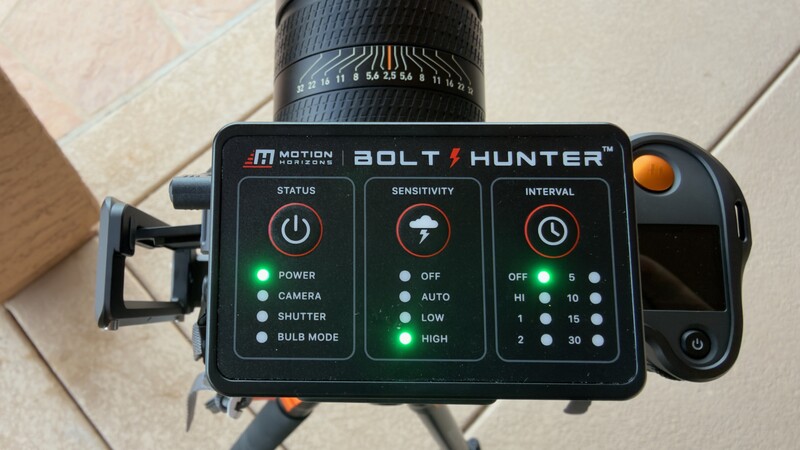
Holding the Power button down for a couple of seconds powers the device up. The Sensitivity button lets you choose automatic operation or how much sensitivity the Bolt Hunter sensor will have. Low sensitivity, for example, will give you the big, bright flashes. High sensitivity can be triggered by dimmer flashes. Auto makes the choices for you.
Finally, the Interval control activates the intervalometer and allows time-lapse photography.
There is a companion app for iOS and Android, but it's not required for basic operation. It is where you can upload firmware updates. There are also some setup routines where you can adjust for shutter lag to get the best performance out of the device.
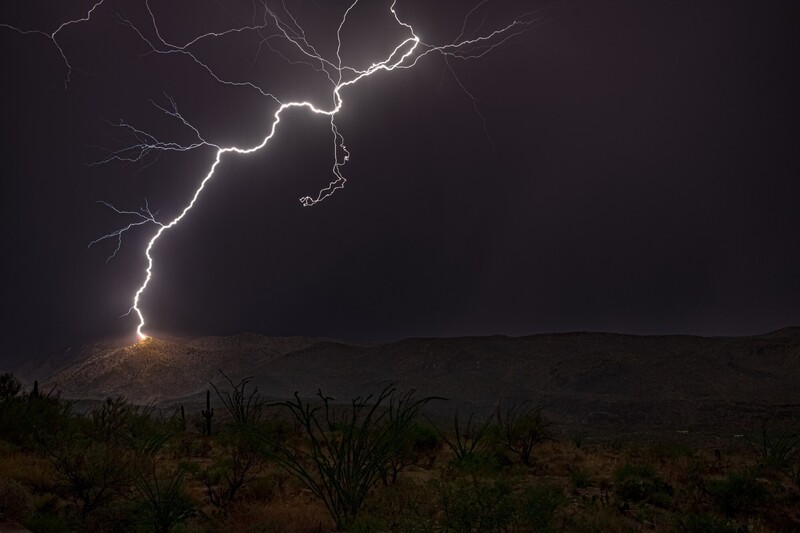
As I said, we're in the monsoon season here in Southern Arizona, but I haven't always been near my camera for the most spectacular storms this year. On my first night out with the Bolt Hunter, however, I got a pretty good photo of some lightning on my first try. It wasn't my most spectacular lightning photo, but I was out in a minor storm. I was impressed that my first shot paid off, something I have not been able to say with some other triggers.
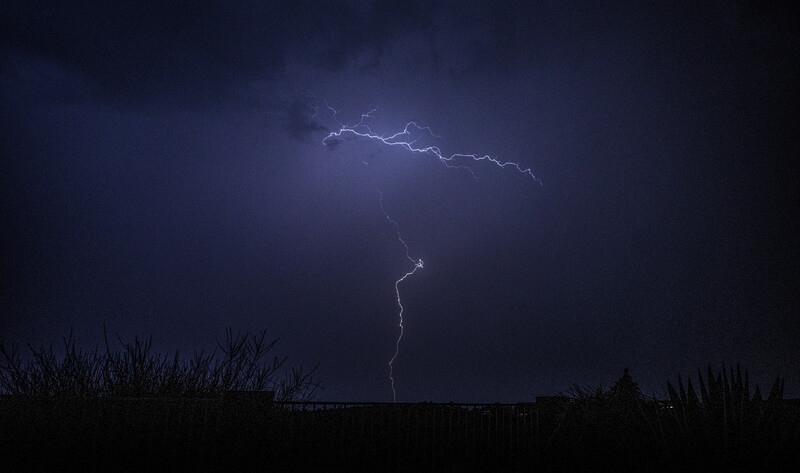
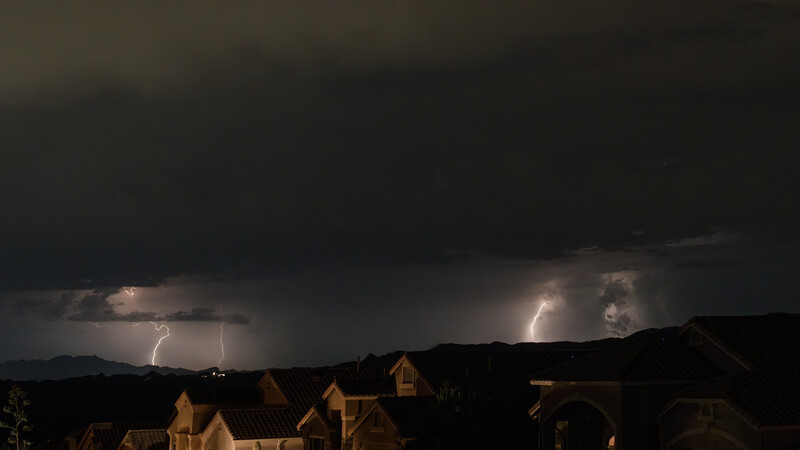
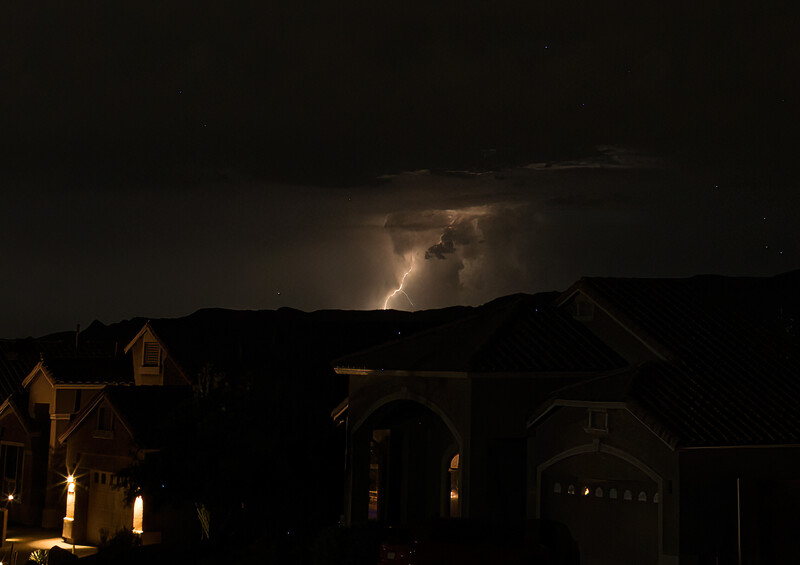
Right before I turned in this review, we had a pretty good storm, but it was some distance away. Bolt Hunter grabbed some good photos from a camera set up on my driveway. It was a quick-and-dirty setup, but I was happy with the results:
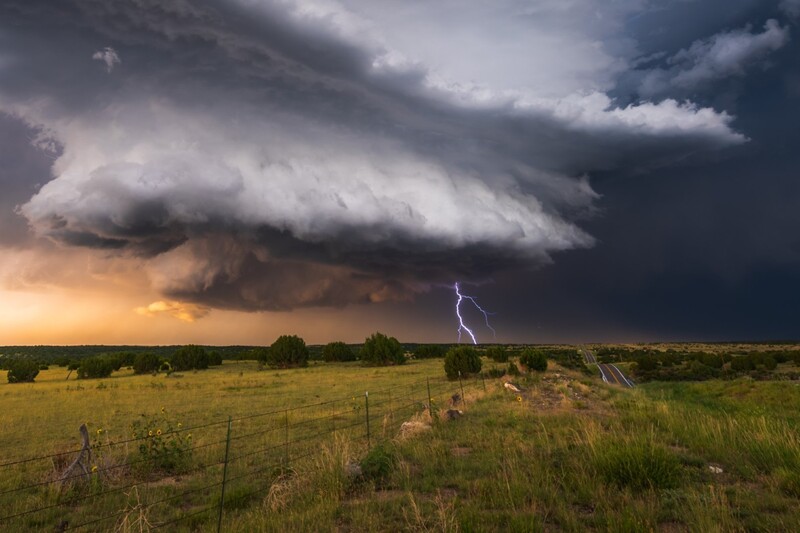
I'm anxious to get more and better images as the monsoon season progresses, but here are some images the Bolt Hunter team made while testing its hardware and software:
My Thoughts on the Bolt Hunter
This is a well-made product with complete documentation and a handy, plastic-coated quick-start guide. I'm seeing great results from photographers around the world, and I like the fact that this is a device dedicated to lightning only. I think that will reap dividends for users, as it's not meant to be a "Swiss Army knife" approach to doing lots of different tasks, which is how many triggers are designed.
Pros
- Well-designed, water-resistant hardware that is easy to operate
- Users report very reliable captures and excellent results
- Long battery life
- Easy firmware updates
- The Bolt Hunter will send alerts to the app if a cable fails or the battery is low
Cons
- It may take some setup time before first use to get a good match for your camera and lens parameters
How to Get a Bolt Hunter
The Bolt Hunter is $349 in the U.S. and includes a matching cable for your camera, a USB charging cable, and even a wall charger plug. It is available on the Bolt Hunter website.
If storm and lightning photography is important to you, the Bolt Hunter is worth a serious look. There are other triggers on the market, some I've tried and some I haven't, but the Bolt Hunter seems to have been built by people with a lot of time in the field capturing lightning, and I think the experience has paid off in this product. Highly recommended.

Join the Fstoppers community for free
-
Post comments and join in the discussions
-
Browse the site ad-free
-
Share your work and get featured in the community
-
Compete in the photo contests for fun and prizes
2 Comments
It seems to be a good device. Recommend that you use the app to dial in the configuration on the Bolt Hunter. It's worth the time to get it dialed in right.
There's nothing easier than OM Systems Live Composite.