
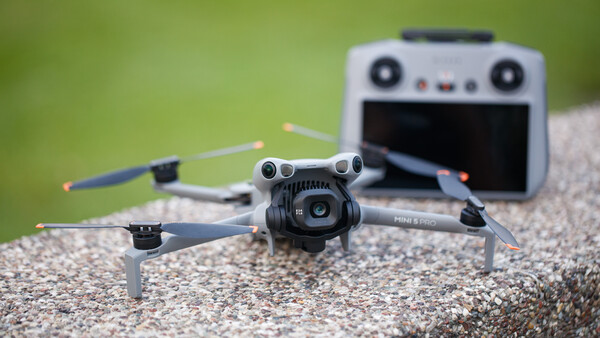
Since the first iteration of the DJI Mini series drone, I have always dreamed of having a small, portable drone equipped with a large 1-inch sensor—specifically, a drone capable of combining the benefits of being lightweight while delivering great image quality. Prior to this, it had always been a game of choosing your compromise. Flying a compact drone meant compromising on image performance, while a larger drone naturally offered better quality at the expense of portability.
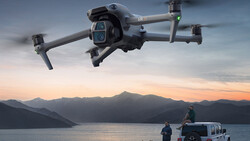
With the latest launch of the Mini 5 Pro, DJI has finally struck the balance. The company has once again redefined what is possible in aerial imaging by introducing the world’s first sub-250 g mini drone with a 1-inch CMOS sensor. This compact yet powerful palm-sized drone promises to deliver pro-level image quality, advanced safety features, and extended flight time, making it a versatile tool for creators at any level.
Build Quality
Being a sub-250 g drone, the DJI Mini 5 Pro weighs just 249.9 g, which is great for avoiding extra paperwork when flying in most regions. Depending on the unit you get, there may be a slight material and manufacturing variation, as DJI mentions there will be a ±4 g variation. Therefore, you should always check with your local law enforcement and regulations to confirm whether registration or an exam is required. Either way, this will be a small issue if you are going to be flying with the Intelligent Flight Battery Plus, because the total weight of the drone will exceed the C0 category anyway.
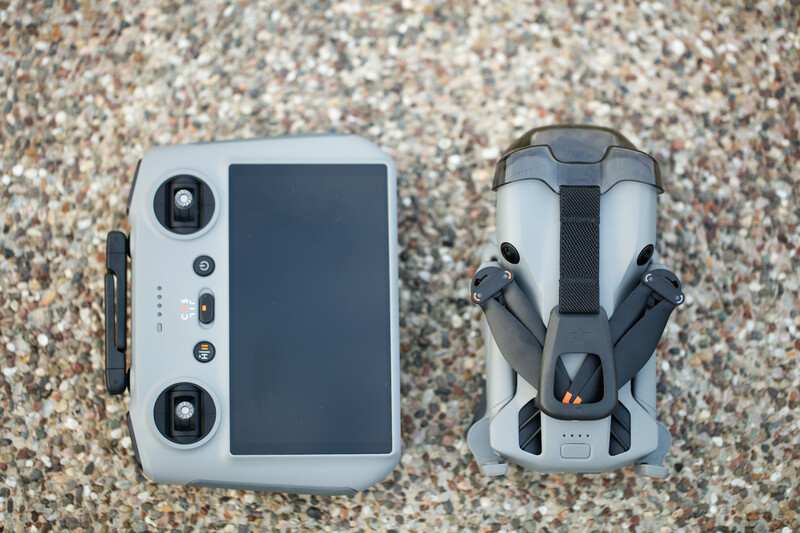
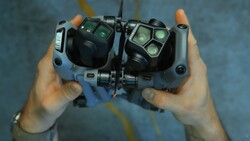
It still has the familiar lightweight plastic build quality and, size-wise, folds down to 157 mm × 95 mm × 68 mm, making it incredibly portable, and unfolds to 304 mm × 380 mm × 91 mm. It is also slightly bigger and stands a bit taller compared to its predecessor, which is expected given its upgraded specs. What’s funny is that when you are using the Mini 5 Pro, the drone itself is so tiny that the controller often feels like the biggest thing in the bag and the greater burden to carry.
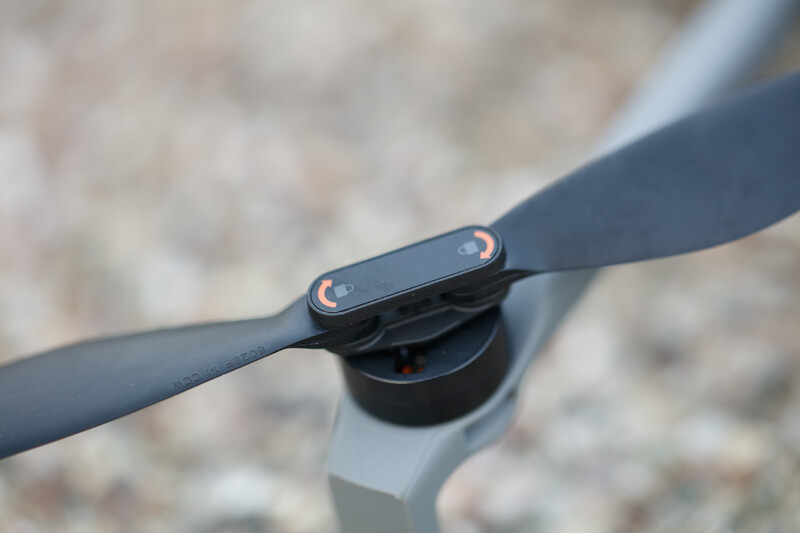
One of the most noticeable physical improvements is the propeller system. DJI has replaced the fiddly little screw-on propellers that required a mini screwdriver with the new push, twist, and lock design that is much quicker and hassle-free to replace, especially when you’re on location. The gimbal has also been leveled up, supposedly to support the much larger 1-inch sensor camera module, and I am quite surprised by how compact it is. DJI also borrowed some gimbal tech from the bigger Mavic 4 Pro, as it now allows for a 225° rotation range, allowing you to pull off vortex-style shots mid-air.
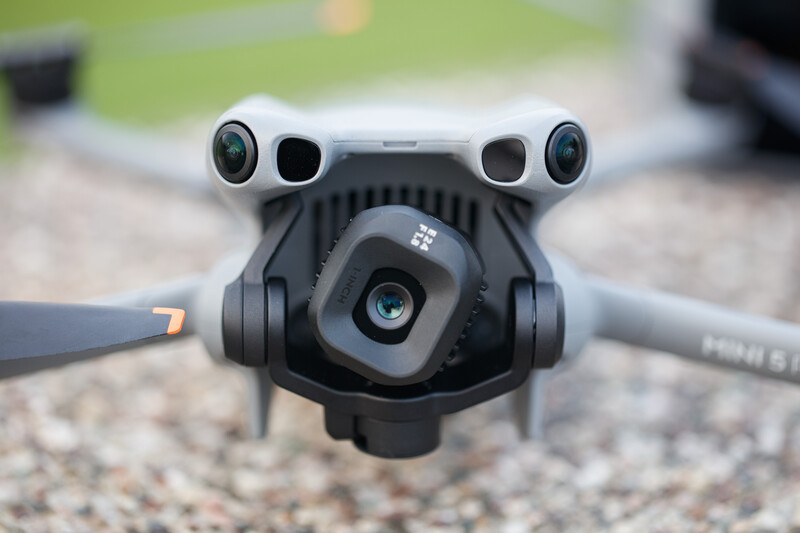
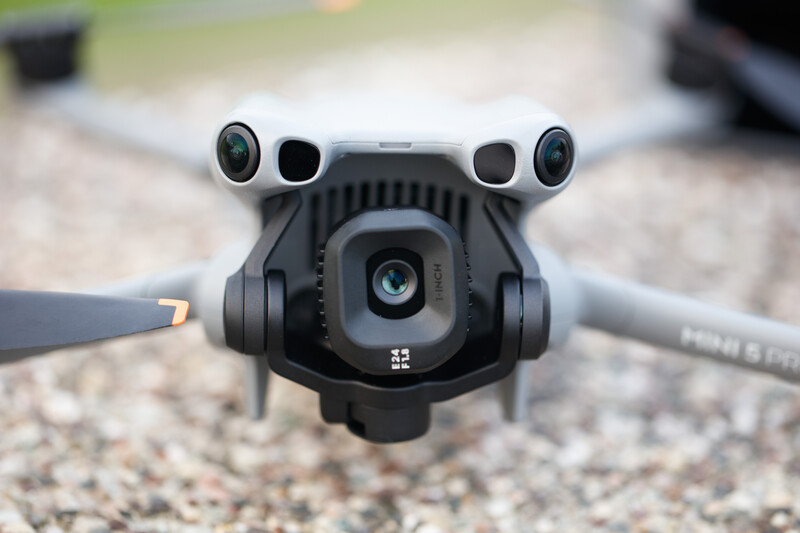
DJI has also updated the propeller and gimbal guard into a one-piece design, which might feel like a double-edged sword. On one hand, this is great for speed, as you no longer need to remove two separate pieces before takeoff. On the other hand, if you are not a fan of prop guards, this update might annoy you since it comes bundled with the gimbal guard, forcing you to use it whether you like it or not.
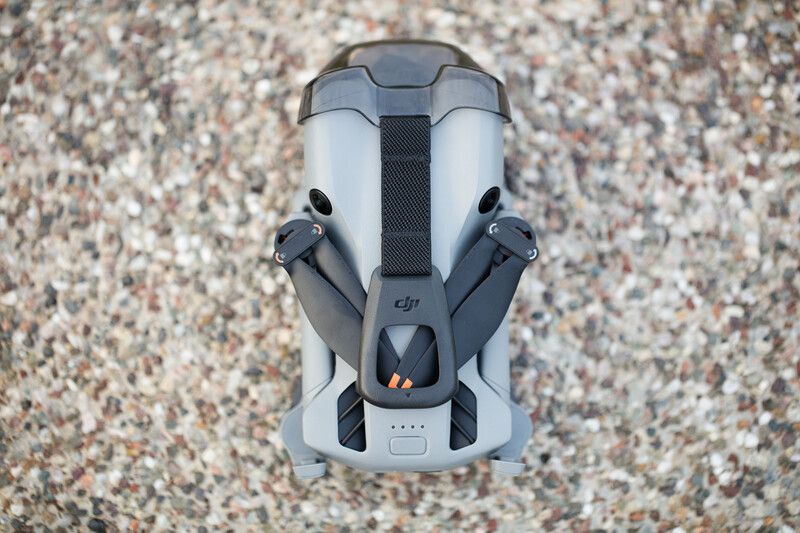
The Mini 5 Pro now powers on as soon as you unfold it, and this is probably my favorite update, as it speeds up the workflow—no more fiddling with that awkward power button that barely registers clicks. What makes this even better is that there is no strict sequence for unfolding the drone; you can open it however you like, and you are good to go.
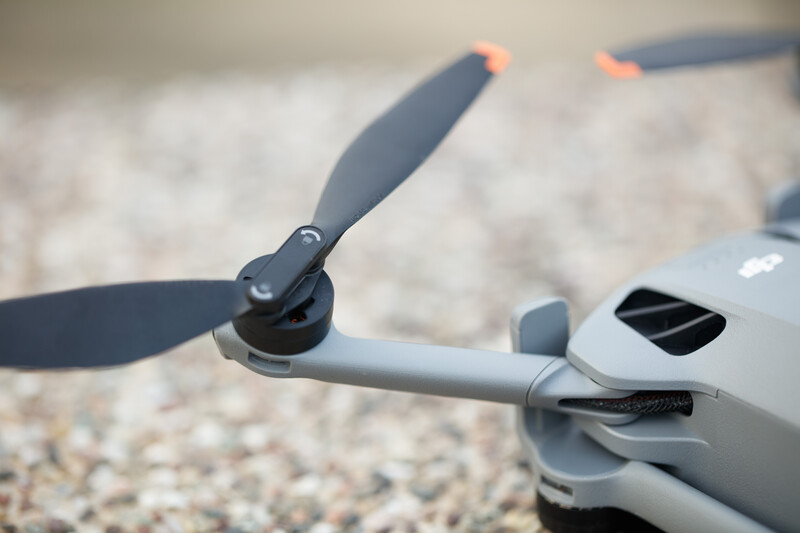
The propeller motors have been beefed up, giving the drone better wind resistance along with a noticeably faster ascent and descent speed. Pair that with a lighter battery that still manages to provide longer flight times (36 minutes for a standard Intelligent Flight Battery and 52 minutes for an Intelligent Flight Battery Plus), plus faster charging through the hub, and we have a drone that feels refined in every practical way.
Features
The headline feature of the DJI Mini 5 Pro is, of course, the long-awaited larger 50 MP 1-inch CMOS sensor squeezed into the same sub-250 g form factor. On the video side, it now supports 4K/60 fps HDR and even 4K/120 slow-motion, with up to 14 stops of dynamic range in auto mode, thanks to a smart image-processing engine built into the drone.
There is also a new 48 mm Med-Tele mode using pixel binning to deliver a 2x digital zoom, which is useful when you need extra focal length, though it is not something I would use often due to digital artifacts. On top of that, DJI has included a new portrait imaging technology, expecting users to film more portrait subjects given its larger sensor, wide aperture, and 48 mm zoom—all key features for a portrait camera. This new portrait technology automatically tunes the tonal range of the image to optimize brightness and contrast for skin tones, so your subject won’t look flat or lifeless.
Low-light performance has also been pushed further thanks to its larger sensor and higher ISO ceiling. The ISO now goes up to 12,800 in normal modes and even higher—up to 32,000—in D-Log M and HLG. In my experience, I rarely go beyond ISO 800 for photos since you can always opt for post-stacking or pull longer shutters for better image quality. This ISO boost will be much more useful for video shooters, not only because it can yield cleaner results at mid-high ISO ranges, but also because that extra headroom can come in handy in critical situations—though you should still use it sparingly.
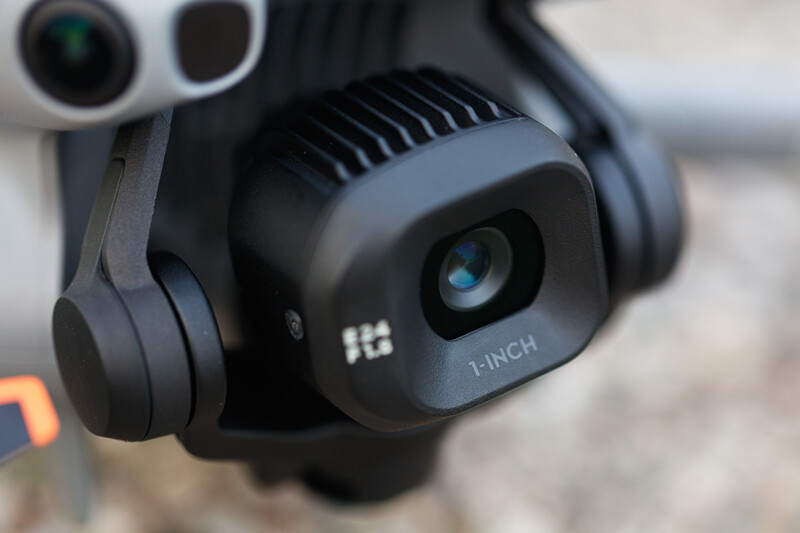
The large sensor is paired with a 24 mm f/1.8 lens. No doubt an f/1.8 lens performs better in low light by allowing a stop more light than an f/2.8 lens, but this also means there will be a noticeable compromise in overall image micro-contrast, especially near the edges. Depth of field is shallower now, thanks to the larger sensor, so nailing focus becomes even more critical. I would suggest shooting multiple takes of the same shot and tapping the focus at slightly different points just to be safe.
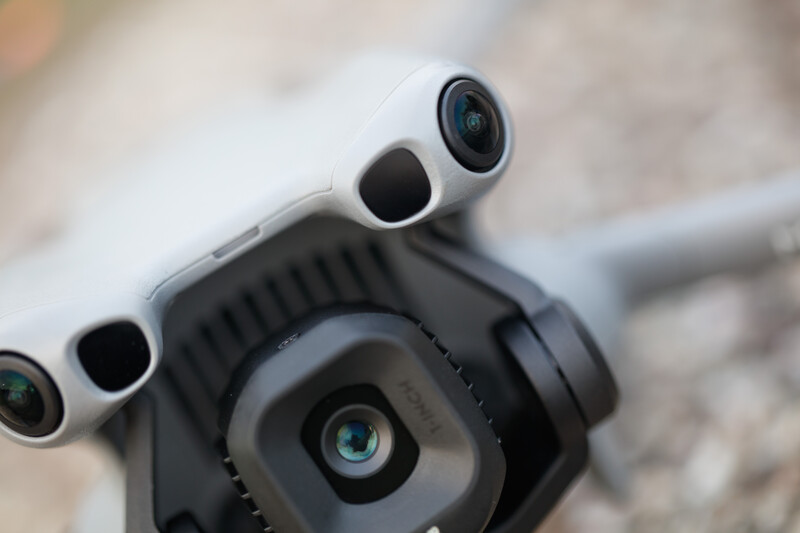
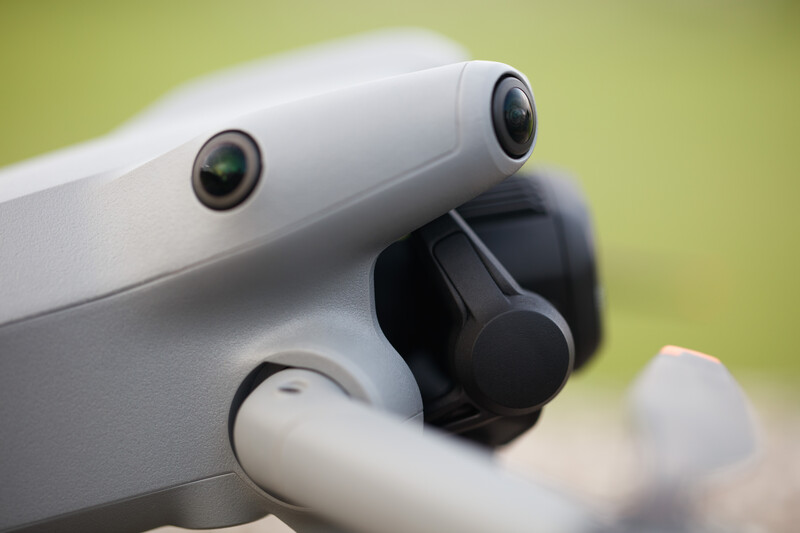
ActiveTrack has been improved to 360° tracking with better stability and higher follow speeds of up to 15 m/s in open areas. There are also new custom tracking modes, making it easier to deliver dynamic footage suited to the setting, from Standard to Cycling modes. I have to admit, automated tracking is something I rarely use because I do not trust the obstacle avoidance of older drone models, but with these improvements, it might just be something I continue experimenting with, since it reduces the likelihood of a crash.
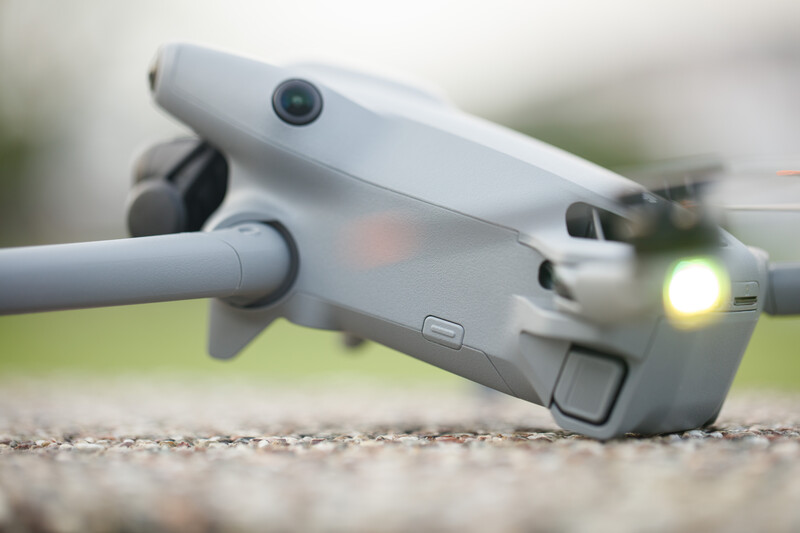
The Mini 5 Pro also comes with built-in 42 GB of storage, which is handy if you forget your microSD card—though I would still recommend using microSD cards and swapping them out with each takeoff to reduce the risk of losing footage in an accident. It also supports Off-State QuickTransfer, meaning you can wake the drone remotely through the DJI Fly app within Bluetooth range and transfer files wirelessly at up to 100 MB/s. The best part is that you do not even need to power on the gimbal or remote, and the transfer continues in the background while you do other things. That’s a huge time-saver compared to the old USB-C workflow.
Real-World Usage and Examples
After finally putting the DJI Mini 5 Pro through its paces, here are a few things that immediately stood out to me — both good and not-so-good.
Flight Performance and Battery Life
Despite being rated for 36 minutes, under practical usage at higher altitudes, I get a flight time of around 20+ minutes with the standard battery, which is decent considering its size and weight. The Plus battery definitely stretches that to about 40 minutes, but honestly, I often run out of creative ideas before the battery runs out. Most of the time, you might struggle to finish a Plus battery unless you’re on a heavy shoot; otherwise, you might find yourself flying around just to drain it.
Battery thermal performance seems to have improved, even though there are no longer vents at the bottom. I noticed the batteries did not get as hot after each flight. Wind resistance also feels slightly better, though under strong wind, the Mini 5 Pro still wobbles, which is expected given its light weight.
Image Quality and Buffer
One thing I was curious about was the buffer speed when shooting 50 MP stills. Unfortunately, it’s still roughly the same as the previous model, even when saving to internal storage instead of a microSD card. The good news is that file sizes are now around 70+ MB instead of the oversized files from the Mini 4 Pro, which feels more logical, likely thanks to improved compression.
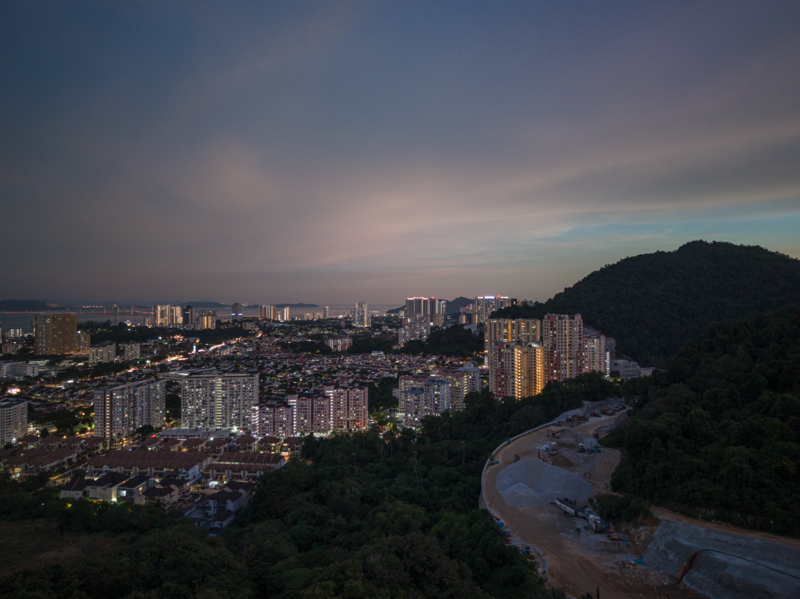
The new 1-inch sensor is where things get interesting. Despite the increase in sensor size and megapixels, the lens handles it well, even at f/1.8, with good resolution sharpness across most of the frame and only a slight drop-off at the corners. Dynamic range has noticeably improved, especially in challenging lighting like sunrise, sunset, and night scenes, with roughly a 20–30% bump in low-light performance. DJI also enhances dynamic range in auto mode (for either auto ISO or auto shutter speed), extracting up to 14 stops for both videos and JPEG photos through a smart algorithm that blends two exposures in real time. Still, because it’s auto exposure, I’d be cautious using it in low-light scenes where the metering can get confused.
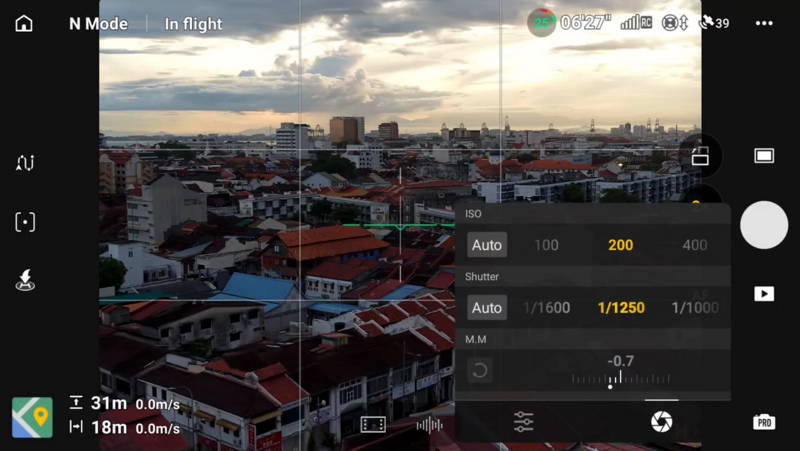
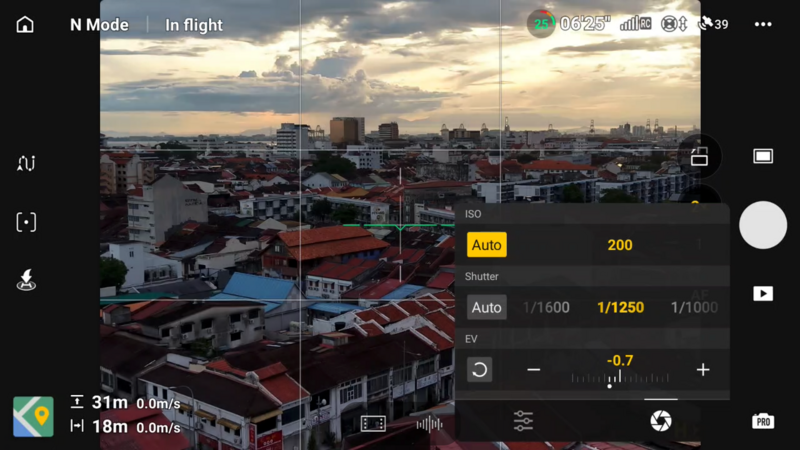
JPEG colors are surprisingly pleasing straight out of the camera, with minimal correction needed. However, you cannot tweak picture style parameters for photos as you can in video mode—so sharpness and noise reduction are baked in. This can make JPEGs look slightly over-processed, especially in 2x medium-telephoto mode. I also noticed that Mini 5 Pro files are slightly more susceptible to moiré compared to the Mini 4 Pro for distant subjects such as buildings, though they’re easily fixable using a brush or selective mask in Adobe Lightroom.


Med-Tele Mode (48mm)
The new 48 mm Med-Tele mode is a handy addition, especially for video. The 2x zoom helps isolate subjects and adds cinematic depth, though keep in mind it does not support RAW for stills. If you’re shooting images, you’ll likely get better results shooting in RAW and refining them in post-processing, though you’ll lose the 50 MP resolution. Remember that resolution and perceived detail are not the same thing.



For video, the 2x zoom can also introduce a bit of noise, but it’s still usable, giving footage more compression. The ability to set the drone to move at 1 m/s in Cine mode is also helpful for smoother, more controlled shots when zoomed in. Just remember spatial awareness becomes trickier at 2x, especially if you’re used to the normal 1x field of view.
Gimbal and Vertical Shooting
The gimbal of the Mini 5 Pro has also been upgraded to support up to 225° rotation, on top of true vertical shooting for creative rotation shots in video. It’s not something I expected in a drone, but it’s definitely a fun feature to play with, adding a creative edge to productions, though it might feel disorienting for users new to rotating gimbal shots.
Obstacle Avoidance and LiDAR
The upgraded omnidirectional obstacle sensing system, paired with the new forward-facing LiDAR, works impressively well. I was surprised to see the downward sensors detecting even power lines, though this can vary depending on lighting. Overall, the Mini 5 Pro feels noticeably smarter and safer to fly, especially in dimmer environments where older models used to struggle.
https://www.youtube.com/watch?v=fCZvSaFzO3I
Summary
What I Liked
-
Powers on automatically when unfolding — a simple but game-changing quality-of-life upgrade.
-
Larger 1-inch sensor in the same compact form factor.
-
225° rotatable gimbal that opens up more dynamic shot possibilities.
-
LiDAR-assisted low-light obstacle sensing for safer flights at night.
-
New 48 mm Med-Tele mode, perfect for far subjects.
What Could Be Improved
-
42 GB of built-in storage is nice, but it could be increased for more serious shooting.
-
Dual recording would be a great addition for redundancy and peace of mind.
-
Full omnidirectional LiDAR coverage instead of just front sensing.
-
A variable-aperture lens for more control over depth of field and exposure.
-
A proper optical zoom lens option.
-
Med-Tele mode support in raw photo format.
-
Faster buffer clearing, especially when shooting bursts and brackets.
-
Open-gate full sensor recording for more flexibility in post.
Final Closing Thoughts
DJI has pushed the Mini series remarkably far since its first iteration, and the DJI Mini 5 Pro is clearly the best it has ever been. With this level of innovation, we are truly living in the golden age of content creation. I hope people do not take these advancements for granted by flying recklessly—the tech is smart, but responsibility still lies with the pilot.
As for upgrades, the Mini 5 Pro makes the most sense if shooting in low light is a major part of your work. The larger sensor with improved low-light performance, paired with enhanced night obstacle avoidance, makes it a practical tool for creators who do not always work in perfect conditions. For those interested, you can get yours at store.dji.com. However, the Mini 5 Pro will not be officially available in the U.S. market for the time being.


Join the Fstoppers community for free
-
Post comments and join in the discussions
-
Browse the site ad-free
-
Share your work and get featured in the community
-
Compete in the photo contests for fun and prizes
7 Comments
I'd love one, but....USA. Damn shame.
If you still need it.. I have read from facebook groups that people are getting them unofficially from ebay. Otherwise, you are really not missing out much with the Mini 4 Pro.
Yeah...except for that tiny sensor in the 4. Pass.
My neighbor just received his mini 5 pro here in U.S.. He bought it through an Ebay seller out of South Korea. He said it took 7 Calendar days to get it.
Glad to know that, but again for those who are purchasing through eBay, do check the reviews, verify the seller's profile and always pay with paypal that has buyer's protection. Because you will never know what is going to happen. I have had a few purchase previously that was burned by the seller and could not get a refund. Paypal and eBay could not do anything as the paypal payment method that I have made is not covered in their buyer's protection domain.
I'll pass on the Mini 5 Pro. The U.S. and several other countries have declared that this is NOT a sub 250g drone. So you know what that means. You must register it, and buy a remote ID transmitter or use the plus batteries which activates the built-in remote ID, or you are flying in violation here in the U.S. at least. At that point you might as well just buy the Air 3S which has the same sensor.
I suppose this will be the one for people who look into portability while still have half the functionality of the Air3s (no proper zoom lens). In which case, I would suggest getting the unit with the Plus batteries if you are on the fence. Since the normal battery is sitting in the grey area