Almost everyone buying their first long lens asks the wrong question. They ask how much reach they can get for the money, then discover in the field that the 800mm they bought is unusable in the hour before sunrise, when the animals actually move. Reach is only one of three things that decide whether a telephoto lens works for wildlife. The other two are how much light it gathers at the long end, and whether you can physically hold it steady long enough to catch a bird lifting off. Every lens below trades those three against each other, and the trade is the entire purchase decision.
The good news is that this category has quietly become the best value in photography. A 600mm zoom that would have cost as much as a car a decade ago now costs less than a mid-range camera body, and autofocus has moved from the lens to the camera's subject detection, which means a modest zoom on a modern body outperforms an exotic prime on a body from five years ago.
We have organized this guide by what you shoot and what you can carry, not just by price. Every specification below was checked against the manufacturer's current spec page rather than a review from launch week, every pick gets its real weakness stated in the text, and the two picks with a supply or life-cycle question mark are called out where they sit.
At a Glance
- Best Overall: Sony FE 200-600mm f/5.6-6.3 G OSS
- Best Super-Telephoto Zoom: Canon RF 200-800mm f/6.3-9 IS USM
- Best Value: Nikon NIKKOR Z 180-600mm f/5.6-6.3 VR
- Best Third-Party Super-Telephoto: Sigma 150-600mm f/5-6.3 DG DN OS Sports
- Best for Birds: Sony FE 400-800mm f/6.3-8 G OSS
- Best Prime: Nikon NIKKOR Z 600mm f/6.3 VR S
- Best Budget Telephoto: Sigma 100-400mm f/5-6.3 DG DN OS Contemporary
- Best APS-C Crop Reach: Fujifilm XF 150-600mm f/5.6-8 R LM OIS WR
- Best for Travel and Hiking: Panasonic Lumix S 100-500mm f/5-7.1 O.I.S.
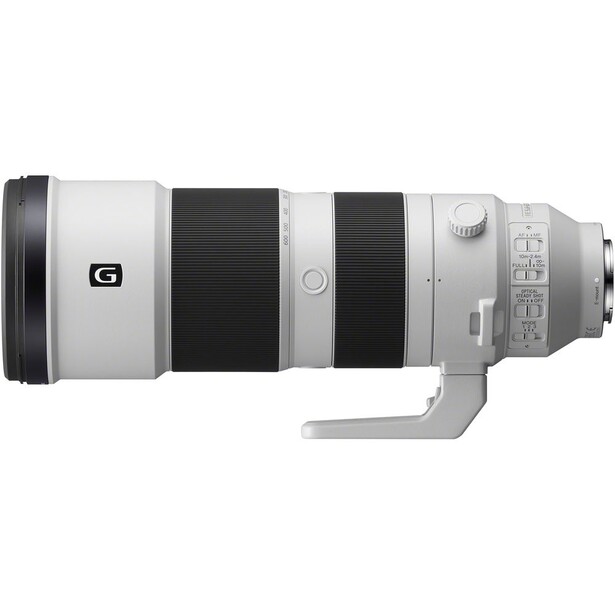
Best Overall: Sony FE 200-600mm f/5.6-6.3 G OSS
- Mounts: Sony E
- Focal length: 200-600mm
- Maximum aperture: f/5.6-6.3
- Stabilization: Optical SteadyShot, three modes
- Teleconverter support: Sony 1.4x and 2x, giving 280-840mm or 400-1,200mm
- Minimum focus: 2.4 m
- Weight: 2,115 g
- Price: $2,098 (B&H)
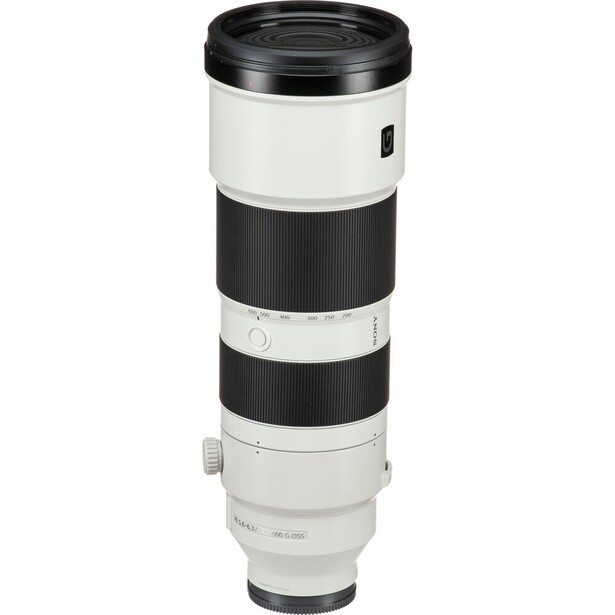
The FE 200-600mm f/5.6-6.3 G OSS is the lens the rest of the industry has spent seven years answering, and it is still the one we would hand to a photographer who wants a single long lens to do everything. The reason is the internal zoom. The barrel does not extend when you go from 200mm to 600mm, so the balance point never shifts on a gimbal, the front element never sucks dust and river spray into the lens, and the whole thing sits in a bag the same length whether it is racked in or out.
Optically it is a G lens rather than a GM, and that is the honest framing. It is not the sharpest 600mm you can buy at f/6.3, and Sony's own 400-800mm beats it at the long end. What it is instead is sharp enough to crop into from 200mm through 600mm, with no soft corner of the zoom range you learn to avoid. The optical formula runs 24 elements in 17 groups, with five ED elements and one aspherical. Paired with an a1 II or a9 III, the autofocus is the real headline, because the lens' dual linear motors keep up with whatever the body's bird-eye detection asks of them. The 2.4 m minimum focus distance also makes it a surprisingly good tool for large insects and reptiles at range.
The catch is weight and light. At 2,115 g this is a lens you carry deliberately, not casually, and f/6.3 at 600mm means dawn and dusk shooting pushes you into ISO ranges where a full frame body earns its keep. It also sits at the tail of a long product cycle: it launched in 2019 and it is the oldest lens in this guide. Sony has kept supporting it rather than quietly retiring it, most recently with a 2026 firmware release that improves how the lens' stabilization cooperates with a body's in-body IS, but a lens this old will eventually be replaced. On its specifications and its long, proven track record, it remains the safe answer.
If you shoot Sony and you want one lens for birds, mammals, and airshows, check the current price of the Sony FE 200-600mm f/5.6-6.3 G OSS at B&H.
Read our full review of the Sony FE 200-600mm f/5.6-6.3 G OSS.
What We Like
- Internal zoom keeps balance and length constant
- Even sharpness across the whole zoom range
- Fast, quiet dual linear motor autofocus
- Works well with both Sony teleconverters
What Could Be Better
- Heavy at 2,115 g for handheld work
- Not as sharp at 600mm as newer, pricier rivals
- Late in its product cycle
Best Super-Telephoto Zoom: Canon RF 200-800mm f/6.3-9 IS USM
- Mounts: Canon RF
- Focal length: 200-800mm
- Maximum aperture: f/6.3-9
- Stabilization: 5.5 stops
- Teleconverter support: Extender RF 1.4x and RF 2x at all focal lengths, reaching 1,600mm
- Minimum focus: 0.8 m at 200mm
- Weight: 2,050 g
- Price: $2,149 (B&H)
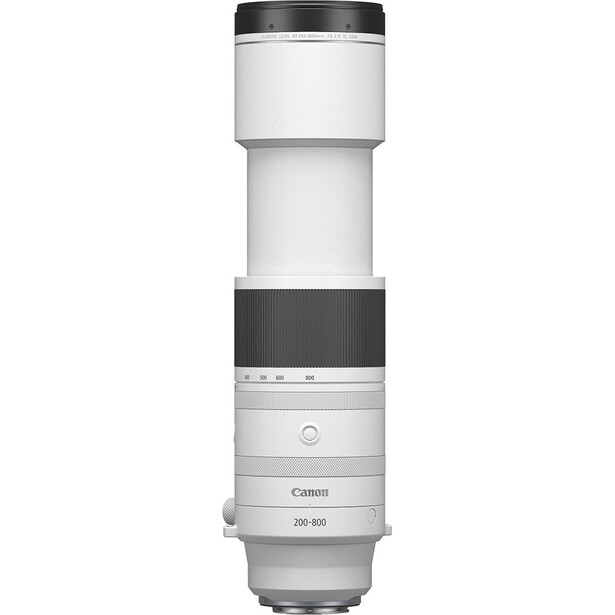
Nothing else on this list reaches 800mm for anything close to the money. The RF 200-800mm f/6.3-9 IS USM is Canon's answer to the photographer who is always slightly too far away, and it solves that problem with unusual bluntness. Eight hundred millimeters on a full frame body, handheld, with 5.5 stops of stabilization behind it, and a 0.8 m close-focus at the wide end that lets you photograph a dragonfly and then a distant osprey without changing lenses. At 800mm and f/9 the image holds up as genuinely usable rather than a marketing number, which was not a given.
The price of that reach is light. You hold f/6.3 only from 200mm to 300mm. By 400mm you are at f/8, and from 640mm to 800mm the lens is f/9, which means it wants sun. In good light on a modern body with strong high-ISO performance, it is a joy. In forest shade or the first light of a winter morning, you will be at ISO 12,800 and wishing for the extra stop the Sony and Nikon 600mm zooms give you. Add the RF 2x extender and you are at f/18, which is a novelty rather than a working aperture.
It also uses an external zoom design, so the barrel grows substantially as you go long, and it becomes front heavy on smaller bodies like an R7. The bigger practical issue in 2026 is supply. Canon has struggled to keep this lens in stock in the United States since it shipped in 2023, and Canon USA's own store currently shows it as no longer available while third-party retailers still list it. Canon has not announced a successor and the lens remains listed by Canon in other regions, but this is the one pick in the guide to confirm is actually in stock before you plan a trip around it.
For anyone shooting Canon who photographs distant birds, wary mammals, or aircraft, check the current price of the Canon RF 200-800mm f/6.3-9 IS USM at B&H. Sony and L-mount shooters who want a similarly wide zoom range should look at the Sigma 60-600mm f/4.5-6.3 DG DN OS Sports instead.
Read our full review of the Canon RF 200-800mm f/6.3-9 IS USM.
What We Like
- 800mm of reach at a mid-range price
- Effective 5.5-stop stabilization for handheld work
- Close 0.8 m focus at the wide end
- Full extender support across the zoom range
What Could Be Better
- f/9 at the long end demands bright light
- External zoom extends and unbalances smaller bodies
- Persistent US stock shortages
Best Value: Nikon NIKKOR Z 180-600mm f/5.6-6.3 VR
- Mounts: Nikon Z
- Focal length: 180-600mm
- Maximum aperture: f/5.6-6.3
- Stabilization: 5.5 stops
- Teleconverter support: Z TC-1.4x and TC-2.0x
- Minimum focus: 1.3 m at 180mm
- Weight: 1,955 g
- Price: $2,196.95 (B&H)
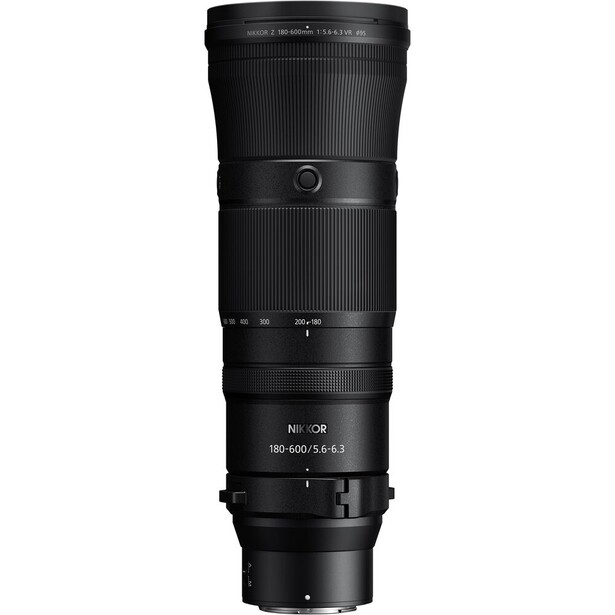
Nikon did something slightly cruel to its competitors with this lens. The NIKKOR Z 180-600mm f/5.6-6.3 VR matches the Sony's internal-zoom design, undercuts it on price, is lighter at 1,955 g, starts 20mm wider, and adds a zoom throw so short (about 70 degrees from end to end) that you can go from 180mm to 600mm with one turn of the wrist. That last detail sounds trivial until you are tracking a heron that lifts off toward you and you need to zoom out fast without breaking your grip.
The optics hold up. Twenty-five elements in 17 groups, six of them ED glass, and the sharpness at 600mm is good enough to leave it there and crop. Both Z teleconverters mount, though the 2.0x drops you to f/13 and asks a lot of the autofocus in anything less than open sun.
The compromises are the ones you would expect at the price. Build quality is a step below Nikon's S-line, with more plastic in the barrel and a tripod foot worth swapping for an Arca-compatible aftermarket one immediately. The autofocus motor is quick but not the silent, instant snap of a Nikon prime, and it slows noticeably when hunting in low contrast. None of that stops this being the lens we point Nikon wildlife shooters toward first, particularly anyone pairing it with a Z8 or Z6III.
If you shoot Z mount and want the most capability per dollar in this guide, check the current price of the Nikon NIKKOR Z 180-600mm f/5.6-6.3 VR at B&H.
What We Like
- Internal zoom with a very fast 70-degree throw
- Lightest of the big three 600mm zooms
- Strong sharpness at 600mm for the money
- Compatible with both Z teleconverters
What Could Be Better
- Build quality sits below Nikon's S-line
- Stock tripod foot is not Arca-compatible
- Autofocus slows when hunting in low contrast
Best Third-Party Super-Telephoto: Sigma 150-600mm f/5-6.3 DG DN OS Sports
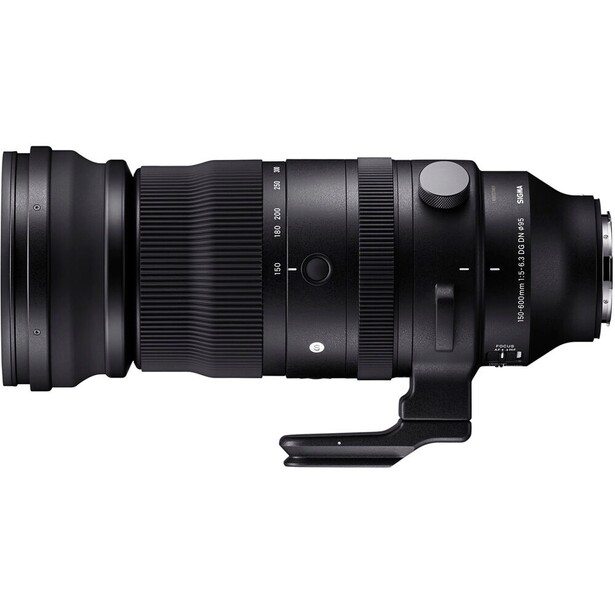
- Mounts: Sony E, L-mount
- Focal length: 150-600mm
- Maximum aperture: f/5-6.3
- Stabilization: OS2, rated up to 6.5 stops wide and 5.5 stops at the long end
- Teleconverter support: Sigma TC-1411 and TC-2011, L-mount only
- Minimum focus: 58 cm at 150mm
- Weight: 2,100 g
- Price: $1,649 (B&H)
Sigma's mirrorless Sports zoom is the enthusiast's lens on this list, and the one with the most thoughtful hardware. The 150-600mm f/5-6.3 DG DN OS Sports gives you a dual-action zoom, so you can rotate the ring or push and pull the barrel directly, plus a zoom torque switch that lets you dial the ring's resistance from loose to stiff and lock it at 150mm for transport. Three customizable AFL buttons sit around the barrel where your left hand actually falls. These are the details you notice on the fifth hour in a blind, not the first ten minutes in a store.
It starts at 150mm, which is wider than any of its direct rivals, and it focuses to 58 cm at that wide end. Push to 180mm and you get the lens' maximum magnification of 1:2.9, close enough to macro territory that this becomes a butterfly and frog tool as well as a bird tool. Sigma rates the OS2 stabilization at up to 6.5 stops at the wide end and 5.5 stops at the telephoto end (measured to CIPA at 600mm), which is the most aggressive claim in this guide, though it requires current firmware to access.
The tradeoffs are real. At 2,100 g it is the heaviest of the 600mm zooms here, its autofocus is quick but not quite at the level of Sony's or Nikon's first-party motors in continuous tracking, and the teleconverter support is L-mount only. Sony E-mount owners who want to push past 600mm are simply stuck. For Sony and L-mount shooters who value handling and close focus over the last few percent of autofocus speed, check the current price of the Sigma 150-600mm f/5-6.3 DG DN OS Sports at B&H.
Read our full review of the Sigma 150-600mm f/5-6.3 DG DN OS Sports.
What We Like
- Dual-action zoom and adjustable zoom torque
- 1:2.9 maximum magnification at 180mm for close subjects
- Starts at a usefully wide 150mm
- Weather-sealing and a fluorine-coated front element
What Could Be Better
- Heaviest 600mm zoom in this guide at 2,100 g
- Teleconverters work on L-mount only
- Autofocus trails first-party rivals in hard tracking
Best for Birds: Sony FE 400-800mm f/6.3-8 G OSS
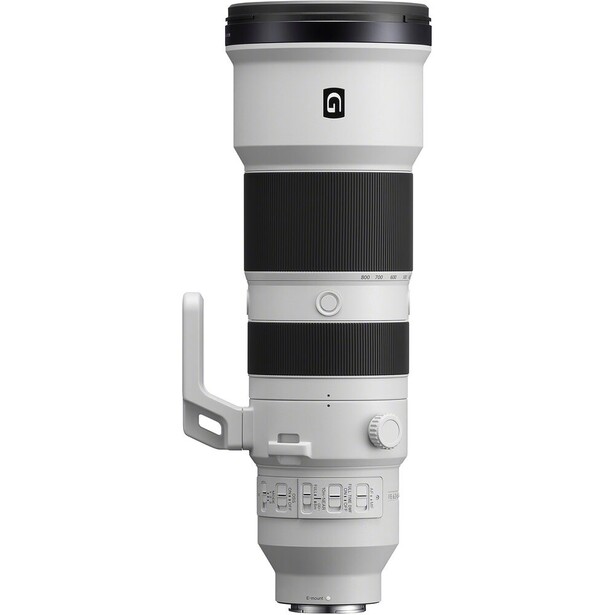
- Mounts: Sony E
- Focal length: 400-800mm
- Maximum aperture: f/6.3-8
- Stabilization: Optical SteadyShot, three modes
- Teleconverter support: Sony 1.4x and 2x, giving 560-1,120mm or 800-1,600mm
- Minimum focus: 1.7 m at 400mm
- Weight: 2,475 g
- Price: $2,698 (B&H)
Bird photography is the one discipline where the usual advice about not chasing reach breaks down. Small birds are small, they do not let you approach, and 600mm frequently is not enough. The FE 400-800mm f/6.3-8 G OSS is Sony's acknowledgment of that, and it is built the way a bird lens should be: internal zoom, 27 elements in 19 groups with six ED elements, and optics that are sharper at 800mm than the 200-600mm with a 1.4x teleconverter bolted on. If you already own the 200-600mm and have been extending it, this is the upgrade that removes the compromise.
It gives up the short end entirely. Starting at 400mm means it is useless for a deer at 30 m or a raptor that lands close, so this is a second lens for most people rather than a first one. It also holds f/6.3 only to 482mm, runs f/7.1 from 483mm to 590mm, and sits at f/8 from 591mm all the way to 800mm, which is two-thirds of a stop darker than the 200-600mm at 600mm. Sony's autofocus rescues a lot of that, and on an a1 II the bird-eye detection is fast enough that f/8 does not feel like the constraint it would have been three years ago.
At 2,475 g it is also the heaviest lens here by a clear margin, and its 346mm length makes it awkward in anything but a dedicated long-lens bag. Handheld shooting is possible for short bursts, but this lens wants a monopod or a gimbal for a full day, and our tripods guide covers heads that will actually hold it. For a Sony shooter whose subject is birds specifically, check the current price of the Sony FE 400-800mm f/6.3-8 G OSS at B&H.
What We Like
- Sharper at 800mm than a 200-600mm with a teleconverter
- Internal zoom holds balance on a gimbal
- Reaches 1,600mm with the 2x teleconverter
- Excellent chromatic aberration control
What Could Be Better
- Heaviest lens in this guide at 2,475 g
- No useful short end for close encounters
- f/8 from 591mm onward
Best Prime: Nikon NIKKOR Z 600mm f/6.3 VR S
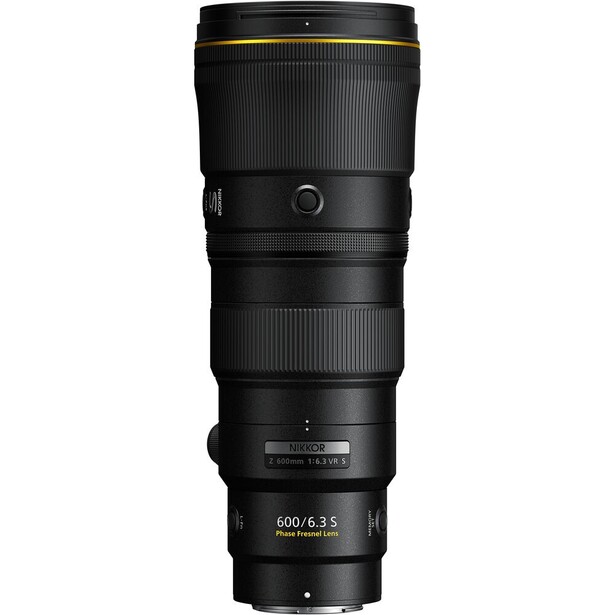
- Mounts: Nikon Z
- Focal length: 600mm
- Maximum aperture: f/6.3
- Stabilization: 5.5 stops, up to 6.0 stops with Synchro VR
- Teleconverter support: Z TC-1.4x and TC-2.0x, giving 840mm f/9 or 1,200mm f/13
- Minimum focus: 4.0 m
- Weight: 1,470 g with tripod collar
- Price: $4,696.95 (B&H)
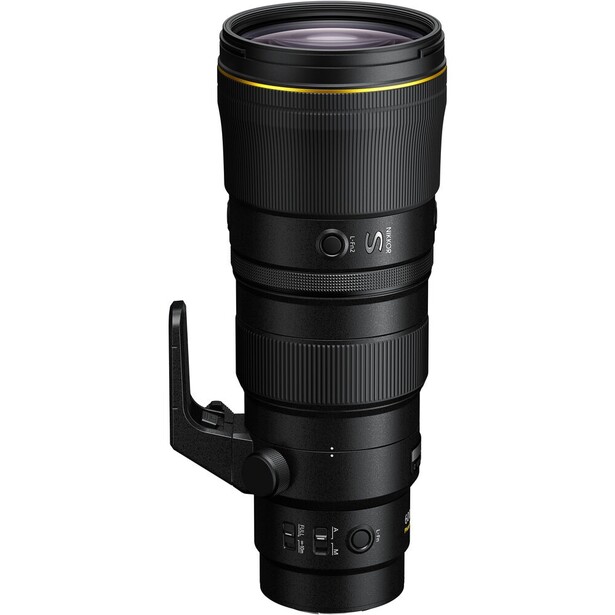
A 600mm prime used to mean a 3 kg lens, a hard case, and a porter. Nikon's Phase Fresnel design rewrites that. The NIKKOR Z 600mm f/6.3 VR S weighs 1,470 g with its tripod collar and measures 278mm, which puts it lighter than every zoom in this guide and short enough to fit in a normal camera backpack. It handles like a fast 70-200mm that happens to reach 600mm, and it is the only lens here you can genuinely walk with all day and raise to your eye without ceremony.
The image quality is where it separates from the zooms. As an S-line prime it is sharp wide open across the frame, and its contrast holds in a way the variable-aperture zooms simply do not match at 600mm. Autofocus is quicker and quieter than any zoom here. Add the TC-1.4x and you have an 840mm f/9 that still focuses reliably on a Z8 or Z9. The Phase Fresnel element does introduce the trade PF designs always make: point a strong light source into the frame at the wrong angle and you can get a soft, ring-shaped flare artifact. It is rare, predictable, and easy to avoid once you know the angle that triggers it.
The real barriers are price and flexibility. This is by a wide margin the most expensive lens in this guide, it costs roughly triple the 180-600mm zoom, and it is a prime, so when a bird lands close, you have no way to zoom out. The 4.0 m minimum focus distance is also long by the standards of the zooms here. If you shoot Nikon, photograph wildlife seriously, and value weight and optical quality over versatility, check the current price of the Nikon NIKKOR Z 600mm f/6.3 VR S at B&H. Sony shooters wanting a comparable prime experience should look at the Sony FE 300mm f/2.8 GM OSS, which trades reach for three extra stops of light.
What We Like
- Lighter than every zoom here at 1,470 g
- Sharp wide open with S-line contrast
- Fits in a normal backpack at 278mm long
- Keeps reliable autofocus with the 1.4x teleconverter
What Could Be Better
- Costs roughly three times the 180-600mm zoom
- Fixed 600mm with no way to zoom out
- Phase Fresnel flare in rare backlit situations
Best Budget Telephoto: Sigma 100-400mm f/5-6.3 DG DN OS Contemporary
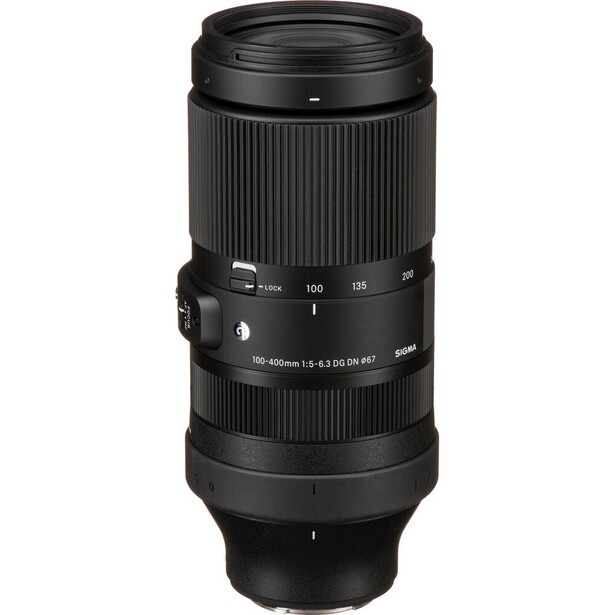
- Mounts: Sony E, L-mount, Fujifilm X
- Focal length: 100-400mm (150-600mm equivalent on Fujifilm X)
- Maximum aperture: f/5-6.3
- Stabilization: 4 stops (5 stops on Fujifilm X), with a dedicated panning mode
- Teleconverter support: Sigma TC-1411 and TC-2011, L-mount only
- Minimum focus: 1.12 m at 100mm
- Weight: 1,140 g on Sony E, 1,135 g on L-mount and Fujifilm X
- Price: $949 (B&H)
Most people who think they need 600mm would be better served by starting here and finding out. At 1,140 g the 100-400mm f/5-6.3 DG DN OS Contemporary is half the weight of the big zooms and a fraction of the price, and it is the lens that actually gets carried on a casual hike, a safari day, or a soccer sideline. The 67mm filter thread means your existing filters probably fit.
Four hundred millimeters is real reach on full frame, and on a Fujifilm X body it becomes a 150-600mm equivalent, which is the whole wildlife range in a lens that weighs less than most 70-200mm f/2.8 zooms. Sigma's optical formula is good rather than exceptional, with a mild softening at 400mm wide open that closes up nicely by f/8. The stabilization is rated at four stops (five on the Fujifilm X version), the weakest figure in this guide, and it is the spec that reveals the price point most clearly.
Be honest with yourself about the reach. If you are photographing small perching birds, 400mm on full frame will leave you cropping until the pixels give up, and you should buy one of the 600mm zooms instead. For deer, foxes, coastal birds, zoo animals, and field sports, 400mm is plenty, and the fact that this lens comes with you is worth more than the reach you did not use. Canon RF shooters have no equivalent third-party option at this price; the closest is the Canon RF 100-400mm f/5.6-8 IS USM, which Canon has delisted from its own US store, so remaining stock is finite.
For the photographer buying a first serious telephoto, check the current price of the Sigma 100-400mm f/5-6.3 DG DN OS Contemporary at B&H.
Read our full review of the Sigma 100-400mm f/5-6.3 DG DN OS Contemporary.
What We Like
- Half the weight of a 600mm zoom
- Available on Sony E, L-mount, and Fujifilm X
- Common 67mm filter thread
- Becomes a 150-600mm equivalent on APS-C
What Could Be Better
- Only 4 stops of stabilization on full frame mounts
- Soft at 400mm wide open until stopped down
- Not enough reach for small birds on full frame
Best APS-C Crop Reach: Fujifilm XF 150-600mm f/5.6-8 R LM OIS WR
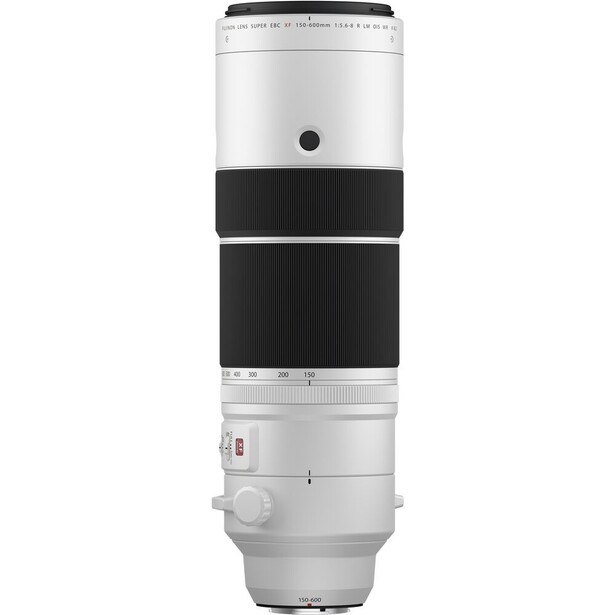
- Mounts: Fujifilm X
- Focal length: 150-600mm (229-914mm equivalent)
- Maximum aperture: f/5.6-8
- Stabilization: 5 stops
- Teleconverter support: XF1.4X TC WR and XF2X TC WR
- Minimum focus: 2.4 m
- Weight: 1,605 g
- Price: $2,399 (B&H)
Crop sensors are the cheat code of wildlife photography, and Fujifilm's long zoom is the cleanest expression of the idea. Mount the XF 150-600mm f/5.6-8 R LM OIS WR on an X-H2S and you have a 229-914mm equivalent field of view in a lens weighing 1,605 g, several hundred grams lighter than the full frame 600mm zooms that see less. Add the 2x teleconverter and the equivalent framing pushes past 1,800mm, which is a genuinely absurd number to reach handheld.
The build is better than the price suggests. Twenty-four elements in 17 groups including three ED and four Super ED elements, weather-sealing rated to -10 degrees C, a fluorine-coated front element, and a linear motor that keeps up with Fujifilm's stacked-sensor bodies. Unlike some crop-sensor teles it does not fall apart at the long end, and the 82mm filter thread is far cheaper to filter than the 95mm and 105mm threads elsewhere in this guide.
What you pay is light, and you pay a lot of it. Starting at f/5.6 and ending at f/8 on a sensor that is already a stop or so behind full frame on noise means this is a bright-conditions lens. Dawn in a forest is where it struggles, and no amount of stabilization fixes a subject that is moving. The X-H2S handles high ISO better than Fujifilm's older bodies, but this pairing still asks for light in a way the Nikon and Sony 600mm f/6.3 zooms do not. It is also a stills-first design, with visible focus breathing that video shooters will notice.
For a Fujifilm shooter who wants maximum reach without carrying a full frame kit, check the current price of the Fujifilm XF 150-600mm f/5.6-8 R LM OIS WR at B&H. If you want lighter and cheaper on APS-C and can accept less reach, the Sony E 70-350mm f/4.5-6.3 G OSS is the equivalent answer on Sony's crop bodies.
What We Like
- 229-914mm equivalent reach at 1,605 g
- Weather-sealed to -10 degrees C
- Affordable 82mm filter thread
- Both Fujifilm teleconverters supported
What Could Be Better
- f/8 at the long end on an APS-C sensor is demanding in low light
- Noticeable focus breathing for video
- Fujifilm X only, with no full frame path
Best for Travel and Hiking: Panasonic Lumix S 100-500mm f/5-7.1 O.I.S.
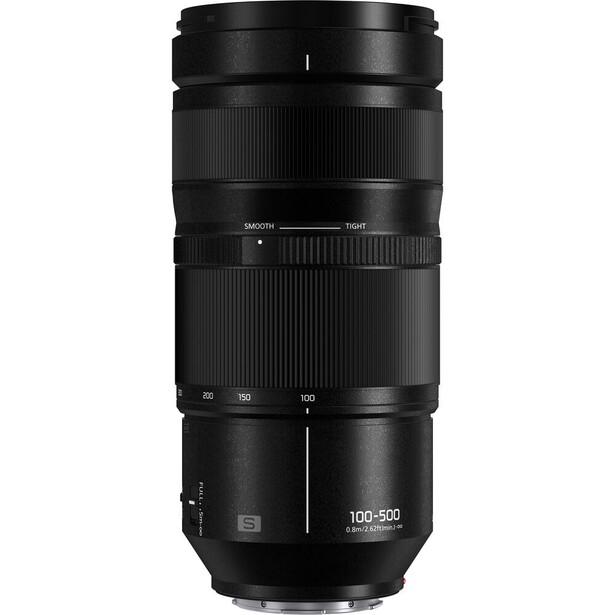
- Mounts: L-mount
- Focal length: 100-500mm
- Maximum aperture: f/5-7.1
- Stabilization: Up to 7 stops with Dual I.S. 2
- Teleconverter support: DMW-STC14 and DMW-STC20, reaching 700mm or 1,000mm
- Minimum focus: 0.80 m at 100mm, 1.50 m at 500mm
- Weight: 1,285 g excluding the tripod mount
- Price: $2,029.99 (B&H)
Panasonic arrived late to full frame super-telephoto and used the time well. The Lumix S 100-500mm f/5-7.1 O.I.S. is 196.1mm long and 1,285 g without its tripod mount, which makes it dramatically more packable than the 600mm zooms, and it covers 100mm to 500mm rather than starting at 150mm or 200mm. On a trip where the long lens has to share a bag with everything else, that combination is the argument, and our review of the 100-500mm found it fits easily in a standard camera bag.
Two specs stand out. The stabilization is rated at up to 7 stops when the lens' optical system works with the body's sensor-shift stabilization, the highest figure in this guide, and it is the difference between needing a monopod and not. The other is magnification. The lens focuses to 0.80 m at 100mm and to 1.50 m at 500mm, and at that long end it delivers 0.36x, the highest reproduction ratio of any lens in this guide (the Sigma 150-600mm's 1:2.9 is the only figure close to it). Photographers who shoot both wildlife and the flowers, fungi, and insects around it will find themselves using it far more than the focal length range suggests.
The costs are the aperture and the mount. Ending at f/7.1 is dim, and while the stabilization holds the camera still, it cannot slow down a moving animal, so low-light action pushes ISO fast. The lens is also L-mount only, which means Lumix, Leica, and Sigma bodies and nobody else. And 500mm is short if birds are your primary subject. As a hiking and travel telephoto for an L-mount shooter, though, nothing else balances size, reach, and stabilization this well, and it feels far smaller in hand than the spec sheet implies. Check the current price of the Panasonic Lumix S 100-500mm f/5-7.1 O.I.S. at B&H.
What We Like
- Only 196.1mm long and 1,285 g
- Up to 7 stops of stabilization with Dual I.S. 2
- 0.36x maximum magnification and 0.80 m close focus at 100mm
- Useful 100mm short end
What Could Be Better
- f/7.1 at the long end is dim
- 500mm is short for small birds
- L-mount only
How to Choose a Telephoto or Wildlife Lens
Start with the honest question about reach. The instinct to buy the longest lens you can afford is strong, and it is usually wrong. Reach costs light, weight, and money in that order, and a 400mm lens you carry every weekend produces more keepers than an 800mm lens that lives in a closet. Big mammals, coastal birds, and field sports are comfortable at 400mm. Songbirds, raptors at distance, and shy forest animals need 600mm and reward 800mm. If you do not know which you shoot yet, buy the 400mm zoom and find out.
Teleconverter or Crop?
This is the question that generates the most bad advice. A 1.4x teleconverter multiplies your focal length by 1.4 and costs you one stop of light; a 2x doubles it and costs two stops. Cropping in post costs you no light at all, but throws away pixels. The decision comes down to what limits you.
If your sensor has resolution to spare, cropping usually wins. A 45 MP full frame body at 600mm, cropped to an APS-C-equivalent frame, keeps roughly 20 MP at an 840mm-equivalent field of view, with no light lost and no extra glass between the sensor and the subject. A 24 MP body cropped that hard leaves you around 10 MP, and there the teleconverter earns the stop it costs, because it puts real detail on the sensor rather than enlarging what is already there.
The other axis is autofocus. Every teleconverter slows it, and 2x converters slow it a lot. On a bird in flight in overcast light, a 2x will cost you the shot. Use a 1.4x freely, use a 2x rarely, and if you find yourself reaching for a converter on every outing, you bought the wrong focal length. The third path is a crop-sensor body: a Canon EOS R7, Nikon Z50 II, or Fujifilm X-H2S turns a 400mm lens into a 600mm equivalent, and our cameras guide covers the bodies worth pairing with long glass.
Internal Zoom, Weight, and Support
Internal zoom is underrated and external zoom is under-criticized. A lens that does not change length keeps its center of gravity fixed, which matters enormously on a gimbal head and matters for dust and moisture ingress in the rain. External zooms are cheaper and often lighter, and if you shoot handheld only, the difference will not bother you. Once you put a lens on a tripod, it will.
The last thing to think about is what holds the lens. A 2 kg telephoto on a lightweight ball head is a bad afternoon, and the standard tripod feet on several of these lenses are not Arca-compatible, so budget for a replacement foot and a head rated well above the lens' weight. Our tripods guide has the supports that will not fold under a 600mm zoom.
What We're Looking For
Our picks weigh reach against the light a lens actually gathers at its long end, the weight you have to carry to get it, the honesty of the autofocus in poor conditions, and how the lens behaves on support rather than how it scores on a chart. Every specification in this guide was verified against the manufacturer's current spec page at the time of writing, and every pick was checked for discontinuation, supply problems, and a rumored successor. Where Fstoppers has tested a lens hands-on, the review is linked in its entry; where we are working from verified specifications and a lens' documented design, we say so rather than implying testing we did not do.
Frequently Asked Questions
Is 400mm Enough for Wildlife Photography?
Yes, for most subjects. Deer, foxes, herons, waterfowl, zoo animals, and field sports are all comfortable at 400mm on full frame, and 400mm on an APS-C body gives a 600mm equivalent field of view. Small perching birds and distant raptors are the exception, and those subjects are the reason 600mm zooms exist.
Do I Need f/4 or Is f/6.3 Fine?
For most photographers, f/6.3 is fine. Modern full frame sensors handle ISO 6,400 cleanly, which covers most daylight wildlife shooting at f/6.3. Exotic f/4 primes buy you roughly a stop and a third of shutter speed over f/6.3 for dawn, dusk, and dense forest, which decides the purchase if that is when you shoot, and they cost several times as much.
Are Third-Party Telephoto Lenses Worth It?
Yes. Sigma's Sports and Contemporary super-telephotos are optically competitive with first-party glass and typically cost less. The gap that remains is autofocus in hard continuous tracking, where Sony's and Nikon's own motors still hold a small edge, and teleconverter support, which third-party lenses often restrict to L-mount.
What Is the Best Lens for Bird Photography Specifically?
The longest lens you can hold steady, which for most people means a 600mm or 800mm zoom rather than a prime. Sony's 400-800mm and Canon's 200-800mm are the two purpose-built answers among current lenses, and both are sharp enough at their long ends to crop further. On Nikon, the 180-600mm with a 1.4x teleconverter covers the same ground.
Fstoppers may earn a commission from purchases made through links in this article. Our picks are made independently by our editorial team.