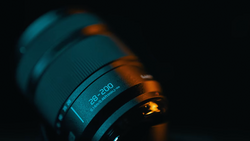
For the last month, I’ve been deep in the world of ultra-telephoto lenses for Sony full-frame cameras, testing some of the most advanced glass money can buy. But can Panasonic's new 100–500mm f/5–7.1 lens, for a fraction of the price, compete? Surprisingly, it can.
First Impressions: Compact and Travel-Friendly
When the box arrived, I was honestly shocked. The packaging was tiny compared to what I’ve been lugging around lately.
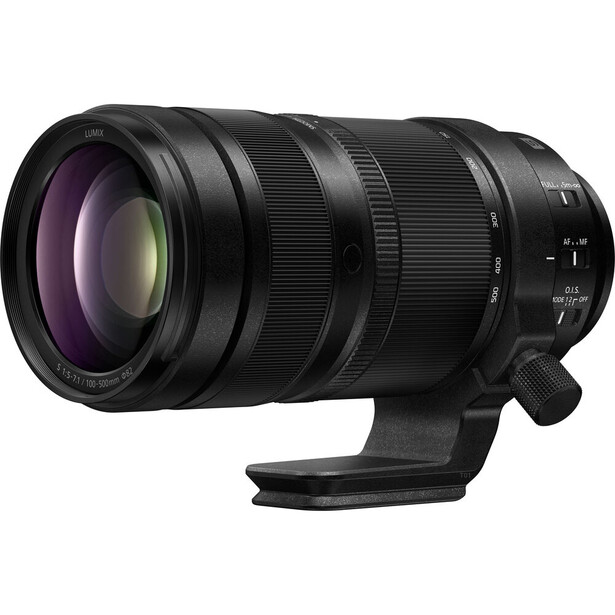
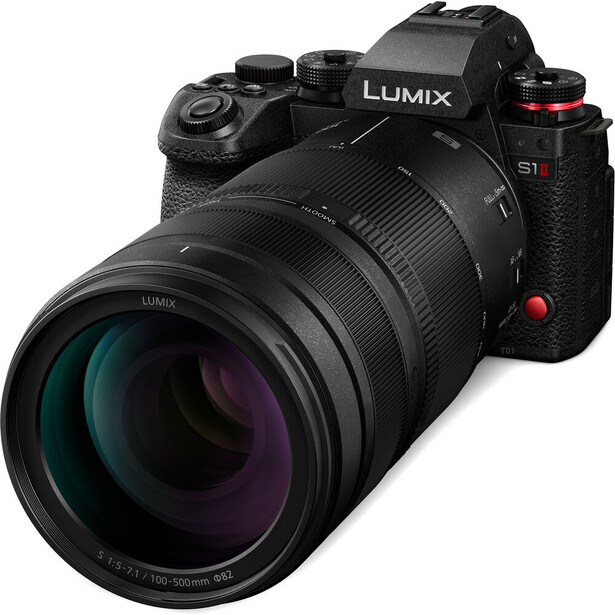
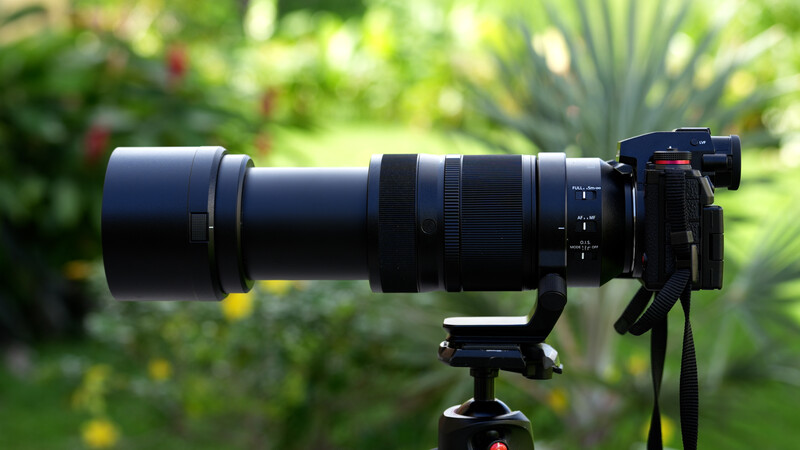
Once I pulled the lens out, that same thought stuck: this thing is compact. For a 500mm lens, it’s downright small—about the size of a 70–200mm f/2.8.
Does it feel as premium as the $14,000 Sony 600mm f/4 or Sigma’s $7,000 300–600mm f/4? Of course not. But at roughly $2,100, the build feels perfectly fine, and the sheer convenience factor is unbeatable. It fits easily in a standard camera bag and doesn’t destroy your shoulder after an hour of hiking.
Stabilization: Panasonic’s Secret Weapon
The first thing I noticed when I brought the lens up to my eye was how rock-solid the image looked. Panasonic’s stabilization has always been industry-leading, and this lens continues that legacy.
Even at 500mm, the viewfinder image barely moves. Compared side-by-side with other stabilized telephotos, the Lumix combo is easily the most stable I’ve ever used.
For handheld wildlife work—especially without a monopod—this is a huge deal. You can confidently shoot long exposures or track small moving subjects without that frustrating micro-shake.
Autofocus: Much Better Than Expected
I’ll admit, I came in skeptical about autofocus. After all, Sony’s animal eye-detect AF is the gold standard. Point your camera vaguely toward a bird, and it finds the eye instantly.
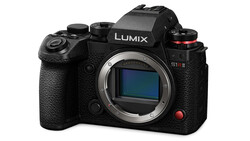
To my surprise, Panasonic’s AF held up incredibly well on my Lumix S1 II. It doesn’t track arbitrary objects as confidently as Sony’s system, but when it comes to eyes, whether human or animal, it locks on with remarkable precision.
Even in tricky situations, like when a bird’s head is half-hidden behind leaves, the Panasonic combo sometimes did better than my Sony setup. It consistently recognized partial subjects and nailed focus where I didn’t expect it to.
Minimum Focus Distance: A Quiet Game-Changer
One frustration with Sony’s 600mm f/4 and Sigma’s 300–600mm is their long minimum focusing distance, you often need to be 15 feet or more from your subject.
Not here. The Panasonic 100–500mm lets you focus at just 4.9 feet creating a .36x magnification, which makes a massive difference when shooting small subjects like birds, insects, or flowers. This lens feels more versatile in that regard; it’s not just for faraway subjects.
Optical Performance: Shockingly Sharp
I went into this test expecting compromises; soft corners, vignetting, maybe some chromatic aberration. None of that really showed up.
At 100mm, there’s only very light vignetting at f/5, and it completely disappears by f/7.1. The edges are impressively sharp, and the center sharpness is excellent.
Zoomed in to 500mm, wide open at f/7.1, the sharpness holds strong. I pixel-peeped at 400% and could barely spot a difference between f/7.1 and f/10. The edges soften slightly, but it’s still extremely impressive—especially considering the price and size.
Bokeh and Depth of Field
You wouldn’t expect creamy bokeh from a lens that tops out at f/7.1, but the compression of 500mm changes everything. Get close to your subject, and you can achieve beautifully soft backgrounds that rival much faster lenses.
The bokeh quality itself is smooth and pleasing; no harsh outlines or distracting patterns. It adds to the lens’s versatility, letting you use it for portraits, nature, or even compressed landscapes.
Final Thoughts
Can I recommend the Panasonic Lumix 100–500mm f/5–7.1? Absolutely.
For $2,100, it’s not cheap, but it’s a fantastic value. You’re getting 500mm of reach in a package that’s easy to carry, with top-tier stabilization, shockingly good sharpness, and autofocus that far exceeds expectations.
If you’re a Panasonic shooter looking for a compact, travel-friendly ultra-telephoto zoom, this lens is a winner. It's not going to be as fast as an f/4 lens, but it's $12,000 cheaper and about 1/3 of the size. I'll gladly take that trade.



Join the Fstoppers community for free
-
Post comments and join in the discussions
-
Browse the site ad-free
-
Share your work and get featured in the community
-
Compete in the photo contests for fun and prizes
No comments yet