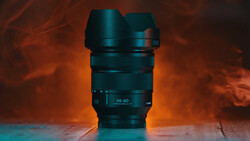
The Panasonic Lumix S 24-60mm f/2.8 promises f/2.8 performance in a smaller package, but does trimming 10mm from the standard zoom range actually matter? Its direct competitor, the Sigma 24-70mm f/2.8 DG DN II Art, offers that extra reach plus features like a manual aperture ring, yet the Panasonic undercuts it by $400.
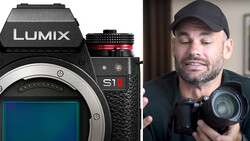
Coming to you from Pav SZ, this detailed video breaks down the Panasonic Lumix S 24-60mm f/2.8 and Sigma 24-70mm f/2.8 DG DN II Art through actual shooting scenarios rather than chart tests. Pav finds both lenses deliver excellent sharpness where it counts most. The central areas where most people focus perform exceptionally well on both, and autofocus works reliably on current Panasonic bodies like the S5 II, S5 IIX, and S1R II. The Sigma makes a distinct ticking sound during autofocus operation, though it doesn't affect performance or audio recording. One difference emerges with chromatic aberration. While both lenses show minimal color fringing compared to primes, the Sigma exhibits slightly more purple and orange artifacts around high contrast edges.
The bokeh comparison reveals subtle advantages for the Sigma. Both create attractive background blur and subject separation, but the Sigma produces rounder, smoother out of focus areas. The minimum focusing distance difference sounds small on paper (19 cm vs 17.3 cm at 24 mm), but in practice, the Sigma delivers noticeably more macro-like results with greater magnification and more pleasing background separation.
The physical differences between these lenses extend beyond the spec sheet. The Sigma weighs 740 g compared to 544 g for the Lumix, and that 200 g matters during all day shooting. The Sigma packs more features including a clickable aperture ring, aperture lock, two programmable focus buttons, and a zoom lock, while the Lumix keeps things minimal with just an autofocus switch and single focus button. One frustrating quirk: the zoom rings rotate in opposite directions. The Sigma zooms in counterclockwise while the Lumix goes clockwise, which becomes annoying if switching between brand ecosystems. The Sigma requires 82mm filters versus 77mm for the Lumix, adding to long-term costs. And with a difference of about $400, the price difference is substantial considering both deliver similar image quality. Check out the video above for the full rundown from Pav.

Join the Fstoppers community for free
-
Post comments and join in the discussions
-
Browse the site ad-free
-
Share your work and get featured in the community
-
Compete in the photo contests for fun and prizes
1 Comment
I chose the Sigma 28-70mm f2.8 over the Sigma 24-70 not just of the size and weight savings but because it was so much less expensive.