
I was in Bilbao earlier this year, and a photographer appeared from around a narrow backstreet with a massive backpack and a huge full frame camera and zoom lens hanging from his neck. He carefully took the obviously heavy pack off and placed it on a chair outside a cafe. The relief on his face, to take a break from lugging all that weight around, was telling.
I couldn't help but wonder why someone would spend all that money to travel to a beautiful destination, only to burden himself with an enormous amount of camera gear. A trip like this should be enjoyable, not exhausting. The truth is, I could relate to this guy, because that was me a few years ago.
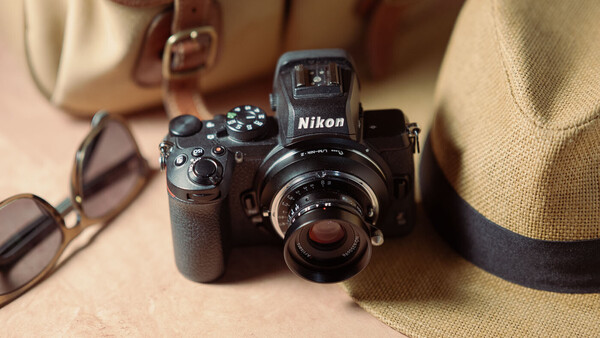
I used to have a Nikon D700 with a 24-70mm f/2.8 lens, plus a 16-30mm f/2.8 and a couple of primes in my pack. Moving to Z mount wasn't much better. A Z9 with a pro zoom or two was just as burdensome. And after decades of travel photography, one day I had this bright idea to buy Nikon's little Z50 as an everyday carry. After using it for a few weeks, I had a eureka moment: smaller APS-C cameras are the smartest choice for travel photography. I wondered why I hadn't discovered this years ago.
The great thing about an APS-C system is that not only are the cameras smaller, so are the lenses. This makes photography easier, lighter, more spontaneous, and ultimately more enjoyable. And when photography is enjoyable, you tend to take more photos, which ultimately results in better photographs.
A Camera You'll Actually Carry
I discovered that my little APS-C kit, being so light, meant I was carrying it around more. It's perfect for wandering around old cities all day, or taking on hiking and backpacking trips. The inconspicuous size means I feel more confident carrying it around at night.
When we're traveling, we really need a camera around our neck all the time, just in case something interesting presents itself. When we're exploring somewhere new, it's those unexpected, fleeting moments that we want to catch: beautiful light, interesting details, local characters interacting. If your camera is in your backpack or in your hotel room, you're missing out.
Smaller cameras stay with you, and that's a real advantage.
APS-C Image Quality Is More Than Good Enough
The obsession with full frame cameras has become slightly ridiculous. Modern APS-C sensors are excellent.
They might not be good enough if you're printing enormous gallery pieces, shooting high-end commercial campaigns, or wanting to do heavy image editing and manipulation. Otherwise, an APS-C camera is more than capable of producing beautiful, professional-quality images. On a four-week backpacking trip, I took my APS-C camera and small prime lens instead of my full frame kit, and shot enough images to make a coffee table book. There is more than enough quality and resolution in the files for this. I've even used the camera on client shoots that have been printed in magazines.
It's worth reminding ourselves that photography is never limited by megapixels, only by your vision.
Smaller Cameras Change How You Shoot
Large professional camera systems often create a psychological barrier between you and the world around you. People notice them and become self-conscious or suspicious. Smaller APS-C cameras feel less intrusive. They allow you to blend in and work more naturally, particularly for street and documentary photography.
I Prefer Prime Lenses
One of the biggest mistakes travel photographers make is carrying too many lenses.
My full frame travel kit used to consist of an ultra-wide zoom, standard zoom, telephoto zoom, and sometimes a fast nifty-fifty. When I moved to my lightweight APS-C kit, I realized prime lenses were tiny, so my kit now consists of a 23mm, 35mm, and 50mm. That's the full frame equivalent of 35mm, 52mm, and 75mm. My three lenses weigh less than a full frame zoom!
Carrying such a small and light kit around means it fits into a small shoulder bag, and it's incredibly liberating. The simple lens choices are creatively liberating too. I tend to have the 35mm on most of the time. You stop obsessing over focal lengths and start concentrating on the actual things that make photographs interesting.
Traveling with a camera is all about experience, and an APS-C kit allows you to enjoy that experience.
Some Excellent Lightweight APS-C Travel Cameras
There are plenty of excellent APS-C systems available today. A few worthy of a mention include:
Fujifilm X-E5
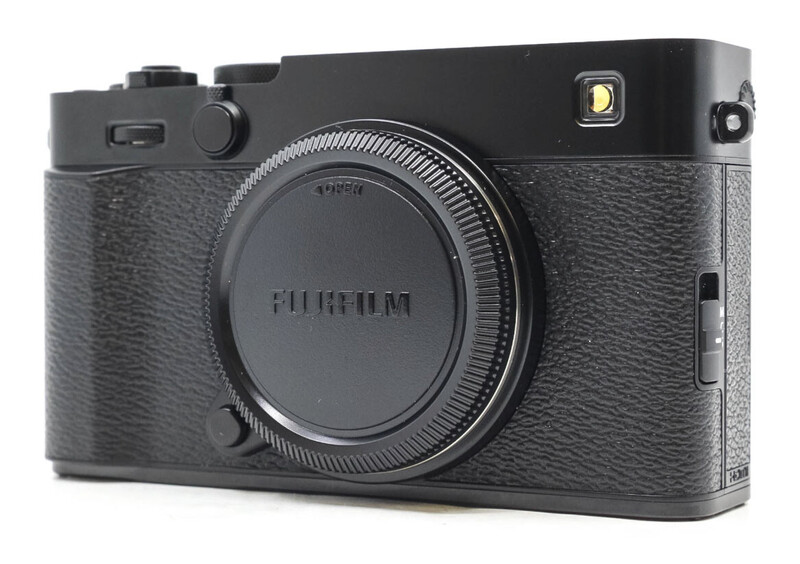
The Fujifilm X‑E5 has a 40.2 MP sensor in a lightweight rangefinder-style body. Its 7-stop in-body stabilization and X-Processor 5 engine ensure sharp, steady images and smooth autofocus across a variety of subjects. The X-E5 is a very compact design, yet still packs in 6.2K video should you need to shoot some footage on your travels.
The older X-E3 is another option if you want to spend less money, and are happy with 24 MP, no in-body stabilization or tilting screen, and fewer film simulation profiles than the newer bodies. Personally, I think this is a great option, and the lower resolution is perfectly fine.
Fujifilm X-T50
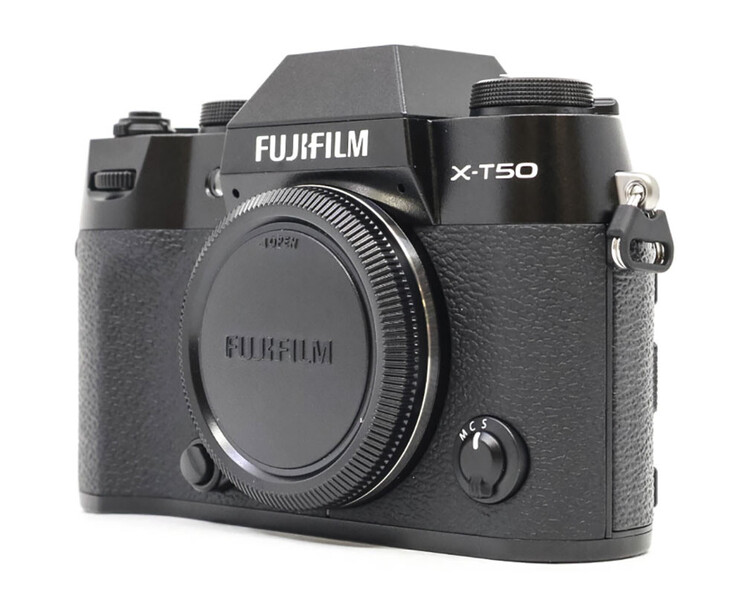
Like the X-E5, the compact Fujifilm X-T50 has a 40.2 MP sensor and in-body stabilization, so your photos stay sharp and full of detail. The main difference is the retro-style SLR styling with a center viewfinder. It comes down to what body style you prefer, although the X-T50 does have a built-in flash.
Sony a6700
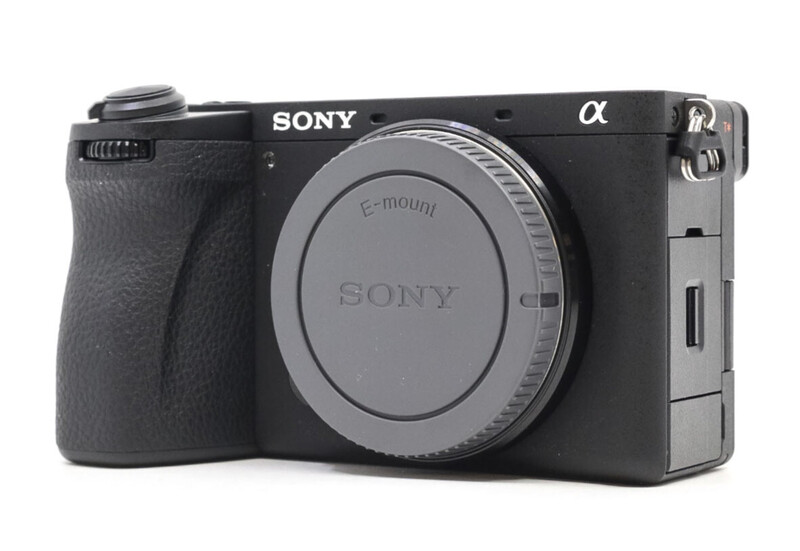
The Sony a6700 is a compact APS-C camera for hybrid creators. Its 26 MP sensor and BIONZ XR processor enable 11 fps bursts and 4K/120p 10-bit video. AI-driven subject tracking handles people, animals, and vehicles with precision. Five-axis stabilization, a vari-angle screen, and a weather-sealed body make it a strong choice for travel and street shooting.
Nikon Z50
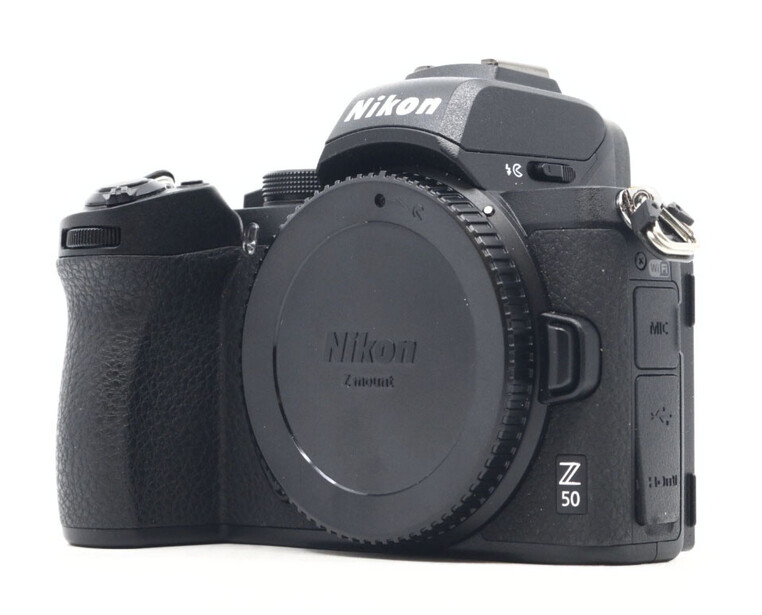
The Nikon Z50 features a 20.9 MP sensor that results in beautiful image quality. This is a tiny camera and one of the nicest to hold. It's very much a photographer's camera, and doesn't feature as many bells and whistles as the others in this listing. There's no in-body stabilization, and the autofocus isn't as advanced as the other cameras here. Its video capabilities are nothing to write home about. Having said that, this is my favorite camera in this list!
If you want a huge upgrade to incredibly impressive autofocus tracking and the ability to shoot internal 10-bit video, you'll need to look at the Z50 II. It is a little heavier and bigger than the Z50, though.
Canon R50
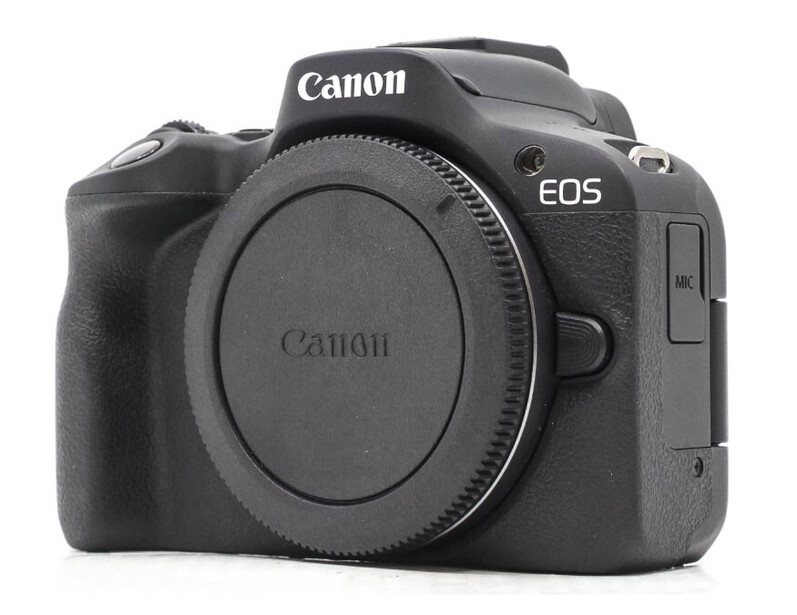
The Canon EOS R50 is a very compact, entry-level mirrorless camera designed for beginners, and perfect for travel. It features a 24.2 MP sensor and has very good autofocus. It also features 4K/30p video with no crop. There's not as much lens choice compared to other cameras we've mentioned.
Conclusion
My definition of a good travel photography experience is the ability to wander around all day with your camera without feeling physically exhausted or creatively burdened by equipment.
Smaller APS-C cameras make that easier.


Join the Fstoppers community for free
-
Post comments and join in the discussions
-
Browse the site ad-free
-
Share your work and get featured in the community
-
Compete in the photo contests for fun and prizes
16 Comments
These days, full frame cameras have become incredibly small (really too small in many cases). e.g., the Sony a7 IV body is small to a point where most people will want a grip extension or even a battery grip.
Beyond that, for APS-C, the biggest letdown for me, was the Nikon Z-50 series cameras, especially with the second gen version of it still-using the same outdated and extremely low res sensor. I wish they could ave at least gone with the 26 megapixel sensor.
It is the lens sizes that kill the FF format as a travel camera. Even standard zooms are a bazooka
There are many third party manufacturers making some incredibly light and small lenses.
That’s why I have FF and M43 :-)
Low Res Sensor? Are you serious?
It has more resolution and image quality than 35mm film ever had. Some of the greatest photos were shot on inferior 35mm film. And even 12-16 Mpix can be printed to billboard size.
What do you use it for that really needs more than 20 mpix? There are some people that need a medium format system. For 99% of us even 16 Mpix is a lot.
If you want to criticise the Z50-2/Zfc than go for the missing IBIS. Especially vintage f-mount lenses would benefit from it.
Only issue with Z50 and R50 is Canon and Nikon has a huge lack of APSC quality level lenses because they treat APSC as entry level, and expect people to "move up" to full frame for their higher quality glass. This shows their lack of commitment to small compact bodies, and this is where the benefits of Micro Four Thirds completely outweigh an APSC system from Nikon or Canon, Sony and Fujifilm understand the importance of compact and have plenty of options. Micro Four Thirds is the true king of compact travel and they don't treat you like a beginner just because you want compact.
Viltrox, TTartisans, 7Artisans, Meike... there are many companies making very small and light lenses for APS-C cameras. I've not found a bad lens yet, they are all very sharp.
Using my Nikon z50 has rejuvenated my love of photography! It gives me the same feeling I had when I first started shooting with my Nikon FM and a 50mm and 20mm primes. I used to carry around my D500 with a few zoom lenses, after some back issues, I picked up the z50 and a Viltrox 25mm f1.7 prime. I enjoyed using it so much, I grabbed a few other little prime lenses. The image quality I get allows me to print comfortably up to 24x36. The biggest enjoyment I get is that it feels like a move back to basics that helps stimulate my creativity. Not saying it's for everyone, it's whatever gets you out shooting. For me, this was absolutely the change up I needed. Thanks for sharing your article.
Thanks for the comment, the Z50 is still a favourite travel camera for me. It's a joy to use. 🙂
No need to use APS-C. Sony a7CR is same body as the a6700, but with 61 mp FF sensor which produces and APS-C crop in post of 26 mp. Sony 24mm f/2.8 G is 163 g, 50mm f/2.5 G is 173 g, or just carry the 40mm, also 173 g. Shooting 24mm on FF enables 2:1 and x-pan 65:24 cropping which is stunning in many scenes. Can't do that with 24mm on an APS-C sensor.
Why would I need or want 61 Mpix, as an amateur that is travelling?
Between my M43 gear with 20 Mpix and the Z7 I shoot 90% with the M43 gear especially on vacation.
when I show it to people, nobody can see a difference.
This is why I picked up a Canon M system at used prices. The excellent 32 F/1.4 seems to have become a prized item. Prices are up significantly in the last couple of years. The 18-150 is a great outdoor one lens solution
Even m43 camera is more than enought for travel photo and its excellent lenses selection makes it very attractive
I usually travel with one of two kits, both full frame. On the road right now, I’m using an EOS R5 II with RF 24-105/4L in a Peak Designs clip on my belt, and RF 20/1.4L in a belt mounted case. That’s about 5 pounds of gear total.
My other travel kit is a Leica M11 with 35/1.4 Summilux-M ASPH FLE II clipped to my belt, and older 21mm f/2.8 Elmarit-M and 75mm f/2 APO-Summicron-M ASPH. I usually go out with just the 21mm in the belt-mounted case. That’s around 3-4 pounds of gear total.
When I used to carry Micro Four Thirds gear after a back injury, an OM-1 with 12-40/2.8 PRO II, and either 40-150/4 PRO or Lumix 8-18/2.8-4, the lenses made it approach the 3 1/2 pound mark.
My point is, your gear choices in any format make the difference. You can choose a heavy APS-C setup or a light full-frame setup.
I have been shooting images for a state travel magazine for 5 years now using a Fuji X-E3 and a Fuji X-T2. I have the ultra wide angle, a 35mm f1.4, a cheap telephoto and the kit lens which is surprisingly good. Recently I also got a dedicated portrait lens. Neve had image quality Issues. Recently I have also been doing architecture with a Laowa 12-24 shift lens, IQ is just fine for 99% of real use scenarios.
I sold all my older Nikon gear. I could have used the old lenses on my new Nikon Z50 II but decided not to use the FToZ Ii to make that possible. I now have a Viltrox 18 mm F1.7 and a Nikon 35mm F1.7 both excelent lenses. I also bought two kit lenses which also are very light and make a very good quality photo. Not as good as the prime tough. The Z50Ii is way better than the first model with almost the same weight. It has eye recognation for people animal birds etc. Pre capture and a lot faster focus.