
I've spent the last week going out three times a day with some serious glass, and I'm about to tell you something that might save you over ten grand.
A couple of months ago, I reviewed the Sony 400-800mm lens and fell completely in love with wildlife photography. I even said that setup was literally the best sports and wildlife combination on the market right now. But you guys weren't having it. The comments rolled in: “What about the new Sigma 300-600mm f/4?”
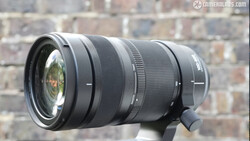
Fair point. So I got my hands on three ultra-telephoto beasts: Sony's $3,300 400-800mm, Sigma's brand-new $6,600 300-600mm f/4, and Sony 600mm f/4 GM OSS prime. I shot thousands of images with each one, and what I found was honestly shocking.
The Lineup
Here's what we're working with:
-
Sony 400-800mm ($3,300): Variable aperture from f/6.3 to f/8, zoom range from 400-800mm.
-
Sigma 300-600mm f/4 ($6,600): Fixed f/4 aperture throughout the entire zoom range, significantly larger and heavier.
-
Sony 600mm f/4 GM OSS ($14,100): Fixed 600mm focal length, no zoom capability, same f/4 aperture as the Sigma.
The main problem with the 400-800mm is speed. It drops to f/8 almost immediately when you start zooming, which means your ISO goes through the roof when you need fast shutter speeds for wildlife or sports.
Build Quality: All Winners Here
I'm not going to sugarcoat this: each one of these lenses is built like a tank. I genuinely couldn't point to one and say it's built better than the others. They all feel premium, weather-sealed, and ready for professional use. The Sigma is significantly heavier, which becomes very relevant when you're handholding these things.
Image Quality: I Cannot Believe What I'm Seeing
After shooting literally thousands of images with each lens and comparing them at 400% zoom on my computer, I need to be honest with you: I cannot tell a meaningful difference in image quality between these three lenses.
The color rendering looks the same. The sharpness looks the same. The contrast looks identical.
I thought I needed to do a more scientific test, so I set up a controlled comparison. When I put the Sigma 300-600mm at 600mm next to the Sony 600mm f/4 at 400% magnification, they look almost identical. Maybe, and I mean maybe, the Sony looks slightly cleaner in the extreme far edge, but we're talking about pixel-peeping territory that nobody will ever notice in real-world use.
Here's where it gets crazy: I compared the Sony 600mm f/4 wide open against the 400-800mm zoomed to 600mm (wide open at f/8). The cheaper lens actually looked very similar, maybe even a touch sharper in the extreme edges. I had to look twice because I couldn't believe what I was seeing.
Each one of these lenses produces absolutely beautiful bokeh. The out-of-focus areas when shooting at f/4 with the two larger lenses are buttery smooth and gorgeous. But here's the thing: even the cheaper 400-800 at f/8 looks incredible. When you're shooting at these focal lengths, depth of field is already so shallow that the difference becomes almost meaningless.
The Sony Teleconverter Scandal
This is where things get frustrating, and it has nothing to do with the lenses themselves.
I was excited to test the Sony 2x Teleconverter, which magnifies your image and gives you double the reach, but you lose two stops of light. I attached it to my camera, mounted the Sigma lens, and... nothing. Black screen.
Apparently, Sony doesn't allow their teleconverters to work with third-party lenses. Annoying, but fine. I'll just get the Sigma teleconverter, right? Wrong. I looked online and found Sigma teleconverters for Canon, Nikon, and other brands, but not Sony.
Here's the kicker: Sony has banned third-party companies from making teleconverters for their system. So not only are they limiting this $6,600 Sigma lens to 15 frames per second (more on that in a minute), they're forcing you to use it as-is with no option to extend your reach. That's insane to me.
Teleconverter Performance: Night and Day
I tested the Sony 2x Teleconverter on both Sony lenses, turning the 600mm into a 1,200mm and the 400-800 into a 1,600mm monster.
With the 400-800, the results were disappointing. Everything I love about this lens went out the window. The images looked soft and dull. I thought: “Alright, 2x teleconverters just aren't for me.”
Until I tried it on the Sony 600mm f/4.
I was expecting the same softness and loss of detail. Instead, these shots looked amazing. I did wall tests on both lenses with the teleconverter, and the difference was night and day. The 600mm maintained incredible resolution and sharpness, while the 400-800mm produced noticeably softer, duller images.
But here's the problem: with the teleconverter attached, my f/8 lens became f/16. Even in bright Puerto Rican daylight, I was shooting at ISO 4,000 just to maintain 1/800th shutter speed. The lens only works with a teleconverter in perfect, bright conditions. Otherwise, your ISO goes to infinity and the pictures look horrible.
Autofocus Winner: All Three (With a Catch)
Autofocus on the Sony a9 III with each of these lenses is incredible. I really didn't notice any speed difference, as they're all nearly instant and flawless.
But there's that Sony limitation again: the Sigma is capped at 15 frames per second, while the Sony lenses can shoot up to 120 frames per second on the a9 III. Honestly, even when shooting flying birds, 15 frames per second is enough for me. But if you're shooting fast-action sports professionally, that limitation might matter.
Optical Stabilization Winner: Not the $14,000 Lens
This one shocked me. The two cheaper lenses have significantly better stabilization than the Sony 600mm.
I did a handholding test at 600mm with each lens, and you might think I forgot to turn on stabilization for the Sony 600mm. I didn't. It was just that bad. And optical stabilization is a massive feature when you're shooting at 600mm, 800mm, or 1,200mm with a teleconverter attached.
I was genuinely shocked at how poor the stabilization is on Sony's most expensive lens.
Minimum Focusing Distance: A Real Problem
I was sitting on my couch watching TV when a hummingbird landed on a tiny twig right outside my window. I grabbed my Sigma 300-600mm and started shooting. As I walked closer, I quickly hit the minimum focusing distance wall. I couldn't get any closer.
Both 600mm lenses struggle with minimum focusing distance. If you're shooting small animals like hummingbirds, these might not be your best option. In my hot sauce bottle test, the 400-800mm was the clear winner, able to focus much closer than either 600mm lens.
Real-World Use: Tripod vs Handheld
For four days, I shot with each of these lenses completely handheld. If you're just shooting quick bursts, even the massive Sigma is manageable. But the second you find something cool and you're holding the lens up, tracking a moving subject, trying to keep it in frame, it will wear you out.
Spotting animals with your eyes is easy. Lifting one of these lenses to your eye and trying to find that bird in the tree when all you're seeing through the viewfinder is blurry leaves? Incredibly difficult and tiring. Every time I brought the camera away from my face to look at the bird again, I was moving the lens and having to restart the whole process.
With a sturdy tripod, you can look at the screen, keep the camera perfectly stationary, look up at the animal, and fine-tune your aim. I did miss some shots because I was setting up while birds flew away. But long-term, I got more shots because I could use the 2x teleconverter to make the 600mm a 1,200mm lens, shoot from much farther away, and more quickly find subjects in the frame.
Camera Body Thoughts
When I reviewed the 400-800mm a couple of months ago, I exclusively used Sony's top-of-the-line a9 III with its insane autofocus, 120 frames per second raw shooting, and pre-capture mode. I had the feeling I'd need to buy both the $3,000 lens and the $6,000–$7,000 camera body.
During this review, I jumped between the a9 III and my much more affordable Sony a7 IV. Surprisingly, I got better results with the a7 IV. It has more resolution, better ISO performance, and 90% of the time, I'm shooting stationary subjects anyway. Yes, the a9 III has better autofocus and tracking, but if most birds are just sitting on branches, I don't really need it.
Final Verdict: Which Should You Buy?
-
Sony 400-800mm f/6.3-8 ($3,300): This is the value champion. The image quality matches these two much more expensive lenses, and you're getting an extra 200mm of reach (800mm vs 600mm). Yes, you're losing two stops of light, but you're saving thousands of dollars and getting a lens that's much more manageable, easier to pack and travel with, and more convenient to carry. For most photographers who don't shoot wildlife or sports professionally, this is an amazing buy.
-
Sigma 300-600mm f/4 ($6,600): This is the best lens of the bunch, no question. It's incredibly capable, and at $6,600, it's actually a bargain for what it does. My three problems: (1) minimum focusing distance makes it tough for small subjects like hummingbirds, (2) Sony's arbitrary 15 frames per second limitation, and (3) Sony blocking teleconverter use. That last one is devastating because this lens is capable of being a 1,200mm powerhouse, but Sony just won't allow it.
-
Sony 600mm f/4 ($14,100): This lens is worse than the Sigma in almost every way. You get very similar image quality, no zoom capability, and significantly worse optical stabilization. The only benefits are 120 frames per second shooting and teleconverter compatibility, and that's just an arbitrary Sony rule. The 2x teleconverter performance is genuinely magical on this lens, but I cannot justify the $14,100 price tag when the Sigma exists.
Why This Matters
Over the last week, I've been so excited to wake up every day and immediately go out looking for wildlife to shoot. I cannot remember a time I've been this excited to take pictures.
If you've never given much thought to wildlife photography, give it a try. Get one of these super-telephoto lenses. It's so much fun, it'll get you outside, it'll get you exercising, and you'll take beautiful images you can hang in your house.
Just maybe don't spend $14,000 when $3,300 will get you there.




Join the Fstoppers community for free
-
Post comments and join in the discussions
-
Browse the site ad-free
-
Share your work and get featured in the community
-
Compete in the photo contests for fun and prizes
11 Comments
Compare the Sigma 500mm f5.6 DN DG. That's even more shocking. I happily gave up one stop of light. 1/2 the weight and 1/4 the price of the 600 f4.
The reason the zoom falls off so hard with the TC, is that the zoom likely is "barely" resolving enough detail to match the resolving power of your sensor, thus when it's image circle is doubled by the TC you end up with like half the resolved resolution onto the sensor. (Think of what happens when you move a projector farther away from the screen, it gets dimmer and the projection gets softer, a TC is essentially doing the same thing)
Meanwhile the high end prime vastly out resolves the sensor, thus when you double the image circle size with the TC, there is still plenty of resolution hitting the sensor. (I suspect if you could have put a TC on the Sigma, you would have also seen a massive delta in performance between it and the hyper expensive prime too)
This is also why, to your eye, all 3 lenses without a TC seem to have the same sharpness, its because the limiting factor is your sensor, not the resolving power of any of the lenses.
I would highly recommend, next, in your "exploration" of wildlife, get Sony to lend you a 300mm f/2.8 and use that paired with a 1.4 and 2.0 TC. That lens is incredibly sharp but doesn't have the bulk of a 400 2.8 or a 600 F4. It also has the resolving power to handle the 2x TC better than almost any other lens ever made. With that combo you have a 300 f/2.8, 420 f/4, and a 600 f/5.6 at less than $7k, and a much lighter package than anything comparable.
Imo that is one of the best wildlife lens setups available on any platform right now, that Sony 300 is just that good. (mostly because both Nikon and Canon haven't updated theirs yet to mirrorless and thus are on old tech making them way heavier), though the Nikon 400 2.8Z with built in 1.4 TC also could be named the king, but its like double the price. ;)
I think you'd get a kick out of the Nikon 600/4TC.
600 or 840mm at the flip of a switch, and optically even better than what you've tested so far.
Glad you finally experienced the joy of shooting wildlife!
This is great that you are shooting wildlife, Lee! What species have you been shooting? Birds? Mammals?
Also great that you are getting such good results from a very affordable lens.
As far as teleconverters are concerned, it has pretty much always been that they perform great with fast primes, but generally suck with slow zooms. I mean that's been the word on the street since the 1990s or thereabouts. And my experience with them certainly backs that up - I used them with great results with my 400 f2.8, but wouldn't even bother using them on any of my zoom lenses.
If you watch the video, he mostly is driving around shooting small to medium sized birds around Puerto Rico. I'm so jealous he has access to such a variety of cool species so readily but I guess thats just one of the benefits of living in the tropics. :)
I thought Lee lived in South Carolina. If that is not the case, then he should update his bio.
They moved the company to Puerto Rico years ago.
https://www.youtube.com/watch?v=o2dNbAnkUG0
I want that Sigma 300-600mm on a Z mount so bad.
deleted... "Sony really does restrict 3rd party lenses." annoying. I missed that.
Great. Either Sony gives up or Sigma will soon go bankrupt.