Canon's decision to release two different 70-200mm f/2.8 lenses for the RF mount has left many photographers scratching their heads about which one to buy. The choice becomes even more complex when you factor in the RF 100-500mm f/4.5-7.1L IS USM as an alternative for reaching longer focal lengths, especially since all three lenses occupy similar price points and target overlapping use cases.
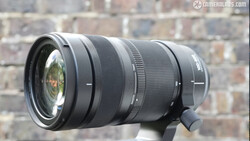
Coming to you from Gordon Laing, this revealing video puts three Canon RF lenses head-to-head in a comprehensive optical test that will change how you think about telephoto zoom choices. Laing tests the original RF 70-200mm f/2.8L IS USM, the newer RF 70-200mm f/2.8L IS USM Z, and the RF 100-500mm f/4.5-7.1L IS USM across multiple focal lengths and aperture settings. His methodology involves precise center and corner sharpness comparisons at various focal lengths, from 70mm all the way up to 200mm, using identical shooting conditions and careful crop analysis. What makes this test particularly valuable is his inclusion of both Canon RF extenders with the 70-200mm Z lens, pushing the effective focal length out to 400mm, where it directly competes with the 100-500mm lens. The testing reveals performance characteristics that aren't immediately obvious from spec sheets alone.
The results reveal some surprising truths about optical performance that Canon doesn't advertise in their marketing materials. While both 70-200mm lenses deliver excellent center sharpness when shot wide open, their corner performance tells a dramatically different story that could influence your purchasing decision. Laing demonstrates how field flatness affects real-world shooting scenarios, particularly when you're focused on subjects in the middle of the frame but need sharp details extending to the edges. His testing also reveals which lens combination actually delivers the sharpest results at 400mm, a focal length that's become increasingly important for wildlife and sports photography. The comparison includes both 1.4x and 2x extender combinations, showing how each lens maintains or loses optical quality when pushed beyond its native focal length range.
The comparison extends beyond just optical quality to examine practical considerations that affect your shooting experience and long-term satisfaction with your lens choice. Weight differences, size variations, and operational convenience all play crucial roles when you're deciding between a 70-200mm with extenders versus a dedicated 100-500mm lens. Laing's real-world perspective addresses the trade-offs between having f/2.8 brightness in the shorter focal lengths versus the convenience of native 500mm reach without swapping extenders mid-shoot. The video also explores how these lenses perform with Canon's 1.4x and 2x extenders, revealing which combinations maintain professional-level image quality and which ones show noticeable compromises in contrast or sharpness. Perhaps most importantly, Laing examines the price-to-performance ratio when you factor in the cost of extenders alongside the base lens prices. Check out the video above for the full rundown from Laing.





Join the Fstoppers community for free
-
Post comments and join in the discussions
-
Browse the site ad-free
-
Share your work and get featured in the community
-
Compete in the photo contests for fun and prizes
1 Comment
Fantastic review and side by side comparison! Totally validates my decision to sell my non-Z RF 70-200mm and my RF 100-500mm in favor of the Z version.
Would love to see a similar “shoot out” between the RF 100-500mm and the RF 200-800mm