

We all carry around a mental image of that perfect shot. A bird plunging toward the water to snag its prey. Your daughter crossing the finish line at her first track meet. These are the photographs that get framed, shared, and remembered. For a long time, capturing these moments required a small fortune. Not anymore.
Advances in optical stabilization, mirrorless autofocus systems, and lens manufacturing have transformed what "affordable" telephoto glass can accomplish. Lenses selling for a fraction of professional prices now deliver sharpness, speed, and handling that would have been unthinkable a decade ago.
A Word About Expectations
Before we dive in, let's be honest about what sub-$1,000 glass can and cannot do. These lenses make real compromises to hit their price points. Most feature variable apertures that narrow considerably at the long end, limiting low-light performance. Build quality, while often surprisingly good, rarely matches the weather sealing and ruggedness of professional options. Autofocus speed and tracking, though vastly improved, still lag behind flagship telephotos in challenging conditions.
None of that diminishes what these lenses accomplish. It simply means understanding where they excel and where they require patience or workarounds.
1. Sigma 100-400mm f/5-6.3 DG DN OS Contemporary
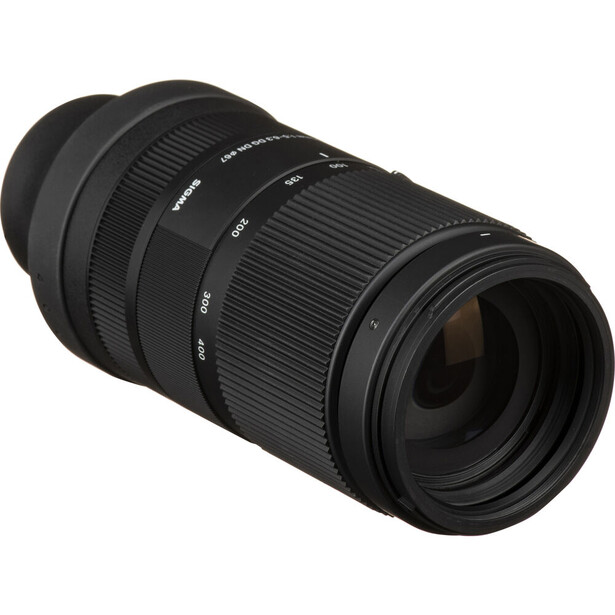
- Mount: Sony E / L-Mount / Fujifilm X
- Price: $1,049
Sigma built this lens with one goal: give mirrorless shooters the sharpest affordable supertelephoto available. They succeeded. Corner-to-corner resolution rivals glass costing twice as much, and the autofocus locks onto subjects with the confidence you would expect from native mount lenses. Optical stabilization handles the long end admirably, and the overall package remains manageable for handheld shooting. For Sony, L-Mount, and Fujifilm users who refuse to compromise on image quality, this sits at the top of the heap.
Ideal for: Shooters who prioritize optical performance above all else.
Purchase here: Sigma 100-400mm f/5-6.3 DG DN OS Contemporary
2. Canon RF 600mm f/11 IS STM
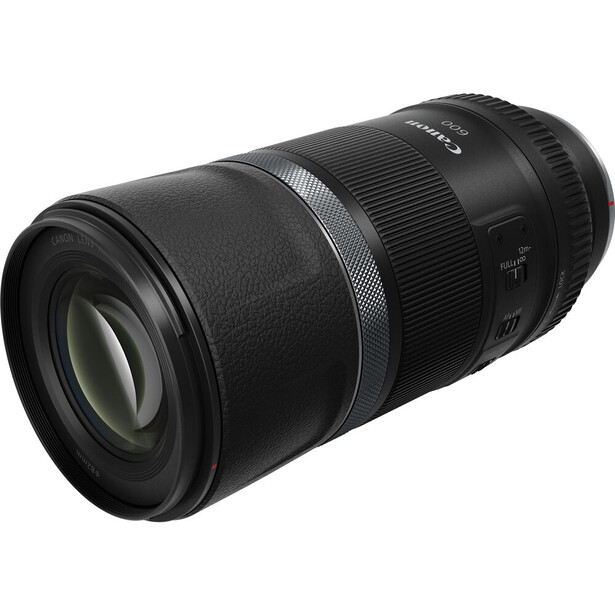
- Mount: Canon RF
- Price: $829
This lens breaks every convention about what 600mm reach should look like. A fixed f/11 aperture allows the entire barrel to collapse into something you can actually carry on a hike without questioning your life choices. Extended, it delivers legitimate supertelephoto reach in a package that weighs barely over two pounds. Yes, that narrow aperture demands good light and higher ISOs, but modern sensors handle noise beautifully. For birders and wildlife photographers who cover serious ground on foot, nothing else comes close to this combination of reach and portability.
Ideal for: Hikers, travelers, and birders who prioritize portability.
Purchase here: Canon RF 600mm f/11 IS STM
3. Canon RF 100-400mm f/5.6-8 IS USM
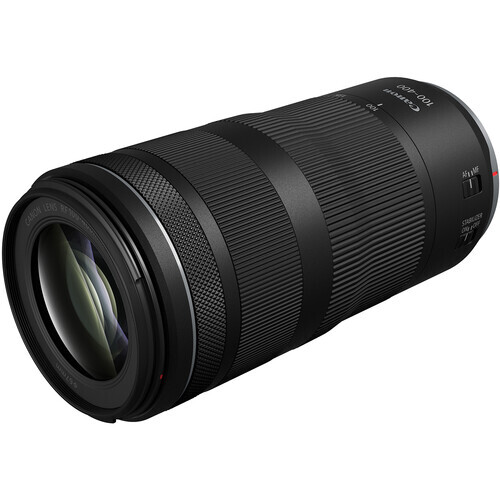
- Mount: Canon RF
- Price: $749
Canon engineered this zoom to feel almost impossibly light in your hands. At 1.4 pounds, it weighs less than most water bottles, yet delivers 400mm of reach with surprisingly capable optics. The Nano USM motor system focuses faster than any other lens on this list, making it a genuine contender for birds in flight and fast-moving sports. The f/8 maximum aperture at 400mm does limit low-light shooting, but for daytime action, few lenses offer this combination of speed, reach, and portability at this price.
Ideal for: Action shooters and bird photographers working in good light.
Purchase here: Canon RF 100-400mm f/5.6-8 IS USM
4. Panasonic Lumix G Vario 100-300mm f/4-5.6 II Power O.I.S.
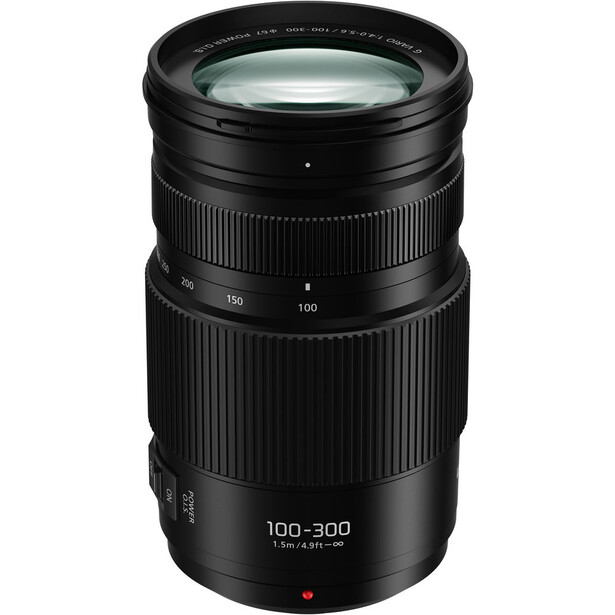
- Mount: Micro Four Thirds
- Price: $648
The Micro Four Thirds 2x crop factor transforms this 100-300mm zoom into the equivalent of a 200-600mm full frame lens. That alone makes it compelling, but Panasonic went further with weather-sealing and excellent optical stabilization. Where cheaper MFT telephotos force you indoors at the first sign of drizzle, this lens keeps working through conditions that would sideline most budget glass. For outdoor wildlife shooters invested in the MFT system, the extra investment over budget alternatives pays dividends in durability and versatility.
Ideal for: Outdoor and wildlife photographers who shoot in variable conditions.
Purchase here: Panasonic Lumix G Vario 100-300mm f/4-5.6 II Power O.I.S.
5. Canon EF 70-300mm f/4-5.6 IS II USM
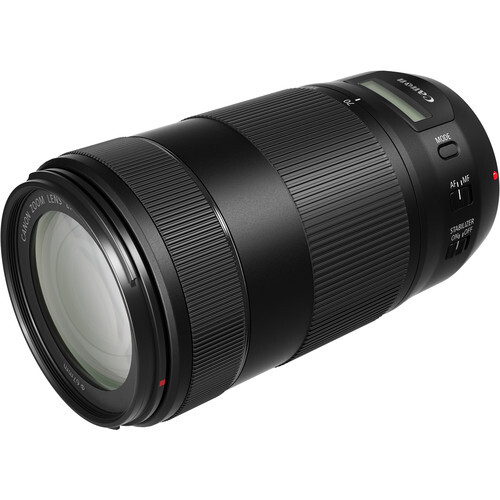
- Mount: Canon EF (DSLR)
- Price: $689
With the Sigma 150-600mm increasingly difficult to find new, this veteran DSLR lens has become the go-to option for photographers looking to adapt older glass to newer bodies. A unique LCD screen on the barrel displays focus distance and stabilization status. More importantly, it adapts flawlessly to Canon's mirrorless R-series cameras, maintaining full autofocus performance through the EF-RF adapter. For shooters with existing EF glass or those looking for proven reliability, this lens bridges generations beautifully.
Ideal for: DSLR owners and photographers adapting to Canon mirrorless.
Purchase here: Canon EF 70-300mm f/4-5.6 IS II USM
6. Olympus M.Zuiko Digital ED 75-300mm f/4.8-6.7 II
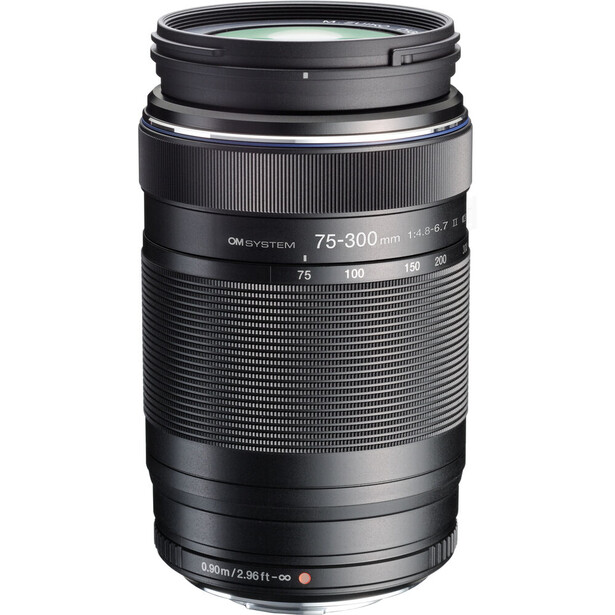
- Mount: Micro Four Thirds
- Price: $499
The numbers tell the story: 150-600mm equivalent reach in a lens that fits in a jacket pocket. This tiny telephoto punches absurdly above its size class, delivering usable images at distances that would require massive glass on larger formats. It lacks the weather-sealing of the Panasonic option above, limiting its utility in harsh conditions. But for travel photographers and hikers who obsess over pack weight, nothing else offers this much reach in this little space.
Ideal for: Travel photographers and hikers prioritizing minimal weight.
Purchase here: Olympus M.Zuiko Digital ED 75-300mm f/4.8-6.7 II
7. Canon RF-S 55-210mm f/5-7.1 IS STM
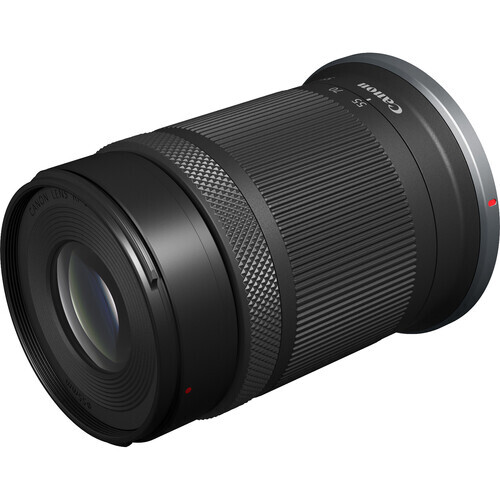
- Mount: Canon RF (APS-C)
- Price: $409
Canon designed this lens specifically for their APS-C mirrorless bodies like the EOS R50, EOS R10, and EOS R7. The crop factor delivers an effective 336mm at the long end, providing meaningful telephoto reach in a package weighing just 9.5 ounces. Image stabilization keeps shots sharp, and the STM motor focuses smoothly for both stills and video. For photographers entering the Canon ecosystem through their excellent crop-sensor bodies, this lens offers a natural and affordable step into telephoto territory.
Ideal for: Beginners and enthusiasts with Canon APS-C mirrorless cameras.
Purchase here: Canon RF-S 55-210mm f/5-7.1 IS STM
8. Nikon Z DX 50-250mm f/4.5-6.3 VR
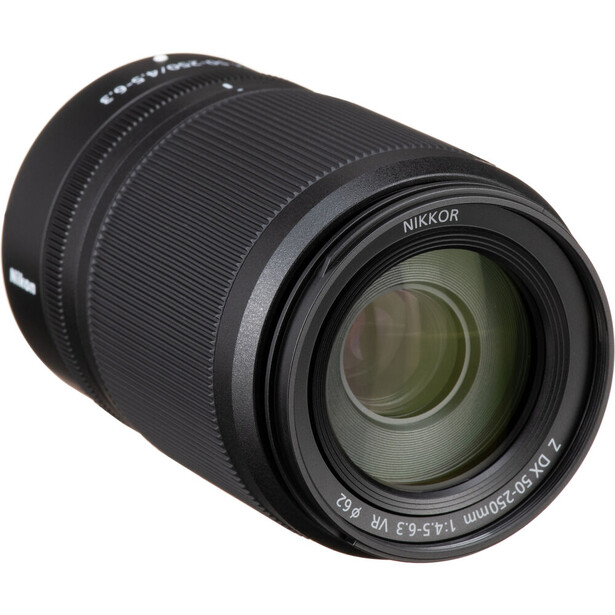
- Mount: Nikon Z (APS-C)
- Price: $407
Kit lenses rarely earn praise for optical quality, but this telephoto zoom breaks the mold. Paired with Nikon's Z50, Z30, or Zfc, it delivers equivalent reach of 375mm with sharpness that consistently impresses. Built-in vibration reduction handles camera shake at longer focal lengths, and the lightweight construction makes it easy to carry all day. At this price point, Nikon Z shooters get a legitimately capable telephoto that outperforms its humble kit-lens positioning.
Ideal for: Nikon Z crop-sensor photographers seeking quality and value.
Purchase here: Nikon Z DX 50-250mm f/4.5-6.3 VR
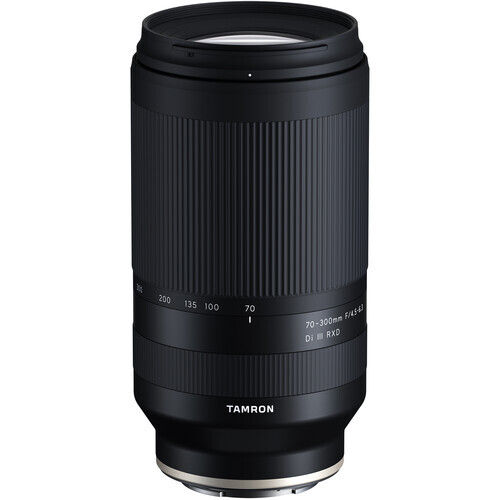
9. Tamron 70-300mm f/4.5-6.3 Di III RXD
- Mount: Sony E / Nikon Z
- Price: $399 (Sony) / $499 (Nikon)
Weight-conscious full frame shooters take note: at 1.2 pounds, this Tamron zoom is the lightest 70-300mm option for Sony and Nikon mirrorless systems. The catch is the absence of built-in stabilization, meaning it pairs best with bodies featuring in-body image stabilization. On cameras like the Sony a7 series or Nikon Z6/Z7, that limitation disappears entirely. For photographers prioritizing minimal kit weight without sacrificing full frame image quality, this lens fills a valuable niche.
Ideal for: Full frame shooters with IBIS-equipped bodies on tight budgets.
Purchase here: Tamron 70-300mm f/4.5-6.3 Di III RXD
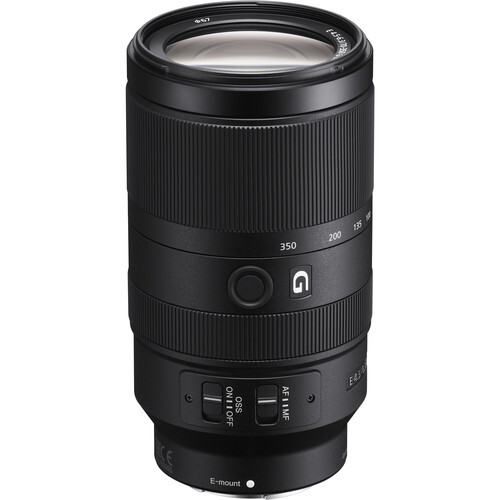
10. Sony E 70-350mm f/4.5-6.3 G OSS
- Mount: Sony E (APS-C)
- Price: $1,098
Sony APS-C photographers looking to move beyond kit glass will find everything they need here. The "G" designation signals serious optical intent, delivering the sharpness and contrast that separate casual snapshots from portfolio-worthy images. With the crop factor providing 525mm equivalent reach, distant subjects suddenly become accessible. The real story, though, is the XD Linear Motor autofocus system, which Sony adapted from their flagship full frame telephotos. It tracks erratic subjects with remarkable speed and accuracy, locking onto birds in flight or athletes mid-sprint without hesitation. Despite that professional-grade performance, the lens remains portable enough for travel and hiking. For crop-sensor Sony shooters ready to get serious about wildlife or sports, this represents the logical next step.
Ideal for: Sony APS-C wildlife and sports photographers ready to move beyond kit lenses.
Purchase here: Sony E 70-350mm f/4.5-6.3 G OSS
Final Thoughts
The telephoto lens market has never offered more value than it does right now. Optical quality that required professional budgets a decade ago now comes in packages costing under a grand. Whether you prioritize maximum reach, minimum weight, or the best optical performance your system allows, this list includes something that fits.
The "dream shot" is more accessible than ever.



Join the Fstoppers community for free
-
Post comments and join in the discussions
-
Browse the site ad-free
-
Share your work and get featured in the community
-
Compete in the photo contests for fun and prizes
6 Comments
Traded my Tamron 70-300 for their newer 50-300. Just a tiny bit larger and heavier, and very worthwhile. The thing is quite sharp all the way out to 300mm, and the quasi-macro close focusing is super-handy when you want to cover everything with just two lenses. Pairs nicely with Tamron's 20-40/2.8.
I'd add the Fujifilm 70-300. It hits all the marks + it pairs with the TC 1.4 with the least degradation I've seen when adding teleconverters. I don't miss my EF 100-400 Mk2 with this one.
A Sony APS-C lens of 2013 year E 10-18mm (15-27mm in 35mm) F4 OSS that can be used in Full Frame Mode at 12-18mm (18mm if the rear light shield is removed). this lens was before the A7 cameras. Why great, it is very small, has threads for filters and was 12mm 3 years before Sony FE 12-24mm F4 G (no OSS/IS) or the Sony FE 12- 24mm F2.8 GM both are big and heavy and require external filter holders to hold big filter glass and also the FE 14mm F1.8 also needs the same external filter holder.
This lens is still great and setting atop a panorama rig gets a 200+ degree Astro MW Arch faster and bright foreground because F4 is not a problem. The only plus with the two 12-24mm and 14mm is the need for faster SS's and also if on a 60MP camera also needs a faster SS and combined you get a very fast SS that makes a panorama at night faster less than 90s.
Another lens is the FE 24-240mm f3.5-6.3 OSS that if APS-C is selected you get a range of 36-360mm in camera crop but using the center of the sensor where AF is faster.
1 and 2. E 10-18mm at 12mm in 2015
3 2015 at 24mm and 4.2017 at 240mm FE 24-240mm f3.5-6.3 OSS
The topic is "high-performance telephoto lenses".
ummmm ... this whole article is about long telephoto lenses. I'm not understanding why you are commenting about wide angle zooms here.
Thank you, Alex, for putting together this excellent reference resource. There are a couple lenses here that I didn't even know existed, such as the Sony 70-350. I love when I can learn something new here!