

Photography has been revolutionized not just by cameras, but by the glass in front of them. While cameras capture the image, it's the lens that creates it: shaping light, defining character, and determining what's even possible to photograph. These five lenses didn't just improve image quality; they fundamentally transformed what photographers could do, how they could do it, and who could afford to do it.
1. Petzval Portrait Lens (1840): Mathematics Meets Photography
Before Joseph Petzval, portrait photography was essentially impossible. The available lenses were so slow that subjects had to sit motionless for minutes (sometimes held in place by metal braces) while the exposure crawled toward completion. Petzval, a mathematics professor in Vienna, approached lens design not with trial and error, but with rigorous calculation. The result was revolutionary.
Why It Changed Everything
- Speed Revolution: At f/3.6, it was approximately 20 times faster than existing lenses
- Portrait Industry Born: Reduced exposure times from minutes to seconds, making portrait photography commercially viable
- Mathematical Design: First lens designed using rigorous mathematical calculations rather than empirical experimentation
- Signature Look: Created the distinctive swirly bokeh that's still sought after today
The genius wasn't just in the speed. It was in the methodology. Petzval used advanced mathematical calculations to optimize the design before a single piece of glass was ground. This scientific approach was unprecedented in optics. His design featured four elements in two groups, carefully calculated to gather as much light as possible while maintaining acceptable sharpness in the center. The lens was manufactured by Voigtländer, who brought Petzval's mathematical design to commercial reality.
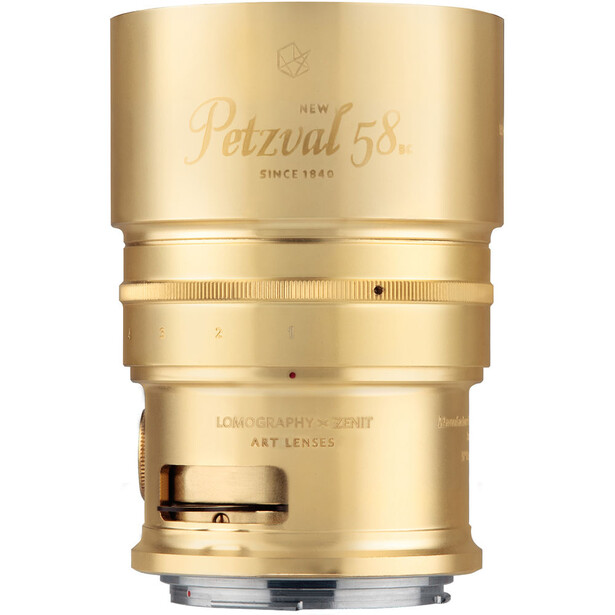
The design had a fascinating quirk: sharp center, soft edges, and a distinctive swirling bokeh pattern. This wasn't a flaw. It became a feature. The dreamy quality drew attention to the subject's face while the soft edges added an ethereal, artistic quality. Modern lens manufacturers still create "Petzval-style" lenses specifically to recreate this vintage aesthetic, proving that sometimes "imperfections" create character that pure technical perfection can't match.
The Legacy: Every portrait lens owes something to Petzval's work. The concept of a fast lens optimized for shallow depth of field? That started here. The idea that a lens could have a signature character beyond just sharpness? Petzval proved it. And the mathematical approach to lens design became the foundation of modern optical engineering.
2. The Cooke Triplet (1893): Three Elements That Changed Everything
Dennis Taylor's Cooke Triplet is the unsung hero of photographic history. Designed by Taylor for T. Cooke & Sons, it's not famous like the Noctilux or romantic like the Petzval, but it's arguably more important than either. This deceptively simple three-element design solved the fundamental problem that had plagued lens makers for decades: how to correct all the major optical aberrations without creating a lens so complex and expensive that nobody could afford it.
Why It Changed Everything
- Aberration Breakthrough: First lens design to adequately correct spherical aberration, coma, astigmatism, field curvature, and distortion simultaneously
- Elegant Simplicity: Achieved excellent correction with just three elements (two positive outer elements sandwiching a negative center element)
- Universal Foundation: Became the basis for countless lens designs for the next century, including the four-element Tessar (1902) which in turn was used for the legendary Leica Elmar
- Still Relevant: Variations of the three-element concept influenced countless compact camera designs throughout the 20th century
Here's what made the Triplet revolutionary: previous lenses either had good correction of one or two aberrations while suffering from others, or they achieved good correction through expensive, complex designs with many elements. Taylor's genius was finding the sweet spot: a design simple enough to manufacture affordably, yet sophisticated enough to deliver genuinely good optical performance across the frame.
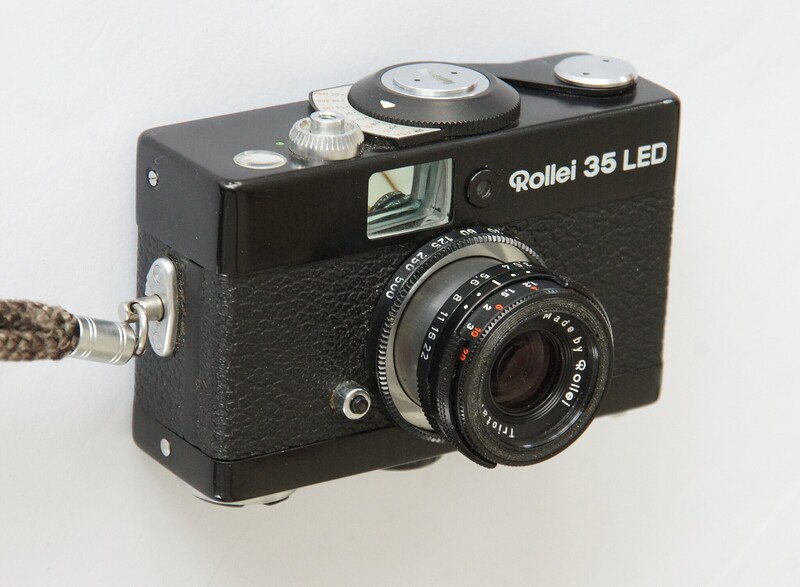
The patent was licensed to companies worldwide, and the Triplet design became the foundation for mass-market photography. When you picked up a Kodak Brownie or a basic 35mm camera in the mid-20th century, there was a good chance the lens was based on the Triplet design. Throughout the 20th century, countless simple cameras used variations of this elegant three-element formula.
The Hidden Influence: The Cooke Triplet proved that you didn't need a dozen elements to make a good lens. This philosophy influenced generations of lens designers who learned to think about optical design as an exercise in elegant problem-solving rather than brute-force complexity. Modern premium lenses might have 15+ elements, but the principle of "use only as many elements as you need" traces back to the Triplet.
3. Angénieux Retrofocus (1950): Solving the SLR's Fatal Flaw
Here's a problem that nearly killed the SLR: wide angle lenses below about 40mm didn't work at first. Not conceptually but mechanically. In a single-lens reflex camera, a mirror needs to flip up between the lens and the film. But wide angle lenses, by their optical nature, need to sit very close to the film plane. The mirror and the lens want to occupy the same physical space. It's an engineering impossibility, unless you completely rethink what a wide angle lens is.
Pierre Angénieux did exactly that. His retrofocus design (also called "inverted telephoto") was so counterintuitive that it seemed wrong. But it worked perfectly. The first lens using this revolutionary design was the Angénieux Retrofocus Type R1 35mm f/2.5, introduced in 1950 for the Exakta mount.
Why It Changed Everything
- SLR Wide Angles Made Possible: Solved the fundamental geometric problem that prevented wide angle lenses from working on SLR cameras
- Inverted Telephoto: Uses negative front group to "push back" the rear element, creating clearance for the mirror
- Industry Standard: Every wide angle SLR lens made since 1950 uses this principle
- Unexpected Benefits: Design also provided better close-focus performance and more even illumination across the frame
The concept is brilliant in its simplicity: a telephoto lens makes things appear closer by having a long focal length but a short physical length. An inverted telephoto does the opposite. It creates a wide angle of view but maintains a long physical length. The negative front element group diverges the light, then the positive rear group converges it back to focus. The result is a lens that acts like it's 24mm but physically extends like it's 50mm.
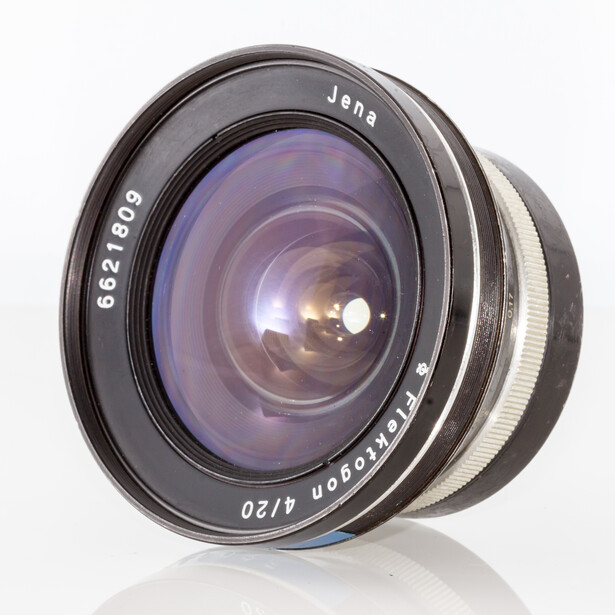
Angénieux's solution was so good that it became invisible. Today, every photographer who mounts a wide angle lens on a DSLR is using a retrofocus design. The mirror clearance problem made it essential. The fact that wide angle lenses "just work" on SLR cameras seems obvious, but it's only obvious because Angénieux solved an impossible problem 75 years ago.
The Modern Impact: Mirrorless cameras technically don't need retrofocus designs (without the mirror, there's no clearance problem), and some newer mirrorless wide angle designs do explore more symmetric optical formulas. However, lens manufacturers still often use retrofocus principles because the design offers other advantages: better close-focus capability, more room for optical stabilization systems, and improved control over field curvature. A solution to a 1950s mechanical problem proved to have optical benefits beyond its original purpose.
4. Voigtländer Zoomar 36-82mm f/2.8 (1959): The Zoom Revolution
Here's what photographers believed in 1959: if you wanted to change your perspective, you changed your lens. Wide angle? Swap to 35mm. Portrait? Mount the 85mm. Action? Reach for the 135mm. The idea of a single lens that could do all of this seemed like science fiction, or at best, a compromise that would sacrifice optical quality for convenience. Then Voigtländer released the Zoomar, and everything changed.
Why It Changed Everything
- First 35mm Zoom: First zoom lens ever designed for 35mm still photography
- Variable Focal Length Concept: Introduced the idea that one lens could replace multiple primes
- Constant Aperture: Maintained f/2.8 throughout the zoom range, a feat that impressed even skeptics
- Foundation for the Future: Proved that zoom lenses could deliver acceptable quality, paving the way for the zoom-dominated market we have today
The Zoomar was a beast. Designed by Dr. Frank G. Back, it featured 14 elements in 5 groups in an elaborate optical design, weighing nearly 2 pounds, and costing about as much as a good used car. The optical quality, while impressive for a zoom, couldn't quite match the best prime lenses of the era. And yet, it was revolutionary.
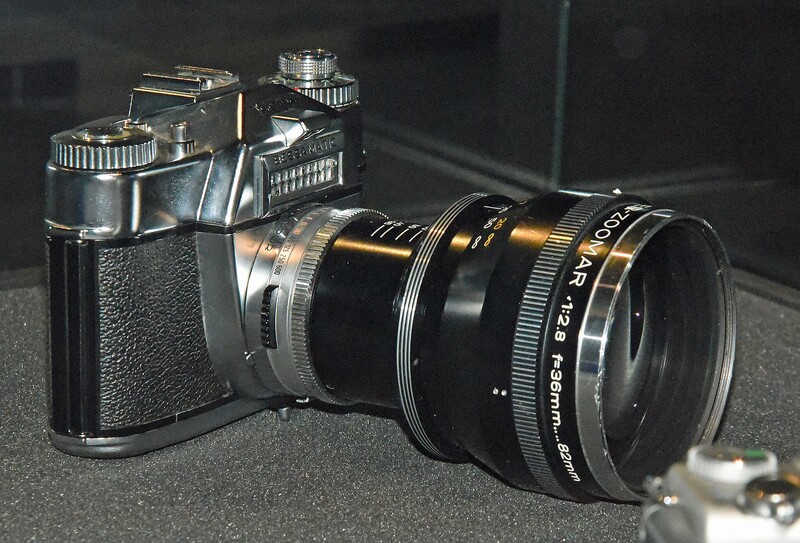
Dr. Frank G. Back disagreed. His Zoomar design used a sophisticated optical formula with multiple moving groups that maintained relative correction as elements shifted during zooming. The trick was keeping aberrations under control throughout the entire focal length range, something that required unprecedented optical calculations and precision manufacturing. The fact that it worked at all was remarkable. The fact that it was actually usable for professional work was shocking. Voigtländer manufactured the lens under license, bringing Back's revolutionary design to market.
The Adoption Curve: Professional photographers initially dismissed the Zoomar as a gimmick. Too heavy, too expensive, not sharp enough. Wedding photographers and photojournalists, however, saw something different: flexibility. Instead of missing shots while changing lenses, they could reframe on the fly. The ability to quickly adjust composition without moving proved invaluable for capturing decisive moments. Sports photographers discovered they could follow action and adjust framing simultaneously. The lens wasn't perfect, but it solved real problems.
Within a decade, every major lens manufacturer was developing zoom lenses. Nikon released the 43-86mm f/3.5 in 1963. Canon followed with the FL 55-135mm f/3.5 in 1964. Each generation improved on the concept: lighter, sharper, faster to use. By the 1980s, zoom lenses had become so good that many photographers stopped carrying prime lenses altogether. The optical compromises that once made zooms unacceptable had been engineered away.
The Irony: Today, a photographer with only prime lenses is making an artistic choice, not a practical one. The default assumption is that serious photographers use zooms: 24-70mm f/2.8 for general work, 70-200mm f/2.8 for portraits and sports. Premium zoom lenses now match or exceed the sharpness of primes from the 1960s. The "compromise" lens that purists once dismissed has become the professional standard.
The Modern Impact: Walk into any sporting event, wedding, or photojournalism assignment today, and you'll see zoom lenses everywhere. The 24-70mm f/2.8 is arguably the most popular professional lens ever made. The convenience that was once scorned as unprofessional is now essential. And it all traces back to a heavy, expensive, imperfect lens that dared to suggest photographers didn't need to carry a bag full of primes.
The Zoomar proved that convenience and quality weren't mutually exclusive. They were just engineering problems waiting to be solved. Every zoom lens on every camera today exists because Voigtländer took a chance on an idea that everyone said couldn't work well enough to matter.
5. SMC Pentax-AF 35-70mm f/2.8 (1981): The Autofocus Revolution Begins
The Pentax ME-F wasn't the best autofocus camera. Its system was slow, clunky, and quickly obsoleted by Canon and Minolta's better implementations. But the SMC Pentax-AF 35-70mm f/2.8 that launched alongside it was the first autofocus interchangeable lens for a 35mm SLR system. It fired the starting gun on the AF revolution that would completely transform professional photography within a decade.
Why It Changed Everything
- First AF Interchangeable Lens: First autofocus lens for an interchangeable lens 35mm SLR system
- Motor in Lens: Used in-lens motor design (later abandoned but validated the concept of lens-based AF)
- Proved AF Viability: Demonstrated that autofocus could work in an interchangeable lens system
- Started the Race: Triggered Canon, Nikon, and Minolta to develop competing AF systems
The timing was everything. Point-and-shoot cameras with autofocus had existed since the late 1970s, but they were fixed-lens cameras with simple optical systems. Everyone assumed that serious photography (the kind that required interchangeable lenses) would always be manual focus. The coordination required between the camera body, the lens, and the focus motor seemed too complex for the technology of the era.
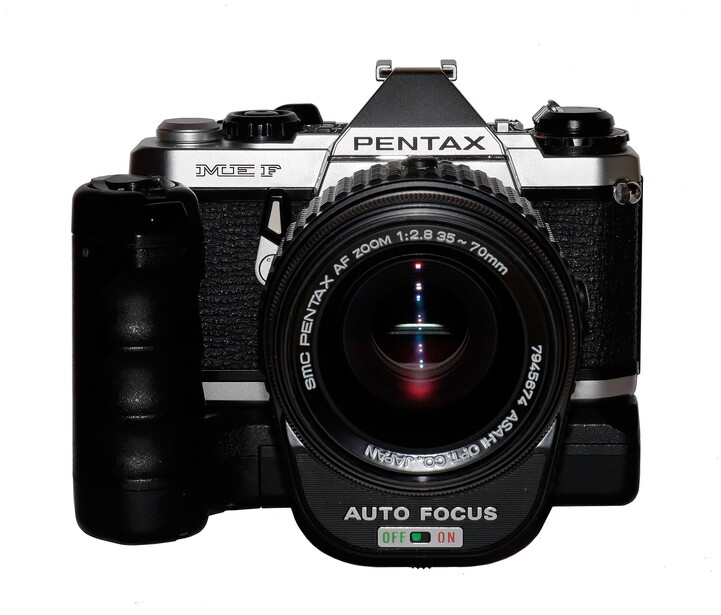
The industry's response was swift and dismissive. Professional photographers insisted they'd never trust a machine to focus for them. Camera reviewers called it a gimmick. Manual focus was a skill, they argued, and autofocus was for amateurs who couldn't be bothered to learn proper technique. These same arguments would be repeated for digital photography, mirrorless cameras, and computational photography. Professionals hate change, until the technology gets good enough that refusing to adopt it means losing work.
The Better Solutions: Pentax's in-lens motor approach was quickly superseded. Minolta released the Maxxum 7000 in 1985 with body-integrated autofocus motors that proved faster and more efficient. Canon's EOS system in 1987 refined the concept further with ultrasonic motors in the lenses. Nikon eventually switched to both approaches: body motors for older designs and in-lens motors for newer professional lenses.
But here's what the Pentax ME-F and its 35-70mm lens proved: autofocus was possible in a professional SLR system. It wasn't perfect yet, but it was viable. Within five years, every major camera manufacturer had autofocus systems. Within ten years, professional photographers were demanding faster autofocus performance. Within fifteen years, manual focus was essentially dead for mainstream photography.
The Irony: Pentax, the company that started the autofocus revolution, never dominated it. Their system was overtaken by competitors with better implementations. But they proved it could be done, and that proof was all the industry needed. Today, when a sports photographer captures a perfect shot of an athlete mid-flight, or a wildlife photographer nails focus on a bird in flight, they're using technology that traces back to a clunky 35-70mm zoom that most people have never heard of.
The Pattern Behind the Revolution
Each of these lenses succeeded by solving a problem that seemed fundamental to the nature of photography:
- Petzval: Made portraits fast enough to be practical
- Cooke Triplet: Made optical quality affordable
- Angénieux Retrofocus: Made wide angle SLR photography possible
- Voigtländer Zoomar: Made zoom lenses viable for professional photography
- SMC Pentax-AF 35-70mm: Made autofocus viable for serious photography
None of these lenses were perfect. The Petzval had poor edge performance, the Triplet was slow, the retrofocus added complexity, the Zoomar was heavy and had focus shift during zooming, and the Pentax AF needed its own battery pack. But they all changed fundamental assumptions about what lenses could do and how photography should work.
Lead image with Petzval lens by VGrigas (WMF), CC BY-SA 3.0.



Join the Fstoppers community for free
-
Post comments and join in the discussions
-
Browse the site ad-free
-
Share your work and get featured in the community
-
Compete in the photo contests for fun and prizes
3 Comments
great topic you did a good job providing an interesting read you should dig deeper and bring some of the brilliant lenses from the past in future articles
Why did the Pentax AF on/off switch face the front of the lens? Was the person being photographed supposed to operate it?
The one thing I believe changed a lot for film photography was my Canon Ftb of the mid 70's had a light meter and it's nettle placed in the center of the aperture circled needle gave great pitchers as long as the film speed/ASA is put in to the upper dial. If you had a camera without it built in you had to use a hand held light meter. A trick used was one shot with needle at the top of the circle, one in the middle and last at the bottom was the equal to todays digital bracketing.
Just carry one camera with day time film and another with night time film because rewinding film then reloading the next day having to right down the number of shots to reload to was very tricky the main reason for using only 12 shot film.
I still play with my old toys but back in the day I never realized the triangle of light just captured off the hip.
A nice thing today is when you get your film developed they give you a SD card or email you your images so you do not need to scan them also.
2. is a photo of a film photo I used with a flash back in the 80's
3. a film photo using the needle and aperture circle and hand held to boot
4. A hard one using a very old travel tripod and getting the needle some where on the target then rushing to position while the mechanical timer ran down.