Panasonic’s latest full frame body pushes harder on hybrid performance than spec sheets suggest. If you shoot both stills and video and want open gate modes, fast readout, and practical tools baked in, this is a serious step up.
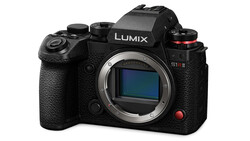
Coming to you from Bobby Tonelli, this practical video puts the Panasonic Lumix S1 II mirrorless camera through real jobs instead of desk tests. Tonelli stacks it against previous Lumix bodies and stresses the semi-stacked 24.1 MP sensor for rolling-shutter control. You get a feel for the ergonomics, the 5.76-million-dot EVF, and the touchscreen while he moves between stills and video.
The autofocus holds up for faces and eyes in everyday work, and it will keep up with concerts and casual action, though tracking fast subjects exposes the limits. Burst hits 70 fps, yet the buffer runs out sooner than you’d like when you lean on it. Tonelli also calls out the L-Mount ecosystem momentum and pairs the body with glass that actually ships, including the Lumix S 24-60mm f/2.8 as a lighter alternative to a standard 24-70mm and the tiny Lumix S 100mm f/2.8 Macro for detail work. The takeaway is simple: you can build a compact kit around this body without giving up capability.
Video is where the camera stretches. Open gate up to 5.1K 60p gives you room to crop for vertical and horizontal deliverables from one capture. You get 10-bit internal options, anamorphic tools with proper de-squeeze and stabilization, and real-time LUT workflow from Lumix Lab for fast looks on set. Tonelli grades V-Log in Resolve and pushes the point that you don’t need exotic rigs to get a clean, modern image. Overheating shows up once under direct sun during a 20-plus-minute take, then clears; switching from CFexpress to SD cards helps reduce thermal load, and the internal fan does its part.
Key Specs
-
24.1 MP effective full frame CMOS, partially stacked
-
5-axis in-body stabilization
-
Dual Native ISO 100 / 800, native 100–51,200 (50–204,800 extended)
-
Open gate internal recording up to 5.1K 60p, 4K/DCI 4K up to 120p
-
ProRes raw/ProRes raw HQ internal options, H.264/H.265 10-bit profiles
-
HDMI out 4:2:0 10-bit up to 4K 120p
-
Dual slots: CFexpress Type B and SD UHS-II
-
5.76-million-dot OLED EVF, 0.78x, free-angle 3-inch touchscreen
-
Up to 70 fps burst, blackout-free view with electronic shutter
-
5 GHz Wi-Fi, USB-C power/data, headphone and mic jacks
If you lean long, Tonelli spotlights the new Lumix S 100-500mm f/5-7.1 O.I.S.. It’s not fast, but stabilization paired with IBIS makes handheld wildlife or motorsport possible in daylight. A zoom-tension ring helps for smooth pushes in video and prevents lens creep. In low light, you’ll raise ISO, yet the body’s noise handling up to ISO 12,800 remains usable with a light touch in post. If you’d rather keep the kit smaller, the Lumix S 20-60mm f/3.5-5.6 still shines for wide angle work and travel.
Framing tools are a quiet win. Built-in frame markers let you compose for 9:16 and 16:9 at once, and open gate capture means you can leave the second take off the shot list. That saves time on set and reduces reshoots when a client changes the delivery mix late. Add the fan to keep long clips rolling, weather-sealing for tough days, and a vertical grip option when you need more runtime. Check out the video above for the full rundown from Tonelli.





Join the Fstoppers community for free
-
Post comments and join in the discussions
-
Browse the site ad-free
-
Share your work and get featured in the community
-
Compete in the photo contests for fun and prizes
No comments yet