Most photographers overbuy. They read that a camera shoots 8K raw video and 30 frames per second on a stacked sensor, they picture themselves needing all of it, and they spend a thousand dollars chasing headroom they will never touch. The truth the spec sheets bury is that the 2026 camera market is so good that the wrong camera for you is almost never a bad camera, just a mismatched one. A 66-megapixel landscape body and a 24-megapixel speed body can sit at the same price and both be excellent. Picking correctly comes down to what you photograph, how large you print, and how much weight you will carry.
We have organized this guide by the photographer, not the sensor. Three questions decide almost every camera purchase: how much resolution you genuinely need, how fast the subject in front of you moves, and how deep and affordable the lens system behind the body is. Everything else, the video specs, the burst rates you will use twice a year, the megapixel bragging rights, is secondary in a stills-first guide.
Prices below are for the body only and shift with rebates, so treat them as a snapshot. Every pick carries a note on where it sits in its product cycle, because buying a body six months before its replacement lands is the easiest money to lose in photography. Where we have reviewed a camera hands-on, we link the review; where we have not, we say so plainly. If you are buying your first camera, skip to the beginners entry and then read our guide to the best cameras for beginners, because the calculus is different at that level.
At a Glance
- Best Overall: Canon EOS R6 Mark III
- Best Full Frame All-Rounder: Sony a7 V
- Best APS-C: Fujifilm X-T5
- Best for Professionals: Nikon Z8
- Best High-Resolution: Sony a7R VI
- Best for Enthusiasts: Nikon Z6 III
- Best Value: Nikon Z5 II
- Best Compact and Travel Camera: OM System OM-3
- Best for Beginners: Nikon Z50 II
Best Overall: Canon EOS R6 Mark III
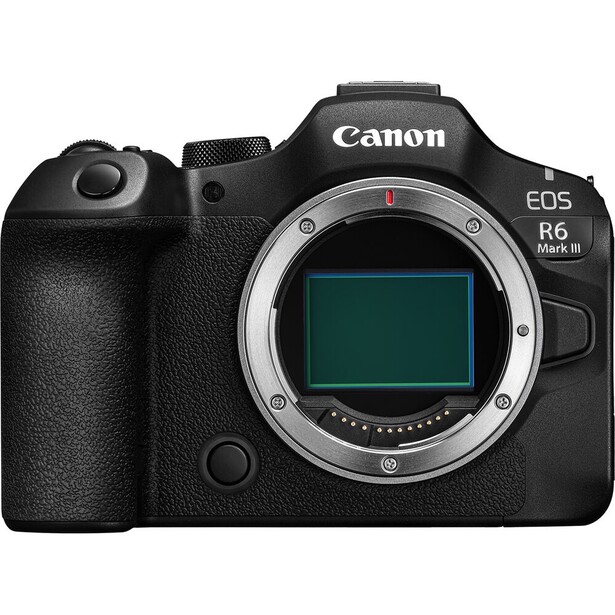
- Sensor: 32.5 MP full frame CMOS
- Stabilization: up to 8.5 stops in-body, 5-axis
- Continuous shooting: 40 fps electronic, 12 fps mechanical
- Autofocus: Dual Pixel CMOS AF II with subject detection
- Viewfinder: 3.69m-dot OLED, 0.76x
- Storage: 1x CFexpress Type B, 1x SD UHS-II
- Weight: 699 g with battery
- Price: $2,799 (B&H)
The Canon EOS R6 Mark III wins the overall slot for the least glamorous reason imaginable: it is the camera that gets in the way least. When we put it through a full hands-on review, we found that Canon optimized rather than maximized. The sensor climbed from 24 to 32.5 megapixels, the sweet spot where you can crop hard, print large, and still keep files that do not choke your Lightroom catalog. It runs cool, the battery lasts through a long event, and the autofocus locks with the confidence that lets you stop thinking about focus.
What separates it from the spec-chasers is behavior under pressure. The buffer is deep because it writes to CFexpress Type B, so you can hold a 40 fps electronic burst on a moving subject without the camera stalling mid-sequence. Dual Pixel CMOS AF II identifies people, animals, and vehicles and stays glued to an eye across erratic movement, and stabilization rated up to 8.5 stops means handheld work in dim receptions without reaching for a tripod. It arrived in late 2025 as the newest body in Canon's midrange line, so nothing is queued to replace it and no discount is coming soon.
This is the camera for the working photographer who values a smooth day over a bragging-rights spec sheet: wedding and event shooters, portrait photographers, anyone who wants one body that handles a paid job without drama. It is less compelling if you print enormous and would rather have 45 or 66 megapixels. RF glass also stays costly and largely closed to third-party makers, so your total spend runs higher than the body price suggests. If a smooth working day is worth more than a bigger number on the box, check the current price of the Canon EOS R6 Mark III at B&H.
Read our full review: Canon EOS R6 Mark III: Midrange Powerhouse for 2025
What We Like
- 32.5 MP hits the resolution sweet spot for cropping and printing
- Deep buffer and 40 fps bursts that do not stall
- Excellent battery life and thermal management for long days
- Class-leading subject-detection autofocus
What Could Be Better
- RF lenses are expensive and third-party options are limited
- Not the resolution tool for large-format landscape or studio work
- Priced against strong midrange rivals
Best Full Frame All-Rounder: Sony a7 V
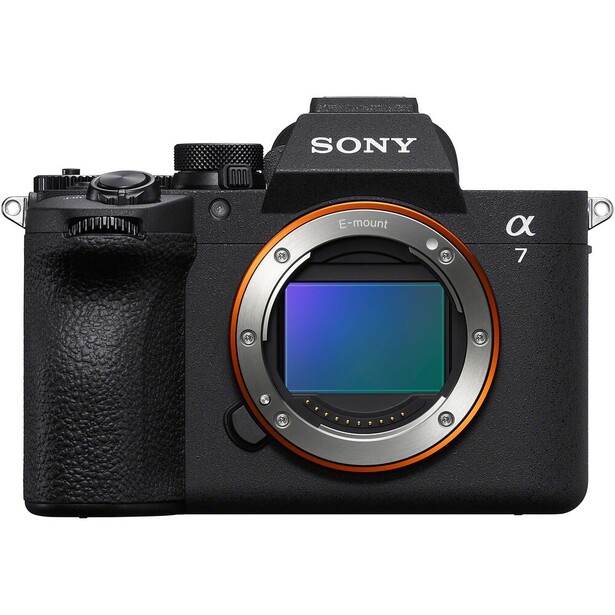
- Sensor: 33 MP full frame partially stacked BSI CMOS
- Stabilization: up to 7.5 stops in-body, 5-axis
- Continuous shooting: 30 fps electronic with 14-bit raw, blackout-free
- Autofocus: 759-point phase detection, AI subject recognition
- Viewfinder: 3.69m-dot OLED, 0.78x
- Storage: 1x CFexpress Type A/SD, 1x SD UHS-II
- Weight: 695 g with battery
- Price: $2,898 (B&H)
If the Canon is the camera that gets out of your way, the Sony a7 V is the one that quietly does everything. Its headline upgrade is a 33-megapixel partially stacked sensor, and when we tested it, the architecture mattered more than the resolution figure. Faster readout means the electronic shutter stops being a compromise: 30 fps blackout-free bursts with full 14-bit raw, and rolling shutter tamed enough that silent shooting becomes the default rather than a workaround. Our reviewer spent a week shooting it in Aruba, in hard sun and on the water, and came home treating the silent shutter as his standard setting.
It earns the all-rounder title on autofocus and ecosystem. The AI processing unit finds people, animals, and birds noticeably faster than the a7 IV did, and E-mount remains the deepest affordable lens catalog in full frame, with Sigma, Tamron, and Viltrox filling every gap Sony leaves. The a7 V landed in late 2025, and Sony leaves three years or more between a7 generations, so this one is early in its life.
Be honest about where it lands. This is a photo-first camera and the video side is deliberately clipped: no open-gate mode, no 6K, no internal raw, all features Canon, Panasonic, and Fujifilm now offer around this price. If your work leans hybrid, that stings. Sony's menus and ergonomics have improved but still feel more engineered than warm next to Nikon's. For a stills shooter who wants one full frame body for nearly any assignment, check the current price of the Sony a7 V at B&H.
Read our full review: Sony a7 V Real-World Review: One Week in Aruba
What We Like
- Partially stacked sensor makes the silent shutter a real default
- 30 fps bursts with full 14-bit raw
- AI subject recognition that holds people, animals, and birds
- The deepest affordable lens ecosystem in full frame
What Could Be Better
- No open-gate, no 6K, no internal raw video
- Ergonomics and menus lag Nikon and Fujifilm for feel
- Priced at the top of the midrange tier
Best APS-C: Fujifilm X-T5
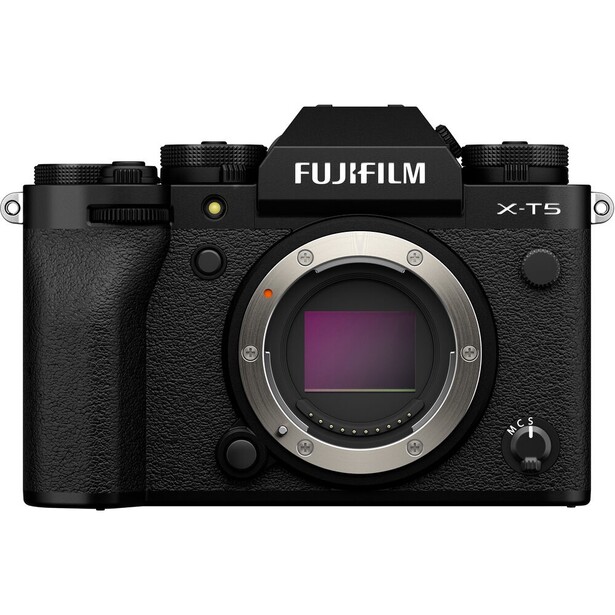
- Sensor: 40.2 MP APS-C X-Trans CMOS 5 HR
- Stabilization: up to 7.0 stops in-body, 5-axis
- Continuous shooting: 15 fps mechanical, 20 fps electronic (1.29x crop)
- Autofocus: 425-point phase detection, subject detection, down to -7 EV
- Viewfinder: 3.69m-dot OLED, 0.80x
- Storage: dual SD UHS-II
- Weight: 557 g with battery
- Price: $1,999 (B&H)
Crop-sensor cameras are supposed to be the compromise you accept to save money. On the Fujifilm X-T5, the compromise is hard to find. Its 40.2-megapixel X-Trans sensor resolves more detail than most full frame bodies, and it does it in a compact camera built around real dials for shutter speed, ISO, and exposure compensation. Setting exposure with your hands, before the camera even wakes, is a faster and more deliberate way to shoot.
We reviewed the X-T5 after ten months of shooting weddings, events, and travel, and our reviewer never regretted buying one. The resolution buys cropping latitude an APS-C body has no business offering, the film simulations deliver finished color straight out of the camera, and the X-mount primes make for a travel kit smaller than any full frame equivalent while giving up very little in a print. Two limits follow from the design: the 425-point autofocus handles portraits and street well but trails Sony and Nikon on fast, erratic action, and high-ISO files fall behind full frame once the light drops.
This is also the oldest body in the guide, shipping since late 2022, and Fujifilm is rumored to announce an X-T6 in the second half of 2026. Nothing is official and nothing is shipping, so the X-T5 is still the camera to buy today, but it is squarely late in its cycle. That cuts both ways: the discounts are real, and if you would resent watching a successor land three months after your purchase, waiting until Fujifilm speaks is defensible. Budget for sharp XF primes over the kit zoom, because 40 megapixels on APS-C punishes soft glass. For street, travel, and everyday work by someone who values the tactile experience and in-camera color, nothing this size competes, so check the current price of the Fujifilm X-T5 at B&H.
What We Like
- 40.2 MP resolves more than most full frame bodies
- Real shutter, ISO, and exposure dials for deliberate shooting
- Excellent film simulations for finished color in-camera
- Compact, light, and paired with a deep prime catalog
What Could Be Better
- High-ISO performance trails full frame
- Dense sensor demands sharp lenses to exploit
- Autofocus tracking is a step behind Sony and Nikon for fast action
- Late in its cycle, with a successor rumored for late 2026
Best for Professionals: Nikon Z8
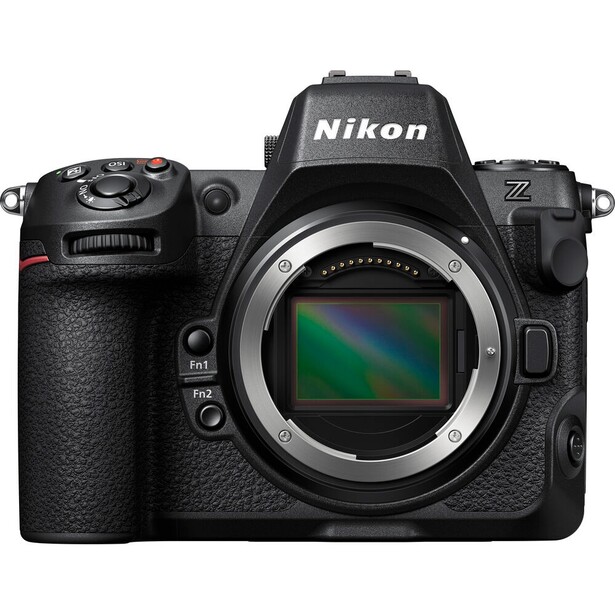
- Sensor: 45.7 MP full frame stacked BSI CMOS
- Stabilization: up to 6.0 stops in-body with focus-point VR
- Continuous shooting: 20 fps raw, 30 fps JPEG (120 fps at 11 MP)
- Autofocus: 493-point phase detection, subject detection across nine types
- Viewfinder: 3.69m-dot OLED
- Storage: 1x CFexpress Type B, 1x SD UHS-II
- Weight: 910 g with battery
- Price: $3,696.95 (B&H)
Take the flagship Z9, cut off the integrated grip, and you have the Nikon Z8. It carries the same 45.7-megapixel stacked sensor and EXPEED 7 processor as Nikon's sports flagship: no mechanical shutter at all, no rolling shutter to speak of, and 20 fps raw bursts with full autofocus that hold for hundreds of frames onto CFexpress. For the wedding, wildlife, or commercial photographer who needs one body to do everything at a professional standard, it is the most complete tool here.
The stacked sensor is the whole argument. It gives you a silent electronic shutter with no distortion penalty, a blackout-free viewfinder that keeps the action visible through a burst, and readout fast enough that flash sync and fast subjects behave predictably. The 493-point subject detection, inherited from the Z9, tracks eyes and animals with the reliability that separates a professional keeper rate from an enthusiast's. When one of our writers moved to the Z8 after seven years on Sony, what sold him was not a spec but the handling: the grip, the illuminated buttons, a menu he could navigate without a manual.
Size and money are what you pay for that. At 910 g the Z8 is noticeably heavier than the R6 Mark III or a7 V, and it is a serious financial step up. Battery life is workable but shorter than the gripped Z9, so a spare is not optional. It is also the pick most likely to be replaced next: it has shipped since 2023, a Z8 II is rumored but not announced, and Nikon has kept this body current through firmware instead. This is the one entry here where waiting might be rewarded. For the working professional who wants flagship performance without the flagship's bulk, check the current price of the Nikon Z8 at B&H. Also consider the Canon EOS R5 Mark II if you are invested in RF glass and want a similar 45-megapixel stacked-sensor pro body.
Read our full review: Trying Nikon After Again After 7 Years With Sony
What We Like
- Flagship Z9 internals in a smaller body
- Stacked sensor with no mechanical shutter and no rolling-shutter penalty
- 45.7 MP that prints large and crops hard
- Professional build and weather-sealing
What Could Be Better
- Heavy and large next to midrange full frame bodies
- Shorter battery life than the gripped Z9
- A significant price step up
- The oldest pro body here, with a successor rumored
Best High-Resolution: Sony a7R VI
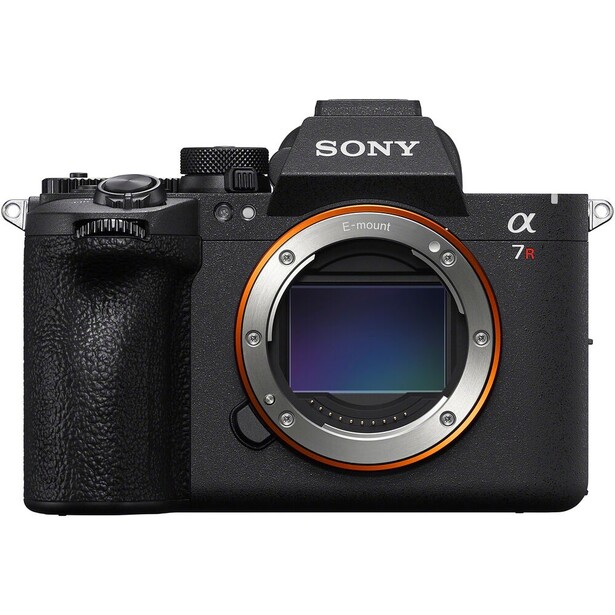
- Sensor: 66.8 MP full frame stacked BSI Exmor RS CMOS
- Stabilization: up to 8.5 stops in-body, 5-axis
- Continuous shooting: up to 30 fps electronic, blackout-free
- Autofocus: 759-point phase detection, AI subject recognition
- Viewfinder: 9.44m-dot OLED, 0.9x
- Storage: dual CFexpress Type A / SD UHS-II
- Weight: 713 g with battery and card
- Price: $4,498 (B&H)
Resolution cameras usually make you choose between detail and speed. The Sony a7R VI is the first that does not. Its 66.8-megapixel sensor is the highest-resolution full frame chip you can buy, and because it is fully stacked, it also shoots 30 fps blackout-free with autofocus tracking, a combination that did not exist at this resolution before. For the landscape, architecture, or studio photographer who prints huge and crops into fine detail, this is the most sensor you can put behind a lens short of medium format.
The numbers back up the ambition. Sony rates it at 16 stops of dynamic range, a stop more than the a7R V and even the a1 II flagship, which shows up as cleaner shadow recovery. There is a practical trick hidden in the resolution: crop to APS-C and you still have 28 megapixels, effectively a second camera for reach without a second body. Announced in 2026, it is the newest camera here, with nothing to wait for. It pairs naturally with the deliberate, tripod-based work covered in Fstoppers' Photographing the World landscape tutorial.
The compromises come with the firehose of pixels. Files are enormous, they demand fast cards and a serious editing computer, and they punish soft technique and mediocre lenses. When we reviewed it, we found uncompressed raw is gone, along with the medium and small lossless-compressed raw sizes the a7R V offered, which Sony may or may not restore in firmware. This is not a camera for low-light events, where the high-ISO files give out sooner than a 24-megapixel body's do. For the photographer whose work lives and dies on ultimate detail, check the current price of the Sony a7R VI at B&H.
Read our full review: Sony a7R VI Beats Sony's Own Flagship
What We Like
- 66.8 MP, the highest-resolution full frame sensor available
- 30 fps bursts despite the resolution, thanks to the stacked design
- 16 stops of dynamic range with clean shadow recovery
- 28 MP left over in APS-C crop mode for reach
What Could Be Better
- Enormous files demand fast storage and a strong computer
- Uncompressed and smaller raw options dropped from the a7R V
- Overkill and a liability for low-light or fast work
Best for Enthusiasts: Nikon Z6 III
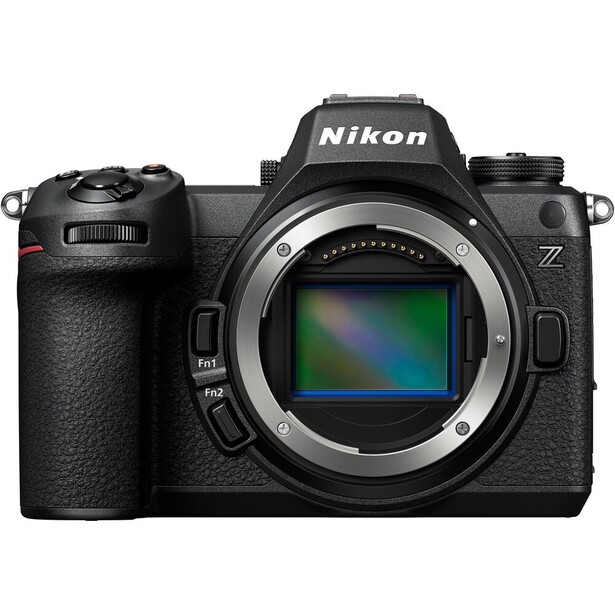
- Sensor: 24.5 MP full frame partially stacked CMOS
- Stabilization: up to 8.0 stops in-body with focus-point VR
- Continuous shooting: 20 fps raw, up to 120 fps JPEG at reduced resolution
- Autofocus: 273-point phase detection, subject detection, down to -10 EV
- Viewfinder: 5.76m-dot OLED, 4,000 nits
- Storage: 1x CFexpress Type B, 1x SD UHS-II
- Weight: 760 g with battery
- Price: $2,196.95 (B&H)
Flagship technology took three or four years to trickle down to a price a hobbyist could justify. The Nikon Z6 III is what happens when it arrives early instead. Its 24.5-megapixel sensor is the world's first partially stacked design, with fast-readout circuitry top and bottom and a conventional BSI center, and it reads out roughly 3.5 times faster than the Z6 II did. That buys reduced rolling shutter, the Z8 subject-tracking algorithms in a far cheaper body, and autofocus down to -10 EV.
We have not put the Z6 III through a full Fstoppers review, so this entry rests on verified specs and the camera's documented design. Two things stand out. The first is the viewfinder: at 5.76 million dots and 4,000 nits, it is the brightest EVF Nikon has shipped, and in harsh midday sun that brightness is the difference between composing and guessing. The second is the control layout: twin command dials, a focus joystick, a deep grip, a vari-angle screen. The 24.5 megapixels keep files manageable, and 6K internal raw makes it a genuine hybrid. Released in 2024, it sits mid-cycle with no successor announced, and Nikon's 2026 attention is aimed at its flagship and APS-C lines instead.
The honest limitation is resolution relative to price. Twenty-four megapixels is plenty for prints and screens, but if you crop aggressively or print mural-sized, the Fujifilm X-T5 and the full frame resolution bodies give you more for similar money. Low-light performance is very good without being the leap the marketing implies, since the stacked circuitry buys speed, not cleaner shadows. For the enthusiast who wants speed, a spectacular viewfinder, and pro-grade autofocus without paying pro-body prices, check the current price of the Nikon Z6 III at B&H.
What We Like
- Partially stacked sensor with Z8-derived autofocus
- The brightest, highest-resolution viewfinder Nikon has made
- Excellent handling with twin dials and a deep grip
- 6K internal raw video for hybrid shooters
What Could Be Better
- 24.5 MP is modest for heavy cropping or mural prints
- Low-light gains are real but smaller than the hype
- CFexpress Type B adds cost to the card budget
Best Value: Nikon Z5 II
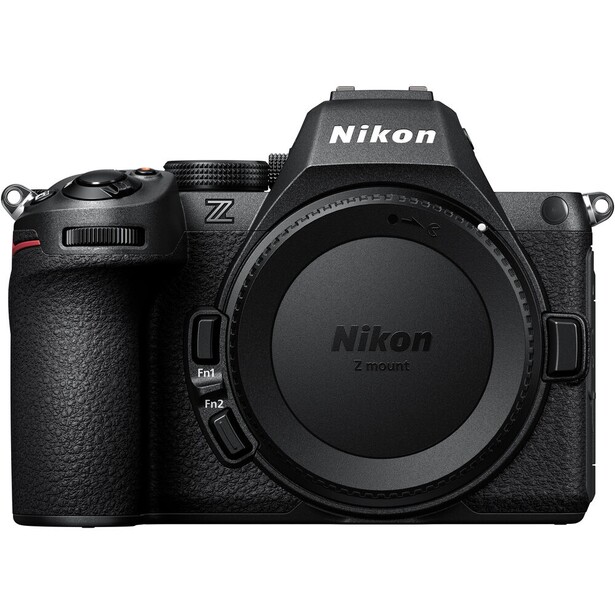
- Sensor: 24.5 MP full frame BSI CMOS
- Stabilization: up to 7.5 stops in-body with focus-point VR
- Continuous shooting: up to 14 fps mechanical, 30 fps in silent JPEG mode
- Autofocus: subject detection across nine categories, down to -10 EV
- Viewfinder: 3.69m-dot OLED, 3,000 nits
- Storage: dual SD UHS-II
- Weight: 700 g with battery
- Price: $1,696.95 (B&H)
Nikon put its flagship EXPEED 7 processor into an entry-level full frame body and, unusually, did not cripple it to protect the pricier models. That is the case for the Nikon Z5 II, and it is a strong one. The processor brings the same subject-detection autofocus found in the Z8 to a camera costing less than half what the pro bodies do. When we tested it in the field, including on wildlife, the autofocus punched far above the price, and the bright 3,000-nit viewfinder was a genuine surprise at this level.
For a photographer stepping up to full frame, or a working shooter who wants a capable second body, the value is hard to overstate. You get a 24.5-megapixel BSI sensor with strong high-ISO performance, dual SD slots so you can skip expensive CFexpress cards, and 12-bit raw video recorded internally to those same cards. It handles like a shrunken Z6 III and mounts the entire Nikon Z lens system, including the S-line glass you will buy later. Released in 2025, it is early in its life and the cheapest new full frame body Nikon sells.
The compromises are the ones you would expect at the price, and they are minor. The sensor is not stacked, so fast electronic-shutter shooting shows more rolling shutter than the Z6 III does, and 4K/60p comes with a DX crop. Buffer depth and burst speed trail the higher tiers, and the 14 fps mechanical ceiling will frustrate anyone photographing birds in flight every weekend. If you want real full frame image quality and flagship autofocus for the least money, check the current price of the Nikon Z5 II at B&H.
Read our full review: Nikon Z5 II Review: Affordable Full Frame Power
What We Like
- Flagship EXPEED 7 autofocus at an entry price
- Bright 3,000-nit viewfinder borrowed from higher tiers
- Dual SD slots keep card costs down
- Internal 12-bit raw video
What Could Be Better
- Non-stacked sensor shows more rolling shutter
- 4K/60p carries a DX crop
- Burst depth and speed trail the higher tiers
Best Compact and Travel Camera: OM System OM-3
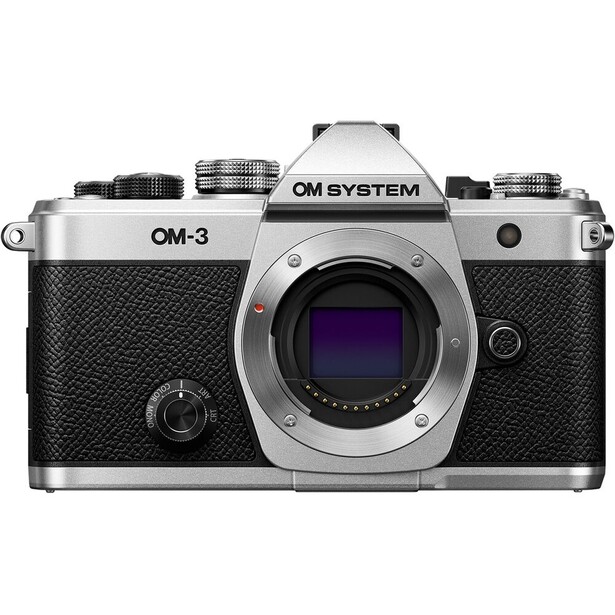
- Sensor: 20.4 MP Four Thirds stacked BSI Live MOS
- Stabilization: 6.5 stops in-body, up to 7.5 stops with Sync IS
- Continuous shooting: up to 120 fps electronic
- Autofocus: 1,053-point cross-type phase detection
- Viewfinder: 2.36m-dot OLED
- Storage: 1x SD UHS-II
- Weight: 496 g with battery
- Price: $1,699.99 (B&H)
The OM System OM-3 answers a question the full frame cameras dodge: what do you carry when the priority is being light, tough, and ready for weather? Its Micro Four Thirds sensor is smaller, which is the point, because it lets the whole system shrink to a fraction of full frame size and weight. A complete travel kit with two or three lenses fits in a small sling, and the body carries a full IP53 weather-sealing rating rather than the vague weather-resistant language most rivals hide behind.
What makes it more than a pretty retro body is the computational photography borrowed from the flagship OM-1 Mark II and reached through a dedicated front dial. Live ND simulates long exposures for silky water without a filter, handheld high-resolution mode stacks frames into far more detail than 20 megapixels suggests, and in-camera focus stacking and Live Composite handle macro and light-trail work other systems make you assemble in software. When we reviewed it, that dial changed how we shot: those modes stop being a menu you forget and become something you reach for. Announced in early 2025, it is current, and OM System's 2026 rumors point at the OM-1 line rather than this one.
The tradeoff is the sensor size itself. At 20.4 megapixels on a Four Thirds chip, it gives up low-light headroom and shallow-background potential to APS-C and full frame, and the retro body deliberately omits a deep grip and a rear joystick. There is one card slot, which rules it out for anyone who insists on in-camera backup on paid work, and it is not the camera for available-light portraits with creamy bokeh. For the traveler, hiker, and street photographer who values a light, weatherproof, endlessly clever kit over sensor size, check the current price of the OM System OM-3 at B&H.
Read our full review: The Sexy OM-3: So Much More Than a Body to Die For
What We Like
- True IP53 weather-sealing in a small body
- Tiny, light system with pocketable lenses
- Computational tools like Live ND and handheld high-res
- Class-leading in-body stabilization
What Could Be Better
- Smaller sensor gives up low-light and background blur
- No deep grip or rear joystick
- A single card slot
- Priced against larger-sensor rivals
Best for Beginners: Nikon Z50 II
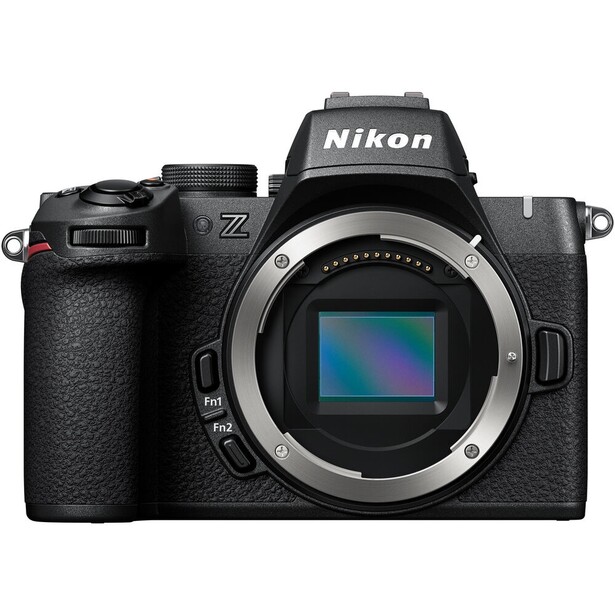
- Sensor: 20.9 MP DX-format (APS-C) CMOS
- Stabilization: none in-body; relies on lens VR
- Continuous shooting: 30 fps JPEG electronic, 11 fps raw
- Autofocus: subject detection across nine subject types
- Viewfinder: 2.36m-dot OLED
- Storage: 1x SD UHS-II
- Weight: 550 g with battery
- Price: $1,006.95 (B&H)
Most first cameras are built down to a price and quietly cut the part that matters most to a new photographer, which is autofocus. The Nikon Z50 II does the opposite, borrowing the EXPEED 7 processor from Nikon's flagships and dragging flagship-grade subject detection down to an entry price. Point it at a person, a pet, or a passing car and it stays locked on the eye, which for a parent chasing a toddler across a yard is the difference between keepers and near-misses. A dedicated Picture Control button lets a beginner audition color looks in real time, a good way to learn how images can feel without opening a computer.
We have not run a full Fstoppers review of this body, so we are writing from its verified specs rather than our own testing. Two things on that sheet matter most for a first camera: the processor is the same silicon in bodies costing four times as much, and the Z DX mount accepts every full frame Nikon Z lens, so nothing you buy here is wasted when you move up to a Z5 II or Z6 III. It shipped in late 2024 and remains Nikon's current DX enthusiast body; a 2026 APS-C refresh is expected, but the reporting points at a replacement for the vlogging-oriented Z30, not this one.
The limitations are real if minor at this level. There is no in-body stabilization, so low-light handheld shots lean entirely on the lens' VR, 4K/60p carries a 1.5x crop, and the native DX lens selection is thin enough that you will buy full frame Z glass sooner than you expect. This entry is deliberately condensed, because choosing a first camera turns on questions the rest of this guide does not address. We work through all of them, with budget picks, video-first bodies, and used-market advice, in our guide to the best cameras for beginners. If you want one body that will not hold you back as you improve, check the current price of the Nikon Z50 II at B&H.
What We Like
- Flagship-derived autofocus at an entry price
- Picture Control button makes learning color intuitive
- Full compatibility with Nikon's full frame Z lenses
- Light enough to carry every day while you learn
What Could Be Better
- No in-body stabilization
- 4K/60p incurs a 1.5x crop
- Native DX lens selection is still limited
- A single card slot
How to Choose a Camera for Photography
Start with resolution, and be ruthlessly honest about how much you need. Twenty-four megapixels prints beautifully to 24 by 36 inches and leaves room to crop, which covers the vast majority of what most photographers ever do. You only need 45 or 66 megapixels if you routinely print mural-sized, crop deep into wildlife frames, or shoot commercial work where a client zooms into detail. More resolution is not free: larger files, slower editing, a more expensive computer, and lenses sharp enough to resolve it.
Next, match the sensor's speed to your subject. If you photograph fast, unpredictable action, weddings, sports, wildlife, kids, a stacked or partially stacked sensor like the one in the Z8, a7 V, or Z6 III earns its cost through a silent shutter, minimal rolling distortion, and blackout-free bursts. If your subjects hold still, landscapes, portraits, products, that speed is money spent on nothing, and a high-resolution or value body serves you better. It is the same axis our mirrorless cameras guide sorts the wider market along.
Then look at the lens system, which is the part beginners skip and regret. The body you buy now will be replaced in a few years, but the lenses will outlast it and cost more over time. Sony's E-mount has the deepest and most affordable catalog, boosted by Sigma, Tamron, and Viltrox. Nikon Z is strong and increasingly open to third parties, Canon RF is superb but expensive, and Micro Four Thirds gives you the smallest, cheapest lenses of all. Price out the two or three lenses you want on a mount before you commit to its body.
Finally, weigh size, weather-sealing, and timing. The best camera is the one you will carry, and a lighter, sealed body you take everywhere beats a heavier one that stays home when the forecast turns. Timing is the lever most buyers ignore: a body late in its cycle, like the X-T5 or the Z8, sells at its deepest discount right before a successor lands, which is either a bargain or a regret depending on how long you keep it.
What We're Looking For
Our picks weigh how well each camera's resolution, sensor speed, autofocus, and lens ecosystem match a specific kind of photographer, rather than how it scores on a spec sheet in isolation. Most picks here come from gear our writers have used and reviewed hands-on, and those entries link the review; where we have not tested a camera ourselves, the entry says so and is written from verified specs and the camera's documented design. Every specification was checked against current manufacturer and retailer sources, and prices are the current B&H figure for the body only.
Frequently Asked Questions
How many megapixels do I actually need?
For almost everyone, 24 megapixels is plenty. It prints cleanly to 24 by 36 inches and leaves room to crop. You only need 45 or more if you print mural-sized, crop heavily into wildlife frames, or shoot commercial work where clients inspect fine detail. Extra resolution costs you storage and editing speed, so buy it only if your work uses it.
Is full frame better than APS-C or Micro Four Thirds?
Not in a way most photographers will notice. Full frame gives you better low-light performance and shallower depth of field, but a 40-megapixel APS-C camera like the Fujifilm X-T5 out-resolves many full frame bodies, and Micro Four Thirds wins decisively on size. The right sensor size depends on which of low light, portability, and budget you care about most.
Should I buy a stacked-sensor camera?
Only if you shoot fast action. A stacked sensor buys a distortion-free silent shutter, blackout-free bursts, and fast readout, which matter for weddings, sports, and wildlife. If you shoot landscapes, portraits, or products, you are paying for speed you will never use, and a high-resolution or value body is the smarter spend.
Is the Canon EOS R6 Mark III worth it in 2026?
For most working photographers, yes. Its 32.5-megapixel sensor, deep buffer, long battery life, and reliable autofocus make it the least frustrating camera to shoot a paid job with. Pass on it only if you print large enough to need more resolution, or shoot enough video to want open-gate recording.
Should I wait for the next model?
Only if your pick is late in its cycle. The X-T5 and the Z8 are the two here with successors rumored, and neither is official or shipping, so buying today is reasonable for both. The rest are recent enough that waiting buys you nothing but a year without a camera.
Fstoppers may earn a commission from purchases made through links in this article. Our picks are made independently by our editorial team.