
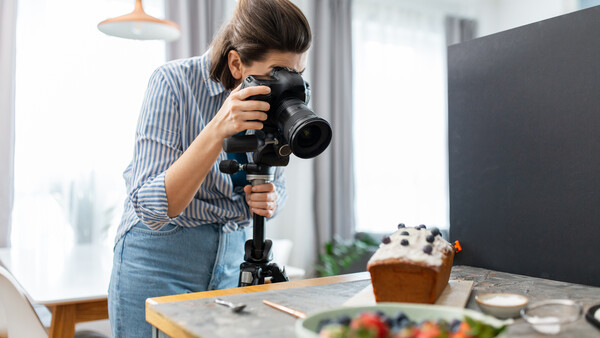
Every camera announcement follows the same script. The press release lands, the spec sheet unfolds, and there it is: a bigger number than last time. Sensor resolution has become a headline feature, the thing we're supposed to gasp at before we've even seen a sample image. What was once considered professional territory is now dismissed as "entry-level," and we're told that serious photographers need 45, 60, or even 100 megapixels to stay competitive.
But here's a question worth sitting with: When did you last crop away three-quarters of your frame and still need to produce a gallery-sized print from what remained? If you're struggling to recall such a time in your career, you're far from being the only one. The truth is that ultra-high-resolution sensors serve a narrow set of specialized applications: archival work, heavy cropping for wildlife and sport photography (not just cropping because of a lazy composition, something I'm frequently guilty of), or commercial projects demanding extreme enlargement. For the overwhelming majority of photographic work, 24 megapixels isn't merely adequate. It's frequently the superior choice.
Where Your Photos Actually Live
Before we talk about what cameras can capture, let's talk about what screens can display.
Instagram compresses and resizes your carefully crafted images down to somewhere between one and two megapixels. That landscape you agonized over? It's being viewed on phones at a resolution that would fit comfortably on sensors from 2005.
Perhaps you're thinking about larger displays. A 4K television or monitor, the current gold standard for home viewing, resolves approximately 8.3 megapixels. That's it. Every pixel beyond that number gets mathematically discarded before the image reaches your viewer's eyes.
What this means is stark: if your photographs live primarily in the digital realm (and the vast majority do in 2025), you're capturing enormous files only to have them aggressively downsized at every destination. That additional resolution isn't being appreciated. It's being thrown away.
The Costs Nobody Mentions
Resolution comes with a tax. Consider storage. A raw file from a 24-megapixel sensor typically runs between 25 and 30 megabytes. Jump to 60 megapixels and you're looking at files ranging from 60 to 80 megabytes with lossless compression, or well over 100 megabytes uncompressed. That's filling your memory cards and hard drives two to three times faster. Over a career, we're talking about thousands of dollars in additional storage costs and countless hours managing exponentially larger archives.
Then there's the processing burden. Editing software doesn't care about your deadline. When you're pushing 60-megapixel files through Lightroom, every adjustment takes longer. Scrolling lags. Exports crawl. Your entire workflow accumulates friction that compounds across hundreds or thousands of images.
Sports and wildlife photographers understand this problem intimately through buffer depth. High-resolution sensors force the camera's processor to work harder, which means fewer frames in a continuous burst before the camera needs to pause and catch its breath. While the 24-megapixel body keeps firing, capturing the decisive moment, the higher-resolution alternative is still writing to the card, having missed the shot entirely.
The Print Size Question
"But I need resolution for large prints."
This concern sounds reasonable until you do the arithmetic. A 24-megapixel file prints comfortably at 20 by 30 inches at 200 pixels per inch, which exceeds what most viewers can perceive as sharp when standing at a normal distance from a print that size.
And that's the key insight people overlook: viewing distance scales with print size. Nobody presses their nose against a three-foot-wide photograph. The larger the print, the farther back people stand, and the less resolution you actually need per inch. Billboard photographers have understood this for decades. A print meant to be viewed from six feet away has dramatically different requirements than one examined with a loupe.
For standard wall art, the kind that hangs in homes and galleries and offices, 24 megapixels provides more than enough information. You'd need to be producing truly massive architectural installations before resolution became your limiting factor, and at that point, you're likely using medium format or specialized equipment anyway.
The Low-Light Reality
Here's where sensor design gets interesting, though the reality is more nuanced than pixel-counting suggests.
On any given sensor size, resolution involves tradeoffs. Pack more photosites onto the same surface area and each individual photosite must shrink. Smaller photosites collect less light per pixel, which means more visible noise when you examine images at 100% magnification. But here's the complication: most people don't view their images at 100% zoom. When you display a 60-megapixel file and a 24-megapixel file at the same output size, whether on a 4K screen or as a print, something interesting happens. Downsampling the higher-resolution image averages out random noise, cleaning up the file considerably. At matched viewing sizes, the gap between modern sensors narrows significantly.
For typical event, wedding, or concert work in dim venues, both 24-megapixel and higher-resolution modern sensors will serve you well. The low-light argument for fewer megapixels is real but narrower than it once was.
The Diffraction Problem
There's an optical phenomenon worth understanding, and it changes the calculus on resolution. Diffraction occurs when light bends around the edges of your aperture blades. This is a property of the lens, not the sensor. At wider apertures, the effect is negligible. As you stop down past f/8 or f/11, the bending becomes significant enough to begin to create a slight softening in fine detail.
Here's what matters: a 60-megapixel sensor and a 24-megapixel sensor pointed through the same lens at f/16 receive identical optical information. The diffraction blur is the same in both cases. The difference is that the higher-resolution sensor has enough pixel density to reveal that softening, while the lower-resolution sensor never resolves it in the first place. If you downsample the 60-megapixel file to 24 megapixels, it looks essentially identical to the native 24-megapixel capture.
The practical implication is this: to actually benefit from 60 megapixels of resolving power, you need to shoot at wider apertures where diffraction hasn't yet limited the optical system. Stop down to f/22 for your landscapes and you're capturing a file that, once viewed or printed at normal sizes, delivers no more detail than the 24-megapixel alternative would have.
You haven't lost quality by owning the high-resolution sensor. You've simply paid for resolving power you can only access under specific conditions.
A Better Way to Spend the Difference
The price gap between a high-resolution body and its 24-megapixel counterpart is substantial. Compare a Nikon Z6 III to a Nikon Z8, or a Sony a7 V to a Sony a7R V. We're frequently talking about a thousand dollars or more for the privilege of managing larger files. That money could go toward glass. A professional-grade lens will transform your images in ways that extra megapixels never will. Sharpness, contrast, color rendering, bokeh character, autofocus speed: these qualities live in the optics, not the sensor.
Or take that thousand dollars and buy a plane ticket. Photograph somewhere you've never been. The images you'll create from genuine experience and inspiration will outshine technically perfect but soulless captures from the most advanced sensor on the market.
Resolution has long been a marketing lever, a number designed to make last year's purchase feel inadequate. Don't let it. Your 24-megapixel camera captures more detail than any screen can display and more than any reasonable print requires. It writes files your computer can handle and your storage can accommodate. It sees well in low light and forgives your aperture choices.
That's not a compromise. That's a tool refined for how photography actually gets made and consumed. The pixels you have are almost certainly the pixels you need.

Join the Fstoppers community for free
-
Post comments and join in the discussions
-
Browse the site ad-free
-
Share your work and get featured in the community
-
Compete in the photo contests for fun and prizes
43 Comments
This has to be a troll post. It's too stupid otherwise.
The diffraction problem section.. who knew that understanding parafocal distances, and at what aperture your lens was sharpest was such an impossible task.. as someone who has hands on experience shooting thousands of images at 24MP, 45MP, and 61MP, I can tell you with absolute certainty more MP coupled with a basic understanding of lens physics yields sharper photos, and being in a position to benefit from the increased resolution is not a corner case for any shooting scenario I’ve been in.
I can also tell you that file size is NOT the only factor in how fast images process. My Nikon 24MP raw files process slower than my Canon 45 MP raw files, same server, same computer, same application.
Also, the statements that implied all cameras with resolutions higher than 24 MP will suffer from buffer limitations are just downright false. (and a bit ironic if we are being honest given the number of articles I’ve read written by Alex saying no one actually needs capture rates higher than 6 shots per second).
Edit: I was going to leave it alone but the engineer in me can’t.. the architecture of the bayer sensor design yields naturally soft images. This is because only a single color is sampled at each photosite then a convolution algorithm is applied to approximate the other colors based on surrounding sensor readings. This type of convolution function is of the same processing family as averaging functions, which happens to be the same family as blur and noise reduction functions. This is why every photographer “worth their salt” knows digital images need post processing sharpening, and the sharpening algorithms are able to use the higher resolution data to create a “crispier” image. That post-sharpened image is then fed into the rescaling algorithm which produces the image seen ln screen defined by your viewing resolution and screen zoom. So no, the higher resolution data is not simply discarded when you see the final creation on your display, and that is why higher MP images can appear sharper when viewed at the same size on your display (assuming you are using professional software such as C1 or Lightroom)
If one calculates the mathematical gain the larger photosites get you, if all sensor tech is assumed to remain the same, 45MP looses approximately 1 stop of light gathering ability per pixel compared to a 24 MP sensor.
Now lets talk benefits to higher resolution sensors.. I can now carry primes, which are far more compact than equivalent performance zooms, and be able to crop in to create whatever composition I need, while having around 2 stops more aperture to work with (assuming f/2.8 to f/1.4). This gives me the options to shoot shallower dofs, faster shutters, or better low light performance, which ultimately means I have more options, which equates to more success shooting -> more keepers.
Hate on higher resolution all you want. Yes it has its drawbacks, it has several benefits I describes above the author omitted, which could have presented a more balanced opinion article IMO. Below are 2 photos from my last trip where I was shooting a prime and had to crop down to 1MP final image size to get the framing I wanted. Yes, I could have carried a zoom, but it would have been larger, heavier, and not had the shallow dof options I needed for other pictures captured that day.
Hi Jarrett,
Keep in mind this article is written for generalists and hobbyists, thus the "95%" in the title.
Understand, and don’t get me wrong I love reading your articles. I am a bit passionate as a hobbyist myself having been in the 24 MP standard zoom camp for years, and now seeing the creative potential I’ve discovered in my photography since making the switch to higher resolution sensors.
To your point, would be life be any less complete without the two pictures I posted above? No. I don’t get paid for any of my work, nor do I have any substantial following on socials to view it either. But they make me happy and are the reason I have a camera and a NAS with over 100k pictures stored on it.
Only 24 Megapixels - how much crop-zoom do you really need?
These are very tight crops from the centre of the main image.
(Lumix DC-S5 + 50 f/1.4 at f/4)
Looks like a nice Banksia spinulosa, but with 170 species around the country, it's had to tell.
As I posted with those two pictures, that are two of my more often remembered pictures from my last trip, I cropped 45 MP to 1 MP. IIRC the final resolution for one of those was just below 1080 width, but I may have that confused with a different picture from a previous trip.
You are spot on. I have shot resolutions up to 102mp but for most of the work I do I am shooting between 21-25mp. Especially if I'm shooting volume images as I do not want to deal with storing that mass amount of data. I only shoot as high as 36mp or higher if I have a very specific need but that is my personal use case. Something else that is to be considered when shooting higher resolutions is the file size of your images if you are going to do post work to them. For example I've had PSD's for HDR Panos get up to 2 and 3 GB for the one image because of all the extra data generated and stored inside a psd. It can get pretty out of hand.
If 24 MP is enough, then why don't use aps-c? It doesn't seems necessary (more cost, more weight) to transporting a full-frame camera and its heavy lenses.
Absolutely. APS-C is more than enough for many photographers.
I use micro 4/3 and full-frame - micro 4/3 is great for the vast majority of my photos as well.
photo sites become smaller at the same resolutions with smaller sensor which decreases dynamic range. That said most modern APS-C sensors are more than enough for the majority of photographers.
I shot this recently with my Fuji X-E1 with only 16mp, with my MF TTartisans 35mm F1.4. I wish all my photos would turn out like this, but unfortunately it's not always the case, but when I get it successfully focused I'm more than happy with the results. Much of the time though, the lighting has to be just perfect, and stepping down with these cheap lenses improves everything. I'm astonished with the clarity from a 14yr old camera...
24 megapixels is so 2016. 😆
Not an argument
lol It's a joke
While I’ve… too many cameras well in excess of 24MP, you’re not wrong!
You have your hypothesis. I'll offer you a counterexample: If any of us were given a 100MP Hasselblad with several lenses, would we say no, because 24MP is enough? Well, there you have it.
If I were given an X2D and lenses - I'd immediately sell it and get something more useful. If the setup was that we will give you a camera, but you can't sell it, and you can only use that camera, then I'd pick a different camera - apart from the extreme megapixels, the majority of $3000 full frames (and some less expensive) accomplish the vast majority of photographic tasks a whole lot better than the X2D
If you think that way, an APS-C camera is more than enough. You don't even need a full-frame camera.
When I started photography, I needed to carry around a separate light meter - I have used 1/2 frame to large format film and M 4/3, APS-C, full frame and even phones for digital. I currently use a M 4/3, FF and phone for digital images.
There are a whole bunch of things that the X2D is a whole lot worse at than even my m 4/3 camera, specialist high resolution images, great, but as a generalist photographic tool, it's less than mediocre.
And you are correct for the vast majoriy of images you don't even need a FF, M 4/3 is more than adequate, sometimes even better because of the reach and availability of high-quality relatively cheap and compact lenses.
I disagree there. Because of the image format (3:2) and the noise, for me the minimum ideal sensor is APS-C.
I did. I sold my GFX 100s and bought a Nikon Zf lol The Zf is great. I use it a LOT more than the 100s. The GFX is a great camera no doubt and I do miss the insane flexibility of it's 16bit raw files. You basically couldn't break them. That said the Zf is significantly more useful and versatile for the money than the GFX is for my use case.
Want vs need -- big difference. If you aren't willing to fork over the $ for more MP then by definition it is not 'worth it' to you.
Theory vs reality - the 12mpx A7S III has objectively worse RAW noise at every ISO level than a 24mpx Lumix DC S5 and 40mpx Nikon Z7 II, and no better than its 61mpx A7RV stablemate.
I own a Sony A1, and after purchasing it, I got a second A7iii. This article is awesome, and each of the main points could be a chapter in a book.
I wish Canon, Nikon, and Sony would read this article and start to focus on a 24MP camera line. The article mentions low-light scenarios like weddings, which is true, but it overlooks a lot of sports played at night, and then there's the entire professional Astrophotography field.
The hobbyists' side is where the camera manufacturers should really take note. Apple and Samsung have been able to convince hobbyist that their phone are just as good as a big camera. One reason: The big camera has noise. Pros can deal with it in post, but hobbyists have no idea and just assume the camera is bad. So they use their phone instead. Having a dedicated 24MP pixel would allow hobbyists to use a big camera in a lot of situations where they don't need post-processing.
As I've never had opportunity or reason to print larger than 24", I always felt the 16MP of my EOS 1Ds MkII and the 16-20MP of my Micro Four Thirds kit was plenty. I shoot higher-rez bodies now, but typically down-rez to 24MP for delivery to my event clients.
I agree with the central concept, but I disagree with this: "A 24-megapixel file prints comfortably at 20 by 30 inches at 200 pixels per inch, which exceeds what most viewers can perceive as sharp when standing at a normal distance from a print that size."
First, that assumes that every pixel is 100% detailed, which is never true. Pixels are RGB, and unless a subject is shades of grey, significant detail is lost. Red and blue subjects falling outside the green range will be lacking up to 75% of the detail. Compare a PixelShift image with a standard image, and you'll see just how much more detail you get with a 24-megapixel full-color image than you do with a 24-megapixel RGB image.
Digital noise, present at all ISOs but more present at higher ISOs, significantly reduces detail. Smaller sensors have significantly more noise at their base ISOs.
Lens sharpness isn't perfect. The more megapixels you have, the higher portion of the lens detail you capture... but even with unsharp lenses, higher megapixels sensors extract more detail.
And there's really no such thing as "normal viewing distance" - if you go into an art gallery, you'll see many viewers lean right into their minimum viewing distance (maybe a foot away) to examine detail.
At that range, you want 300 DPI of DETAIL, which is *way more* that 300 DPI of megapixels. A 100-megapixel camera only gives you about 350 DPI at that size (which again, is not nearly enough to provide 300 DPI of true detail when you factor in noise, RGB losses, lens imperfection, etc).
Source: I have been nit-picking visible print quality from a wide variety of cameras and lenses for basically my entire adult life.
Summary: If your goal is actually a really detailed 20x30" print that meets what the human eye can perceive in the way people view images in galleries, you need to be using high-quality, high-megapixel gear and shooting HDR panoramas.
With that said, 24 megapixels is "good enough" and people don't generally expect or appreciate technical perfection.
I've sold lots of crisp, detailed 24" landscape prints made from appropriately processed, interpolated and sharpened 16MP files. I've seen no evidence that the vast majority of shooters and buyers are pickier than I am.
I did some test shots to test out the impact of pixel shift using my DC-S5 and 50 / 1.4 lens.
I took a standard 24mp image and followed immediately with a 96mp pixel shift image uusing the same settings....
Here are the results
1. original image (12000x8000 =96mp)
2. side-by-side crops of the 24MP (right) 1121x1174 (1.3mp) vs 96 mp images 2237 x 2712 (6mp)
3. Extreme pixel-level crop (156x173) pixels left (0.027mp), 332 x 356 hi res crop right. (0.118 mp)
4. software upscaled version of the 156x173 crop v 332 x356 hi res crop side by side
I can tell a difference but it is so slight that you would need to print ultra huge in order for it to be an issue. At Web resolutions it doesn't matter at all.
Tony wrote:
"And there's really no such thing as "normal viewing distance" - if you go into an art gallery, you'll see many viewers lean right into their minimum viewing distance (maybe a foot away) to examine detail."
I very much agree.
A big pet peeve of mine is this misguided idea that viewing distance increases as print size increases. True in some cases, such as billboards along the highway. Utterly false in cases such as galleries, hotel lobbies, government building lobbies, medical clinic and hospital hallways, lobbies, waiting areas, and cafeterias, etc.
As Tony mentions, many people will walk right up to a huge print, as close as they can get, to see the fine detail. This is only natural.
If I see a photo of a bird, I want to see the feather filaments. If I see a photo of a deer, I want to see the hairs. If I am looking at a photo showing a person in clothes, I want to see the weave of the fabric.
In real life, when I see a paint job on a car that impresses me, I walk right up to the car and get my eyes about 8 inches from its surface, to examine the minuscule metallic flakes in the paint, to try to see which direction they are oriented, relative to one another. Likewise, when I see anything beautiful that is made of wood, I get as close as I can to examine the grain of the wood; not just the obvious grain, but the more subtle texture within the grain.
Many of us humans are fascinated by the smallest details in the things that we encounter in everyday life. We are constantly getting as close as we can to things to see the tiniest of details. Why would we be any different when it comes to the way we view photographs?
You are clearly not the intended audience for the article. Nothing wrong with loving to see tiny details but most people do not stick their nose against a picture or a car to see if they can see the tiniest detail or flaw. We can agree I think that people appreciate different aspects of images and most people view from a distance where their eyes can gather in the entire image or scene and appreciate the whole of it. Viewing distance should be understood as what is 'normal' or common for most people in a particular viewing setting. It is that In context that the article argues that 24 MP is sufficient 95% of the time.
I'm surprised dynamic range wasn't mentioned.
It's sorta fun reading these gear articles. I love photography, and as my life runs out of runway, I shoot the Fujifilm GFX 100S 102 megapixel medium format camera. I shoot mostly landscapes and even fast flying hummingbirds. I am definitely not a technocrat; just an old guy having a great time. Leaving out all of the technical talk, I love the look of the raw files, and I am just having the time of my life.....
I used to have a 100s. I sold it because I needed something more practical for how I shoot BUT boy howdy were those raw files incredible. You basically can't break them and the smoothness of the color especially in low light with those 16bit raw is mind blowing. Excellent photo sir.
Thank you
24MP is the new number I guess. Around 2005, I heard the number was that 6MP would be more than enough for most. Later, that number went to 12MP. I am sure 24MP will not be the final one.
I like 33MP, but have 61MP just so I can use Crop Mode with primes.
I am starting to tire of all the articles here on Fstoppers telling us that we don't need this and we don't need that. Basically telling that we don't really need any gear that happens to be expensive, big, heavy, or technologically advanced.
The truth is that most advanced photographers do not buy gear based on what their needs are for 95% of the photos they take.
They buy gear based on what they will need for the other 5%; the rare times when there will be very little light, when the subject is moving rapidly and erratically, when they actually will be shooting for a floor-to-ceiling wall mural that will be viewed from 4 feet away, when they will be having their images judged by a very critical image reviewer at a stock agency, etc.
If we base our gear-buying decisions on the most challenging situations we will ever face, then all of those other situations that are less challenging will be no problem at all. That is using wisdom. That is why we are over-equipped for most of the photography we do. But then we are properly equipped when the most special image-making opportunities present themselves, which usually happen in the most difficult conditions imaginable, where more is demanded of the camera than is usually the case.
So yes, it actually does behoove us to have the biggest sensor with the highest resolution, world class tracking autofocus, a gazillion frames per second, lenses that give extremely shallow depth of field, lenses that cost more than our cars are worth, etc.
We don't need expensive, heavy gear to take a great photo. But we need expensive, heavy gear to take all of the great photos we possibly can, and to never be left out because the conditions are too much for our gear, or because the demands of the editor/curator are beyond what our sensors can resolve.
The last paragraph Tom is what resonates with me the most. The bulk of my gear is for travel photography, and for the price difference between an R6ii and R1, I could not re-create a single trip, forgetting about the memories. I don’t have an R1 because of the size. I have the R5ii as a size compromise and increased resolution. I do recognize I am very fortunate to be in that position.
And I don't disagree that I would like to see more articles from fstoppers saying when the expensive gear would be best used to help people be able to justify their own decisions better.
But to Alex’s point, the average photographer doing studio shoots, sporting events, and weddings trying to get started would be better off spending that difference on other things. And certainly the average hobbyist is in that category as well.
This article and especially all the back and forth in the comments has done little to help me settle the debate between me choosing the Z8 or Z6iii as my next camera...
Maybe if you asked a question...