

The narrative around third-party lenses has flipped completely in the last five years. What used to be a compromise, trading optical quality and autofocus reliability for a lower price, has become something closer to the default recommendation for most photographers. Sigma's Art line routinely matches or exceeds first-party optical performance. Tamron is planning ten new lenses this year across four mounts. Viltrox just joined the L-Mount Alliance as a full partner. A wave of manufacturers are shipping surprisingly competent autofocus glass at prices that would have seemed like a typo a few years ago.
But "third-party lenses are good now" is where most of the conversation stops, and that's where this guide begins. Because the reality is more nuanced than the cheerleading suggests. Third-party lenses are excellent in ways that matter enormously and limited in ways that most reviewers never mention, and those limitations vary dramatically depending on which camera system you shoot. If you've ever wondered whether you'll lose burst speed, whether your autofocus will behave differently, whether a firmware update could break your lens, or whether you're giving up anything at all by saving hundreds of dollars, this is the article that answers those questions mount by mount, with specifics instead of vibes.
What Third-Party Lenses Actually Get Right
Let's be clear about something before we get into limitations: the optical argument for third-party glass is essentially settled. Sigma Art lenses don't just approach first-party sharpness; they match or beat it in many documented comparisons. LensRentals' optical bench data has shown strong third-party performance across dozens of lenses. The Sigma 24-70mm f/2.8 DG DN II Art trades blows with the Sony FE 24-70mm f/2.8 GM II it competes with; the Sony tends to hold an edge in edge-to-edge consistency, while the Sigma is competitive in center sharpness at a significantly lower price. The point isn't that third-party always wins on every metric. It's that the gap has closed to the point where the optical differences are marginal and the price differences are not.
The price-to-performance math is even more dramatic. A set of three Sigma Art primes (say the Sigma 35mm f/1.4 DG DN Art, Sigma 50mm f/1.4 DG DN Art, and Sigma 85mm f/1.4 DG DN Art) costs a little more than what a single Canon RF 50mm f/1.2L USM costs by itself. That difference isn't marginal. It's the cost of a second camera body, a year of equipment insurance, or a lens focal length you wouldn't otherwise be able to afford.
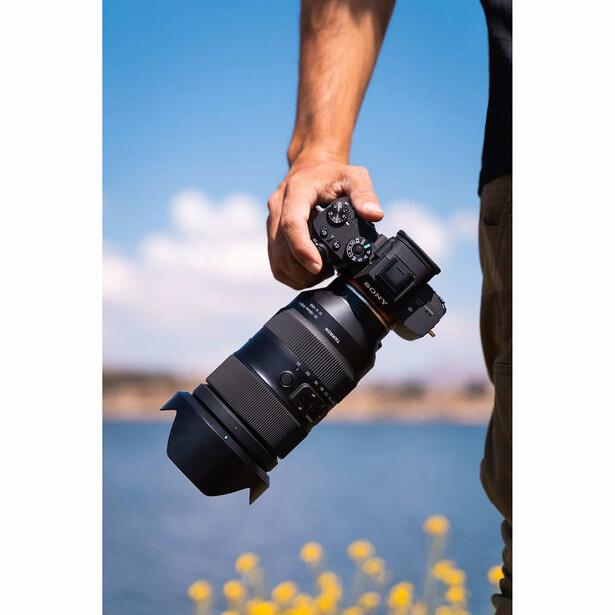
Then there's the innovation angle. Third-party manufacturers take design risks that the big three won't. Tamron's 35-150mm f/2-2.8 Di III VXD created a zoom and aperture combo that didn't exist before it and became one of the most talked-about lenses of its generation. Sigma is pushing into ultra-fast aperture territory with its Art line. The Sigma 35mm f/1.2 DG DN Art is shipping, and the Sigma 85mm f/1.2 DG Art was announced as a development project at CP+ 2026. If the 85mm reaches production, Sigma would have f/1.2 options at two key focal lengths, an ambitious play that no other third-party manufacturer besides Viltrox has pursued at this level. These companies can afford to be weird because a single niche product failing doesn't threaten an entire camera ecosystem. That freedom produces lenses that first-party R&D departments would never greenlight.
And finally, there's mount flexibility. Sigma's Mount Conversion Service will physically re-mount many of its lenses from one system to another for a fee, but only if Sigma produces that specific lens natively for the target mount. Not every lens qualifies, and the available conversions depend on which mounts Sigma currently supports for that model. Still, for lenses that do qualify, it's a safety net that no first-party manufacturer offers. First-party glass dies with its system. Some Sigma glass doesn't have to.
What Nobody Tells You: The Real Limitations, Mount by Mount
The experience of using a third-party lens varies dramatically depending on which camera system you shoot. A Sigma Art lens on a Sony body is not the same proposition as a Sigma Art lens on a Canon body, and neither is the same as what you'll encounter on Nikon Z. The blanket statement "third-party lenses are great" obscures critical differences that can genuinely affect your work.
If you're still building your foundational camera skills across different genres, Fstoppers' The Well-Rounded Photographer tutorial covers eight genres taught by eight instructors and can help you figure out which shooting styles (and therefore which lenses) matter most to your work.
Sony E-Mount: The Broadest Third-Party Selection (With One Big Catch)
Sony's E-mount has the broadest third-party lens selection of any major camera system. The mount protocol is available to third-party manufacturers, the lens catalog from Sigma, Tamron, Viltrox, and others is larger than on any competing mount, and the overall experience is close to native for most shooting scenarios.
Close to native, but not identical. And the gap matters most in exactly the situation where you'd notice it.
The Burst Rate Cap
This is the single most important limitation that third-party lens buyers on Sony need to understand, and it's the one most reviewers skip past. On Sony's high-speed bodies (the Sony a1 and Sony a9 III) third-party lenses are capped at 15 frames per second when shooting with continuous autofocus. The a1 can shoot 30 fps with native Sony lenses. The a9 III can hit 120 fps. Mount a Sigma or Tamron lens, and AF-C burst rates drop to 15 fps.
This is a restriction imposed by Sony's licensing structure for third-party manufacturers, not a limitation of the lens hardware itself. Third-party makers operate under a tier of mount access that caps AF-C burst performance at 15 fps. Whether you view this as quality assurance or market protection is a matter of perspective. The practical result is the same either way.
For the majority of photographers, this limitation is completely irrelevant. If you shoot a Sony a7 IV, a7C II, a7R V, or any Sony body that natively tops out at 10-15 fps, you'll never hit the ceiling. The cap only matters on the a1, a9 series, and other bodies where the native burst rate with Sony lenses significantly exceeds 15 fps. But if you're a sports or wildlife photographer who specifically bought an a1 or a9 III for its speed, this is a meaningful limitation, and you won't find it mentioned on most lens spec sheets.
Sigma and Tamron have released firmware updates for some lenses that improve compatibility with the a9 III's higher burst modes in AF-S and manual focus, but the 15 fps AF-C ceiling remains in place. The situation may evolve as Sony updates its licensing terms, but for now it's a hard constraint.
Teleconverter Incompatibility
Sony's own teleconverters (the 1.4x and 2x TC) are designed to work with specific Sony lenses and are generally not compatible with third-party glass. Sigma and Tamron lenses are not on Sony's official teleconverter compatibility lists. If you shoot a Tamron 70-180mm f/2.8 Di III VXD G2 and want more reach, a Sony TC won't mount or function properly. You'll need to crop, switch to a longer lens, or use the APS-C crop mode on your body (which, to be fair, is a surprisingly effective workaround on high-resolution sensors like the a7R V's 61 megapixels).
Lens Correction Profiles
Sony bodies automatically apply distortion, vignetting, and chromatic aberration corrections for native lenses in-camera. Third-party lenses may not have these profiles baked into the body firmware, which means you'll either need to apply corrections in Lightroom or Capture One, or accept uncorrected edges. Adobe typically adds lens profiles within weeks of a new lens release, so this is a temporary inconvenience rather than a permanent problem. But during that gap period with a brand-new lens, your raw files may show more vignetting and distortion than you're used to seeing.
The Bottom Line for Sony Shooters
Third-party lenses are an excellent default choice on E-mount. The AF performance is indistinguishable from native in most real-world shooting. The burst rate cap only affects a small number of high-speed bodies, and even then, only with continuous AF. Unless you're shooting sports on an a1 or a9 III and need every frame per second the body can deliver, there is very little functional reason to pay the first-party premium on Sony.
Canon RF Mount: The Most Restricted Ecosystem
If you shoot Canon RF, the third-party lens conversation is fundamentally different from every other mount. Canon kept the RF mount protocol locked to third parties for years, and while the situation has improved, it remains the most restricted major mount for third-party glass.
What's Actually Available
In April 2024, Canon began licensing the RF mount to Sigma and Tamron, but only for APS-C lenses. Sigma released six crop-sensor Contemporary primes and zooms for RF. Tamron released one APS-C wide angle zoom. These work on the Canon EOS R7, R10, R50, R100, and other APS-C RF bodies with full autofocus and communication support.
Full frame RF lenses from Sigma and Tamron? They're not available yet, and there's no public timeline for when they might be. Canon executives have been asked about this directly and have responded in carefully worded non-answers that neither confirm nor deny plans for full frame licensing. The most recent comment, from Canon's Mr. Tokura, acknowledged that conversations are ongoing but offered no timeline. Make of that what you will.
The Viltrox Workaround
Viltrox has reverse-engineered the RF mount and sells RF-mount lenses without an official Canon license. These lenses exist and they work: autofocus, in-camera stabilization, the whole package. But Canon hasn't blessed this arrangement, which introduces risk. Canon could theoretically release a firmware update that breaks compatibility with unlicensed lenses. They haven't done so yet, but the precedent exists: Canon was involved in formal patent infringement disputes with Samyang over unauthorized use of RF-mount communication protocols, which resulted in Samyang withdrawing its RF-mount 85mm f/1.4 from the market as part of a settlement.
If you buy a Viltrox RF lens today, it will work today. Whether it will work after every future firmware update is an open question that nobody can answer with certainty.
The EF Adapter Option
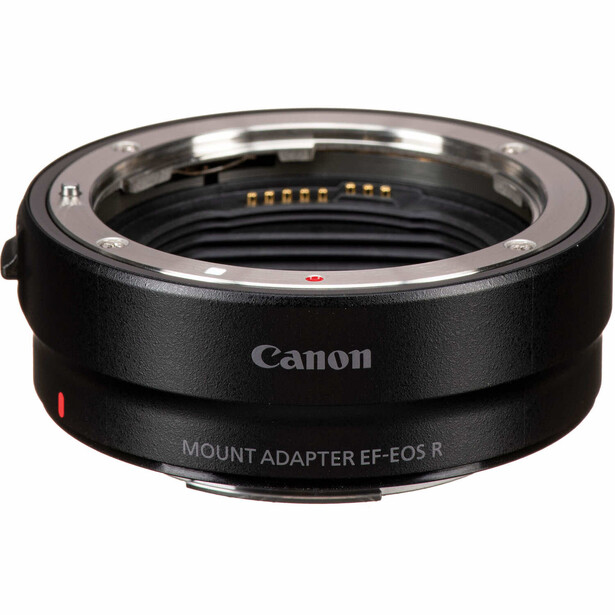
Canon's EF-EOS R Mount Adapter is excellent, and it opens up the entire legacy EF mount ecosystem, including years of third-party Sigma Art and Tamron glass that was originally designed for Canon DSLRs. This is a legitimate solution for RF shooters who want third-party lens diversity. You lose nothing in image quality. Autofocus performance is generally very good, though adapted lenses may not match the AF speed of native RF glass in all conditions. The tradeoff is physical: the adapter adds length and weight to every lens, and some photographers find the ergonomic compromise annoying over time.
The Bottom Line for Canon Shooters
If you shoot full frame Canon RF and want native third-party autofocus lenses, your options are severely limited compared to Sony or Nikon. This should be a significant factor in your system choice if you're building from scratch. If you already own Canon RF bodies, the EF adapter pathway gives you access to a deep pool of used third-party glass, and Viltrox offers a limited but growing selection of native RF lenses, with the caveat that compatibility isn't guaranteed long-term. For APS-C RF shooters, the situation improved meaningfully in 2024, and the Sigma and Tamron crop-sensor options are solid.
Nikon Z-Mount: Improving Fast, With a Legal Cloud
Nikon Z sits in an interesting middle ground between Sony's openness and Canon's restriction. Third-party support is growing, but a major lawsuit threatens to reshape the landscape.
Authorized Third-Party Access
Sigma and Tamron both produce Z-mount lenses, and Nikon's public statements reference working with "officially licensed partner companies" to expand the Z-mount ecosystem. However, Nikon hasn't publicly defined the structure of these arrangements the way the L-Mount Alliance has, and the details of any agreements between Nikon and third-party manufacturers remain private. What matters practically is that lenses from both Sigma and Tamron work reliably on Z-mount bodies, receive firmware updates, and are sold openly without legal challenge. Autofocus performance with current Sigma Art and Tamron glass on Z-mount is generally strong, comparable to native Nikkor glass in most shooting scenarios.
The Viltrox Lawsuit
Nikon is taking Viltrox to court over Z-mount patents, with the case filed in the Shanghai Intellectual Property Court and a hearing on the calendar for March 2, 2026. The case centers on whether Viltrox used Nikon's patented Z-mount autofocus and communication technology without authorization during the period before Nikon's patent was formally granted. Nikon wants back-payment for every Z-mount Viltrox lens sold while the patent was still pending.
The potential outcomes range from a licensing deal (best case for photographers) to a cease-and-desist order that could pull Viltrox Z-mount lenses from the market entirely (worst case). Viltrox has stated publicly that it isn't adjusting its product roadmap in response to the lawsuit, which suggests confidence, or stubbornness.
What makes this situation particularly relevant to prospective third-party lens buyers: if Nikon wins decisively, it could set a precedent that discourages other unlicensed manufacturers from producing Z-mount glass. And there's a secondary fear among Nikon shooters: that a future camera firmware update could intentionally break compatibility with unlicensed lenses, rendering existing Viltrox glass unable to autofocus. Nikon hasn't done this yet. But Canon's enforcement actions against Samyang on RF-mount demonstrate that camera manufacturers are willing to use legal tools to protect their mount protocols.
For now, Viltrox Z-mount lenses work and work well. The Viltrox AF 56mm f/1.4 Z and Viltrox AF 85mm f/1.8 Z are popular and well-reviewed. But buying one right now involves accepting a degree of uncertainty about long-term support that doesn't exist with Sigma or Tamron alternatives.
The Bottom Line for Nikon Shooters
Sigma and Tamron are the lowest-risk third-party options on Z-mount. Both operate with Nikon's apparent cooperation, both have track records of providing firmware updates for new bodies, and neither faces legal action. If you want to buy Viltrox for Z-mount, understand the legal situation and make a decision you're comfortable with. The lenses are good. The long-term outlook is uncertain.
Fujifilm X-Mount: Growing but Niche
Fujifilm's own lens lineup for X-mount is deep enough that the third-party case is less compelling than on other systems, but options are expanding. Sigma and Tamron both make X-mount lenses now. Tamron's plans to release ten lenses across four mounts this year explicitly include Fujifilm X. Viltrox has arguably done the best job filling Fujifilm's gaps with affordable fast primes; the Viltrox AF 56mm f/1.4 XF for X-mount is one of the most popular third-party portrait lenses in any system.
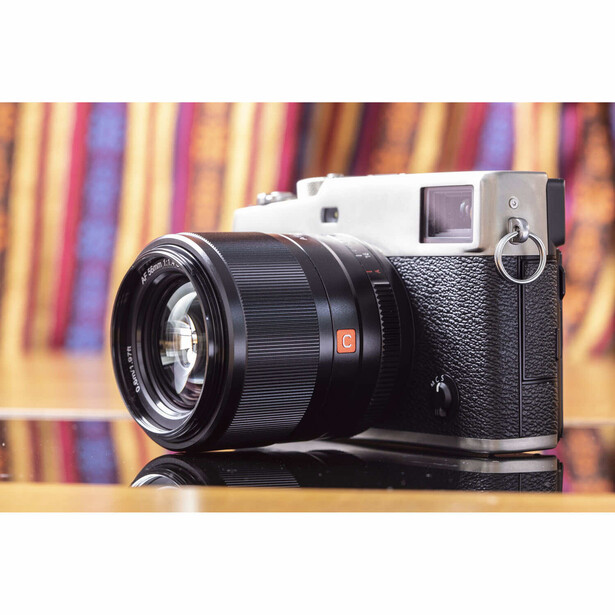
The main limitation: the X-mount third-party selection is still a fraction of what's available for Sony. If third-party lens diversity is your primary concern, Fujifilm isn't the optimal system choice. But if you shoot Fuji and want a few targeted third-party lenses to fill specific gaps, decent options exist and are getting better.
L-Mount Alliance: The Best-Case Scenario
The L-Mount Alliance (Panasonic, Leica, Sigma) represents the ideal version of what a third-party lens ecosystem should look like. Sigma is a founding member of the alliance. Their L-mount lenses aren't third-party in any meaningful sense; they're fully native, with complete communication support, no AF compromises, no burst rate caps, and no compatibility concerns. Viltrox recently joined the L-Mount Alliance as an official partner, meaning even budget third-party options on L-mount are fully sanctioned.
If you want the purest third-party lens experience with zero caveats, L-mount is where you get it. The tradeoff is that the L-mount camera body selection is more limited than Sony, Canon, or Nikon, and the used market is thinner.
Micro Four Thirds: Limited Selection
Sigma produces a small but well-regarded set of autofocus MFT primes: the Sigma 16mm f/1.4 DC DN Contemporary, 30mm f/1.4 DC DN, and 56mm f/1.4 DC DN. But the broader third-party AF ecosystem that Sony or L-mount shooters enjoy doesn't exist here. You won't find the kind of deep Art-series or GM-competing lineup on MFT that you'll find on E-mount. Chinese manual focus manufacturers like 7Artisans, TTArtisan, and Laowa offer a wider selection, but most of those are manual focus only.
Firmware, Warranties, and the Stuff That Bites You Later
Optical quality and autofocus performance are what lens reviews test. The stuff in this section is what you discover six months after the purchase, usually at the worst possible moment.
Firmware Compatibility
When a camera manufacturer releases a new body or a major firmware update, first-party lenses work on day one. Always. Third-party lenses sometimes need their own firmware update to maintain full compatibility. Sigma and Tamron are generally fast about this (days to weeks after a new camera launch). But there have been documented cases where a new camera body temporarily caused AF issues with older third-party lenses until a firmware patch shipped.
If you buy Sigma, invest in the Sigma USB Dock. If you buy Tamron, get the Tamron TAP-in Console. These accessories let you update lens firmware yourself instead of sending the lens in for service. They cost around $50 and pay for themselves the first time a new camera body creates a compatibility hiccup.
Sigma's Mount Conversion Service
This deserves special mention because it's genuinely unique. If you switch camera systems, Sigma will re-mount many of its lenses from one mount to another for a fee. The caveat: the service is only available for lens models that Sigma currently manufactures in the target mount. You can't convert any Sigma lens to any mount, only the specific combinations Sigma supports. Check Sigma's website for eligible models before counting on this as part of your switching plan. But for lenses that do qualify, it's a safety net that no first-party manufacturer offers.
Warranty and Service
Sigma and Tamron both have established service networks in major markets. Turnaround times are comparable to first-party manufacturers. Chinese brands are a different story. Viltrox has improved its support infrastructure, but if a budget lens from 7Artisans or TTArtisan breaks, the repair pathway is often unclear, and the cost of shipping the lens internationally for service may exceed the cost of simply buying a replacement.
Resale Value
First-party lenses hold resale value better than third-party equivalents, particularly in the Canon and Nikon ecosystems where brand loyalty runs deep. Sigma Art lenses hold value reasonably well on the used market. Tamron lenses depreciate faster. Budget Chinese lenses depreciate dramatically. This doesn't mean third-party glass is a bad financial decision; the lower initial cost more than compensates for the steeper depreciation curve in most cases. But if you think of lenses as investments that hold value, factor this into your total cost of ownership calculation.
When to Go Third-Party and When to Stay Native
Rather than ending with "it depends" (which is true but useless) here's a practical decision framework.
Go third-party when you're building a multi-lens kit and want to maximize coverage for your budget; when you shoot Sony E-mount or L-mount, where compatibility is strongest; when you want focal lengths or aperture combinations that first-party manufacturers don't offer; when you're an enthusiast or a working professional whose shooting doesn't depend on maximum burst rate performance; or when you shoot video, where AF speed differences are less relevant than optical quality, focus breathing characteristics, and manual focus feel.
Stay first-party when you shoot Canon RF and need guaranteed full frame native compatibility; when you're a sports or wildlife photographer shooting a Sony a1 or a9 III and need every frame per second with continuous autofocus; when you need guaranteed day-one compatibility with new camera bodies the moment they ship; when you're a wedding photographer who cannot accept even a marginal AF reliability difference during a ceremony; or when your workflow depends on in-camera lens corrections that only apply to native glass and you don't want to handle corrections in post.
If you're a wedding photographer weighing this decision, Fstoppers' How to Become a Professional Commercial Wedding Photographer covers gear reliability in the context of building a professional wedding business.
The smartest play for most photographers is to mix. Go first-party on your one critical workhorse lens, the one that makes you money in the worst conditions. Go third-party on everything else. A native 24-70mm f/2.8 paired with a Sigma 85mm f/1.4 DG DN Art and a Tamron 70-180mm f/2.8 Di III VXD G2 is a perfectly rational, high-performing professional kit that saves you enough money to buy the backup body or the lighting gear that will actually improve your work more than the marginal difference between two optically equivalent lenses ever could.
The Market Has Already Decided
Tamron is planning ten lenses in 2026 across four mounts. Sigma is pushing into ultra-fast aperture territory with f/1.2 Art primes, joining Viltrox's LAB series in a category that first-party manufacturers once owned exclusively. Viltrox just became an official L-Mount Alliance partner. 7Artisans announced an autofocus 135mm f/1.8 at CP+ 2026 at a fraction of what Sony charges for its Sony FE 135mm f/1.8 GM. Chinese manufacturers are flooding trade shows with glass that would have been dismissed as junk five years ago and is now genuinely competitive.
The third-party lens market is not an alternative to the mainstream. For a growing number of photographers, it is the mainstream. The question is no longer whether third-party lenses are good enough. It's whether first-party lenses justify the premium. In specific matchups across the focal length range, they often don't. For the broader ecosystem of compatibility, firmware certainty, and long-term support, they sometimes still do.
Know the difference, and you'll build a smarter kit than the photographer who buys everything from one manufacturer because that's what they've always done.




Join the Fstoppers community for free
-
Post comments and join in the discussions
-
Browse the site ad-free
-
Share your work and get featured in the community
-
Compete in the photo contests for fun and prizes
3 Comments
I would add some additional considerations:
If you are an amateur, how often will you use that particular lens? When you're considering the price and performance differences, is it something you need to just occasionally "fill the gap"? Or is it something you'll be using a great deal?
And, somewhat related:
If you are a professional, how much of your income depends on that particular lens? Again when you're factoring in the major or minor performance differences, reliability, versus the difference in price. It may be a cliche, but just how much you might want to invest, or save, really "depends"....
Timely article. I was teaching a group on Saturday and this topic came up. Generally agree with your comment. I’m a Sony shooter and my comment to the group was that 3rd party lenses are often larger and heavier. My preference is to buy used if I need to stretch my budget.
One supplementary note about Canon and 3rd party. Yes, very restricted in APS-C only, but it looks like Sigma are allowed to release all the APS-C lenses they make in RF mount.
If you are Canon APS-C shooter you might enjoy that Sigma's lenses (and I assume Tamron's too?) as far as I can see works fully like native Canon lenses with no restrictions. That includes top AF-performance, built-in lens-profiles, and lens firmware updating via memorycard in the camerabody.