
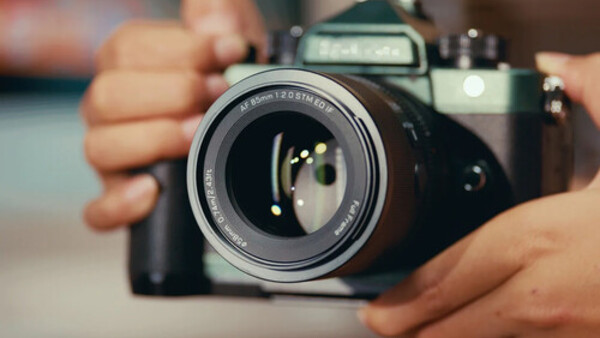
If you have been paying attention to the third-party lens market over the last two years, you have probably experienced a strange sense of déjà vu. A scrappy manufacturer from outside the traditional power structure starts releasing surprisingly competent glass at prices that make the establishment nervous. The photography forums fill with skeptics insisting that something must be wrong, that corners must have been cut, that you get what you pay for. And then, slowly, the narrative shifts. The skeptics become converts. The budget option becomes the smart option. The disruptor becomes the new normal.
We watched this exact story unfold with Sigma a decade ago, and we are watching it unfold again with Viltrox right now.
The Parallel: From Budget Plastic to Legitimate Threat
Cast your mind back to 2012. Sigma was the lens company you recommended to your cousin who wanted a telephoto zoom but did not want to spend real money. Their lenses had a reputation for plasticky build quality, inconsistent autofocus, and optical performance that ranged from genuinely good to merely adequate depending on which copy you got. Sigma had their defenders and plenty of photographers used their glass, but the brand carried baggage. They were often seen as a compromise rather than a first choice.
Then came the Global Vision initiative and the Art series, and everything changed. The Sigma 35mm f/1.4 DG HSM Art landed like a bomb in the photography world. Here was a third-party lens that was not just competing with the first-party options but actively embarrassing them in optical tests. The build quality was transformed. The autofocus (mostly) kept up. And the price, while not cheap, was still hundreds of dollars less than the Canon and Nikon equivalents. Sigma had reinvented itself almost overnight, graduating from budget afterthought to genuine premium alternative.
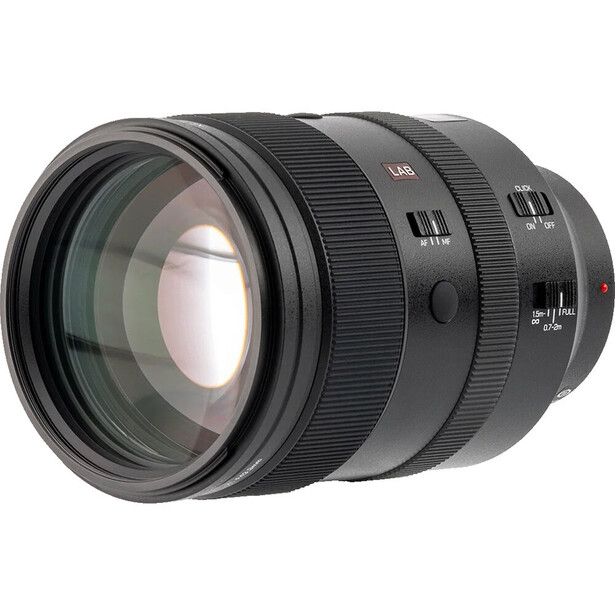
The critical difference is what happened next. Sigma graduated into the premium tier and essentially became a first-party alternative, and prices have started to match. Don't get me wrong, they're still a bargain compared to most first-party options, but their prices have indeed crept up. They left a vacuum behind them, the space they once occupied as the affordable-but-capable option. Viltrox has stepped directly into that vacuum, and they are doing it with a sophistication that suggests they have studied the Sigma playbook very carefully.
The Divergence: Philosophy vs. Perfection
Understanding why Viltrox matters requires understanding the philosophical split that has emerged in lens design over the last decade. On one side, you have companies like Sony, Canon, and the modern incarnation of Sigma chasing what I call "optical perfection at all costs." These manufacturers have decided that clinical sharpness, zero distortion, and zero compromise are the goals worth pursuing, and they will accept whatever cost and complexity that pursuit demands. Their lenses are absolutely stunning example of modern optical engineering. They also cost more than many people's entire camera bodies.
Viltrox has chosen a different path entirely. Rather than trying to beat Sony, Canon, and Sigma at their own game, they are playing a different game altogether. Call it the "feature-rich underdog" approach. They are not just copying optical formulas and undercutting on price. They are actively adding quality-of-life features that the major manufacturers have ignored or relegated to their most expensive offerings.
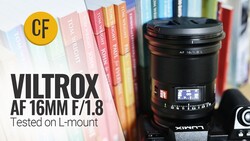
Consider the LAB series lenses with their built-in information screens for at-a-glance lens status and key shooting parameters. Consider the firmware update capability via USB, and on select recent models, via the Viltrox Lens app. Consider that several of their video-leaning lenses offer declickable or clickless aperture rings as a standard feature rather than being locked behind a "Cine" designation at three times the price. Viltrox is competing not just on optics and price but on the total ownership experience, and that holistic approach is resonating with photographers who are tired of nickel-and-dime feature stratification from the major brands.
The Smart Compromises: Doing the Math
Here is where we need to have an honest conversation about what Viltrox actually is and is not. They are not making the best lenses in the world. What they are making are lenses that establish a set of core tenets (metal construction, fast apertures, reliable autofocus, modern optical designs) and then compromise only on the last five percent of optical perfection or performance that most photographers will never notice and would never pay for if they understood the actual tradeoffs involved.
Let me illustrate this. Say you are a portrait photographer building out a Sony E-mount kit and you want fast primes covering the classic portrait focal lengths. If you go the "name brand" route, you might build something like this:
- Sony FE 35mm f/1.4 GM: $1,498
- Sigma 85mm f/1.4 DG DN Art: $1,199
- Sony FE 135mm f/1.8 GM: $2,248
- Kit total: approximately $4,945
This is excellent glass. Some of the best available for the mount. No argument there.
Now consider the Viltrox alternative:
- Viltrox AF 35mm f/1.2 FE: $999
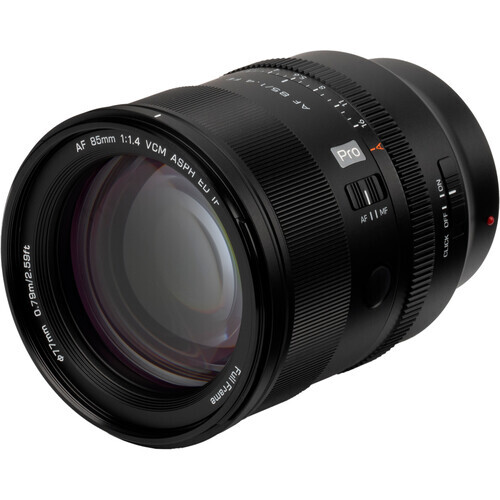
- Viltrox AF 85mm f/1.4 Pro FE Lens: $598
- Viltrox AF 135mm f/1.8 LAB FE: $899
- Kit total: approximately $2,496
You are saving nearly $2,500, which represents half off the premium option, and you even get a wider aperture with the 35mm lens! You could buy the entire Viltrox kit, a backup body, and still have money left over for a trip to actually use the gear.
The question that matters is not whether the Sony and Sigma kit is better. It is. The coatings are more sophisticated, the micro-contrast rendering is slightly more refined, and the autofocus will handle extreme scenarios better. The question that actually matters is whether that kit is three thousand dollars better. For studio portrait work delivered on Instagram? For wedding photography delivered as web galleries and modest prints? For event coverage that will be viewed on phones and laptops? For 95% of working photographers doing 95% of real-world jobs, the answer is a hard no. The Viltrox kit is not just "good enough." It is genuinely excellent, and the money you save can go toward things that will actually improve your photography, like travel, education, or simply not carrying the stress of five thousand dollars of glass every time you walk out the door.
Is Viltrox About to Blow Up?
It's beginning to feel that Viltrox is on the verge of exploding from "enthusiast favorite" to "industry standard." The first indicator is the cinema crossover. Just as Sigma gained credibility with the photography community partly through the prestige of their Cine line being adopted by serious filmmakers, Viltrox's EPIC Anamorphic series has earned strong reviews in cinema-focused publications. When a brand starts getting taken seriously by the video and film community, photographers take notice. Cinema places different demands on glass, especially around focus mechanics, breathing, and shot-to-shot consistency, so strong cinema reviews carry real credibility. Viltrox is not just making stills lenses anymore; they are making genuine cinema glass that reviewers have praised for holding its own against options costing significantly more, and that credibility is going to bleed back into their photography lineup in a meaningful way.
The third indicator is their aggressive expansion strategy. Watch how Sigma and Tamron approach new lens mounts versus how Viltrox approaches them. The established players are cautious, sometimes waiting years to release native versions for mounts like Nikon Z. Viltrox is moving into these systems at remarkable speed on mounts where third-party autofocus is viable, sometimes beating the major third-party players to market despite having a fraction of the resources. That hunger matters. That urgency matters. It signals a company that understands the window of opportunity in front of them and is moving aggressively to capture market share before the established players wake up to the threat.
The Reality Check
I want to be clear-eyed about the genuine tradeoffs here because pretending they do not exist would be doing you a disservice. Viltrox is not a magic solution that gives you everything for nothing. There are real compromises, and you should understand them before committing.
The sharpness conversation requires some nuance. Sony GM lenses are generally superior. The Sony glass maintains excellence right to the edges of the frame in a way the Viltrox glass does not quite match. The autofocus is better. If your work involves enormous prints or high-end commercial reproduction where every pixel will be scrutinized, buy the Sony glass. You will see the difference. But if your work is destined for wedding albums, social media, web portfolios, or prints under 20 inches, the differences rarely survive real-world delivery pipelines. You are paying for a difference that exists in test charts but not in delivered work.
The support question in the U.S. is more significant. If your Sigma lens develops a problem, you are sending it to their service center in New York. If Viltrox intends to capture a larger portion of the professional market share, they may need to consider expanding their support locations.
Conclusion
Viltrox is not trying to be the best lens manufacturer in the world. They are trying to be the smartest purchase you can make, and there is a crucial difference between those two goals. "Best" means no compromises, no tradeoffs, no consideration of value. "Smartest" means understanding that most photographers have finite budgets and that the marginal returns on premium glass diminish rapidly past a certain point of quality. If you are building a kit today, ignore the snobbery and give Viltrox a serious look. You might be surprised at what that money can do.


Join the Fstoppers community for free
-
Post comments and join in the discussions
-
Browse the site ad-free
-
Share your work and get featured in the community
-
Compete in the photo contests for fun and prizes
7 Comments
One thing to consider left.
Total weight of Sony/Sigma kit: 2100g
Viltrox: 2950g
Similar story like Sigma DSLR lenses years ago. :)
And the used prices for the Sigma variants can be had for the same price as the Viltrox. Understandably not everyone has a tolerance for used equipment, but on the same aspect of it, there’s plenty of new used gear that people have bought and never touched so you can scoop some of that stuff up for a good price and it’s still mint quality.
I think I’ve only ever bought one new lens and everything else has been used and flawless
Based on everything you had to say about Viltrox, I am extremely interested.
BUT ......
Viltrox doesn't make any lens that would be at all useful to me for wildlife photography. They have completely ignored telephoto lenses. I mean using the link to B&H that you put at the end of the article, it looks like the longest focal length they sell is 135mm. What's that all about?
From what you say about Viltrox and their overall strategy and the niche they are attempting to fill, I think they would be the perfect company to fill the huge void in the super telephoto market; really long focal lengths, but that are a stop or two slower than the $12,000 options that Canon and Sony make.
For example:
800mm f8
600mm f8
600mm f5.6
500mm f8
500mm f5.6
It seems to me that because these are primes, and do not have large apertures (relative to premium options) that it would be no trouble at all for a company like Viltrox to make them so they are cheap and light weight. They could even be made with retractable lens hoods like the old Canon 400mm f5.6 used to have!
I also could not find any Viltrox lenses for the mount that my cameras use - the Canon EF mount. EF lenses are still viable in the market, so I wonder ... why Viltrox is ignoring that big huge market?
I think its mainly that making a good super tele is more difficult and costly while also having a smaller market. Its also a lot easier to make a portrait lens work that has “character” to it as opposed to optical perfection but super tele users typically don’t want “character”, they want performance which requires more cost and precision in production. I am sure they eventually will put one out but it doesn’t surprise me that their main focus is on standard portrait focal ranges primarily.
As for why no Canon, as I understand it, Canon has been pretty hostile to third party lens makers, especially on RF mount.
I don't know about Sony - but I assume they have the same sort of system as Canon or Nikon. CPS or NPS. If you've been doing this a while, you've probably got enough first party gear to join one of those. Free cleanings/adjustments, discounts on first party gear, free loaners for service, etc. One thing that has always stuck with me is a statement from an older photographer when I was first starting out, "glass doesn't go bad". Even with the changes to mirrorless, most glass from one system can be adapted to another in some manner. So the question is - is the cheaper price of the Viltrox worth it over 20 years compared to a first party lens that potentially has all of these other benefits? And to be clear, for my walk-around APS-C kit, yes, totally have a couple of Viltrox lenses - but for what I use every day to make money, first party all the way. And I still have (and use) the first lens I bought nearly 20 years ago with a used 6.3MP DSLR and it works great on my 45MP Mirrorless.
Until they get serious about QAQC and customer support, Viltrox will get a pass from me. Professional reviews like Petapixel and Fstoppers frequently rave about their recent glass, but checking user reviews from stores like B&H paints a different story. I ordered their F mount 135mm a month ago and didn't check user reviews first - happened to a few days before it was delivered and changed my mind. One or two outliers is one thing, but when you have five or six people with the same type of issue and the same complaints about lack of responsiveness from the manufacturer, and I'll stick with Nikon/Sigma/Tamron as known quantities. Returned it and went with an adapted Sigma 135mm 1.8 Art, and couldn't be happier.
I’m sharing the same sentiment.
I received a 85 mm F.4 Viltrox from B&H a bit ago. It was technically a used item but the quality was rated at I think a nine or a 9+ or something. And every used item that I’ve ever bought from B&H that’s in that ballpark has been flawless both cosmetically as well as performance
And it did work great… Initially. Beautiful shots fast auto focus. And then probably the third or fourth time that I went to go use it I started to notice more than unacceptable AF performance. It has the dual VCM motors that make noise when the lens is off and you shake it around ever so slightly. And this is normal and to be expected and from what I understand is shared with the 135mm f1.8. However, it’s not at all supposed to make any sort of rattling noise when it is turned on which mine was showing. There was also some hard rack focusing from what seemed to be the entire front to the back (despite not actually focusing or resolving on anything in frame ) and loud clunking.
I initially reached out to viltrox just out of curiosity to see if they would maybe handle it despite having plenty of opportunity to return it to B&H (somewhat in hopes that they would just take it in and then send me a brand new one and then I would’ve made off like a bandit with a new one for a used price ;) )
Unfortunately, their service or email correspondence seems to be nonexistent. I waited about three days. I think to be fair two of those were business days but they’re also from what I understand based in China so three business days we’ll call it and I heard absolutely nothing. No acknowledgment or even creation of a ticket with promises of further correspondence.
Which is rather alarming, considering if I was in a situation where I didn’t have another opportunity to return it to the retailer I purchased it from I’d be SOL.
After recently receiving my sigma 14 to 24 back from them with a repair cost of $280 after I did a substantial amount of damage to not quite the front element, but the outer barrel of the front part of the lens. I felt like it was a more than fair repair cost. And the process to go through that whole thing was seamless from filling it out to shipping it off and getting it shipped back within I’d say a week to a week and a half.
So needless to say the second that my RMA was approved through B&H to get it back to them I went ahead and ordered the sigma 85mm f1.4. Which I was also considering but had initially disqualified due to the price difference as well as the and barrel distortion. But aside from those two things, optically I found them to be quite similar if not the same from the tests that I looked at so.
Oh and and I tested the Viltrox on three different bodies (a7iv, a7siii, a6300). All on the latest firmware. After sending off the email to Viltrox I realized that you can’t update the 85 mm with their app (and that mine was not on the latest) which is fine. They just don’t really mention that anywhere that’s super obvious. so you have to download the PC app and plug it in with USB-C, which is not really an issue and I don’t mind doing. However despite the fact that I upgraded the lens from I think version 1.03 to 1.09 I saw absolutely no change leading me to believe that it was a physical imperfection or design issue.