

New iterations of our favorite tech appear regularly, and though the new version is often indistinguishable from the previous one, the manufacturer tells us we can't live without it. The previous version of the product is quickly forgotten, as it is now considered obsolete, with nothing to offer over the new model. Nikon, Canon, Sony, and Fuji have taught us not to look to the past when we select a camera or lens. Leica is the only company that understands the value of choosing tech that isn't state-of-the-art.

Oddly, photographers love using the brand-new tools, while other artists are quick to embrace the past. My favorite guitarists, Jimmy Page, Ace Frehley, and Eddie Van Halen, were bonded to the tools of their trade in a way that photographers aren't. They didn't just care how their guitars sounded, but how the instrument looked as well. They took saws and paintbrushes to their guitars and modified them so that the instruments barely resembled the devices they had purchased. They redesigned the standard offering to create something that felt like an extension of their own being. They searched pawn shops for vintage guitars that were supposed to produce richer tones than the modern offerings. Could they really tell the difference in the sound produced by a '59 Gibson Les Paul Standard Sunburst and the current model? It doesn't matter. If they believed it sounded better than that instrument, it would inspire them to write a better song.
As photographers, we get so caught up in the technical specs of our gear that we don't take the time to consider how a camera makes us feel when we pick it up. We do A/B comparisons that are not the norm for other artists. We learn on forums that an image is flawed if its histogram shows blown highlights. We don't take the time to look at those blown highlights to determine whether they hurt or enhance the image's intention. Our obsession with technical perfection is made worse by camera companies that regularly introduce improvements detectable only through the aforementioned A/B tests or pixel peeping. We have been taught that a 45-megapixel camera is better than a 24-megapixel camera simply because of the increase in resolution. And when the higher-resolution camera is released, the smart move is to trade in the older camera we used to love so we can buy the new and improved version.
But art isn't about megapixels and measurements, it's about feeling and inspiration. When you view photography as an artistic pursuit, you care how the camera feels in your hand. My first Nikon was the F4 film camera, and I loved it. It inspired me in a way that my previous camera, the Minolta Maxxum 7000, didn't. Today, I don't feel a connection with my Nikon Z9, despite it being the most capable photographic tool I have ever used. When the situation permits, I use my Nikon D6, despite it having lower resolution and inferior autofocus performance to the Z9. I am drawn to tools that inspire me to go out and take photographs. The D6 feels and sounds like my old Nikon F5, and that means a lot to me. And if I believe a certain lens renders scenes in a more pleasing manner than another lens, there is no reason for me to perform tests to confirm that belief. Specs and technical perfection don't come into play when we are talking about creating art.

We don't look to the past when it comes to photography gear. Most people purchasing an older, discontinued lens or camera would gladly trade it in for the latest version if it did not cost them additional funds. Leica is the only camera company that understands why you might want to shoot with an older version of a lens rather than the newer one, even though the newer version is demonstrably better in terms of sharpness and chromatic aberrations. This understanding led Leica to create the Classic Lens line. There are currently four offerings: Thambar-M 90mm f/2.2, Summaron-M 28mm f/5.6, Noctilux-M 50mm f/1.2 ASPH, and Summilux-M 35mm f/1.4 (a.k.a., "Steel Rim"). Each of these lenses recreates the optical formula and design of a lens offered by Leica decades ago. In the case of the 50mm Noctilux and 35mm Steel Rim, the lenses have been replaced with versions that offer superior sharpness, color accuracy, and flare control. If you were to compare the Classic Line versions of these lenses to their current iterations, the latter versions would outperform the Classic Line offerings in every test. If you were to go out and take photographs with both versions of these lenses and show the resulting images to someone, they might prefer the images produced by the older, inferior designs. I had the opportunity to borrow the 50mm Noctilux, the 35mm Steel Rim, and an M11 Monochrom from Leica for two weeks to assess their value in a variety of shooting situations. In this article, I will discuss my experience with the lenses. My conclusion is that these are marvelous lenses that offer a rendering unlike any other lenses I own.
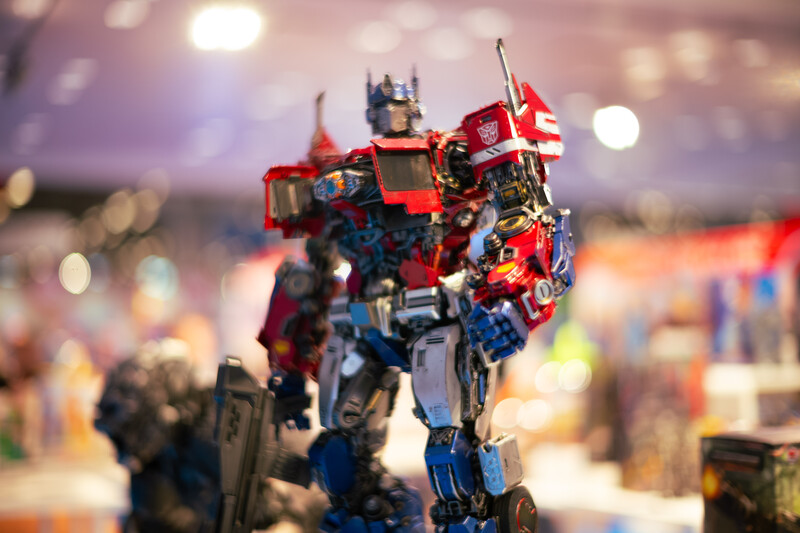
You can use these classic lenses for any scene, but they shine best when used wide open to isolate a subject from its background. This forces you to think about the entire composition. If you were to take a photo of a person leaning on a plain white wall, you wouldn't get the maximum benefit from these lenses even if you were shooting wide open. A modern lens would have been a fine choice for that shot. The unique rendering from these classic reissues would be more dramatic if you selected a background with busy elements and you placed the subject 10 feet away. Blurry leaves and lights are great choices here, although you need to take care not to overuse these elements to the point that your photographs become predictable.

When I first began shooting with Leica M cameras, my biggest problem was not being able to photograph my subjects up close. Although I had spent a lot of time reading about M cameras on Leica forums, I wasn't aware that the rangefinder focusing mechanism does not allow the camera to focus closer than about 0.7 meters. The Noctilux and Steel Rim are based on older designs and have even greater shooting distances of 1 meter. This increase in shooting distance was a constant source of frustration for me, even when I was taking casual photos. I recall sitting across the table from my wife in a restaurant, and I couldn't take a simple shot of her without moving my chair back from the table. If I were purchasing a Leica 50mm, I would choose the 50mm Summilux, which focuses at 0.4 meters when decoupled from the rangefinder, over the Noctilux. Although I would lose the pleasing soft focus and the exaggerated out-of-focus elements of the Noctilux, I would gain the ability to shoot closer to my subject, allowing me to create dramatic images with clear separation between foreground and background.
Because these lenses are not 100% sharp, focusing can seem easier with these remakes than with their modern counterparts. Suppose you miss focus by a millimeter or two with the Steel Rim. The softness isn't apparent because there isn't much difference in sharpness between an image where you nailed focus and one where you missed it by a hair. By contrast, the current iteration of this lens, the 35mm Summilux FLE, is tack-sharp in the center. When you miss focus, it is noticeable. The Steel Rim is also forgiving because photographs taken with this lens shine when your composition incorporates background elements that look interesting out of focus. You want the viewer to focus on the full image, not just the subject, when using the Steel Rim.
Before getting my hands on these lenses, I had watched videos and read user reports about both. Often, the reviewer will compare the reimagined lens to an original version made decades ago. The conclusion is that the new lenses render scenes very close to those of the originals, but the rendering is not identical. These tests are meaningless to me. Leica's promise is that the lenses from the classic line will be noticeably different from the brand's current offerings. In that regard, the lenses excel. I can tell the difference between images taken with the Steel Rim and the FLE at the most casual glance.

I brought the Steel Rim to a gallery that hires me to photograph several exhibits throughout the year. My wife was attending a floral arrangement workshop there, and I went to pick her up. I wasn't hired to cover the event, but I shot the participants for about 15 minutes as a gift for my client. I told her that I was using a special lens that was not tack-sharp and that the images might look a bit different than what she was used to from me. The photos I turned in looked dreamy and surreal. White flowers were often blown out and the classic Leica glow was visible. My client texted me, "OMG, I love the soft effect of that lens!!!! You should use that for all our events."

The imperfections of these lenses were a perfect fit for the subject matter. I don't think this look would work for every exhibit at this gallery, and I'm certain it would become boring if overused. But as I discussed in an earlier article about Leica's camera offerings, Leica seems to be the only camera company that understands the value of a tool that is useful in only a limited number of scenarios. Other camera makers focus on creating tools suited for any use case.

Pixel-peeping to determine exactly how different the new Noctilux or Steel Rim is from the original misses the point. The only concern for me is whether the look is reminiscent of that lens, and whether the difference between the recreation and the rendering of the 50mm or 35mm lens I normally use is noticeable.

The original Steel Rim was prone to flare. While this may look cool for certain shots, it isn't necessarily a characteristic you wanted back in 1966 when the 35mm Steel Rim was your only 35mm lens. Flare is most likely to occur when shooting wide open. In the days when most photography was done at ISO 100 or 400, shooting wide open was common to avoid underexposure. Today we shoot wide open for the look of the out-of-focus elements rather than out of necessity to let light into the image. When flare appears in your image because you had no other option than to shoot wide open, and you don't have the option of shooting the scene without flare, you might not see flare in the photograph as a good thing.
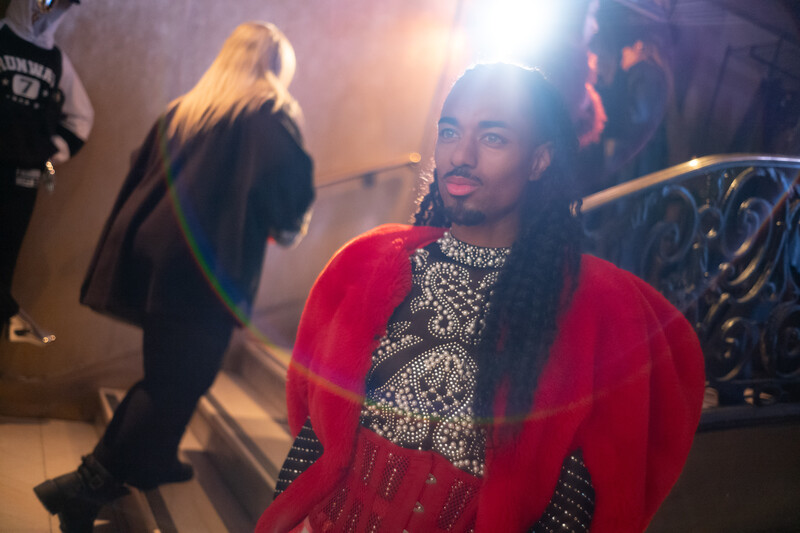
The 35mm FLE does not flare. Most modern lenses don't, which makes a lens that is prone to flare something special. Modern cameras can shoot at faster shutter speeds than in the past, allowing you to shoot wide open whenever you want. I kept shooting the Steel Rim directly into light sources, hoping to create flare. I was successful, but I never managed to create flare in a photograph that had a strong composition or a compelling subject. Still, I could see the potential in using the lens in situations where I had control over what I was shooting, and I could look for a location that would create flare, then move my subject to that area. Even though I didn't capture a great photograph with flare present, the fact that the Steel Rim was prone to flare was one of the things I liked most about the lens.

I brought the two lenses and the M11 with me to a workshop I taught for a group of students enrolled in the NYCSALT photography program. I taught them a headshot lighting technique, and we discussed strategies for posing a subject. I also showed how we can use the Evoto software for tethering to display retouched images in real time for our client. The M11 is the state-of-the-art digital camera that follows a lineage that began with the M3 in 1954. It is remarkable how similar the cameras are in design. A photographer from 1954 would be able to take photographs with the M11 as easily as they could with their M3. Equally remarkable is the fact that I can tether the M11 to a computer to access AI-based retouching as easily as I can attach my state-of-the-art Nikon Z9.

I took the two lenses and the M11 to a New York Fashion Week show run by Runway 7 Fashion. The first time I photographed shows at NYFW was September 2000. Back then, the shows were attended by industry insiders and staged to present the latest collection to movers and shakers in the fashion industry. Today, the shows I attend are staged for social media influencers, and it is very easy to acquire a press credential. There are as many people photographing the shows as there are watching the shows. I don't understand the business model: who is paying to stage these shows, and how anyone is making a profit. Still, I love attending these shows because they offer interesting photographic opportunities.

At the Runway 7 shows, models often walk around between shows, and they are very accommodating of photographers. It's a messy scene, with photographers shooting on staircases, in hallways, and outside restrooms while hundreds of attendees try to access the same areas. It's amazing to think that I am photographing a modern interpretation of a fashion show with a camera and lens virtually identical to what I would have used in 1954. Despite the M11 being a digital rangefinder, it has no more controls, dials, and buttons than the Leica M3. That is a testament to how well-designed the original M cameras were and to how clever Leica has been in modernizing them. They've walked the line perfectly between adding improvements and preserving the camera's essence. It is worth noting that when we switched from SLRs to DSLRs, every camera company started a new naming convention. Nikon's first professional DSLR was the D1. Nikon viewed this camera as a new paradigm and not a direct successor to the F5 film camera. Leica was the only company to maintain consistent naming across film and digital cameras. The M7 was a film camera. The M8 was digital. For me, this was an indication that Leica understood the importance of incorporating as much of the M7 as possible into the M8, rather than seeking to reinvent the M series cameras simply because we were transitioning from film to digital.
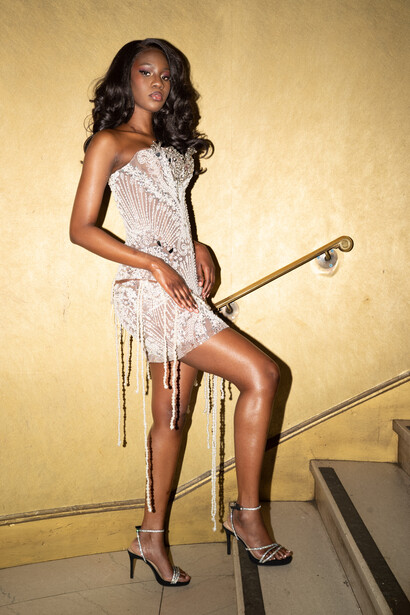
The magic of these lenses is only visible when shooting wide open. This limitation can be problematic if you are shooting outdoors during the day and cannot set the camera to a sufficiently high shutter speed. Shooting wide open is also difficult when you are dealing with a moving subject. Depth of field is shallow and unforgiving on the Steel Rim and even more so on the Noctilux f/1.2. You can use the Steel Rim and Noctilux to render scenes in both modern and classic ways. If you shoot wide open, you will have the look of a lens created decades ago. If you close down to f/5.6, your photograph will have a modern lens look.

One of the most rewarding aspects of using these lenses on a Leica rangefinder is embracing their limitations. Using the Steel Rim wide open, you can't shoot up close on your subject, nor can you focus accurately on a moving subject. As a result, thousands of shots are unavailable. These shots would be easy to capture on my Nikon Z9. Using a Leica rangefinder helps you appreciate how versatile modern cameras are. After shooting the Leica M10 for a few hours, I find it easy to nail shots on my Z9. The reward of using the more limiting Leica system in place of the Nikon comes from finding the shots available to you despite the lens and camera's inherent limitations.
I embrace the difficulty of taking good photographs using a Leica M camera. Sometimes I think we're going to reach a point in the future when no one will understand why people chose to pursue the process of taking photographs as a creative pursuit or hobby.

Had I used my Z9 at the gallery or NYFW events, my keeper rate would have been higher. The photographs would have better dynamic range, exposure would be spot-on, and the subject would be tack-sharp in every shot. However, I enjoy the image-making process more when I force myself to overcome limitations. We've made the process of taking photographs so effortless that I sometimes fear the craft of photography will go the way of driving a manual transmission. There was a time when people chose manual transmission cars because it made them feel more in touch with the driving process. Today, most drivers are like me: we don't care about the process. We want to get to the destination as quickly and smoothly as possible. It's hard to believe that people used to go for a Sunday drive just to enjoy the ride. When it comes to photography as an artistic pursuit, each time we make the process easier, we lose as much as we gain. It's all so easy now that the process can feel unrewarding, even though our photographs are better than ever.
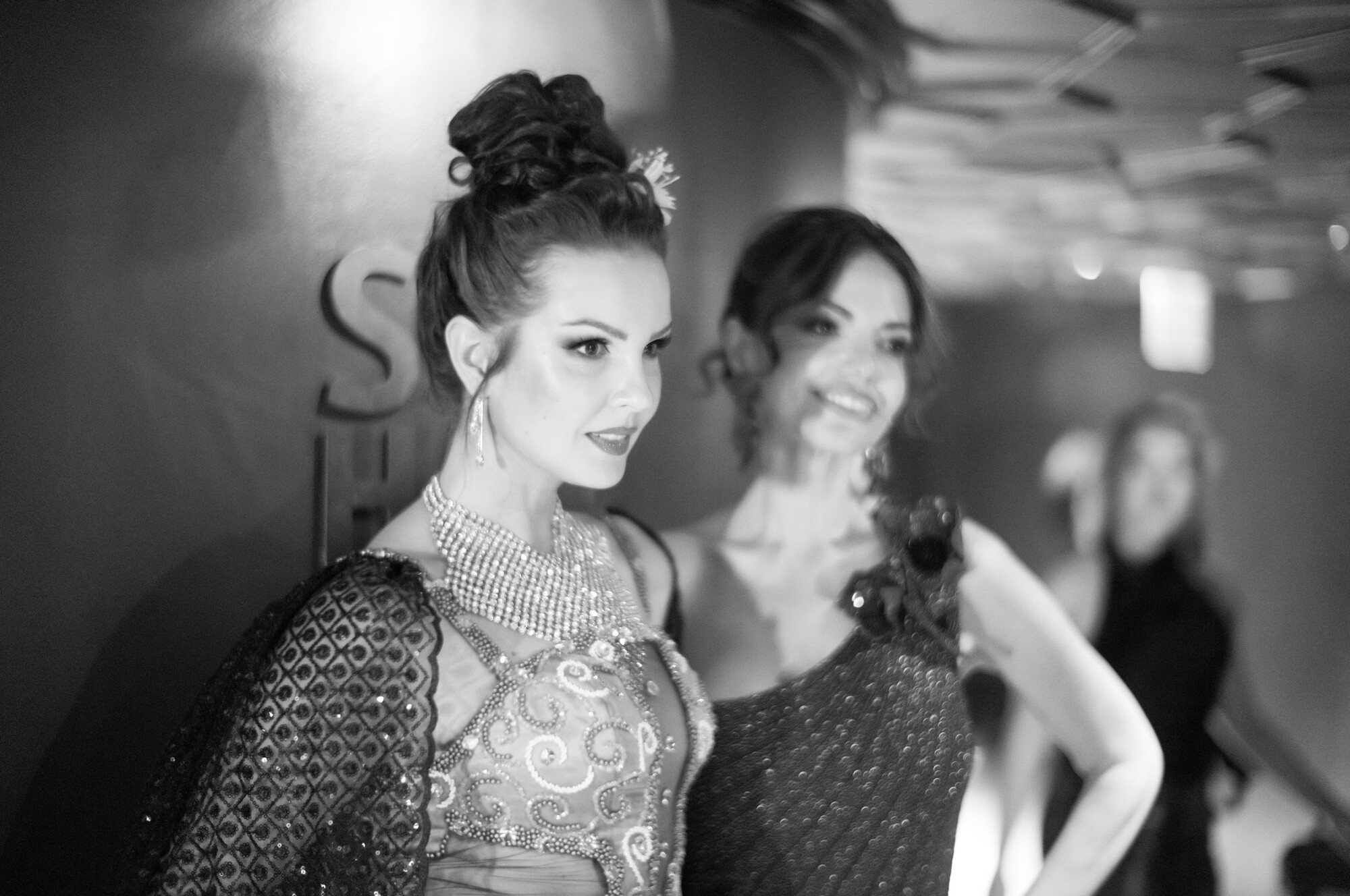
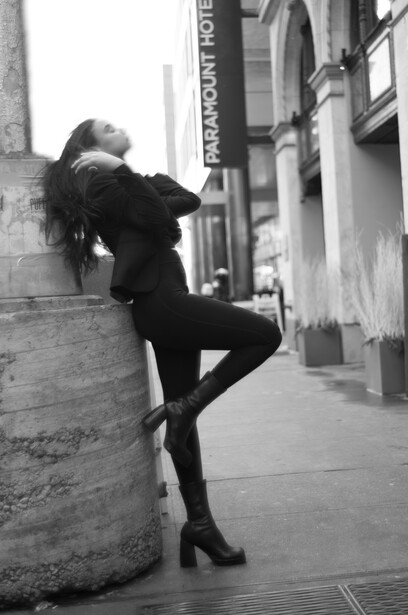
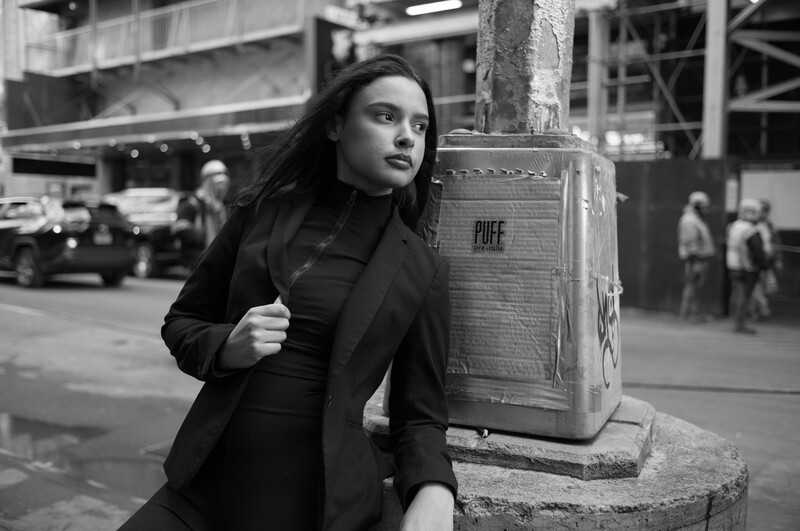
Leica M11 Monochrom with 50mm Noctilux f1.2 reissue. Photograph by John Ricard
Leica M11 Monochrom with 50mm Noctilux reissue. Photograph by John Ricard
Young shooters may enjoy the photographs they create, but they don't seem to have much interest in the process of taking photographs, at least not in the traditional sense. Today's shooters don't want to focus the camera. They don't even want to set the focus point. They don't want to determine the correct exposure. They don't want to move closer to their subject when zooming in is so much quicker. They don't want to look through the viewfinder. When the shoot is over, they don't even want to look through the day's take, preferring an AI-based software program to pick out the strongest images for them. Each new iteration of our cameras reduces our immersion in the process.
In the same way that Tesla doesn't offer a vehicle with a manual transmission, Nikon, Canon, and Sony don't offer a tool that fully embraces the process of taking photographs. That's why I'm grateful for Leica. They understand there is joy to be found in the struggle to create. As long as Leica stays on its current path, I will continue to embrace its cameras and lenses—including the Noctilux-M 50mm f/1.2 ASPH and Summilux-M 35mm f/1.4 "Steel Rim" mounted on an M11—despite offerings from the aforementioned brands being technically superior.





Join the Fstoppers community for free
-
Post comments and join in the discussions
-
Browse the site ad-free
-
Share your work and get featured in the community
-
Compete in the photo contests for fun and prizes
No comments yet