
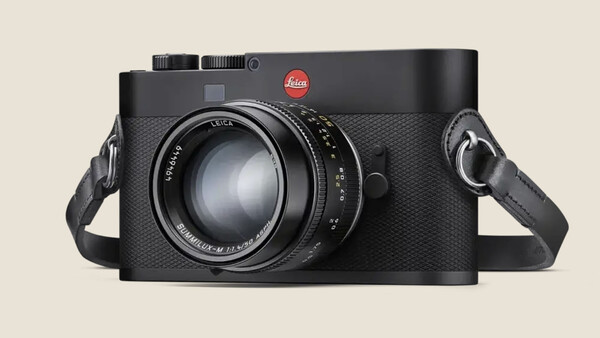
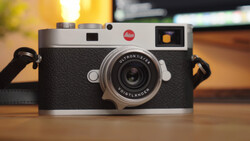
Leica launches the first M with an integrated electronic viewfinder, the Leica M EV1. But what will the M purists say?
This is a big moment for Leica. Huge, actually. After 71 years of M-rangefinder cameras, Leica is introducing a rangefinder-style M with an EVF instead of a rangefinder patch. Leica purists will hate this; others will embrace it. Sit back with your popcorn, and enjoy the angry comments and endless debates on social media over the coming months.
Despite the shock and horror for many, Leica isn’t abandoning their rangefinder cameras any time soon—they’re simply introducing another option. Why? Well, it’s likely due to the success of the fixed-lens Q series introduced 10 years ago. Its popularity has grown from strength to strength. The Q offers the joy of a simple classic rangefinder experience, but with an electronic viewfinder instead of an optical rangefinder. This has made things much easier for many photographers.
Because of this, isn’t it an obvious decision to make a Q-like camera with the benefits of an EVF, and the ability to change lenses? I think so.
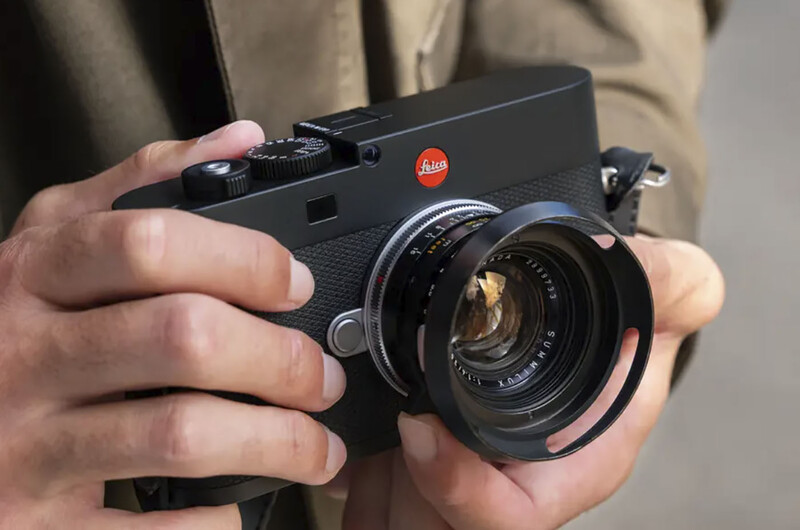
Benefits of an EVF
- Real-time exposure preview: An EVF is tied to the sensor, so you can see exactly how your settings will affect the image. You don’t have to guess your exposure. You can have a live histogram in the EVF, which is very useful.
- Accurate focus: You have the benefit of focus aids in the Leica M EV1 and can accurately focus with focus peaking and magnification. The one thing I love about the Q cameras is the ability to manually focus and zoom into the image through the EVF to check focus accuracy.
- Low light: An EVF allows you to compose and focus more easily in low-light situations.
- Additional aids: In an EVF, you can add a grid to help you compose, include a level to keep your horizon true, and adjust the built-in diopter—a huge deal for those with less-than-perfect eyesight or glasses.
Benefits of an Optical Rangefinder
- Direct optical view: You look through a window and see the actual scene, not a digital representation of it. You also have the ability to see outside of the framelines, which can be helpful for things like street photography.
- Immediacy: There’s no delay or lag with an optical rangefinder; what you see is what you get.
- Experience: This is more of an emotional benefit but important nonetheless. The rangefinder experience is part of the Leica heritage. It’s a pure photography experience.
- Less distraction: Some may like grids, levels, and other info in their viewfinder, but others prefer nothing and seek a cleaner view of the image in front of them.
- Battery life: With fewer electronics working and no live preview, batteries tend to last much longer.
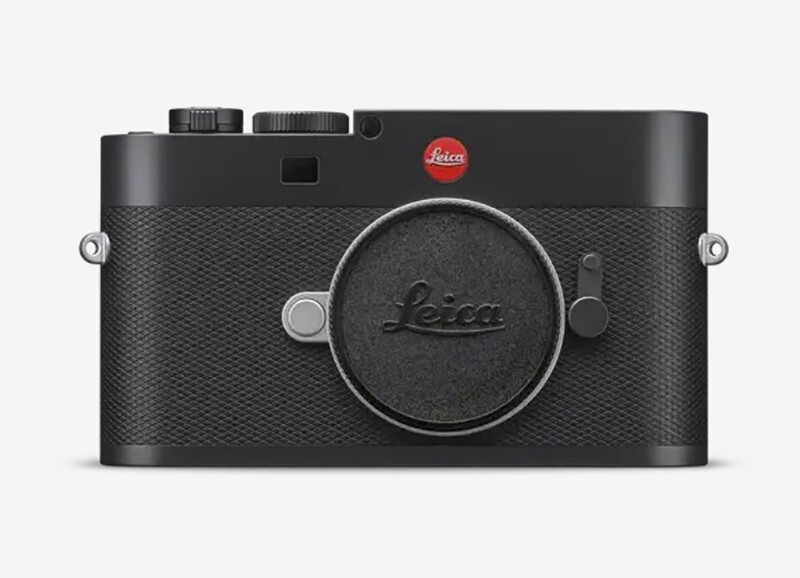
Leica M EV1 Specifications In a Nutshell
- Sensor: full-frame BSI CMOS – 60.3 MP
- Processor: Leica Maestro series (Maestro III)
- Internal memory: 64 GB
- Storage medium: UHS-II (recommended), UHS-I, SD/SDHC/SDXC memory card (SDXC cards up to 2 TB)
- Material: full-metal housing made of magnesium and aluminum, leatherette cover
- Mount: Leica M bayonet with additional sensor for 6-bit encoding
- EVF: 5,760,000 dots, 0.76× magnification, 100% frame coverage
- Shutter: Mechanical shutter – 60 min to 1/4000 s; electronic shutter – 60 s to 1/16,000 s. Flash sync up to 1/180 s. Optional noise reduction via additional “dark frame” (can be disabled)
- Self-timer: 2 s or 12 s delay time
- Burst shooting:
- Single
- Continuous – Low Speed (3 fps)
- Continuous – High Speed (4.5 fps)
- Interval shooting
- Exposure bracketing
- ISO:
- Auto ISO: ISO 64 (native) to ISO 50,000; also available in flash mode
- Manual: ISO 64 to ISO 50,000
- Weight: Approx. 495 g with battery
The Bottom Line
This is a fabulous—and long-awaited—addition to the Leica M line-up.
If you want speed and flexibility, the ability to preview your photos immediately, and the convenience of working easily in various lighting conditions, then an EVF gives you many practical advantages.
If you want a more deliberate and minimalist experience, enjoy manual control, and appreciate a traditional workflow, then a rangefinder is for you.
So you have pros and cons to both systems, and it’s pointless debating what’s best. There actually isn’t a “best.” Just choose what works for you, get off your computer, walk away from the futile and biased opinions in user groups, and go out and shoot!
The Leica M EV1 will retail at $8,995.



Join the Fstoppers community for free
-
Post comments and join in the discussions
-
Browse the site ad-free
-
Share your work and get featured in the community
-
Compete in the photo contests for fun and prizes
9 Comments
What does the M mean Leica?
M is “Messsucher,” which means “rangefinder.”
Exactly my point. RANGEFINDER as in there isn't one, hence it's not an M.
In Mercedes, “E” originally stood for Einspritzung (fuel injection), but today it’s just a class name with no technical meaning — pure heritage. Leica follows the same logic.
Nice update, and definitely a well-justified one. The logic behind it is clear. Many Leica users have a collection of unique and rare lenses that just don’t perform the same on other cameras, even with Leica’s own adapters. And since the average Leica owner tends to be on the older side, not everyone finds a rangefinder comfortable anymore — eyesight just isn’t what it used to be. Still, most of them, I think, want to keep the joy these lenses bring to the shooting process. So this is a great alternative, and it’s even cheaper than the original.
For me personally, the rangefinder is exactly why I bought the camera in the first place. Nothing else delivers the same kind of result.
WOW 9K for a camera, Leica has one customer in mind, Hedge Fund / CEO / trust fund baby. I'll stick with my SONY A6400 thank you. Its not the camera but the photographer that takes good pictures.
I agree it is expensive, but you're paying for the user experience. The simple design, quality materials, lack of technology—it adds up to something not available with any other camera brand. With the exception of Hasselblad.
"You have the benefit of autofocus in the Leica M EV1 ". There is NO autofocus in this camera.
Correct, I meant to say focus aids.