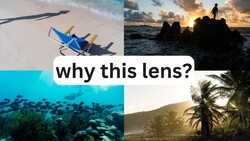
Most people learn lenses as a set of assignments: wide angle for landscapes, telephoto for portraits, a 50mm for everything in between. Those assignments are easy to memorize, and they quietly limit how many different photographs you can pull out of a single scene.
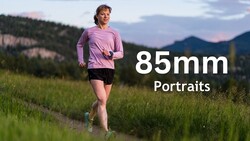
Brenda Bergreen of The Bergreens treats the focal length as nearly the last decision. It comes only after you know what the photograph is supposed to say. Her example is a climber on a cliff. That one moment could become a portrait of the climber, a picture about the size of the rock face, a picture about fear and exposure, or a picture of the landscape the climber is moving through. To show this in practice, she photographs a mountain biker on one stretch of trail three ways. With an 85mm up tight, the image is about the rider. With a 24mm or 35mm from close in, you get the rider plus the trail, trees, and rocks. When she backs far away, the rider shrinks until the land takes over. This approach helps most on days when a location feels used up after one frame, because each of those stories calls for a different camera position before it calls for a different lens.
Once the story is set, Bergreen asks what visual effect will carry it. The first choice is context versus isolation, and she frames it as a spectrum rather than a switch. You can isolate someone and still leave enough background to place them, or you can make an environmental portrait where the person clearly dominates. Some of her favorite images come from deliberately breaking the expected pairing. A headshot with an 85mm is predictable, but a full-length portrait with the same lens can be striking. She is also precise about compression. Distance creates it, and the longer lens, maybe a 200mm or 300mm, simply frames the shot from that farther spot. Background blur gets the same treatment as a combination of focal length, subject distance, background distance, and aperture. None of those four settings does the job alone.
Phones have trained a lot of people to choose by number. Current flagship models from Apple, Samsung, and Google carry ultra-wide, main, and telephoto cameras, labeled with multipliers like 0.5x, 1x, and 3x or 5x. Tapping between them from one spot is fast, and it makes focal length feel like a zoom control rather than a decision about where you stand. A dedicated camera is no different. A 24-70mm zoom used from one position only changes the crop, while walking 20 feet closer or farther changes how foreground and background relate. One habit undoes this. Pick your distance from the subject first, with the lens set aside, and then pick whichever focal length frames the scene from that spot. A short exercise helps it stick: tape a zoom at one setting for an afternoon, or carry a single prime, and force yourself to solve every frame by moving. After a few outings, you start reading a scene in terms of distance and relationships, and the lens becomes the tool that finishes the idea.
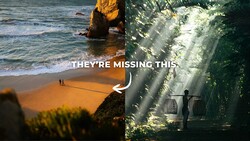
Bergreen's third question is one she thinks often gets overlooked: how close do you want the viewer to feel? Get physically near with a wide angle lens, and the picture turns immersive. The rider comes straight at you, the trail wraps around the edges, and you feel like you're standing there. She points out that this is part of why photojournalists and wedding photographers tend to like wider lenses, since they can step into the moment and bring the viewer with them. Shoot from farther back with a narrower field of view, and the viewer becomes an observer looking at something happening over there. Asking whether the person looking at your photo should be standing in the scene or watching it from a distance changes a lot of choices at once. It affects where you stand, how much of the surroundings you include, and how intimate the result feels. She then turns to the cases where wildlife, cliffs, crowds, sidelines, or a narrow trail decide where the camera can go, and she brings everything together in a four-question checklist to run through before you open the bag.
Bergreen runs through her four-question checklist for choosing a lens at the end of the video.
Join the Fstoppers community for free
-
Post comments and join in the discussions
-
Browse the site ad-free
-
Share your work and get featured in the community
-
Compete in the photo contests for fun and prizes