Shooting in low light is one of the most technically demanding situations in photography, and a handful of bad habits can quietly ruin your results before you ever open an editing program. Most of these mistakes are easy to fix once you know what to look for.
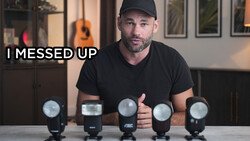
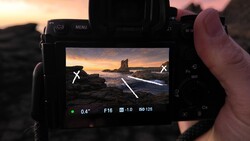
Coming to you from Robin Wong, this practical video covers five common low light shooting mistakes, with Wong demonstrating each one using the OM System OM-1 on location in Kuala Lumpur. The first mistake is one most people would never suspect: using silent shutter in low light. When you shoot at high ISO values, say ISO 6,400 or above, electronic shutter produces noticeably more noise than mechanical shutter. Wong shows this directly on the OM-1, with side-by-side results that make the difference hard to argue with. Silent shutter has its place, like in a recording studio or on a golf course, but if noise from the camera isn't a concern, mechanical shutter is the better call.
The second mistake is equally counterintuitive. Turning on noise reduction in Olympus and OM System cameras doesn't actually reduce noise the way you'd expect. What it activates is dark frame subtraction, a method designed to eliminate hot pixels during long exposures. Hot pixels and noise are not the same thing. On top of that, engaging noise reduction forces the camera to take two exposures and process them together, which significantly slows down shot-to-shot performance. Wong demonstrates this live, toggling the setting on and off to show just how much the camera bogs down. His recommendation is simple: leave noise reduction set to auto, and the camera will engage it only when shooting long exposures, which is exactly when it's actually useful. The third mistake is auto ISO. Most cameras, and especially Olympus and OM System bodies, tend to push ISO aggressively in dim conditions. Wong shows the camera jumping straight to ISO 12,800 in a situation where ISO 400 produces a sharp, clean, perfectly usable image at 1/16 of a second.
Mistakes four and five get into exposure discipline and shooting technique. Underexposing is one of the most damaging things you can do to a low light image, even when shooting raw. When you try to recover shadow detail in post, that's where noise becomes a real problem. Getting exposure right in camera, as close to your intended result as possible, saves you from fighting noise after the fact. The fifth mistake, and arguably the most avoidable one, involves shooting habits: stopping down to f/4 or f/5.6 when you have a fast prime lens in your bag, or holding a shutter speed of 1/1,000s when nothing in the frame is moving. Opening up to f/1.2 or f/1.8 and dropping to 1/100s or even 1/60s lets in dramatically more light, which means you can stay at ISO 400 or 800 instead of ISO 3,200 or 6,400.
Check out the video above for Wong's full breakdown, including the live camera demonstrations that make each mistake concrete and easy to understand.




Join the Fstoppers community for free
-
Post comments and join in the discussions
-
Browse the site ad-free
-
Share your work and get featured in the community
-
Compete in the photo contests for fun and prizes
1 Comment
Love it, particularly since Robin speaks my lingo with the OM-1. You don't see that often.