The gap between knowing what you want to make and actually making it is one of the most common struggles in creative work. It's not laziness, and it's not a lack of discipline, even though that's the story most people tell themselves.
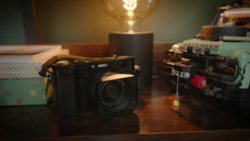
Coming to you from Rick Bebbington, this candid video cuts straight to the pattern that keeps creative people stuck, and it's probably not what you think is causing it. Bebbington argues that the real problem isn't procrastination or motivation. It's the gap between inspiration and action. Inspiration has a short shelf life, anywhere from a few hours to a couple of days, and if you don't act inside that window, life fills the void. Then the pressure builds, the stakes feel higher, and suddenly whatever you wanted to make has to justify the wait. That's when the internal voice kicks in, telling you it won't be good enough, that nobody will care, that you should wait until the light is better or you have the right camera or lens for it.
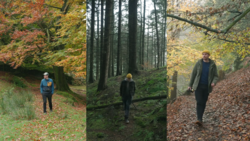
Bebbington draws on his own years of stopping and starting, as well as work with clients at very different points in their creative lives, to make a case for something he calls specificity. "Go out and take more photos" isn't an action, he says. It's a direction. A real action has a time, a location, a duration, and an achievable outcome. His example: every Tuesday on your commute, take your camera, leave half an hour early or arrive home half an hour late, and spend that time shooting whatever catches your eye. That's specific enough to follow through on without deliberating, and the lack of deliberation is exactly the point. The goal isn't to make your best work. It's just to make something.
What's compelling here is the logic around constraints. Bebbington makes the case that creative freedom, counterintuitively, can be what keeps you stuck. When everything is possible, decisions pile up and overwhelm sets in. A constraint, whether that's one lens, one location, or one hour, forces a decision and removes the friction. He worked with clients who hadn't shot anything in weeks, not because they didn't want to, but because the next thing felt too large and too undefined. A few minutes spent making it smaller and more specific was enough to break the pattern. Once you break it once, you know you can do it again. Check out the video above for the full rundown from Bebbington.



Join the Fstoppers community for free
-
Post comments and join in the discussions
-
Browse the site ad-free
-
Share your work and get featured in the community
-
Compete in the photo contests for fun and prizes
No comments yet