
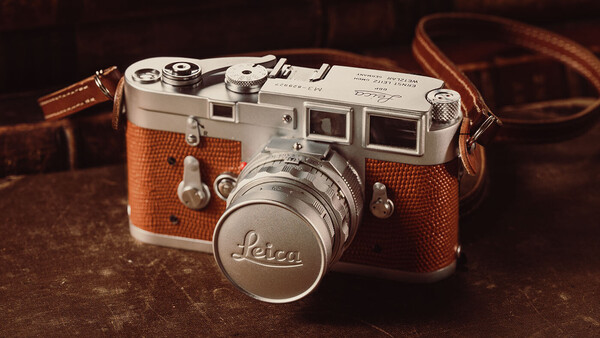
I know I've talked about my renewed interest in old film cameras before. Therefore I won't go over old ground in detail. I'll just say the main reason was the desire for a pure photography experience once again, without technology getting in my way. The only new digital camera that has given me that so far is a Leica Q2 Monochrome I purchased three years ago. I've enjoyed the experience so much, in fact, I craved more. Well, really I should say, I craved less!
Shooting with a modern Leica is an experience unto itself. It's incredibly rewarding. My Q2M is so well designed and made, it's such high quality, you can really feel that when you hold it. And this makes you want to hold it and use it continuously, over and over. So it was natural then, to start thinking about owning an analog Leica. But which one?
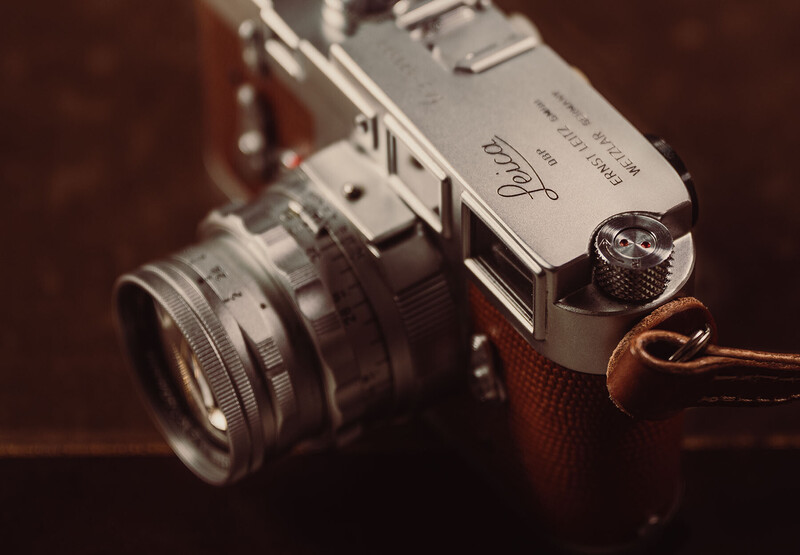
The Leica M3
After months of research, I realized the best Leica ever made was their first M model, the M3. Launched in 1954, it was the world's first camera with a combined viewfinder/rangefinder that meant focusing became faster because you only had to look through one window in the back instead of two. It also introduced a bayonet M mount that is much quicker than the older screw mount when one needs to switch lenses.
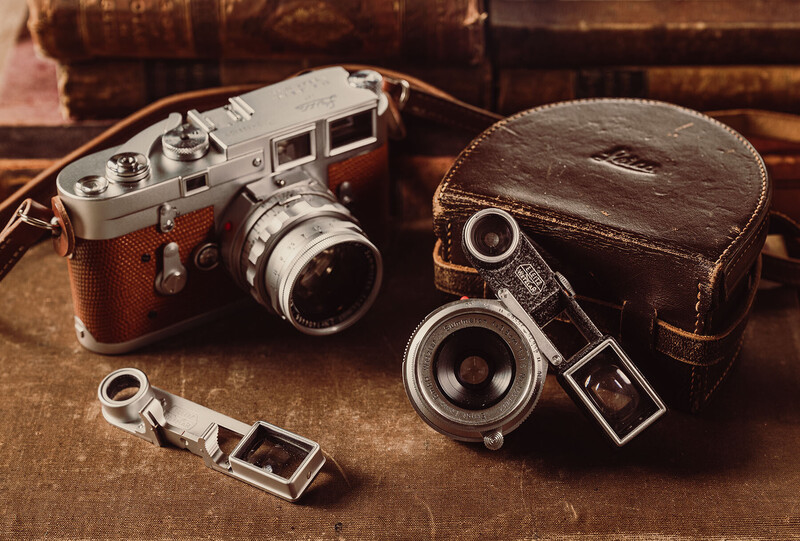
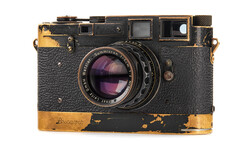
The Leica M3 is a piece of photography history, and it reminds me of a fine vintage Rolex watch. It's solid and reassuring to hold, has a silky-smooth quiet shutter, is made with the finest components, and is assembled expertly by hand. Many of the internal components, along with the top and bottom plates, are made of brass. Even the latest M film camera made by Leica—the M6—cannot boast this. The M6 is made with lighter, cheaper materials than the M3—including a couple of plastic components, heaven forbid—but let's not tell those hipsters that love them so much. And then there's the matter of understated taste. An M3 doesn't need to advertise its model number or brand name in a large typeface for all to see. The M6, in contrast, has a Red Dot logo, and the word "LEICA," along with "M6" in large white type. How uncouth.
Another huge factor to consider is price. A new M6 will set you back a whopping $7,000, while a good-condition M3 can be found for as little as $1,200.
Some may say the M3 has limitations because it's hard to use a lens wider than a 50mm on it. The camera was designed for a 50mm focal length, along with 90mm and 135mm. Those are the three viewfinder frames in the camera, hence the "3" designation. The "M" stands for Messsucher, which is German for rangefinder.
If you need to shoot wider than 50mm, you can buy a Summaron 35mm lens with added "goggles" to help you see a 35mm field of view, or you can use external viewfinders for an even wider focal length.
Many of the best photographers during the '50s and '60s loved this camera with a 50mm focal length. If it was good enough for the likes of Henri Cartier-Bresson, Robert Frank, Elliott Erwitt, and Lee Friedlander—then it's good enough for me.
One fun fact: it has the best viewfinder ever put in a Leica. It's the only M camera to have a 0.91 magnification. It's bright, precise, and very easy to focus at wide apertures.
Buying An M3
A finely crafted old Leica, if looked after, should work as well as the day it was made. But if you're looking to buy one, you can run into problems, so you need to look out for a few things.
All the components inside the M3 are top quality, including cogs and springs—that are well designed and skillfully assembled with the utmost precision. But those components can become misaligned if the camera was dropped. So the first thing to look for in a vintage camera is dents. I personally would avoid a camera that has evidently been dropped, particularly if there are dents on the top plate.
For everything to work, all the parts were lubricated when originally assembled. Unfortunately, as the decades roll on, the lubrication can gum up and become sticky, which means things like small delicate cogs don't turn so easily. A common issue is the shutter speeds not working properly, or sticking. Mine stick when selecting 1/5 or lower, but I don't shoot that slow, so I'm not too bothered. It may become a problem down the road though, which means the camera will need a really good service. You need to consider that whatever the condition of the camera you're looking at, factor in a service. We commonly refer to a service as a CLA—cleaning, lubrication, and adjustment. You need to do your homework on who to trust to service your M3, but that topic is a whole other article. I will say though, proper service by a trusted expert could easily start at $400+.
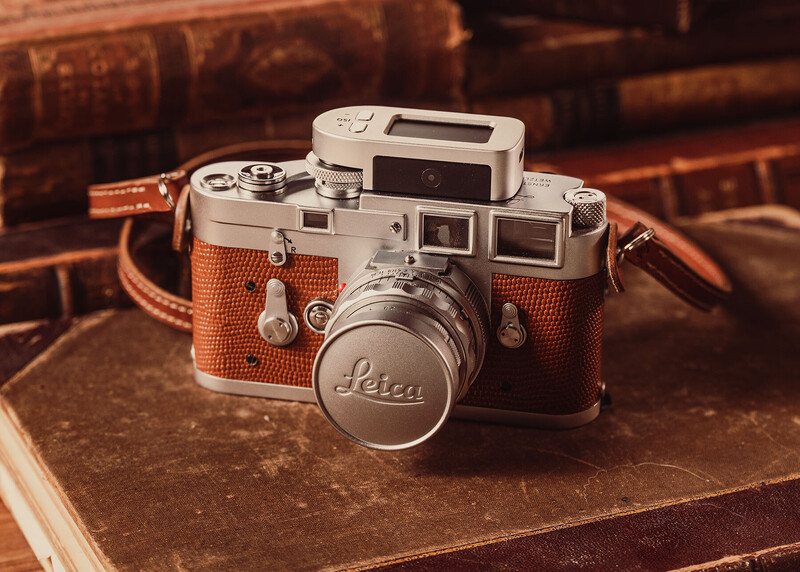
Finding a good-condition M3 took me a little time, about 16 months of searching online stores and Facebook Marketplace. Prices and condition can vary greatly with this camera, so you need to put in the time and do your research. But I finally found one, an early dual-stroke version from 1956, with "Buddha Ears." These larger strap lugs look nicer than the smaller ones that were introduced a few years later, in my opinion. It was being sold with a Summicron 50mm f/2 Dual Range made the same year—a perfect pairing. I bought my Leica to use mostly as a 50mm camera and keep things really simple. I'm enjoying the experience of this limitation.
The Leica M3 was in production from 1954 to 1966. Some 220,000+ of them were made, with around 7,000 coming from Leica's Canadian manufacturing facility in Midland, Ontario. Despite what some may say, the Canadian M3s were as good as the German-made M3s. Many Leica employees, including top optical designers, moved to Canada to work when the factory was set up.
M3s don't have any electronics in them, so there's little to go wrong. They don't break for no reason like many modern cameras; they just keep working. My M3 still has the original black wax seal in it, which means it's never been serviced. It was made in 1956, so it's still working after almost 70 years! To this day, the M3 remains Leica's best-selling camera. And they still service them too, which is impressive.
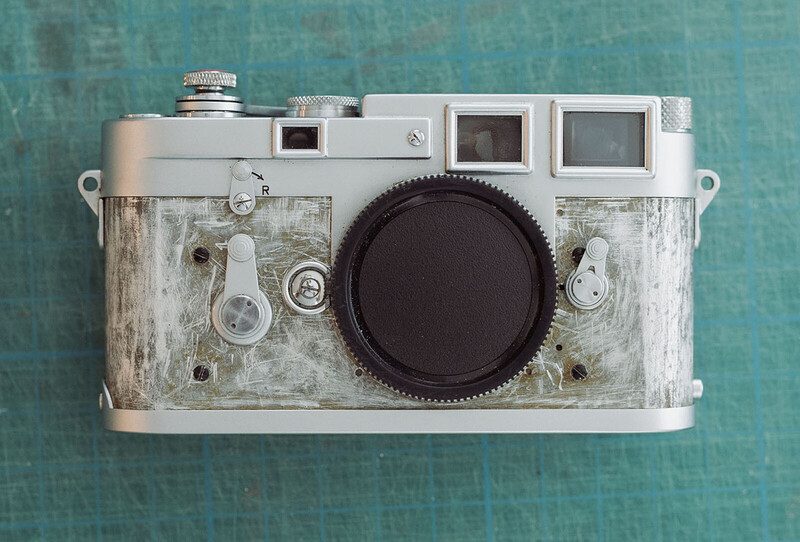
A Cosmetic Problem
The one issue you will likely encounter with buying such an old camera is the black Vulcanite grip—made of hardened natural rubber—that over time becomes very brittle and pieces fall off. Having such a beautiful chromed brass camera with a scruffy covering that's crumbling away is cosmetically very unappealing. My Vulcanite was intact when I got the camera, because the camera had been sitting in storage for decades and hadn't been used. But once I started to take it out and use it, it quickly crumbled.
After some research, I found a company in Japan called Aki-Asahi that makes real leather replacement skins in a variety of colors. The quality is top-drawer, and I ended up with three different colors. I have a black set if I ever needed to restore the camera to its original-looking condition for resale, but decided to fit the ochre brown version for now, that matches my handmade leather F4 strap from Fab' in Canada.
Scraping off the old Vulcanite, and installing the new leather takes a little care, but is easy to do. My camera now looks stunningly gorgeous at 70 years old.
What People Tell Me They Don't Like, and My Responses
Skeptic photographer: "I don't like the film spool loading design."
My response: "It's fine once you've loaded a few rolls. I find it to be a good design, and quickly got used to it."
Skeptic photographer: "I don't like the rewind knob, it takes too long to wind the film back into the canister."
My response: "What's the hurry, you have a bus to catch?"
Skeptic photographer: "It doesn't have a light meter!"
My response: "You don't need one. Learn the Sunny 16 rule. With practice, you can easily guess the exposure. Alternatively, buy an external light meter. KEKS makes a wonderful retro-style model (see below)."
Skeptic photographer: "I'm not buying a 70-year-old camera, it's too old!"
My response: "You're no spring chicken yourself, this camera will last much longer than you. Age has nothing to do with anything, but build quality does. The M3 was made so well, and it's all mechanical. No electronics to go wrong. It's relatively easy to service, and will outlast all the new cameras people buy today, full of electrickery." If you know where that last word comes from, you're as old as my M3!
Lenses
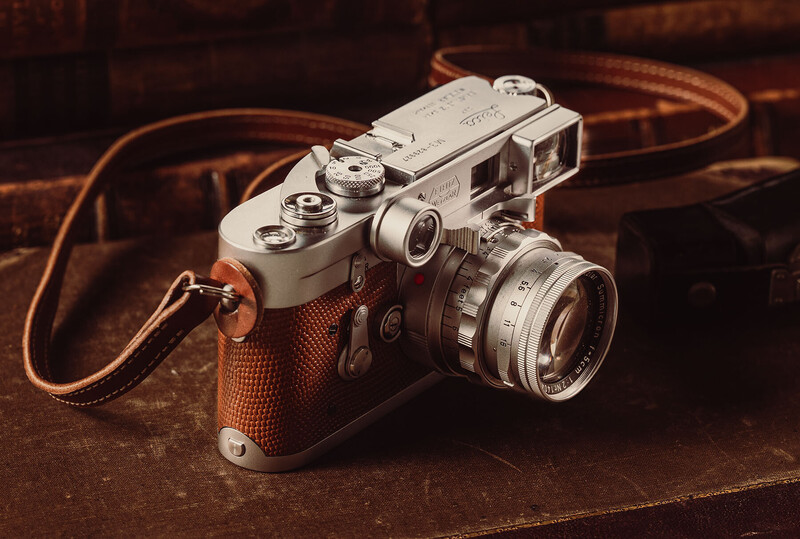
The one drawback with the Summicron 50mm f/2 DR lens on the M3 is the close focusing. The minimum focus distance is one meter, unless you have special "goggles" that slide on and allow close focusing from 0.88 m down to 0.478 m. Like most Summicron 50mm f/2 DR lenses you find for sale, mine was missing those goggles. But after 6-8 months of looking online, I found a pair on Facebook Marketplace in England, while I was there for a two-week visit. It turned out they were in perfect condition, and came with the original leather case. My little Leica 50mm lens now focuses closer than any other Leica lens made since. Most Leica M lenses only focus down to 0.7 m.
One of the main reasons to shoot on a Leica M system is the size of the lenses—they're often tiny. My 50mm is made of solid brass, so there's a little weight to it, but it balances perfectly with the camera. I find myself using it on my new Nikon mirrorless cameras with an adapter, because the image quality and character is unrivaled by anything made today.
Just recently, I found someone selling a Summaron 35mm f/3.5 with attached goggles designed for the M3, for those requiring a wider focal length. I was lucky to find this in such good condition, along with the original leather case. They're quite rare these days.
A big part of the enjoyment with this vintage setup is the searching, and then the excitement of finding something.
I may look for a 90mm lens at some stage, but that would be it; three lenses maximum is all I really need.
Has My Approach To Photography Changed?
Some say shooting on film slows you down, and makes you put more thought into your photography. Especially if you have no light meter. It forces you to look hard and think about your composition more.
No, it doesn't. You should be doing those things whatever camera you use.
I recently went on a beach shoot to document some old decaying boats. I took a Leica Q2 Monochrome, and the M3. I shot many of the boats with both cameras, capturing digital and analog images. I wasn't doing anything different with the M3 over the Q2. I always look for the best possible compositions, taking my time to make sure there was nothing in the frame that wasn't needed, or that objects in the mid-ground weren't overlapping with objects in the background or foreground. Nothing changed, so I fail to understand the reasoning that film photography slows you down. If it does, maybe you've been doing it wrong with digital.
You can watch that beach video below.
Exposure, and How I Made the M3 Even Better With a KEKS Light Meter
The M3 doesn't have any electronics or batteries, because there's no built-in light meter. This scares some photographers, but it shouldn't. You simply need to learn the Sunny 16 rule, which doesn't take too long to master. Negative film is very forgiving; you can veer on the side of caution and overexpose by around one stop and you'll be fine.
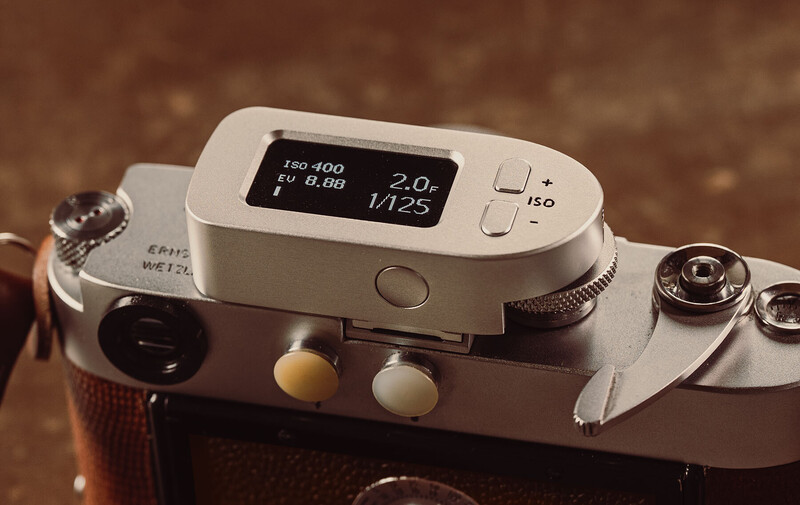
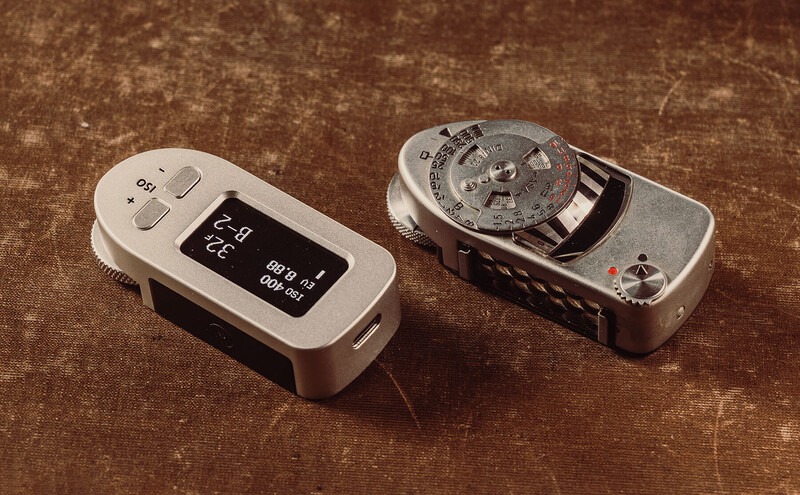
Alternatively, if you want to speed up your shooting and make life easier, you can buy an external light meter. I recently discovered that a Hong Kong-based company called KEKS makes a light meter specifically for early M cameras. It takes its design cues from Leica's light meter from the 1960s, and its retro aesthetic fits seamlessly with an early M camera. The M-Meter is compatible with Leica M1, M2, M3, M4, M4-2, M4-P, M-A, MD, and MD2 models, and comes in chrome, black chrome, or black paint.
I spoke with Donald Poon from KEKS, and he explained the M-Meter came to life when he purchased an M2 from a camera fair. It came with an original Leica MC meter that connects directly to the shutter speed dial. After using it, he found it extremely handy; it made metering much easier and significantly improved his workflow.
However, because of the age of MC and MR meters, most have become unreliable or broken and are nearly impossible to repair. When I bought my M3, it came with a non-working meter, which, after some research, I discovered wasn't repairable. Donald, however, had been making light meters for five years, and decided he could develop his own. He told me, "I believe the reason no one has made a new Leica-style meter in 50 years is the market size. It is a very niche product that only works on a limited number of non-metered Leica M bodies. As someone who loves the Leica M system, I took this on as a personal project. I never expected to sell them in large numbers; it was simply one of my favorite projects because it was something I personally wanted."
After many designs and discussions, it was decided the new meter would be based on the Leica MC model. "It wasn't an easy project, especially fitting a modern OLED-style light meter on top of a Leica M body, which is such an aesthetically beautiful camera. You wouldn't want to get it wrong and ruin the beauty of the camera."
From a distance, it looks exactly like the original MC meter, ensuring it doesn't look out of place and blends in with the camera aesthetically. When viewed up close, you will find it's an entirely newly designed meter with a 1.3-inch OLED display. This new display makes readings much easier to see under all conditions.
Since bringing it to market, KEKS has been really happy to see the Leica community embrace the product. Donald told me, "I realized I wasn't just solving a problem for myself, but helping many others as well, which I find very rewarding."
The M-Meter includes a setting menu to allow for more customization, such as exposure compensation and setting maximum and minimum aperture values. Additionally, it comes with a Leica M3 double-stroke mode. Early M3 double-stroke models used a completely different set of shutter speeds, and the new M-Meter is fully compatible with those.
It has a rechargeable battery with a USB-C port, that keeps the meter powered all day.
- f/1.0–128
- 30s – 1/1000s
- ISO 6 – 3200
- 24-month warranty
- Exposure compensation
- Max/min aperture
- Selectable aperture/ISO stops
Conclusion
An M3 is a precision instrument, built to an exacting quality not achieved with cameras made since then. There was zero compromise on any of the parts used in its manufacture. That's reason enough to want one. Its simple design, durable construction, bright viewfinder, and lack of computer-aided tech mean you can focus on the subject, not the camera. You set it and forget it. Paired with the perfect lens, it's a magnificent and significant piece of history, and pure joy to hold and use.
Yes, film stock and developing is expensive, but so is a visit to Starbucks. I make my espresso at home, and run a roll or two of film through my M3 every couple of months.
The M3 is the best camera I've ever owned or used. And now that Leica's latest offerings have recently increased in price yet again, an older model like an M3—paired with a Summicron 50mm f/2 Dual Range and a KEKS M-Meter—makes so much more sense.



Join the Fstoppers community for free
-
Post comments and join in the discussions
-
Browse the site ad-free
-
Share your work and get featured in the community
-
Compete in the photo contests for fun and prizes
1 Comment
All rangefinder cameras are easy to focus at wide open apertures, because the aperture setting has nothing to do with focus or focusing accuracy.
That said, I love my M3. It is an awesome piece of machinery and a fabulous imaging tool. I should get around to re-skinning mine...