Shooting large format film in an abandoned Welsh slate quarry sounds like a niche pursuit, but the images that come out of locations like this are unlike anything a modern digital workflow produces. The combination of 4x5 film, dramatic ruins, and unpredictable natural light creates a specific kind of pressure that forces deliberate, considered photography.
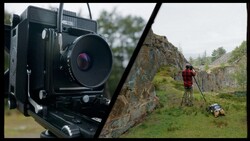
Coming to you from Kyle McDougall, this atmospheric video follows McDougall as he returns to North Wales to continue work on his long-running Slate City project, this time at the Gorseddau Quarry and the nearby Ynysypandy Slate Mill. He's shooting a 4x5 large format camera loaded with Ilford HP5, his go-to film for this project, and working with a 105mm lens for most of the day. The quarry itself has a remarkable backstory: built in 1855 during the North Wales slate boom, it was funded with unusually heavy investment, featuring a massive curved retaining wall, a purpose-built worker's village with 18 pairs of cottages, and a railway engineered by James Brunlees, who was known for major infrastructure projects of the era. Despite all of that, the quarry closed in 1867, operating for just over a decade.
McDougall's first compositions center on that curved retaining wall, which he describes as unlike anything he's seen at other quarries. Working with everything inverted under the dark cloth, he frames the wall on the left side with the old rail bed visible through the scene and a ruined building anchoring the background. He shoots two frames there, one in landscape orientation and one portrait, stopping down to f/32 at 1/15 of a second to maintain sharpness across a tight foreground. From there, he moves deeper into the quarry, where he finds a series of beehive-shaped blast shelters scattered across the levels, structures he says he's never encountered in such numbers before. The quarry's scale becomes apparent quickly: just physically moving between levels and setting up each shot eats through the available light faster than expected.
What makes this video worth watching beyond the scenery is how honestly McDougall documents the pace of large format shooting in the field. There's no romanticizing the logistics. Batteries die, sheep occupy the composition you wanted, and the light at the final location goes flat before you can work with it. He ends the day at the Ynysypandy Slate Mill, also designed by Brunlees, which served as the finishing and loading point for slate coming down from the quarry. It's a striking building that still stands largely intact in the landscape. McDougall gets one frame before calling it a night, citing exhaustion and the flat light, but the structure itself is remarkable enough that even a single shot seemed worth the extra kilometer on foot.
Check out the video above for the full rundown from McDougall, including his compositions at the blast shelters and his final shot at the slate mill.



Join the Fstoppers community for free
-
Post comments and join in the discussions
-
Browse the site ad-free
-
Share your work and get featured in the community
-
Compete in the photo contests for fun and prizes
No comments yet