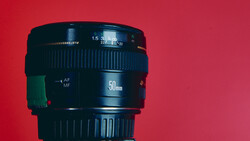
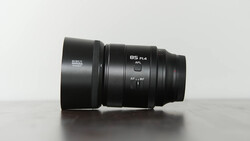
Let’s see the comparison of the portraits taken with 50mm, 85mm, and 135mm prime lenses. Is there a difference in the bokeh and background? Find out if focal length affects facial features and what the ideal shooting distance is for both environmental and close-up shots.
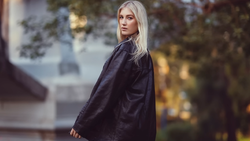
In this video, Julia Trotti, an exceptionally talented and well-known portrait photographer based in Sydney, takes us on location and performs a live side-by-side comparison using three different focal lengths: 50mm, 85mm, and 135mm.
When it comes to portrait photography, there are a few key aspects to consider. These include background compression, distortion in close-up headshots, full-body shots and separation from the background, and finally, the bokeh and depth of field. Julia embarks on a mini adventure with her model, showcasing the results one by one. Although the results are best watched in the video, the one takeaway and learning point for me was about close-up headshots and distortion, as I have always found it difficult to decide whether to use a 50mm or an 85mm lens for my portraits.
The examples demonstrate that the focal length influences how flattering a subject's facial features appear in close-up shots. The 85mm is the best of both worlds for close-ups, offering a good balance between compression and distortion. It allows the photographer to get close without significantly distorting the subject's features. Conversely, with a 50mm lens, if you get too physically close to the subject, distortion will become noticeable, making facial features appear unnatural. Lastly, while a 135mm can produce flattering headshots, it can also flatten the subject's face, making them appear less three-dimensional. Julia recommends avoiding this lens if someone has a wider face shape, as it will exaggerate features and make the face seem wider. Watch the full video to learn more about the features of these lenses.



Join the Fstoppers community for free
-
Post comments and join in the discussions
-
Browse the site ad-free
-
Share your work and get featured in the community
-
Compete in the photo contests for fun and prizes
6 Comments
Personally I use my x100v1 35mm for portraits, wide open and careful not to tilt lens, just like the immediacy it gives. Not a big fan of closeups.
Incredible model ugly dress.
I personally like 40mm and 90mm as they're so unique. The 40mm is really natural and the 90mm give nice separation without exaggerated compression. So, the 50mm and 85mm are so close to my liking
Nice demo and explanation. However none of those lens has any significant distortion. What you are describing as distortion is perspective. The exaggerated perspective of the 50mm (even moreso a 35mm!) and the minimized perspective of the 85mm and 135mm. Most photographers confuse these terms and talk about "wide-angle distortion" even when the wide angle lens in question has 0.01% optical distortion!
Decades ago I noted that mother's preferred portraits of their baby taken with a 50mm or even a 35mm as they were used to seeing their baby's face up close with that kind of perspective, whereas the dads typically preferred the more typical portrait lenses like 85mm with less perspective as they were used to seeing their babies from a more distant viewpoint.
I was taking some company headshots and one of the women was beautiful but had a really big nose. I pulled out my 300mm and moved three times as far away as I had been shooting with my 90mm. I had her look directly into the camera and that big nose all but disappeared (compressed perspective of 300mm lens). She cried when she saw the prints (film days, 1970's) because she had never seen herself look so beautiful in a photo.
Former pro photographer.
Retired lens and camera designer.
"Please stop saying my lens has distortion!"
Personally I like a 600mm and a walkie talkie. Just kidding, I like the 85; it’s the perfect balance between compression and closeness.
Is this the video where she calls the 50mm a "medium telephoto"? 🙄